Snuggle Season Has Arrived! Limited Edition ‘Stomp’ BedTime Wear With NEXT For LOROS Hospice. (Non Sponsored Post)

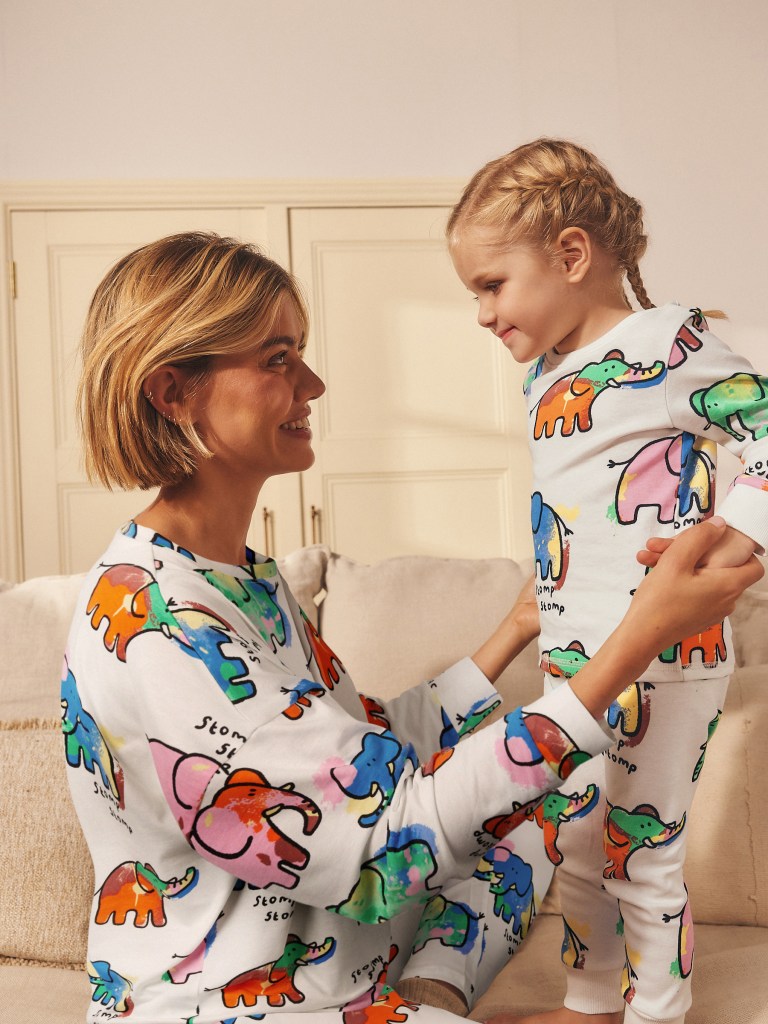
(image: Limited edition Stomp pyjamas by Next, featuring a playful elephant design. 100% of profits support LOROS Hospice’s care for patients and families.)

Now that clocks are going back and its time to get snuggled and cosy, the perfect pyjamas for yourself and little ones have arrived! Teaming up with retail giant NEXT, the LOROS Hospice in Leicester, UK, have come up with some beautiful, stomping elephant pyjamas filled with colourful designs. The designs are inspired by the hand-painted elephant sculptures as part of the famous ‘Stomp Around Leicester’ art trail, which culminated in an art auction.

LOROS Hospice is facing a £2 million shortfall in funding and so NEXT has joined forces with LOROS to encourage the fundraising momentum! 100% profits from the pyjamas go to LOROS., which provides free, high quality compassionate care to terminally ill patients.

Available online now at next.co.uk, with nationwide delivery – every pair sold contributes to LOROS’s vital, compassionate care for over 2,600 patients each year. 

There are matching PJ sets for women and children, for family fun! These cosy pyjamas offer more than just warmth and style – they offer a feel-good factor that comes from helping a community lifeline.

Snuggle up for a cause this autumn: by slipping into Stomp PJs, families can stay stylishly warm while making a real difference to LOROS Hospice when it needs it most.

Please note: This post is non-sponsored (no fee taken) so Be Ur Own Light Blog can get entirely behind this wonderful cause!

image: Limited edition Stomp pyjamas by Next, featuring a playful elephant design)

The women’s Stomp PJs are 100% cotton and available in sizes XS – 2XL in regular length, and S – 2XL in tall. The children’s Stomp PJs are also 100% cotton and available in sizes 9-12 months, through to 7-8 years.

5 Valid Reasons For Not Becoming a Mother

(image: Valentina Conde: Unsplash)

Women that don’t have children will often be on the receiving end of the big question of when they’re going to start having children. But, there are some women who simply don’t want to have children, and all of them are extremely valid. However, some don’t understand this concept, and if you’re wondering why someone would ever feel like that, you’ve come to the right place. While no woman should ever have to explain herself, we’re going to explore some of the reasons why a woman wouldn’t want to become a mother.

Health problems

For some women, the choice to have children may be taken away from them due to health concerns. It might be that they can’t have children because of their health, or it might even be that becoming pregnant could endanger their health. And, while there are many avenues when it comes to having children, such as surrogacy or adoption, some women would simply prefer to carry their child themselves. When this isn’t possible, they may then choose to not have children at all.

A painful history

Sadly, some women will have a difficult or painful history that might put them off the idea of having children all together. It might be that they’ve grown up with abusive parents and don’t want to make the same mistakes. Or, it could be that they’ve been through something extremely traumatic like rape, and would rather not bring that kind of history into their children’s lives, especially if they experienced a life long injury because of it. Instead, they may speak with a sexual offence solicitor and bring the offender to justice, and then move on with their lives.

They don’t want to bring a child into this world

Every person thinks about this at some point or another, and some women will choose not to bring a child into this world if they don’t believe they can provide them with a safe and happy upbringing. Others may look at the world, citing the sense of war, environment and poverty as a reason to question whether it’s a good idea to bring a child into this world.

Giving up a social life and less freedom

Another concern that some women have and choose not to give up is their social life or freedom to travel. While times have changed compared to, say, fifty years ago, it’s still common for the mother to stay at home with the child while the partner goes out to work. While it’s not impossible to have a social life when you’re a mother, it’s certainly not as easy. And, for some, this plus freedom to live the life they want to live is simply not something they want to give up.

Career priorities

Women have just as much of a right to have a successful career as men do, and some women choose to prioritise their career over having children. A career can sometimes take decades to climb and some don’t want to have time off to have children and juggle their work.

This article was written by a freelance writer.

Book Review : ‘Smart Girls Handbook: How to Silence Self Doubt’ by Scarlett V Clark of Smart Girl Tribe

Disclaimer: I got sent a free copy of the book to review but did not receive payment for this review.

I was so excited to receive my copy of this book! I have been following Scarlett Clark’s work for a year or more- she is an incredible woman! She set up a global hub for women on issues that matter, Smart Girl Tribe at the age of only 19! Scarlett is a true trailblazer and entrepreneur, who is all about womens empowerment. Smart Girl Tribe is now the UK’s number one empowerment organisation and as well as being an accomplished motivational speaker, activist and writer, Scarlett can now add author to the list!

On International Womens Day, earlier this month, Scarlett released The Smart Girls Handbook: How to Silence Self Doubt, Find your Purpose and Redefine the Impossible’ with Trigger Publishing (who also published my book!). I often have self doubt and it can be hard to find life purpose too for so many of us, especially if you struggle in life.

(image: Scarlett Clark/ Trigger Publishing)

Using her own story alongside the most popular questions that Scarlett is asked at the many events she runs in schools and colleges, The Smart Girl’s Handbook  aims to help you:

• Discover your talent and find your passion.
• Learn how to deal with fear of failure.
• Cope with anxiety and start speaking your truth.
• Build a strong group of true friends and slay the naysayers.
• Be confident and love yourself.

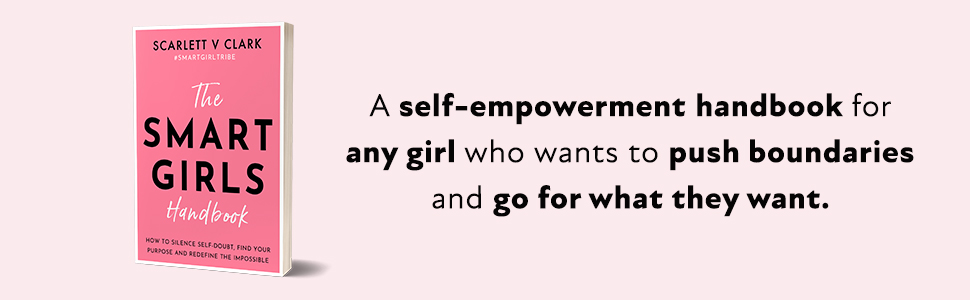
Each chapter follows the themes above and uses examples from Scarlett’s own life to explore the central idea. Included are tools, tips and exercises to work through, as well as interviews with other ‘Smart Girls’. This is a handbook for any girl who wants to push boundaries and go for what they want.

Scarlett tackles each issue head on, giving examples from her life journey and providing incredible motivational tips. I loved learning more about her, her life story and why she set up Smart Girl Tribe by herself at such a young age. Her fearless attitude and strength of character really stood out to me but also how she empowers other women to be and do the same.

Having lived with anxiety since the age of 15, I have had many years of holding back through fear but I have also achieved a lot too. I will go back to this book for advice again and again! It is an empowering book that will help women of any age, and especially teens and young women to reach for their dreams.

Each chapter has the Smart Girl Tribe promise headings and includes exercises to help you on your way too:

1) I promise to discover my talent and find my passion
2) I promise to learn how to deal with the fear of failure
3) I promise to learn to cope with anxiety and start speaking my truth
4) I promise to slay the mean girls and build a strong tribe of true friends
5) I promise to be confident and love myself unconditionally
6) I promise to be a total #boss
7) I promise to embrace self-care and take a well-needed pause
8) I promise to stand up and help change the world

Thanks Scarlett for being you and publishing this wonderful book too!

If you;d like to read your copy you can here


About Scarlett Clark:
At 19, female entrepreneur Scarlett V Clark set up a global hub for young women. Smart Girl Tribe quickly became the UK’s number one female empowerment organization. Since then she has worked with the UN, the British Council, HeforShe, Women for Women, and spoken at the Houses of Parliament. Now in her mid 20’s, Scarlett is an ambassador for the NSPCC and 50:50 which lobbies parliament and the political parties to be more inclusive of women. With a Masters degree in journalism, Scarlett has written for major publications including Cosmopolitan and Harper’s Bazaar. She is an avid traveller, competitive skier and multi linguist.

Understanding PTSD by Gender: Guest blog by Dale Vernor

ptsdim

(image: Kennington Osteopaths)

Post traumatic Stress Disorder, better known as PTSD can occur in a person who has experienced or been a witness to an event that is traumatic enough to affect their lives in a negative way. Witnessing a death, a serious accident, war, abuse, being a victim of a crime, natural disasters and childhood trauma can all be causes of PTSD. Many people only associate PTSD with war and veterans, but the truth is an estimated 3.5 percent of the US population suffers from PTSD.

Research has shown that there are differences in the brain when it comes to how men and women process and deal with PTSD. Science is admittedly behind on truly understanding the gender differences when it comes to PTSD and how it is expressed, but there have been some findings.

Men and women respond to stress differently. Men are more likely to respond with a fight-or-flight response in a stressful situation and women are more likely to use a more calming response known as tend-and-befriend.

This is an emotion-focused coping mechanism. It should be noted that there is so little data that stereotypes should not be formed, however, there is enough data to support differences in the genders.

PTSD in Men

Men are more likely to have PTSD due to combat trauma, trauma from natural disasters and disasters caused by human force, some sort of violence and accidents. Based on studies and research men actually suffer more traumatic life events than women on average, however, only 5-6% of men will experience lifetime PTSD. Lifetime PTSD is less prevalent in men than in women. Double the rate of women will experience lifetime PTSD at 10-12%.

PTSD in Women

Women are at a substantially higher risk for PTSD than men. Biology and psychology play a part in why those differences exist. Women are more likely to experience what is considered “high-impact trauma” at a younger age than men.

Women are more likely to experience sexual abuse, domestic violence and sexual assault that leads to their PTSD. It is sexual trauma that puts women at a higher risk for PTSD than men.

Women who suffer from PTSD will also tend to do so longer in comparison to men; on average 4 years to 1. When it comes to seeking help for PTSD women are more likely to seek support for their illness amongst a group. They tend to look for social support.

Symptoms of PTSD Same in Men and Women

The women and men who have this condition often express similar symptoms. Men may display their symptoms in a more aggressive expression where women have shown to retreat internally and avoid the outside world.

Some of the symptoms of someone suffering from PTSD are:

Re-experiencing nightmares, having flashbacks and frightening thoughts that appear real, avoiding people, places and things that may remind a person of the trauma and avoiding feelings and thoughts to cope with the trauma, signs of heighten anger and anxiety expressed physiologically, being hyper-vigilant against threats, difficulty sleeping, experiencing an onslaught of negative feelings, thoughts and judgments, unreasonable blaming of yourself, excessive guilt and a negative perception of yourself in the world, and disinterest in regular every-day activities.

PTSD and Substance Abuse

According to the U.S. National Library of medicine 50-66 % of people who have PTSD simultaneously suffer from addiction. What begins as a means to cope with the symptoms of PTSD, which are distressing, usually turns into a full-blown addiction.

Substances like drugs and alcohol can decrease anxiety in the moment, escape the pain , distract from negative emotions and increase pleasure in the short term. The coping mechanism of substance abuse affects both women and men. There are dual diagnosis treatment centers for people who are suffering from PTSD and substance abuse.

Post traumatic stress disorder, wherever you live in the world and whatever gender you are, can be hard to cope with. Please seek support if you need it and know you are not alone.

This post was written by Dale, a freelance writer specialising in mental health, based in the USA.  He can be found on Twitter https://twitter.com/DaleVernor