Living with PCOS and Managing Mental Health: Guest blog by Jasveer Atwal

pcos1

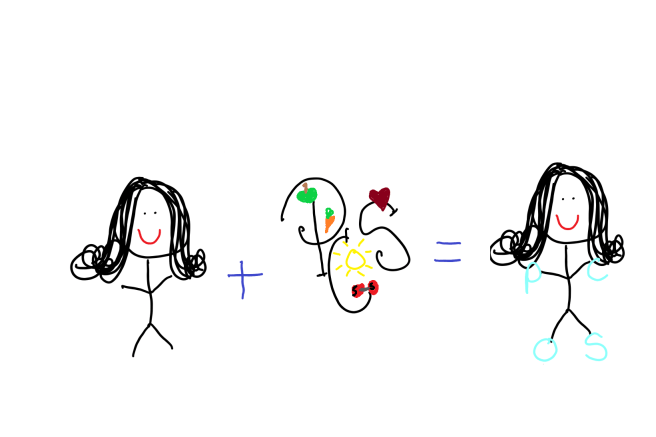
(image: Jasveer A)

I have lived for over 2 decades with PCOS (Polycystic Ovary Syndrome), yet I had not been diagnosed until in my 30’s. PCOS means you have many follicles on your ovaries, which are underdeveloped sacs. These sacs are unable to release eggs and so ovulation does not occur. There is no medication to cure PCOS but there are alterations, you can make to your life, to make it somewhat manageable.

The indicators for PCOS normally follow the lines of acne, excess hair and irregular periods. All of which I have had since my teenage years (quite obviously). These symptoms were considered separately and the dots were not connected until I went to India to see a dermatologist. As soon as I discussed the aforementioned symptoms, she asked me whether I had been diagnosed with PCOS to which I said no and looked completely dumbfoundedShe asked me to get this checked out and to cut out dairy and sugar, as this was part of the cause of my acne and also helped in my diet. Luckily, I don’t like cheese anyway (how could I not? I know) and so this wasn’t too taxing on me.

Diagnosis

I, then returned to the UK and insisted on having an ultrasound and within 30 seconds it was quite clear I had PCOS. I didn’t really look into it much further, as I was told the only way to look into managing it was with birth control and being active. I didn’t want to use any medication and I was already considering going to the gym. There wasn’t much around PCOS at the time except for the NHS diagnosis.

Little did I know that there was more to PCOS, than the anxiety inducing symptoms of acne and excess hair. For years, I had always had trouble losing weight from my belly and this was after changing my diet to include more wholegrains and less sugar.  But, even after making these changes I had always found that it was really easy for me to put on weight and then extremely hard to lose it. Which I know, is a common problem for most but I found this, even when I was really conscious of what I was eating.

Management and Mental Health

I started going to the gym but this was really hit and miss, as I found it really hard to be consistently active. There would be some points where there wouldn’t be much difference to my weight that just led me to give up. But after some time I decided, I wanted to strengthen my body and started going to the gym to work on my strength.

Working on my strength meant, I was also losing weight as I was more active, however I have still not been able to shift the belly fat. This started becoming extremely frustrating and after looking into it more, PCOS also impacts weight because another symptom is insulin resistance. In short, this means that the body doesn’t respond properly to insulin it makes. Which in turn raises your blood sugar levels and your weight is then affected. It is more common that PCOS sufferer’s bellies, want to hold onto the fat more dearly!

I am now on a mission to get those highly coveted abs. It is a tougher journey than someone without PCOS but it’s about figuring out what works well for your body. I have found that overall exercise is an integral part of my everyday life.

I currently exercise many times a week, which is excessive for some but I find that I need it to manage my mental health and weight. I am finding this difficult at the moment for a number of reasons:

  1. It’s the winter and I suffer from SAD
  2. PCOS also means I have anxiety, low mood and fatigue
  3. Its cold outside and sometimes have to spend 10 minutes scraping my car

So I am trying to battle through these hindrances by going as much as I am able because the exercise helps with my low mood. Trying to be consistent is the best thing for me, otherwise I become entangled in a catch 22 situation which derails the work I have put in place to manage my PCOS.

However, I have also realised that listening to my body and taking a break now and again may be all I need to ease the impact on my mood/anxiety. You constantly have to be aware of how you are feeling which I have found difficult as, I don’t always want to give into the low moods. But sometimes staying in the duvet longer in the morning, may help my mood more than dragging myself to the gym.

Living

Though I am able to manage the effects of PCOS on my body, changing my diet made changes to my body and skin. With my hair I have had to resort to laser treatment. I have recently started to look more into managing my stress, a lot of the stress when I was younger was due to the acne and excess hair.

There were days my acne would cause me not to go out or really dread it. Constantly having to get rid of hair which is conventionally not seen as ‘ladylike’ became tiring. And there were many days, which turned into weeks where I didn’t want to have to manage this anymore. I slowly started making changes and started to see some results. My acne reduced and I was able to work off the weight. However, my anxiety and low mood remained.

For this, I realise I need to manage my stress more intentionally and work on what affects me, my triggers and how I can reduce stress and anxiety. It’s different for each individual. I have found it is something you can manage and I have become more persistent and resilient as a result of having anxiety and low mood related to PCOS.


This guest blog was written by blogger Jasveer Atwal, who lives in the UK. She blogs at https://shelved.blog/ and you can find her on Instagram  @shelvedblog .

9 Years Undiagnosed: My Life with Bipolar Disorder, for Time to Talk Day: Guest blog by Mike Segall

timetotalkdaydad1

(image: Time to Change)

*Trigger warning: discusses thoughts of suicide and mania, please read with care *

This blog has been courageously written by my Dad, Mike, about his journey with bipolar disorder and the hurdles he faced in getting a diagnosis. For those of you who have read my book, you’ll know some of this. This is the first blog that Mike has written for us and I want to share it on today, Time to Talk Day by the charity Time to Change.  So here is Mike’s story….


My experience of Bipolar 1 Disorder was that I was undiagnosed for 9 years. I was never sent to a psychiatrist and was put on the wrong medication (I hadn’t heard of mood stabilisers and seemingly neither had my doctor).

So- What is Bipolar Disorder? (formerly known as Manic Depression)

To me, Bipolar symbolises the two extreme poles of mood- mania and depression. The North Pole is Mania. Mania is wonderful for me- you think you can be anyone, you think you can do anything, achieve anything, You are flying. You think ‘why can’t everyone be like this and experience everything?’. You are much more uninhibited. You may shop more, you spend more money, You think you can FLY!

But you can’t fly and you fall, you fall off a cliff into varying degrees of  deep, dark depression, which can last for months.

Bipolar disorder is  a chemical imbalance in the brain that causes periods of depression and periods of abnormally elevated mood, mania. The elevated mood is significant, known as mania or hypomania depending on its severity and whether symptoms of psychosis are present. Psychosis means when your mind lose touch with reality, with delusions or hallucinations.

During mania, someone feels abnormally, happy, energetic, irritable and not requiring sleep they often appear to be bouncing off the walls, starting new projects, trying to achieve too much. In some cases, addictions during mania may also present.

During depression, someone with bipolar disorder may be crying, experiencing negative thoughts and giving poor eye contact. You will notice this if you ever have a conversation with someone who is depressed. They may also be suicidal or talk about self harm.

My Story:

My first manic episode occurred in 1991 and I went to the doctor and was prescribed Valium (an anti anxiety calming medication), which was handed out like sweets in those days.

The Valium didn’t do me any harm but they certainly didn’t do me any good. In the next 9 years, I had three manic episodes followed by three increasingly devastating depressive and suicidal episodes, the last of which lasted 5 months.

In my first manic episode I was going out a lot late at night to clubs and bars and spending too much money. My second and third manic episodes were much more controlled as I recognized what was going on but I was still much more outgoing than usual and spending too much money.

My depressive episodes were serious and eventually suicidal and lasted 3, 4 and 5 months respectively. I often stood on the edge of a London Tube platform thinking about ending it all. I would drive down the motorway at speed not turning the corners until the last possible moment. I would stand in the bathroom with hands full of tablets thinking about overdosing and ending my life. Mostly, I was at home in bed doing nothing but sleeping , eating and surviving.

The person you would meet today is not the person you would have come across at that time.

Looking back there was no real connection made between these episodes and I wonder 1. Why I was never hospitalised and 2. Why I wasn’t diagnosed more quickly.

First of all, 30 years ago far less was known about Bipolar Disorder so the doctors weren’t quick to diagnose it. Secondly, it was only after 9 years that my GP reviewed my file and noticed that I had never been referred to a psychiatrist.

This was the breakthrough that changed and saved my life.

I went to The Priory hospital to see a psychiatrist, describing my episodes. Within 45 minutes I had a diagnosis,

”You have a mental illness. It has a name, It is Bipolar 1 Affective Disorder. You have it for life and it is treatable with the drug Lithium.”

Lithium balances out the chemical imbalance so you end up between the poles and mood is then stabilised. I am pleased to say that in the past 20 years, the medication has worked for me and has stabilised my bipolar disorder, so I no longer get episodes of mania or depression.

I am also pleased to say that as quite an emotional person I still experience the normal feelings and emotions that come with everyday life.

Starting on Lithium is not easy as you have to be weaned onto it. There are side effects, the most common being weight gain and you have to have regular blood tests to make sure the level of Lithium in your bloodstream is correct (non toxic) and it is not affecting your kidneys.

I do wish that I had been diagnosed earlier and not had to suffer manic and depressive episodes as I did.

These are the 4 takeaways I would like you to have from reading this, this Time to Talk Day:

1. With mental health it’s good to talk about it , It’s good to fight stigma and it’s good for your own healing.

My journey started in 1991 and I would hear things like ”you’ve got a weakness. Why don’t you pull yourself together?”, which were unhelpful

2. Think about how you can help people in your community by recognizing the signs that someone has depression or mania.

3.  Live a positive life- I am an example of a bipolar sufferer who can maintain a positive life. Bipolar is an illness that needs treating. It is treated with medication but it can take time for the medication to be right as each person has individual brain chemistry.

4. Listen to those who are struggling. Most of us listen to reply. If you watch two people deep in a conversation or you are in one yourself your focus will be very much on the other person and you will be listening at 90%.

But if you are listening to understand and you are feeling and sharing their emotions then you are truly listening at 100%. Check out the Samaritans help line too.


mikesegall

(image: Mike Segall)

Mike Segall is a professional speaker and mental health advocate, sharing his lived experience with bipolar disorder to groups in the UK. He is also the father of the founder of this blog, Eleanor.

Talking for the Jami Mental Health Awareness Shabbat 2020 by Eleanor

jamimhas1

As some of you will be aware, back in 2017-2018, I helped as a volunteer with fellow volunteers (Lisa Coffman and others) to found the Mental Health Awareness Shabbat (Jewish sabbath) in our communities across the country here in the UK. The initiative, led by the mental health charity Jami and conceived by Rabbi Daniel Epstein, now runs in 150 Jewish communities.

This year, my dad Mike and I were delighted to be asked to share our father and daughter journey with bipolar disorder to Chigwell and Hainault Synagogue.

I have social anxiety- which includes at times a fear of public speaking. In December, I had a breakthrough, where I spoke for a short time at a conference called Limmud alongside my Dad and read from my book Bring me to Light. So, when we were asked to do this talk at Chigwell, I felt it could be possible.

I armed myself with the fact that I knew kind people in the community including the Rabbi and his wife and friends of my husband Rob (its the community he grew up in). I also wanted to share my story to help other people.

So, we stayed with a lovely lady in the community and had friday night dinner with the Rabbi and his family. On Saturday morning, I woke up feeling a little nervous but took my trusted anxiety medication for when I need it- Propranolol, and walked to the synagogue with Dad.

I managed not to have a panic attack and the thought of speaking to help others got me through (as did distraction, deep breathing and drinking a glass of water).

So, at the end of the service, we were called up to speak. Dad went first and talked about his journey with bipolar disorder from when it started for him in 1991 to finding recovery. Then, it was my turn.

I stood up there in the pulpit speaking to a packed audience with a prepared speech. I felt scared but also empowered and began to relax into the talk. I knew that by sharing what happened to me, being sectioned and so ill and talking openly, that I could break stigma and touch others. I was also so proud of my Dad for speaking so openly.

It was only after, when talking to people after the service, that we realised that about 150 people came to listen to our talk! We had some important conversations with people after our talk including someone very newly diagnosed and someone else whose niece had bipolar and is currently very ill.

I couldn’t and still can’t believe I was able to do that. However, since I have been very tired so trying to de-stress and rest as much as I can!

We just want to thank everyone who came to hear our talk and supported us, to every person who thanked us for coming and shared their stories with us. We are so grateful for such a positive reception and thank Rabbi Davis and the Chigwell community for having us.

The Mental Health Awareness Shabbat has had events in communities all across the country. It runs yearly and you can find out more here 

When Therapy Isn’t Enough–How to Handle Physical and Mental Health Issues: Guest post by Brooke Chaplan

johngreen2

(Image: Pinterest)

Therapy is the first line option that most people choose when they are dealing with a mental health issue. While therapy is undeniably important, many people struggle with it, even giving up if they feel it isn’t meeting their needs. This isn’t because therapy isn’t important, but because therapy can only do so much when you are physically and financially in situations where you have no power to make lasting change in your life. Dealing with chronic pain and other physical issues can leave you worn out mentally as well, and learning how to deal with both physical and mental issues at the same time is the best way to find relief. True wellness must come from understanding and addressing physical and mental concerns together.

Understand the Connection Between Physical and Mental Health Issues

Chronic pain is exhausting to deal with on a daily basis. Over time, dealing with your pain and the loss of your normal activities can cause you to feel depressed and even anxious about your future. People often develop anxiety about their pain, especially when it seems to worsen without warning and at the worst possible times. Your mental health can also make pain worse. For instance, dealing with PTSD or anxiety causes tension within your body that affects the muscles. It is the same reason why people find that their shoulders ache after a long and stressful day. Understanding this connection will help you to articulate just why you are feeling the way you are, and allow you to talk to both mental health and physical therapists about your unique situation in ways that will let them best help you.

Choose a Program That Focuses on Your Mind and Body

Injuries that leave you unable to do many physical activities, such as spinal or leg injuries, have an impact both on your body and your mind. The best type of back pain treatment involves helping both your mind and body to heal. While you may participate in special exercises and other forms of therapy for your back, you’ll also receive counseling and support that helps you to feel better mentally. For instance, identifying mental health issues that require treatment can help you to learn techniques that help you to avoid focusing on the pain. Meditation and mindfulness are two solutions that often work well with traditional back pain strategies.

Commit to Following the Program

As with any type of therapy, your involvement makes a big difference in the outcome. Although you may feel depressed and in pain, you need to commit to working through it all. Choosing to show up for your treatment even on a bad day helps you to make continuous progress. It might not happen all at once, but you’ll soon begin to see how your treatment plan is working. Committing to physical (physio) therapy programs has also been shown to have positive impact on your ability to handle mental challenges. Remember, you may see your body and mind as two separate things, but your body interprets them both together.

Take Steps to Reduce Stress in Your Life

This is the time to take care of yourself. Take a time out from stressful activities so that you can focus on the treatment. You can also use relaxation strategies to help stop stress from affecting your physical health such as using deep breathing to work through an anxiety attack.

Your mind and body are connected, and you’ll find that each one influences the other. When one type of therapy isn’t enough, it is time to explore new options. Continuing to work on improving both your physical and mental health helps you manage pain and regain control over your life.


Brooke Chaplan is a freelance writer and blogger. She lives and works out of her home in Los Lunas, New Mexico. She loves the outdoors and spends most of her time hiking, biking, and gardening. For more information, contact Brooke via Facebook at facebook.com/brooke.chaplan or Twitter @BrookeChaplan

5 Steps to help your Mental Health, Depression and Anxiety: Sponsored by Core Wellness Maryland

pexels1

(Image: Pexels)

Depression and anxiety can feel totally overpowering and overwhelming. It can consume you in ways in which it controls you. Your thought patterns, emotional responses, physical energy, and even your short term memory are all affected by depression and anxiety. And because it can feel so dominating, it is vital that you do not try to deal with it alone. Therapy, counselling and all the help that you can possibly get, should always be your first plan of action.

However, there are small yet effective steps that you can practice to cope and manage the severity of your depression and anxiety. Below I’ve listed 5 actions and activities that you should implement into your life daily, while also sticking to an action plan as explained above.

  1. Do something spontaneous, random and out of your usual routine. Depression can make life feel monotonous and mundane to say the least. You do the same things again and again, every day. Or you literally do nothing at all. Duvet days are no longer a Sunday treat, but a compulsion of the mind as you lack the motivation or energy to even leave the bed. That is why forcing yourself to do something spontaneous and different can feel like a breeze of fresh air. And it absolutely does not need to be a demanding task. Keep it simple, keep it easy, and then slowly build up on it on days you feel slightly better. Some ideas are:
  • A quick walk in the morning around the block.
  • Cooking an easy meal.
  • Tidying up something you’ve been procrastinating on.
  • Playing with your pet.
  • Doing easy home diys or even a bit of gardening.

The choices are endless, so feel free to add your own ideas. But just bare in mind that you should start off by keeping it simple and easy so that it doesn’t burn you out or mentally drain you. The feeling of doing something out of your routine, mixed with the feeling of satisfaction of completing a motive, can be a powerful and revitalising feeling.


2. Practice gratitude. Make a list.

Grab a pen and paper and write down all the things you own, love and appreciate. All the good things that you have experienced. All the happy memories. The good nostalgia. Things you find beautiful. Add the weirdest or silliest of things – if they make you smile then they should be on this list! Do this daily, even if you don’t feel like it, or even if you can only think of one thing on some days. Trust me, it all counts when you look back on your list a week later, a month later, 6 months later and so on.


3. Hold on to that pen and paper because I want you to play a game.

Write the first word that comes to your mind without thinking about it. Then write another word, and then another. Carry on adding to this list for a minute or two. No matter how random, or weirdly nonsensical the words that pop up in your mind are, just carry on writing it and adding it to your list. Once you’re done, analyse your list. Some might actually have absolutely no meaning or weight to your emotional state, but you will definitely find a good bunch that will shed some light to two things: feelings and thoughts that are hidden in your subconscious mind. Additonally,  feelings that you have been suppressing.

If you try to do this daily, you should begin to notice a pattern. Same words might pop up. Or similar words. Or words that are more negative/positive then the days before. It’s a good and unique way of tracking your thought patterns and emotions, while releasing pent up thoughts and feeling that you might’ve not even realised are there. Plus it’s fun!


4. Create a positivity board.

Get yourself a board and pin up things that signify your dreams and goals, things that you love and that make you happy. Photos, newspaper or magazine cut outs – anything and everything that defines you or who you want to be. Keep adding to it, and every time you feel your worst, look at this board and think of each thing you have included on it. And remind yourself why.


5. Train yourself to be more aware of your surroundings.

Use your 5 senses to their potential. This is practicing mindfulness. Depression can  numb our senses down. Noise can feel like just noise. When really it could be laughter, trees rustling, birds chirping, baby’s cooing, rain tapping, and so many other beautiful things. Depression tells us it’s noise and chaos.

Be more mindful no matter where you are, and you’ll begin to notice things you otherwise wouldn’t have, you’ll see the beauty and peace where you normally see chaos and mental exhaustion. Listen to the rain, notice the beautifully formed clouds above you, look how the trees sway with the wind, feel the rain on your skin. It’s the little things that are the most impactful. And being mindful can calm the heart and soul.

That’s my 5 steps for you. Remember no one and nothing can define you except yourself. Not even depression, not even anxiety. Celebrate this day, and use these steps to improve the quality of your life, even if you don’t suffer from a mental health disorder. If you have any steps of your own, then comment below! 


This sponsored post was written for you by Core Wellness Maryland CEU, who can be found at https://corewellceu.com/

10 Signs that you may have an Anxiety Disorder: Guest post by Capillus

anxietyquote1

(image: Psych Central)

You might feel like a worrier—someone who is unable to let the little things slide, who becomes agitated by small shifts in your schedule, who is kept up at night at the thought of something you said earlier in the day. We all feel worry now and then, but there are people who have an inclination to feel concern and apprehension more than others. If you’re someone who often finds yourself feeling uneasy, fearful, stressed-out, and tense, you might have Generalized Anxiety Disorder (GAD)

Worrying over the Small Things 

Are the most basic daily tasks—brushing your teeth, taking out the garbage, commuting to work—stressing you out on a regular basis? Do you find that your usual routine is becoming burdensome, making you feel short of breath and unable to focus elsewhere? If so, it’s likely that you’re undergoing some form of GAD. This is a common symptom of GAD, in that people will become overwhelmed by activities that once were normal, leading them to feel stressed and burdened in the face of small tasks.   

Insomnia and Sleep Issues 

Whether it’s due to obsessive cyclical thinking or worrying about things that might have happened earlier in the day, there are many people who are kept awake, either unable to sleep at all or regularly disturbed from their sleep during the night. Insomnia can be brought on by various factors, either by an inability to quell your mind prior to going to sleep or increased cortisol levels, which will leave your body in its “fight or flight” mode even at night. 

Daily Fatigue 

Often as a result of insomnia or poor sleep, daily fatigue can be another symptom found in people with GAD. Without enough rest in the evening, the body and mind will feel sluggish during the day, leaving you exhausted and unable to focus.

Other factors can lead to such fatigue, but they might be wrapped up in other factors of anxiety, whether you are using stimulants such as coffee or alcohol to mentally balance yourself during the day or you are stress-eating unhealthy food as a reaction to increases in overall anxiety. 

Upset Stomach and Indigestion

GAD manifests itself in many different symptoms, and some of the most common ones are physical. A common side effect people have when struggling with GAD is stomach distress, including indigestion, constipation, diarrhea, ulcers, and more. Anxiety itself can lead to stomach issues, but, as said above, other lifestyle decisions made while struggling with anxiety can further exacerbate digestion issues, including poor diet, increased alcohol consumption, poor sleep, etc.

Difficulty Concentrating

A common side effect found in people dealing with GAD is the inability to focus during the day. Laboured by concerns, fears, and fatigue, those with GAD will sometimes find it difficult to completely focus on a task without being derailed by some other worrying quality or event. 

General Agitation and Discomfort

Quick to become aggravated by general unease and things not going your way? Do you feel ill when attempting to talk in public or in under-populated social scenarios? Are shifts in your daily routine cause for unease and panic? These can all be signs of GAD, as the mind becomes easily perturbed by occurrences and situations it might not expect or want. It’s a struggle to deal with such responses, and it can be difficult to break yourself out of such negative cyclical thinking under such circumstances, but you should do your best to be aware of when such thinking crops up. 

Muscle Pain and Discomfort 

One side effect of anxiety often not discussed is that of physical pain. Whether it’s muscle tension, tension headaches, hand tremors, chest tightness, or feeling as if you’re unable to breathe, anxiety can lead to detrimental physical responses that might be cause for concern. 

Hair Loss and Thinning 

Along with other physical effects that anxiety can bring about, one of the more common ones is an effect on hair. GAD can lead to hair becoming thin, brittle, and falling out, both on the head and around the body. For some people already struggling with genetic hair loss, anxiety can lead to hair loss and thinning becoming increasingly worse. Thankfully, there are treatment methods available to facilitate hair regrowth, so you shouldn’t be too worried if you notice the first signs of thinning. 

Panic Attacks

You’re likely to know a panic attack if you’ve ever experienced one. Brought about by an intense feeling of fear, unease, and physical symptoms, panic attacks can be a debilitating response to extreme anxiety. The level of response will depend on the person and the level of anxiety, but they are serious reactions to the feeling of a perceived threat. Please reach for medical support from a doctor, if you need it.

Self-Deprecation

If you are regularly feeling down on yourself, feeling as if you cannot meet the standards of perfection or do not match the image you have of yourself, you might be struggling with anxiety. GAD can often leave people obsessed with a self-described definition of who they should be, and anything beneath that can be a never-ending cause of compounding insecurity. If you feel as if you don’t look good enough, aren’t performing as well as you should, or are unsure of your general abilities at work, school, or elsewhere, these underlying feelings might be brought on by anxiety. 

While some of these signs can be symptoms of generalized anxiety disorder, it is important to remember that we shouldn’t self-diagnose ourselves with general mood disorders. If you’re concerned that you might have GAD, you should meet and discuss these symptoms with your primary care physician (in the UK, GP) or a therapist—someone who can provide you with a diagnosis and thus help you alleviate said symptoms for the betterment of your mental health.  


This unsponsored guest blog was written by Capillus at www.capillus.com , a hair loss treatment brand with medical expertise.


Life Changing Habits to Bring into the New Year: Guest blog By Vanessa Hill

(image: http://gandlblog.com/17-inspirational-new-years-quotes-for-2020/)

The start of 2020 is a special time. Not only are we lucky enough to be able to start a new year, but we also have the privilege of beginning a new decade. We have the opportunity to define the next ten years of our lives, which means we should probably be starting it off on the right foot by developing good habits. Here are three life-changing habits that you can start doing right now to ensure you have a great decade.

Eat Healthy Foods 

The first habit you need to bring into the new year with you is making your health a priority, and one of the easiest ways to do this is by maintaining a healthy diet. Your diet plays a huge role in how you feel mentally and physically. It’s where your body sources it’s energy from, so when you put good things in your body you feel good. Now, this doesn’t mean you have to completely give up your favourite guilty pleasures. Try thinking of things you can incorporate into your diet rather than thinking of things you want to get rid of. Commit to eating more leafy greens rather than swearing off chocolate. Choose to eat whole grain rather than avoiding carbs.

If you’re not entirely sure where to start, you can always sign up for healthy eating program that shows you exactly how to transform your eating habits. Even if losing weight isn’t your goal, you’ll find that making healthier choices with your nutrition will leave you feeling better, and give you the energy to take on the year.

Please note to speak to a doctor before you start any new eating program and take care if you are struggling with your mental health alongside. 

Develop a consistent sleep routine

Sleep is an underrated body function that too many of us take for granted. Our bodies use this time to repair damages, replenish our energy, and restore us to a functioning state. Lack of sleep negatively affects every part of your body. If you’re tired of struggling with brain fog, lack of energy, and irritability, then developing a good sleeping pattern is the place to start.

Try to go to bed and wake up at the same time every day– even on the weekends. This may be a bit tricky if you’re younger and you find yourself spending your weekend nights out on the town, if you travel a lot, or if you have young children. But once you come up with a schedule that works, try to stick to this as closely as you can. You’ll find that your days are more bearable and you might even get deeper sleep at night. Don’t be afraid to consult a sleep specialist if you’re having trouble getting a good night’s rest. They’ll be able to help you get the best sleep possible, which will turn into you living the best year possible. 

Practice Gratitude

While people are eager to think of the things they want to change at the beginning of the year, it’s important to show your appreciation for the things that you do have and for where you are right now. You can show gratitude on a macro-scale, where you’re thankful for your friends and family, for your amazing job, or the events that you’re lucky enough to experience. On a micro-scale, you can be thankful that you had enough money for coffee today, for example.

Either way, taking the time to notice and appreciate the things that are going well around you will give you a positive outlook on life, and it will remind you of all the reasons you have to smile. You have so much to be thankful for, you should regularly remind yourself of that.

About the Author

Vanessa is a content writer who’s passionate about spreading knowledge and joy to the world. When she’s not writing, she enjoys exploring the streets in a foreign country where she can immerse herself in different cultures.

How to Deal With Social Anxiety, Social Phobia and Depression: Guest post by CBT Toronto

emptycup1

(image: the Funny Beaver)

Millions of people around the world suffer from social anxiety, social phobia, and depression. Unfortunately, due to the stigma that is still associated with mental illness around the world, many people try to hide their problems and suffer in silence. Left untreated, social anxiety, social phobia, and depression can lead to isolation, physical health problems, and even suicide. 

Fortunately, there are many treatment modalities available,. This can help sufferers obtain the support and relief that they need and deserve. Here, we will focus on some simple yet effective ways that you, or someone that you love, can alleviate social anxiety, social phobia, and depressive symptoms with tact, integrity, and verve.


Risks of Having Social Anxiety Disorder and Depression

Certain individuals may be genetically predisposed to social anxiety disorders or clinical depression, as well as seasonal affective disorder, chronic stress, anger, and generalized anxiety disorder. However, other non-genetic factors may influence whether or not a person develops a social anxiety disorder or depression in their lifetime.

For instance, if you are currently dealing with substance abuse issues, such as excess consumption of alcohol or narcotics, then you may be at an increased risk of developing a social anxiety disorder or chronic depression. Unfortunately, many people will turn to drugs and alcohol in an attempt to numb their pain. This puts their bodies at risk of developing a tolerance or resistance to such illicit substances; which can lead those individuals down a path of destruction.

If you are having trouble communicating with others, whether at home or work or are having trouble being productive in your day-to-day life, then you may be suffering from a cognitive impairment or mental health disorder. If you notice that you are not responding to the treatment that your doctor or mental health care professional has prescribed, whether it be cognitive behavioural therapy, psychotherapy, or medication. 

If so, please speak to your doctor, as they may need to adjust your treatment or try a new treatment method. Suicidal ideation is also a serious red flag, and if you have suddenly developed severe thoughts of harming yourself, please seek immediate medical attention.  

What Prevents Social Anxiety Disorder Patients From Accessing Mental Health Care?

Many people who suffer from social anxiety ,blame themselves for their issues. As such, they may refuse to seek outside help to address and rectify their health problems. Furthermore, many people who suffer from SAD are actually unaware that such a condition exists, or may not know who to turn to in order to receive the necessary treatment. 

In fact, it can be argued that many doctors, and most of the general public, are unaware of SAD or how to best tackle the matter. As such, there may be very little help available to those who suffer from the disorder; whether it be medical, moral, or emotional.


Does Social Phobia Run in Families?

There have been studies conducted indicating that a person’s risk of developing a social phobia disorder may be elevated if someone in their family has or had the same issue. Moreover, the correlation vs causation interplay between psychiatric and serotonin disorders is also something that many medical experts in the field are aware of. 

That is, while most agree that there is a marked connection between SAD, depression, and serotonin, medical experts are uncertain about which comes first in terms of driving said correlation between the disorders.


How to Deal With Social Anxiety Disorder

SAD can often be overcome by getting moral support from friends and family. The key is to interact with loved ones in a respectful and supportive environment so that the person can overcome their problem. Also, it should be noted that many people who suffer from chronic depression do not actually understand why they feel the way they do. 

In other words, many of the feelings or behaviours that they exhibit are automatic and deeply ingrained into their thought process and psyche. It is the responsibility of their loved ones to care and support them by sympathizing with their condition and helping them process their emotions in a safe and healthy manner.

In addition, many studies have found that patients with SAD who undergo cognitive behaviour therapy report a significant improvement in their anxious or depressive symptoms. In some cases, patients may be treated with a combination of cognitive behaviour therapy and medications. This could include Busperione, Remeron, Paxil, Celexa, Trintalex, or other medicines that are commonly used to help those who suffer from anxiety or depressive disorders.

Also, if your symptoms are relatively minor, then there are techniques that you can implement yourself to obtain near-immediate relief. For instance, if you find yourself in a situation that elevates your stress and anxiety levels, then you can practice deep-breathing exercises before the situation escalates.  

If you suffer from social anxiety, then you should try to slowly cultivate your social connections. Doing so can not only help you eventually overcome your social anxiety but may also help alleviate feelings of depression that often result from social isolation. This is known as exposure therapy and can be helpful.

There are other ways to help deal with anxiety and depression. For instance, studies have found that listening to music that you enjoy releases hormones that help promote relaxation. Exercise has many mental as well as physical health benefits. The release of oxytocin and endorphins can help counteract the release of cortisol and other harmful hormones that can exacerbate anxiety and depression.  A healthy and balanced diet can help rectify certain hormonal balances and nutritional deficiencies that can cause lethargy, depression, irritability, and anxiety in some people.

Most importantly get help from a GP doctor or therapist if things are getting too much. Don’t be ashamed to ask for help.

This guest post is by CBT Toronto, based in Canada.

If you would like to learn more about social anxiety treatments in Toronto or would like to obtain social anxiety treatments in Toronto, then please visit our website or give us a call at 416-817-8925. We specialize in PTSD, OCD, BDD, depression, couples therapy, and anxiety disorders.


Reflections on Winter Mental Health: by Eleanor

undepress

(image: Undepress)

I’m in a time in my life right now where I am finding things hard, which includes public speaking about my book. I have come to the conclusion that however painful that is, I can still do my freelance writing and social media work and I can still communicate with my book and blog readers. So all is not lost.

Public speaking induces fear in me, so I am going to start by making some videos when I feel able and sharing online. I also hope to be supporting my Dad at a talk he is giving on our story with bipolar this weekend, more on that after the event.

I am going through a period of depression at the moment (probably part of my bipolar, the winter and long nights/dark days and a reaction to life circumstances). As I am medicated, its not terrible, but I do experience heightened anxiety. I also freeze in fear and going out can sometimes be a challenge. The book was a blessing but I didn’t realise how exposed I would feel sharing it with the world.

This will get easier and I know how lucky I am to have a warm home, food on the table, a husband and family who love me and some very good friends. My sister has been my personal cheerleader too and we are helpful to each other too- she is wonderful.

I am now 9 weeks into therapy and I feel like its going to take a while to deal with all the trauma I have been through. Last week, I made a timeline of events for my therapist and we ranked traumas in order of how painful they are. Eventually, in the new year, we will start to process them in a safe space. EMDR (rapid eye processing) works in this way and will hopefully clear the blockages, fear and pain away so I can thrive again.

I am learning to be kinder to myself. To take time for me. To take breaks. To try not to feel guilty or selfish for working part time from home- I am learning that depression and anxiety are difficult but I am incredibly grateful for my blessings.

There are good things. My book being featured in Happiful Magazine this week and looking forward to Chanukah, Robs birthday and the Christmas break with family/friends. I also continue to be paid to write from home and am working on future plans. However, I am slowing down in order to recover from a very busy year!

How are you feeling this Winter? What helps you?

Eleanor x


Taking care of your child’s mental health: Guest blog by Chloe Walker

childmh1

(image: Power of Positivity)

Mental health is extremely important and has a significant impact on a person’s overall health and wellbeing. According to a recent survey by the NHS, one in eight 5 to 19 year olds had at least one mental health disorder when assessed. As a parent, you play a crucial role in your child’s mental health. Fortunately, you can help improve your child’s mental health by creating a supportive family environment at home and learning the early warning signs of common mental health disorders, for example. With this in mind, here are some top ways to care for your child’s mental health. 

Develop a good bedtime routine 

Sleep plays a vital role in a child’s mental health. Research shows that there is a strong link between sleep problems and an increased risk of developing certain mental illnesses. In fact, one study found that four-year olds with sleep disorders have a much higher risk of developing symptoms of mental health conditions as six-year olds, when compared with children without sleep problems. Experts at Little Lucy Willow add – “Sleep keeps you calm, your mind alert, and recharges your body to enable you to get up and face each day.” For that reason, you must try and get your child into a good bedtime routine from a young age. Here are some top tips to help your child sleep better:

  • Create an ideal sleeping space by providing a comfortable bed, installing blackout curtains, and minimising any outdoor noise. 
  • Encourage your child not to use electronics like smartphones before bed. 
  • Get your child into a consistent routine where they go to sleep and wake up at the same time each day. Try to keep this the same on school days and weekends. 
  • Make sure that your child avoids any caffeine in the afternoon or evenings. 
  • Visit your GP if your child has been experiencing sleep problems for more than two weeks, or if the symptoms are interfering with their daily life. 

Exercise as a family 

Exercise plays an important role in a child’s overall health. Along with the physical benefits, regular exercise can greatly improve mental wellbeing. This is because physical activity releases endorphins in the brain which creates feelings of happiness and alleviates stress and anxiety. According to advice on the NHS website, children should get at least 60 minutes of moderate intensity exercise every day.

To give you an idea, examples of moderate intensity exercise include walking to school, riding a bicycle, and playground activities. Exercising as a family is an excellent way to encourage your child to be active. It also allows you to spend quality time together as a family and build closer bonds. Playing games in the garden, going for a walk in the park, or going on a bike ride, are all fun ways to exercise together as a family. You could also encourage your child to start playing a team sport they’re interested in, such as football, rugby, or hockey. 

Encourage open communication

You must create a welcoming family environment that is built around trust and understanding. This will help your child feel comfortable telling you about any issues surrounding their mental health. Encourage open communication in your family and make sure you check on your child if you notice any changes in their behaviour i.e. they become distant or their eating habits change.

Remember that children tell people how they are feeling in several ways, not always verbally. A sudden change in behaviour may signal that your child is struggling and needs support. Always listen to your child and empathise with their feelings. Let them know that it’s natural to feel down from time to time and offer support in any way you can.

If you’re still worried about your child’s mental health, then speak with your GP or contact a mental health specialist for further advice. 

Final thoughts 

Mental health illnesses in children are becoming increasingly common and can lead to several serious long-term effects. Fortunately, there are plenty of ways for you to care for your child’s mental health. Encouraging healthy habits is a simple yet effective way to improve your child’s mental well-being. This should include exercising regularly, getting enough quality sleep, and following a nutritious diet. Along with this, you should also educate yourself on the symptoms of common mental health conditions in children and create a warm, trusting home environment that encourages open communication. Speak to a medical professional if you need to.

This guest blog was written by professional writer Chloe Walker.