Flowers for wellness: Product Review on Posy and Posy

posyandposy1

(image: Eleanor Segall)

I am going to be starting to do Product reviews on the blog. I have always loved flowers, whether I am going out for a walk and spot them in gardens or whether I am receiving a bouquet from a friend or partner, they always lift my mood.

I was contacted by the wonderful Posy and Posy, a new monthly flower subscription box- ‘Creative Floral Recipe Box‘ where you can lose yourself in creativity in arranging different flowers. Each month has a different ‘flower recipe’ (different flowers) for you to enjoy and arrange.

I was sent the above posy, recipe 006, which contains stunning deep pink, yellow and orange roses, pink crysanthemums and beautiful hellebore greenery. The result feels very autumnal and beautiful to put together.

The flowers arrived individually wrapped in a special Posy ‘cocoon’ ( a cardboard box with compartments to keep the flowers at their best). Each flower recipe also comes with a little booklet to tell you how to take care of your flowers and encourage you to arrange them in your own way.

Posy and Posy say, ‘Flower arranging doesn’t need to be old fashioned, fussy or high end- it can be fun, freeing and inspiring.’ They see it as a creative art form- a floral service for the creative soul.

I really enjoyed getting creative and arranging my flowers (after cutting the stems and putting them in a low vase in water, with their plant food that comes in the Posy cocoon).

They are bright, work well together and truly brightened my day.

Posy and Posy deliver to home and work with delivery slots available via their website.

Each flower delivery is different and you can choose what you would like. You can
also send flowers as a gift to friends.

I was impressed by the way the flowers were cared for and delivered and the creative mission of its founders.

posyandposy2
(image: Eleanor Segall)

So I would recommend a posy from Posy and Posy. Its always lovely to receive fresh, beautiful flowers and lifted my mood. You can also get creative and style the flowers how you would want.
Prices start from £28 a box and available at http://www.posyandposy.com

posy1


(This article was an unpaid product review)


Mental health, work and the realities of freelancing: by Eleanor


mentalhealthquote

This article was voted for on my Facebook group last month but as always, there has been a lot going on and I wanted to give this one the time it deserved.

Mental health and work is a huge topic. Mental ill health affects peoples ability to work at times- depression, anxiety, panic attacks and other symptoms can stop us from working and disrupt careers. It is one of the biggest causes of sickness, with people being signed off work by their doctors- from stress or other mental health issues. However, some  people are able to manage their health symptoms and work through it. For me, and many others, I had to switch to self employment, in order to work more effectively.

I started off at uni studying English Literature and Drama at Goldsmiths here in London, got a 2:1 degree and then worked for a year as a teaching assistant in a primary school. I decided then that it may not be for me and I applied to study a masters degree in Applied Theatre at the Royal Central drama school. This was amazing and eye opening- but I was suffering from anxiety and panic attacks (possibly part of my bipolar disorder or just general..).

The anxiety attacks were debilitating for me at times- but I managed to get my Masters. However, I have often found that certain work places are far less forgiving of people with mental health issues- if they are still symptomatic.

I always thought that I would work as a teaching assistant and become a Reception teacher. I worked in several schools and I loved working with the children. I also tried working for a mental health charity. However, I found that my anxiety was getting worse and worse (despite taking medication and having therapy) and that the career just wasn’t working for my health.

So,  I decided to go self employed and become a freelance writer. The perils of freelancing can include: late payment of invoices from clients, having articles pulled at the last minute because the editor changes their mind, clients wanting you to write for free, waiting months for work to be published and some clients only paying on publication- so you don’t get a regular ‘salary’. Income is less stable, its harder to trust people and that you are often sending out pitch emails for writing work- only to get ignored, as editors are often busy with their in house team and work.

The pluses of freelancing: some regular gigs (Thank you Metro!), being featured in Glamour UK is a huge honour and in Happiful and Cosmopolitan/ Elle. I have written a lot this year and I am grateful every day for the editors who have taken a chance on me and commissioned my work.

However, its a balance. Yes working from home is great. Yes setting own hours is good. But, it means that income is less stable for sure. I have far less anxiety and panic working like this. Thats a major plus.

I often feel bad for not earning enough. Or because you have to develop a thick skin to deal with rejection.

In terms of mental health at work- there is SO much that needs to be done. Sickness records mean employees are still penalised, despite their genuine need for a mental health day. Each work place should be trained in signs to spot and have a mental health first aider. Some work places are disability friendly, but many just see you as a worker and if you have a mental illness, will only tolerate so much time off.

I don’t really know what to suggest if you are also in my position. In the UK, we have the benefits system which has been very important for me due to my illness. However, I would love to get to a stage where I can earn enough not to need it.

If you are struggling with your mental health at work, speak to a trusted colleague. HR will not always be supportive – it depends on the organisation, but don’t suffer alone. Just be aware that if you are off sick a lot, some companies will see you as unreliable. This may be 2018, but outdated attitudes at work still exist unfortunately.

There are positives and its important to know  there are good, wonderful people out there. I have met many. 

What is your experience?

Eleanor x

Copy of my Mask: (On Depression): Guest poem by ‘N’

depression1blog

(image: Sweety Texts)


This is a poem/ thoughts written by a guest poster with depression who wanted to share their thoughts. Please read with care as it discusses exactly what depression is like 


When everyone sees rainbows and flowers, I am trapped, suffocating in the darkness, alone.

As everyone laughs and smiles, I pull my mask, over my face, over my soul, yet again.

My mask is what I hide behind, and shield everyone else from the unbearable dark cloud that follows me everywhere.

My hair hasn’t been washed in a week, and I don’t have the energy to shower. My teeth aren’t brushed and my house is a mess. Everyday, I sit, in the darkness, alone. This feeling is crippling.

It slowly sucks the life out of me, and I fear the day my eyes no longer open.

I hide behind my mask, because the truth is just too scary for most, that the demons haunt me all day and everyday, and suck my soul to shreds.

I hide behind my mask because it’s easier than hearing how I am in a rut, or mind over matter.

I hide behind my mask because it makes me the same as all the other moms. It makes me more relatable. It gives me the illusion that I am not alone.

I am careful to put my mask on each and everyday, and while I carefully balance it, I am being beaten down by the darkness that follows me.

My smile isn’t real, nor is my laugh.

Deep inside when I remove my mask, the clouds take over and it’s simply too much to bear.

Demons swirl around faster and faster, weighing heavily on my body, crippling me until I can no longer move.

I lay numb, soulless, and alone.

And my depression has won again.


N

Finding Purpose- my journey to survive Anorexia. Guest post for World Mental Health Day by Spela Kranjec

spela1
(image: Spela Kranjec)


Please note; Trigger warning, this post discusses Anorexia and thoughts during it. Read with care.

Do you sometimes feel useless and unneeded? You wake up in the morning, lethargic with the thought that you truly don’t know why this upcoming day would be important? You watch other people, everyone with some task of their own, busy and running around with determination. How is it that the world is passing you by? “Is it my fault?” you ask yourself. You become bogged down with these thought, only making the situation worse. You unintentionally focus on the thought that you’re not worth anything! And you forget about everything that you’re good at, things that make life worth living.

You have destroyed yourself. You pushed yourself down into nothing. What’s worse is that you believe others see you as such, too. That’s why you need something that has a purpose, as otherwise you soon lose a will to live. The human mind is a very complex thing, and when it wants something it’s willing to take it by itself if you fail to provide it. But it takes the thing that it finds first. It doesn’t choose. As the whole body is surrounded by negativity, it latches on to that – and that’s how I developed anorexia.

Yes, I was a young girl who couldn’t find her way in this big world. I tried to fit in, but I was rejected. I thought I was intelligent, but I had to try much harder than others at school to get an A. I believed a good job was waiting for me, but was disappointed to discover that there are so many other people in greater need. I constantly trained, but never made the team. I looked at myself in the mirror, but I never became a beauty. I saved money when others were spending it, but they now probably have more than me.

In all my drive to become something, to be something, I started disappearing. And I wasn’t even aware of it. My mind convinced me that I would be appreciated, desired, only if I were thin. Very thin. As I was willing to do anything to be accepted, I started starving myself. Very quickly, scales become my only friend, and the only daily task was to exercise and reject food. The more I succeeded in this, the greater power I had over my own life. I was becoming something. Finally!

It didn’t take long before I heard the first comments, “Špela, you’re so thin!” My heart leaped! All my hunger and the dizziness during excessive exercise finally paid off. Obviously, it really was my own fault. Obviously, all I had to do was try harder. With this victory, I really couldn’t stop. So I kept going. I wanted to be even skinnier, just in case I ever gain back some weight, so that things didn’t change back to their old ways.

But as I never really defined this limit of losing weight, this “just in case”, I never knew when to stop. So I didn’t. There was one other boundary line. A sort of point of no return, before which I could still come back. Back to that old Špela, still knowing that I matter, that I belong somewhere. I’ve passed that point some time ago, and I wasn’t even sure that old Špela ever truly existed.

I was suddenly in a situation where everything was confusing and unclear. Before, I never belonged anywhere, then the world was in the palm of my hand, and now everything was falling apart, even more so than at the beginning. And I fell apart… Anorexia finally conquered me.

Now I faced a truly difficult task, which required from me a tremendous amount of mental and personality changes. A task that would be completed once the world stopped passing me by, and I would walk in step with the world. A task to find recovery.

spela2

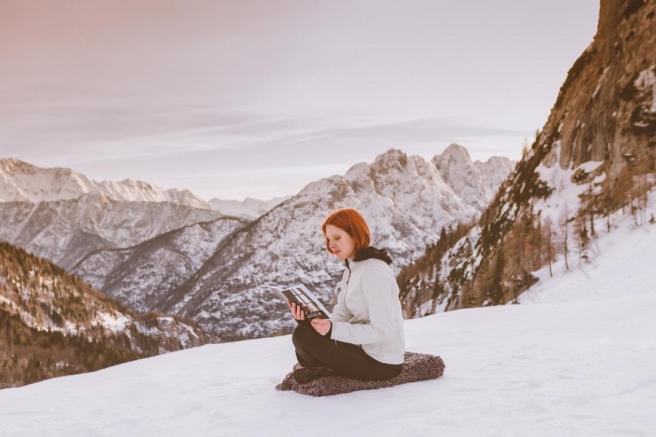
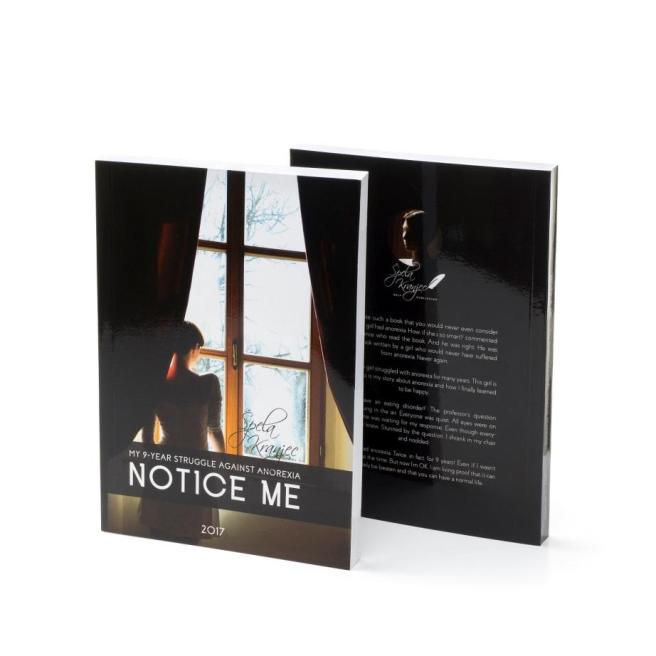
I wrote a book about my mission to save myself. And for this book, my brother and I are launching a Kickstarter campaign, NOTICE ME: My 9-Year Struggle against Anorexia.

Why? Because I know there are too many like me in this world, and this has to change. And because we want to show that we matter, that we have a mission in this world, even though I believed otherwise for many years.

Because I want to help you, I’m giving you opportunity, to start reading my book totally for free on this link: https://www.notice-me.net/free-chapter/.

Spela Kranjec is a mental health writer, documenting her 9 years of living with anorexia.

On Complex PTSD and my recovery: Guest post by Lydia for World Mental Health Day

ptsdlydia

Hi there, I’m Lydia a 20-year-old youtuber and film maker, I’ve been battling my mental health conditions for a little over five years. This article is about C-PTSD (Complex Post Traumatic Stress Disorder) and how I’ve found recovery, but first, what is C-PTSD?

C-PTSD, is a type of post-traumatic stress disorder that stems from repetitive exposure to a traumatic experience, it is also commonly diagnosed alongside BPD (borderline personality disorder), I was diagnosed with C-PTSD around 3 years ago after witnessing a suicide and multiple suicide attempts, without going into too much detail it was really hard, and has taken me until this year (2018) to even begin to process what happened.

So, let’s talk about recovery, there a massive misconception that it isn’t possible to recover from any type of PTSD, however it totally is possible to  find recovery. My recovery really got started this year when I made the decision to privately access EMDR (Eye Movement Desensitization and Reprocessing) which was without question the most beneficial type of therapy I’ve tried.

Following this there was a major incident in which my mental stability declined rapidly I was subsequently detained in a psychiatric hospital for a little under a month, following my release, I decided to take control of my mental health and help myself.

The first thing I did to help myself was cut off from everybody negative, which I realised I had to do, because I really was at a point where I could have reached crisis point if things didn’t change. I moved from one end of the country to the other, I blocked everybody’s number, Facebook and Twitter, it was a drastic move but so important and to anybody who struggling with their mental health I’d wholeheartedly recommend doing this, just cut yourself off from everybody negative, you don’t have to justify it, your health and welfare should be the most important thing in your life.

The next thing I did was go to my GP and re-start my medication. Sometimes you just need an extra push, psychiatric medication can’t change your life circumstances, but it can help you heal. This was a pretty big decision but it was one I needed to make.

The final thing I did was to take a break and find a hobby.  I went on holiday with my family, I started creating more positive content on YouTube while also documenting my recovery which has been one of the most helpful things I’ve done/ This is because I’m a part of a really supportive community on YouTube, and just reading comments like “you gave me hope” means so much.

The big move I made this year was to write and release my own book on the journey I’ve been on, and I wouldn’t change it because it’s made me who I am today.

After a few years of complete hell, I’ve turned my life around and I’m certainly in a much more positive place, things change and life changes for the better. My overall message for you all would be to never lose hope, just hold on because if you put in the time and work things will change, however don’t expect people to change things for you. Hold on and find recovery.


Lydia is a youtuber and film maker, talking about her mental health. You can see her channels here:

www.youtube.com/lydiisadinosaur

www.twitter.com/Lifewithlydia


Why Writing therapy helps : Guest Post by Amy Hutson, Counsellor

writing therapy
(image: Amy Hutson)

I first started using writing therapy without really knowing what it was when I was having a tough time at school. There was something valuable about getting my thoughts down on to a page, instead of spinning around my head that helped to make sense of everything.

Since training as a counsellor many years later, I came across writing therapy and took some training in how to use it with clients. I’ve found it can be very powerful, alongside therapy or even on its own.

But what is writing therapy?

Writing therapy or expressive writing is basically writing as fast as you can without worrying about grammar or whether it makes sense. It might sound a bit odd, but it taps into your unconscious thoughts and can be cathartic writing things down, as well as helping to come up with answers to something you’ve been struggling with.

In the 1980s James W. Pennebaker was the first person to research how writing therapy helps and he set the challenge of asking people to write about their most traumatic experiences over four consecutive days. The results of the study were staggering, people felt much better both mentally and physically. So much so that people made less visits to the doctor at about half their usual rate, after the experiment.

So how can you use writing therapy?

There are lots of different techniques I use with clients, depending on what issue it is we’re discussing or what I think might be helpful to them. But here are a few things you could try at home and if it ever feels a bit too painful what you’re writing, you can stop at any time or write about something that feels safer.

Journalling

If you’ve never tried writing in a stream-of-conscious style of writing in a journal, I’d recommend starting here. Some people like to buy a lovely notebook and find a quiet space to write, sometimes at the beginning or at the end of the day. Then the idea is to write about whatever comes to mind. Even if you start by just writing ‘blah blah blah’, you will probably find something insightful will come up if you just keep writing and don’t stop to think. If writing every day feels too much, you could try writing whenever you feel you need to – it could be you’ve had a really rough day and want somewhere to vent or maybe something incredible happened and you want to record and remember it.

The unsent letter

The unsent letter can be powerful when you want to say something to someone but feel you can’t. It might be you’re angry or upset with someone and you’re holding on to those strong emotions, because you feel unable to share them. So, you simply write everything you want to say to this person in a letter without worrying about hurting anyone’s feelings, because it’s not going to be sent. Writing it alone can really help, but it can also be used as a way of getting your thoughts together before confronting someone in a less emotional state.

If you want to take this one step further, you could write a letter back to yourself from the other person. The results can be surprising, as they can offer another perspective to the situation you might not have thought of.

Quick lists

Writing lists quickly and without editing them can be helpful and used in lots of different ways. Say you’re feeling anxious, you could start a list like:

I’m really anxious about:

  • My new job
  • Lack of sleep
  • Bad diet

Rather than just focusing on the anxiety, writing a list can sometimes help uncover what might be causing it, which you could then explore further in a journal, with a friend or a counsellor.

Another example of a quick list which can help if you’re feeling low is:

Three good things that happened today:

  • I got through the day at work despite little sleep
  • I met a friend for coffee
  • I went to the gym

Writing therapy really helps my clients and it could help you too!


Amy Hutson is a counsellor and writing therapist, who offers therapy in Hove and worldwide on Skype. For more details visit www.amyhutsoncounselling.co.uk


‘What its like wedding dress shopping as a curvy bride to be’ (focusing on mental health and body image) for Glamour UK by Eleanor


weddingdresses

(image: Glamour UK)

Here it is, my GLAMOUR UK article on being a curvy or plus size bride.

 
This one is understandably a very personal one but I wanted to investigate about body image, self esteem and how it affects mental health. As women we get taught what is ‘correct’ in terms of body shape and what isn’t- especially with the rise of social media.
 
I have put on weight over the years due to medication for my bipolar and its not easy. I am yet to go wedding dress shopping (going soon) but the brides I spoke to often had.
 
Thank you to the brides Rachel, Emma, Lauren and Reva for telling me their own courageous stories.
Thanks to the expert psychologists Nicola Walker and Jessica Valentine and Karen at Smashing the Glass wedding blog. And to my editor Bianca London at Glamour.
 
Happy reading, click here: 
 

What’s Family therapy really like? Guest post by Christine H

Family therapy 1
(image: Christine H)

Therapy is growing more and more accepted as a mainstream practice, rather than a scary, stigmatised ordeal. After all, it’s important to take care of mental health, and sometimes, we could all use a little extra help.

However, when it comes to any kind of therapy, it can still be scary. We don’t know what to expect, and we worry that we’ll be forced into something that makes us too uncomfortable. This can especially true in the case of family therapy. Often, family therapy is utilised when one or more family member confronts a serious mental health challenge (such as, for example, bipolar disorder, addiction, or major behavioural issues) that affects the rest of the family.

So, in order to dispel some of the misunderstandings surrounding family therapy, and to perhaps help people become more comfortable with it, here are some important things to know:


There May Be a Mix of Alone and Together Time

Contrary to popular belief, family therapy isn’t just going to be your family talking in a circle with a therapist the whole session. Well, maybe sometimes it will be. But other times, “family therapy” refers to a lot of different compilations of relationships within your family. Parents may talk with the counsellor separately, and then a child who has been the primary subject of therapy will talk with the therapist, and then perhaps the counselor will enable a conversation between the child and parents in order to share information that needs to be shared.

Additionally, family therapy is most effective when all family members are utilising therapeutic tools to get what they can out of the experience. For example, often in the case of addiction, support groups are available for both the person struggling with addiction, and for the family members who are affected by it. In these separate group therapies (which you can learn more about here) family members can gain new perspectives which will empower them to return to family therapy with the information they need to make it a productive venture.


Information that You Want Confidential Can Be Confidential

During all the mix-match of family therapy modules, many individuals are wary about sharing information with the counselor if they don’t want it to be shared with the whole group. And although this might sound kind of shady, it’s not just about keeping major secrets. Often, it’s about protecting family members’ feelings, or being embarrassed or worried about our own feelings.

Since family systems therapy is ultimately about repairing relationships and empowering healthy communication and cooperation, a counsellor can help individuals identify what information is important to share, and how to go about it in the best way. However, there are some challenges that are best talked out one on one with the therapist, and not in the group as a whole. It’s important for all parties involved to understand that they can still control the information that’s shared, and the way they choose to do it… or not.


It’s Not All Talk Therapy

Although sometimes all that’s needed in order to strengthen a family’s power to communicate and cooperate is an outsider guiding the conversation, other times talk therapy can be frustrating for families, as they’ll find themselves going around in the same old circles and arguments that they would on their own. That’s why most counsellors will utilise other techniques and approaches to achieve family goals.

For example, sometimes it’s useful to utilize experiential therapy, which could include anything from a cooperative ropes course, to role playing exercises. You can learn more about those options here.


Practicing Outside of Therapy Sessions Is Vital

One common assumption of family therapy is that the work will get done in therapy sessions, and it doesn’t have to change the way things are outside of therapy. Family therapy can only be successful when it creates changes to habits and systems within the family dynamic that aren’t serving individuals as well as they should.

Most of the time, a therapist will give family members assignments and goals that they can do–both by themselves, and as they interact with the rest of the family–in order to improve family relationships. Often, these are small habits in the way that we talk and the way we share duties in and out of the house.


This article was written by expert on family therapy Christine H:

christine

Christine is a professional writer and an avid reader who’s passionate about storytelling in any form. At any given moment, she’s in the middle of at least three books on anything from psychology to ninjas. Although she’s a marathon swimmer and enjoys camping in the mountains, she believes there’s nothing better than a carton of ice cream and a Dawson’s Creek marathon. She blogs about marketing here. Follow more of her writing on Twitter @readwritechill.


Autumn leaves and Mental Health tales. (by founder Eleanor)

autumnhyg

(image: http://www.thechakrahouse.co.uk/chakra-hygge-fairy-lights/)

I wanted to write this blog today because I have been reflecting. Over the years, I have come to really love the Autumn (Fall) season, despite being born in summer. Its cosy and calming at times, however these months can bring on some anxiety again for me.

I think that we are all human and are affected by the changing seasons. I know that my bipolar goes in phases, but is largely controlled and stabilised by medicines. However, sometimes hormones can make me feel lower at times of the month or life events can make you feel a bit sadder than normal, and in some cases, provoke depression.

My anxiety arrives in the form of morning panic and I can find it harder to do certain tasks. However, I am lucky that I am not depressed currently but the anxious thoughts are getting worse again.

I will worry about being around crowds, travelling far or socialising en masse with people I havn’t seen for a while. I live within a community where we all gather together for religious festivals and it can be harder to do this when I am more anxious. I particularly find early mornings hard- and don’t want to leave the house before 10am usually!

Working from home is both a blessing as I can work my own hours but I go out less. I am really trying to work on going out more- even down the road, especially before it gets too cold and dark.

Despite the increase in anxiety in the past few days, I am feeling thankful. There are so many good things to look forward to. There are so many exciting projects I can be a part of. When one door closes, I know that another will open.

I am still writing my book, still running my blog and have some articles being published soon. I also do social media management. I hope that my career will continue to diversify and bring joy.  I also need stability and the life of a freelancer, though fulfilling at times, is never easy.

There is a lot to be grateful for- family and friends, my fiance and life- despite the fears, anxiety and catastrophising that I do at times and am trying to limit. Positive mindset is so important- I am working on it!

Autumn can make us feel sadder or more anxious, or cause other mental health symptoms.  However, like now, it can also feel comforting- as I write on my computer, sipping a cup of tea as the darkness is falling. (Is it too new age of me to use the word ‘hygge’)?

As the leaves begin to fall and the frosts come its so important we find our lights in the darkness.

How are you doing? Let me know below!

Love,

Eleanor

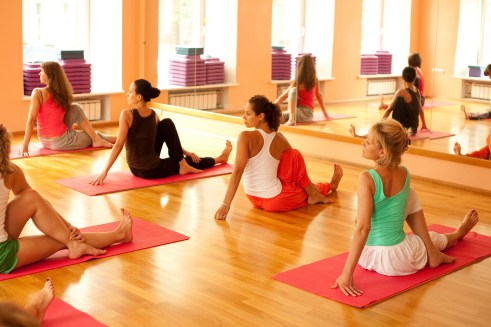
7 reasons why 30 days of Yoga enhances your lifestyle by Meera Watts

yoga

You are probably fully aware of how beneficial yoga is for your mind and body. When you commit to it for 30 days, you will really begin to feel those benefits.

A practice like this is known as sadhana in Sanskrit, which means “dedicated practice.” You will definitely become more flexible and release tension on a daily basis.

The benefits go much deeper than this though. All aspects of your life will improve. You will mentally feel better about yourself just for the effort of getting on the mat every day. When you feel good about yourself and take action for your own self-care, life will get better for it.

Here are 7 reasons why 30 days of yoga will enhance your lifestyle.

1. You are More Able to Relax

When you’re able to relax, you can enjoy little moments in life far better. Yoga has been proven to reduce levels of cortisol by relaxing the central nervous system. Poses, or asanas, in yoga, will help relax all the tension in your body. You begin to regulate your heartbeat when you do yoga daily. This helps you to deal with stress far better as well.

If you have problems with sleeping because your mind won’t shut down, yoga can be beneficial for this as well. Chronic insomniacs have been able to break the cycle of sleepless nights from starting a daily yoga regime.

It helps to calm the mind and body. You might even want to do a few relaxing poses before going to bed.

2. You Feel Better About Yourself

It’s easier on your body to do yoga for 30 days straight as opposed to weight training or other intense exercises. It might be hard at first but the progress you make in the practice will improve how you feel about yourself.

Whatever your reasons are for going through a 30-day yoga practice, you will get a sense of purpose. This sense of purpose will make you feel good about yourself. Being dedicated to something and sticking to it can create a habit of commitment within you. You will have a greater sense of trust in yourself as well.

It starts with 30 days of yoga but you’ll likely move onto do more yoga or other types of physical activity. Doing something active daily is good for the mind and the body. Once you get into the habit, you’ll always want to improve.

3. Your Body Will Become Stronger

Although yoga wouldn’t be considered a direct way to lose weight, it actually can. You don’t burn a lot of calories but you do gain more muscle. Muscle eats fat so it is an indirect way to improve the body.

Doing yoga for a while 30 days will help your metabolism so you’ll burn fat more easily. Your weight will normalize through yoga because it restores hormonal imbalances. You also become more mentally stable when something arises and you feel stressed.

You’ll hopefully be able to manage the ebbs and flows of life because you’re more centered.

4. Better Posture

As you’ll be doing yoga for 30 days straight, you’ll be able to properly counteract bad posture. This will be a noticeable improvement.

As you stand in Mountain Pose, you’ll be pulling your shoulders back which will probably feel uncomfortable for a few days. As you continue with your practice, you’ll notice that it’s easier to stand with your shoulders back.

You’ll be focusing on your posture and how your body is functioning, which will help you focus on it while you’re off the mat. Many of the poses stretch out the areas of the shoulders and back that are compromised from slouching.

5. Mindfulness Makes You More Conscious

You may not realise all of the things in your life that you’re grateful for. Most of us just live every day and don’t really think about we have. We think about what we don’t have, what we want, and other things.

Mindfulness is a large part of the full yoga picture. It is where we let go of the ego mind, which is that inner chatter you’re hearing all the time. When you’re present in the moment of now, there can be no depressive or anxious upsets.

This allows you to open up to what is happening for you right now. When you’re more conscious, it’s easy to appreciate moments, you are more easily grateful for what you have. You become happier and more at peace.

Also, you’re not missing out on your life. It’s unravelling in front of you and you are there with it. The conscious thought brings a great deal of fulfillment into your life while eradicating self-critical, worrying thoughts.

6. You’ll Become Better at Breathing

Breathing is important for the health of your physical and mental state. When you get anxious, you will experience a shallow breath. This makes you feel more anxious. If you can learn how to breathe deeply into your lungs, you can calm yourself down instantly.

During yoga, you will probably feel very relaxed so you can safely hone those deep breathing skills. Then in times when you need it, you will be able to automatically breathe into your belly.

7. You’ll Be Able to Focus Better

Yoga sends a lot of oxygen to the brain, which helps to promote mental functioning. In addition, the lack of anxiety allows you to think more clearly. This can help you in your work life with productivity or in running a household.

When you’ve completed your 30 days of yoga, you will know that your life has changed. You have trained the mind and body to work in the most optimal way. You will see the benefits that manifest into your outside life and how it enhances the lifestyle you’re living. You’ll be fit and feel generally happier. Yoga can teach us a lot and you will understand this when you commit to the practice.

Meera Watts is a yoga teacher, entrepreneur, and mom. Her writing on yoga and holistic health has appeared in Elephant Journal, CureJoy, FunTimesGuide, OMtimes, and others. She’s also the founder and owner of Siddhi Yoga.

Website:  https://www.siddhiyoga.com/
Youtube: https://www.youtube.com/user/siddhiyogaacademy

Instagram: https://instagram.com/siddhiyogainternational

Pinterest: https://pinterest.com/siddhiyogainter

Twitter: https://twitter.com/meerawatts

LinkedIn: https://www.linkedin.com/in/meerawatts

FB Page: https://www.facebook.com/siddhiyogateachertraining