How to Manage Bipolar Disorder in the Workplace: Guest blog by Ralph Macey

bipolarwork

(image: bphope.com)

People with bipolar disorder face a major problem in maintaining a good job performance at work due to frequent mood shifts (from high moods to extremely low moods). High moods are characterised by mania and hypomania. On the other hand, low moods are characterised by depression. These mood shifts create several types of challenges in the social, professional, and personal life of the people.

Bipolar disorder can make it very difficult for a person to get or keep a job especially if the symptoms are hampering day-to-day functioning, and if they also have anxiety.

In a recent survey, it has been found that 88% of the individuals with bipolar disorder face problems in maintaining a decent work performance. Around 58% of the people have stopped working altogether.

It’s a fact that bipolar disorder brings many challenges that can hamper work productivity. However, qualified psychiatrists specialising in bipolar disorder say that it’s possible to get and maintain a job while having a bipolar disorder by following a few tips. Let’s talk about them today.


How to get and maintain a job with bipolar disorder

1. Don’t volunteer to disclose your medical information to the employer during the interview. Employers have full right to decide if you can do the job properly. But they can’t ask confidential questions to you.

2. As per the Americans with Disabilities Act, (and other disability legislation around the world like her in the UK), employers can’t force you to give a medical exam or check your medical records. They also can’t ask you questions regarding your medical history. Moreover, this Act forbids any kind of discrimination on the basis of perceived or actual disability. So it’s better you read the rules and regulations of this Act before going for a job interview.

3. Try to avoid talking about your past. Instead, talk about your current capability of doing a job properly.

4. Ask about health insurance after getting a job. Just review the benefits information before accepting the job officially.

5. If your mental illness becomes an issue for the employer once in the job, then bring a letter from your psychiatrist that gives a general outline of the treatment you’re undergoing. Request that the psychiatrist issues a letter where it’s clearly written how much you can cope with at work. You can read the letter before giving it to the employer. 

How to keep a job with bipolar disorder

It’s a myth that you can’t be successful at work with a bipolar disorder. There are several things you can do to control your mood swings and manage your work. Let’s talk about them in detail now.

1. Take medicines as instructed: Even if you’re extremely productive during a manic high, don’t skip your medicines. That is not advisable as you can become unwell too with your mania.  Don’t stop taking medicines even when you feel well for several months. Remember, medicines keep all your symptoms under control. When you stop taking medicines, your symptoms can reappear and aggravate your mental illness.

Bipolar disorder medications have some side effects. Some medications cause drowsiness. This makes it quite difficult to focus on work. Speak to a psychiatrist specialising in bipolar disorder about this issue if you feel too sleepy at work. Ask if you can change the time you take the medication. Learn about the various strategies to combat drowsiness so that you can give your 100% at work.

2. Relax a little bit: Take short breaks between work regularly. Take a short walk during the lunch break. Listen to music that uplifts your mood. Take deep breathing. All these things help you to relax, especially if you are low or have anxiety .

3. Lead a healthy lifestyle: Exercise regularly to keep your mind and body fit. Eat healthy and nutritious food. Have adequate sleep at night. If possible, try to sleep for 8-12 hours at home. Try to avoid eating unhealthy food. A healthy lifestyle can help you manage bipolar disorder both at home and work, by making you feel at your best.

4. Organise your tasks:   Bipolar can at times interfere with work functioning.This means your mind may not cooperate with you on a regular basis. Try to organise your tasks. I

Create a ‘to-do’ list on the Google calendar and check if each task has been completed. Whenever you fail to finish a particular task on a specific date, move it to the next date on the calendar. This way you’ll remember about the unfinished task. Divide big projects into small tasks. It will be easier for you to manage them.

If you are struggling, you can speak to your work HR if they are understanding.


Should you inform your employer? The eternal dilemma

Let’s accept it. There is a social stigma attached to mental health, however many employers are becoming more understanding and the stigma is lessening. Your medical information is something confidential and private. Obviously, you may not want to share it with everyone. You don’t need to talk about your mental health openly at work if you don’t want.

However, if your boss or line manager is cooperative and a good human being, then you can have a conversation with him or her. When you need to take leave for doctor appointments, your boss will understand and give you a day off without issue.


Conclusion

Don’t panic. Don’t feel that you’re less than anyone because of your bipolar. Your mental disorder doesn’t define you. Your work is not the only thing you have in your life. Spend quality time with your friends and family and volunteer to help others.

If you have a good conversation with your employers and/or your doctor/ occupational health, you may be able to manage at work.

The Mental Health Benefits of Yoga: Guest post by Manmohan Singh

yoga1

(image: https://www.gaia.com/series/yoga-every-day)

Mental illness is like any other illness in the body. With Yoga, it can be treated and helped to heal. Yoga encourages mental fitness and healing of the mind.

Living in a modernised world, many of us still have conformist ideologies. Mental illness  is misinterpreted. It is often a deep-rooted issue, which, if not helped, can become life-threatening. Day-to-day stresses and heartbreak can lead to depression and other mental illness. If the condition becomes severe, it can lead to self-destructive tendencies, including self harm.

There are many ways (meditation, therapies, etc.) to prevent and help mental illness, with yoga being one of the most natural and safe options. According to many studies, it is confirmed that Yoga has the ability to relieve stress and anxiety and reduce mild depression and other mental illnesses.

So, let’s see the amazing mental health benefits of Yoga:


Calms The Nervous System

Yoga has the power to calm the nervous system and reduce anxiety levels. It makes you enter into a more relaxed state, and gradually, you move from flight or fight-to rest and digest mode (or move from the sympathetic nervous system to parasympathetic nervous system). Yoga reduces stress, anxiety, depression, treats insomnia, and other kinds of health issues.

Makes You Self-Aware

Yoga practice helps to ignite the sense of Self. Through yoga, you know yourself better and form a deeper connection from within. Yoga helps build self-trust, increases self-awareness that helps in making healthier choices- like eating healthier, living the right lifestyle. You learn to accept yourself, develop stronger willpower, bring your consciousness back to the present, feel more confident, and gradually realise your self-worth.

Helps Mend  Relationships

Emotions and feelings contribute a lot towards ones mental health. A traumatising incident, heartbreak, death of loved ones, and many other day-to-day relationship struggles, can affect our mind and lead to mental illness.

Yoga ignites awareness and not only helps us improve our relationship with the Self but with others as well. When you form a positive relationship with the Self, you tend to deal with others in the same manner. A healthy relationship helps to maintain the overall mental well-being as well.

Reduces Inflammation Related To Genes

According to a study, it is proven that 15 minutes of yoga practice or relaxation techniques switches off the genes that are responsive to stress and inflammation. With the modern world, stress is something that is often found. This stress leads to various mental health conditions. Our body is designed in a manner that it has the ability to reduce stress and this mechanism is called the ‘relaxation response’. With yoga relaxation techniques, you can easily trigger the stress reduction ability.

Yoga practice is the best way to fire your body’s built-in mechanism that helps mental relaxation. 15-20 minutes of yoga practice triggers the biochemical changes in the brain cells and protects from stress and anxiety.

Yoga Boosts GABA Level

Our brain is filled with receptors and GABA or GABA receptors or gamma-aminobutyric acid is linked with anxiety and mood disorders. When the brain drops the GABA activity, the mood of a person becomes lower and they start feeling more anxious.  

With the help of yoga practice, you can boost the GABA level. Practice yoga for an hour daily to get positive results.

Reduces The Effect Of Traumatic Incidents

Post Traumatic Stress Disorder or PTSD is a serious issue that people face after going through a traumatising or negative situation, shocking or terrifying experiences. People in this condition frequently experience flashbacks and nightmares of the situation they have had come across. With yoga, a person can help himself come out from the situation and help the mind.

Improves Concentration And Boosts Memory

Sometimes, our brain finds it difficult to do or concentrate on the day-to-day tasks. Yoga practice has proven effective in boosting memory and improving concentration and also clears the mind and calms the senses.

Prevents Mental Health Disorders At Every Age

A mental health condition can occur at any age depending on the situation you are in or what you’re going through. According to a study, people of age group 18-35 are at high risk of mental illness and have periods of severe stress.

These issues can also occur during adolescence, due to various reasons, including genetics but also envrionmental- family disputes, fights, peer pressure, body shaming, academics etc. Teenagers also go through many physical, mental and emotional changes.

Yoga practice helps elevate the mood, reduce stress and anxiety, prevent depression, control anger, and ignites mindfulness.

People as they get older can also face these mental health issues due to loneliness, change of the environment, alcohol abuse, dementia, loss of loved one, long-term illness, physical disability, poor diet, etc., Yoga can be beneficial to health.

Yoga Asanas To Practice For Mental Health- Balasana, Viparita Karani Asana, Uttanasana, Adho Mukha Svanasana, Setu Bandha Sarvangasana, Bhujangasana, and Shavasana. Also practice Pranayama like: Kapalbhati, Anulom Vilom and Bhramari.

It is rightly said that a healthy mind breeds a healthy body, and vice-versa. It is important to have good, positive mental health for complete fitness and healthy, happy living.

Practising yoga promotes better health, try it today!


Author Bio: Manmohan Singh is a passionate Yogi, Yoga Teacher and a Traveller in India. He provides Yoga Teacher Training in Rishikesh, India. He loves writing and reading the books related to yoga, health, nature and the Himalayas.

Website: https://www.rishikulyogshala.org/

How to Enjoy the Holidays after Addiction: Guest blog by Alek Sabin


Holiday After Addiction 2 (2)

Socialising during your recovery always requires some effort, and life after rehab always takes some serious adjusting, but it can be especially difficult during the holiday season. The holidays are a time when you reunite with family and friends and spend time at seasonal social gatherings. You may encounter friends from your past times of using, people with whom you have impaired relationships, and social situations that tempt you to compromise your sobriety. In short, despite being one of the happiest times of the year, the holidays can also be stressful and dangerous for sobriety.

While the holiday season is a season of joy and giving that ought to be celebrated, it is important to be on your guard in order to protect your newfound sobriety. In case you find yourself or a loved one struggling to navigate recovery from addiction this season, here are some tips for protecting the sobriety you’ve worked so hard for during the holidays…


Know Your Triggers

Take an inventory of what your triggers for substance use are. In the past, did you use when you were hungry, angry, lonely, or tired? Was substance use an outlet for stress? Do you experience cravings most when you are bored or sad?

Whatever your triggers, be sure to take the necessary steps to keep those triggers at bay. If stress is a trigger for you, for example, practice regular stress relief techniques like meditation, even when you don’t feel particularly stressed. If you are tempted to relapse when you are bored, on the other hand, make it a point to plan out your days with wholesome activities and to have a go-to activity for those times when you truly do have nothing to do.


Use Your Support System

It is so crucial to set up a support system within your social circle during recovery, and the holidays are a perfect time to take advantage of that support system. Talk to members of your support system, especially family members and friends with whom you may be attending holiday gatherings. Tell them about what struggles you are facing and what you are worried about this season. This will help them remain mindful of you and allow them to help you at those times this season when you need it most.


Don’t Be Afraid to Call for Help

Your support system can carry you through the most difficult times of the holiday season. If you are worried about temptations to pick up alcohol during a particular holiday gathering, for example, a friend or family member can refrain from drinking with you or stay by your side throughout the evening to help hold you accountable. If you are worried that spending time with a particular group of people might tempt you to use again, make alternate plans with a friend or family member who understands your recovery.


Consider Whether an Event is Worth It

Holiday gatherings can be stressful for a variety of reasons. You have to answer questions about what you have been up to and what’s new in your life. You may encounter people with whom you used to use during times of addiction. You may find yourself around loved ones with whom you are still trying to repair harmed relationships. There are all kinds of reasons to be stress about attending a holiday season event, and for those occasions when you think the stress may be too much, it’s important to recognize when it may be better to miss an event.


Make a Plan for Parties

If you do feel that a holiday party will be low-risk enough for you to attend, be sure that you still come with a plan. Bring your own non-alcoholic party drink to sip on if you know alcoholic drinks will be present. Drive yourself so that you can duck out a bit early and have more control over when you leave. Plan out what you will say any time someone offers you a drink at parties. Try to envision which scenarios may arise so that you can be prepared for them.


Wear Your Sobriety on Your Sleeve

Finally, make the decision to own your sobriety this season. When someone asks you what is new in your life, go ahead and tell them about your sobriety (only if you feel comfortable doing so, of course.) Talk to them about your journey thus far, in as little or as much detail as you desire. Share what you are looking forward to as you continue your journey. When others see you talk enthusiastically about your recovery, they are sure to respond with similar enthusiasm, offering a shoulder of support and becoming advocates of your recovery.

12 Tips on how to Accept Yourself: Guest post by Spela Kranjec

I know that everyone suffering from an eating disorder wants some magical cure. But there is no such cure. And I can’t give you one, even though I had anorexia and searched for such a cure for whole nine years. But I can give you some useful tips that helped me – and they might also help you.

I also described my entire experience in a book for which I just launched a Kickstarter campaign which you can visit here :https://www.kickstarter.com/projects/spelakranjec/notice-me-my-9-year-struggle-against-anorexia.

I’m sure you’ll find something that will help you find your own happiness.

spelak

Here are my 12 tips:

  1. Find your motivation

After I overcome anorexia the first time, I relapsed a few years later – and it was even worse. Thinking about it today, why it happened, I’m convinced that it’s because I didn’t want to get better the first time. I got better because my parents made me. I needed to find my purpose to reach recovery.

Today I am aware of how important it is that you do something because you want to do it and are motivated to do it. I discovered myself that finding motivation when you’re at the lowest point in your life is far from simple. But I’ve also proven that it is possible.

  1. Don’t give up 

Know that you will have moments where life is really difficult, so get ready for them. These are turning points in your life, so you can’t give up.

  1. Read a motivational book and attend a workshop on personal growth

There are many books and workshops on the subject of personal growth – some are more technical, while others include personal experiences of people who faced a similar situation to the one you face.

These books are filled with advice that could be helpful. Furthermore, reading these books will help you realize that you’re not alone.

  1. Go shopping

You don’t actually have to buy anything – you can just go window shopping. Try on a gown, browse free samples in a cosmetics shop, go to a furniture store and find the most comfortable sofa – anything to distract you and make you happy.

  1. Spend time in nature

If you don’t like big shopping centres and prefer to spend time in nature, take every opportunity to do so. I’m one of such people. I love to climb mountains, spending hours sweating to reach the top, where I can enjoy a wonderful view and a delicious sandwich. This makes me forget all my worries, and I come home a new person. And afterwards, I can look in the mirror at home and tell myself, “Damn, you’re not too bad!” 😉

  1. Socialize

Human beings are social creatures, and solitude has a negative effect on us. We need love, we need laughter, and we need to feel accepted. Without this, it’s inevitable that your thoughts, stuck as you are between four walls, will become occupied by the negative. And suddenly everything will become negative – even you. So don’t let that happen.

  1. Write a diary

If you have problems sharing your problems with others, find a new way to express yourself – maybe start writing a diary. You can also write down a list of positive characteristics that you like about yourself.

  1. Listed to music / sing / draw / be creative

Find your creativity and keep your mind active. Boredom has a similar effect on us as loneliness – an opportunity for pessimism to creep in.

  1. Do something nice for others

I spend my time with my grandmother. I knew she was lonely and that a cup of coffee shared with her granddaughter meant a lot to her. It was heartwarming spending time with her in a cafe, listening to her talk, because I could see how important that moment was for her.

  1. Find something that will make you feel useful

You’ve certainly done something for which you received praise. The feeling was phenomenal, right? Remember what you felt at that time – a feeling of pride, success, joy. So make sure there are more moments like that.

  1. Visit a counsellor

If you’re feeling completely down and think you can’t do it on your own, seek help. There is nothing to be ashamed of. I sought help from a psychiatrist. Even though I was ashamed at the time, I am so happy I did it. Ultimately, it helped me become happy and well again by working with a professional.

  1. Talk about your problems

Never shut yourself off from others and isolate. That’s the worst that can happen! If you isolate yourself and don’t talk about your problems, negative thoughts may get worse. So find someone you trust and share your feelings – you will feel much better!

Most importantly, never give up! I’ve proved that it’s possible – and so can you! To find out how I did it, visit https://www.notice-me.net/free-chapter/.

spelak2

Winter blues, Depression and Social anxiety by Eleanor

caringcrate1

(image : http://www.caring-crate.com)

In the past few weeks, I have found that all I want to do is stay inside, under a cosy blanket in my little nook on the couch, reading lots of good books or watching something good on TV (by good I mean my favourite reality shows at this time of year!). I have been practising a lot of self care activities as I havn’t been feeling at my strongest or happiest this week. I think I may have seasonal depression but I am not sure if its the winter blues – probably the winter lack of light combined with my bipolar brain chemistry.

Sometimes I  will phone or whatsapp my friends, I will take long bubble baths and sing in the tub (feeling like some kind of surreal movie like Amelie) , I have discovered a new love for the Body Shop seaweed clay facial mask (it leaves my skin so soft and moisturised and helps my spots). I have wrapped myself in my pink, Beauty and the Beast blanket (without make up on) and just enjoyed the freedom of being. Of resting and being in the moment. Of being more mindful.

There have been times when this has become a bad thing. I’ve spent several nights this week on my own and there have been days where my anxiety has increased and I havn’t wanted to go outside. This is because its cold and dark (winter here in England), I don’t want to interact with random people or I just don’t want to be out in this weather when I could be warm and cosy at home.  I am an introvert (who also loves people). My introvert side craves time on my own but this is also part of my social anxiety.

However, every anxiety win.. like going to a gig in Holborn with my Dad and using the Tube (I forgot about the lack of personal space) or hanging out with my fiance or friends without cancelling on them, has been good. In truth though, I have had to cancel a lot of plans this week and luckily have very understanding people in my life. I hate letting people down but sometimes I can’t cope- the adrenaline pumps and things feel too much for me, too overwhelming.

I have felt overwhelmed and mildly depressed this week. However, I am coming to the slow realisation that this is OK. Its alright to struggle and to want human contact but also to find it overwhelming too.

I do need to get more fresh air though, exercise more and be healthier. Part of the lure of being inside is that its relaxing and ‘safer’ but the outside world is not as scary as my head decides it is when its cold and dark in winter.

I think I have mild seasonal depression- so its really important I do all I can to work with that and go outside my comfort zone- when all I really want is to be a doormouse surrounded by those I love and sometimes curled up on my own!

I am going to start talking therapy again soon as theres been a lot of stressful things going on, so hopefully that will help too.

How do you help your seasonal depression?

  Eleanor x

Coping with the lows and Celebrating the highs by Eleanor

depressionblog
(image: the chic life)

I have been wanting to write about everything for the past week but felt like I have been swept up into a hurricane. There has been a lot going on- some good, but a lot of bad in my life and I have been trying to process it all.

As most of you know, my article on bipolar was published in the Telegraph with thanks to an amazing editor who believed in my story. The Telegraph is a high profile newspaper here in the UK and this was a big platform for my story to be given. So I am grateful. I will put the link to it in the articles tab soon.

I received many positive messages from people with bipolar and psychosis- who could see themselves in my experience and were pleased and appreciative that I shared it. Also those who are carers for people with it got in touch too. I had a lot of support from friends and family, which was important because I started to feel quite vulnerable in revealing so much of what had happened back in 2014 when I was hospitalised. It isn’t easy- even though I want to share it to help people.

As well as the positives, I did receive a few unwanted and negative messages- mainly from ignorant people who don’t know me. I don’t want to give the Trolls any air time here, except to say that the Telegraph were fantastic and stepped in. The comments that were sent weren’t nice but it is a risk when  revealing such a complex mental illness to the world- its an emotive topic and some people can be cruel too. However, the positives outweighed the negatives.

My article was published when I was in Portugal visiting my grandparents with my Dad, Aunt and Uncle so having them  around to process it all was really helpful. Portugal was lovely to have the family time but hard to see my Grandpa unwell, though I was so pleased I got to see him. We also went to a very beautiful beach at Sesimbra, near Lisbon which was good to get some sun in November!

I have two close family members who are unwell at the moment with serious illnesses. As such with all the pressure of it all, I am finding that my mood is dipping and I have to practise a lot of self care- sleeping, reading, pacing myself. It could be that its approaching winter and less light, but I am feeling mildly depressed at times and sleeping more in the mornings, so I am watching my mood and trying to cope as best I can.

If it continues for a long period, I may see the doctor or my counsellor but I think its a reaction to everything happening.

Yesterday I received some really good news– which I will share in a few weeks time. I am so grateful for all the good happening and still planning for my wedding which is something positive to focus on too. Thank you to everyone who has been and continues to be there.

If you are feeling like me right now, a bit low/ depressed, tell people you trust. Don’t keep it in. Remember it can pass. And get support and help if you need it. My fiance, friends and family are helpful to me- confide in someone you can talk too.

I am trying to focus on the positives and celebrate the highs, while dealing with the lows. Thats life I think. Its not always easy but I will get there and so will you if you feel the same.

Eleanor x 


Flowers for wellness: Product Review on Posy and Posy

posyandposy1

(image: Eleanor Segall)

I am going to be starting to do Product reviews on the blog. I have always loved flowers, whether I am going out for a walk and spot them in gardens or whether I am receiving a bouquet from a friend or partner, they always lift my mood.

I was contacted by the wonderful Posy and Posy, a new monthly flower subscription box- ‘Creative Floral Recipe Box‘ where you can lose yourself in creativity in arranging different flowers. Each month has a different ‘flower recipe’ (different flowers) for you to enjoy and arrange.

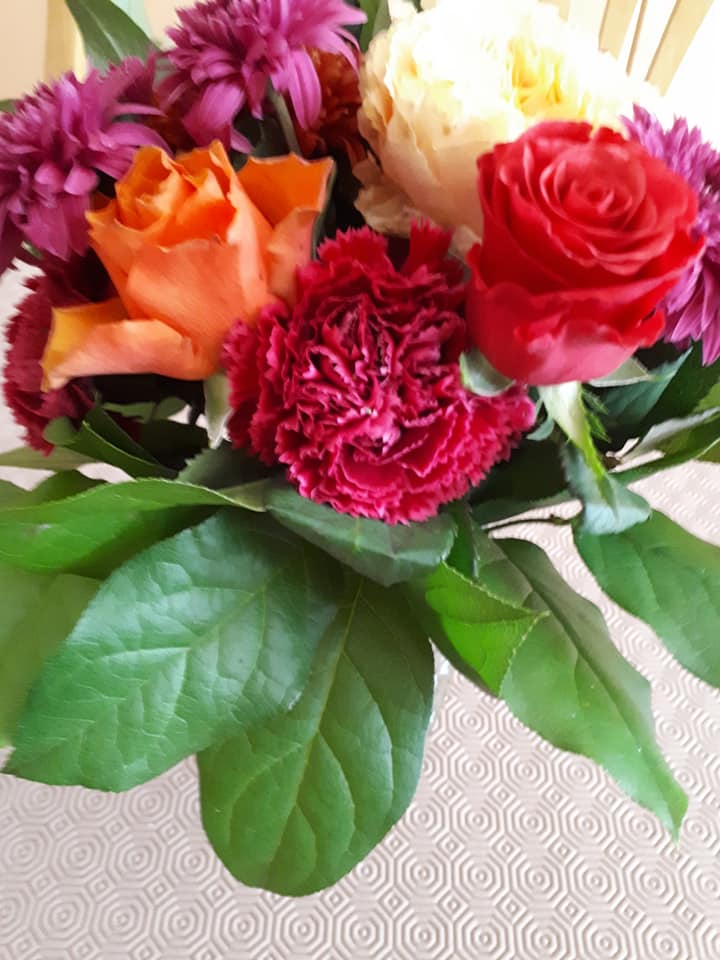
I was sent the above posy, recipe 006, which contains stunning deep pink, yellow and orange roses, pink crysanthemums and beautiful hellebore greenery. The result feels very autumnal and beautiful to put together.

The flowers arrived individually wrapped in a special Posy ‘cocoon’ ( a cardboard box with compartments to keep the flowers at their best). Each flower recipe also comes with a little booklet to tell you how to take care of your flowers and encourage you to arrange them in your own way.

Posy and Posy say, ‘Flower arranging doesn’t need to be old fashioned, fussy or high end- it can be fun, freeing and inspiring.’ They see it as a creative art form- a floral service for the creative soul.

I really enjoyed getting creative and arranging my flowers (after cutting the stems and putting them in a low vase in water, with their plant food that comes in the Posy cocoon).

They are bright, work well together and truly brightened my day.

Posy and Posy deliver to home and work with delivery slots available via their website.

Each flower delivery is different and you can choose what you would like. You can
also send flowers as a gift to friends.

I was impressed by the way the flowers were cared for and delivered and the creative mission of its founders.

posyandposy2
(image: Eleanor Segall)

So I would recommend a posy from Posy and Posy. Its always lovely to receive fresh, beautiful flowers and lifted my mood. You can also get creative and style the flowers how you would want.
Prices start from £28 a box and available at http://www.posyandposy.com

posy1


(This article was an unpaid product review)


Mental health, work and the realities of freelancing: by Eleanor


mentalhealthquote

This article was voted for on my Facebook group last month but as always, there has been a lot going on and I wanted to give this one the time it deserved.

Mental health and work is a huge topic. Mental ill health affects peoples ability to work at times- depression, anxiety, panic attacks and other symptoms can stop us from working and disrupt careers. It is one of the biggest causes of sickness, with people being signed off work by their doctors- from stress or other mental health issues. However, some  people are able to manage their health symptoms and work through it. For me, and many others, I had to switch to self employment, in order to work more effectively.

I started off at uni studying English Literature and Drama at Goldsmiths here in London, got a 2:1 degree and then worked for a year as a teaching assistant in a primary school. I decided then that it may not be for me and I applied to study a masters degree in Applied Theatre at the Royal Central drama school. This was amazing and eye opening- but I was suffering from anxiety and panic attacks (possibly part of my bipolar disorder or just general..).

The anxiety attacks were debilitating for me at times- but I managed to get my Masters. However, I have often found that certain work places are far less forgiving of people with mental health issues- if they are still symptomatic.

I always thought that I would work as a teaching assistant and become a Reception teacher. I worked in several schools and I loved working with the children. I also tried working for a mental health charity. However, I found that my anxiety was getting worse and worse (despite taking medication and having therapy) and that the career just wasn’t working for my health.

So,  I decided to go self employed and become a freelance writer. The perils of freelancing can include: late payment of invoices from clients, having articles pulled at the last minute because the editor changes their mind, clients wanting you to write for free, waiting months for work to be published and some clients only paying on publication- so you don’t get a regular ‘salary’. Income is less stable, its harder to trust people and that you are often sending out pitch emails for writing work- only to get ignored, as editors are often busy with their in house team and work.

The pluses of freelancing: some regular gigs (Thank you Metro!), being featured in Glamour UK is a huge honour and in Happiful and Cosmopolitan/ Elle. I have written a lot this year and I am grateful every day for the editors who have taken a chance on me and commissioned my work.

However, its a balance. Yes working from home is great. Yes setting own hours is good. But, it means that income is less stable for sure. I have far less anxiety and panic working like this. Thats a major plus.

I often feel bad for not earning enough. Or because you have to develop a thick skin to deal with rejection.

In terms of mental health at work- there is SO much that needs to be done. Sickness records mean employees are still penalised, despite their genuine need for a mental health day. Each work place should be trained in signs to spot and have a mental health first aider. Some work places are disability friendly, but many just see you as a worker and if you have a mental illness, will only tolerate so much time off.

I don’t really know what to suggest if you are also in my position. In the UK, we have the benefits system which has been very important for me due to my illness. However, I would love to get to a stage where I can earn enough not to need it.

If you are struggling with your mental health at work, speak to a trusted colleague. HR will not always be supportive – it depends on the organisation, but don’t suffer alone. Just be aware that if you are off sick a lot, some companies will see you as unreliable. This may be 2018, but outdated attitudes at work still exist unfortunately.

There are positives and its important to know  there are good, wonderful people out there. I have met many. 

What is your experience?

Eleanor x

Finding Purpose- my journey to survive Anorexia. Guest post for World Mental Health Day by Spela Kranjec

spela1
(image: Spela Kranjec)


Please note; Trigger warning, this post discusses Anorexia and thoughts during it. Read with care.

Do you sometimes feel useless and unneeded? You wake up in the morning, lethargic with the thought that you truly don’t know why this upcoming day would be important? You watch other people, everyone with some task of their own, busy and running around with determination. How is it that the world is passing you by? “Is it my fault?” you ask yourself. You become bogged down with these thought, only making the situation worse. You unintentionally focus on the thought that you’re not worth anything! And you forget about everything that you’re good at, things that make life worth living.

You have destroyed yourself. You pushed yourself down into nothing. What’s worse is that you believe others see you as such, too. That’s why you need something that has a purpose, as otherwise you soon lose a will to live. The human mind is a very complex thing, and when it wants something it’s willing to take it by itself if you fail to provide it. But it takes the thing that it finds first. It doesn’t choose. As the whole body is surrounded by negativity, it latches on to that – and that’s how I developed anorexia.

Yes, I was a young girl who couldn’t find her way in this big world. I tried to fit in, but I was rejected. I thought I was intelligent, but I had to try much harder than others at school to get an A. I believed a good job was waiting for me, but was disappointed to discover that there are so many other people in greater need. I constantly trained, but never made the team. I looked at myself in the mirror, but I never became a beauty. I saved money when others were spending it, but they now probably have more than me.

In all my drive to become something, to be something, I started disappearing. And I wasn’t even aware of it. My mind convinced me that I would be appreciated, desired, only if I were thin. Very thin. As I was willing to do anything to be accepted, I started starving myself. Very quickly, scales become my only friend, and the only daily task was to exercise and reject food. The more I succeeded in this, the greater power I had over my own life. I was becoming something. Finally!

It didn’t take long before I heard the first comments, “Špela, you’re so thin!” My heart leaped! All my hunger and the dizziness during excessive exercise finally paid off. Obviously, it really was my own fault. Obviously, all I had to do was try harder. With this victory, I really couldn’t stop. So I kept going. I wanted to be even skinnier, just in case I ever gain back some weight, so that things didn’t change back to their old ways.

But as I never really defined this limit of losing weight, this “just in case”, I never knew when to stop. So I didn’t. There was one other boundary line. A sort of point of no return, before which I could still come back. Back to that old Špela, still knowing that I matter, that I belong somewhere. I’ve passed that point some time ago, and I wasn’t even sure that old Špela ever truly existed.

I was suddenly in a situation where everything was confusing and unclear. Before, I never belonged anywhere, then the world was in the palm of my hand, and now everything was falling apart, even more so than at the beginning. And I fell apart… Anorexia finally conquered me.

Now I faced a truly difficult task, which required from me a tremendous amount of mental and personality changes. A task that would be completed once the world stopped passing me by, and I would walk in step with the world. A task to find recovery.

spela2

I wrote a book about my mission to save myself. And for this book, my brother and I are launching a Kickstarter campaign, NOTICE ME: My 9-Year Struggle against Anorexia.

Why? Because I know there are too many like me in this world, and this has to change. And because we want to show that we matter, that we have a mission in this world, even though I believed otherwise for many years.

Because I want to help you, I’m giving you opportunity, to start reading my book totally for free on this link: https://www.notice-me.net/free-chapter/.

Spela Kranjec is a mental health writer, documenting her 9 years of living with anorexia.

Suicide Prevention on Social media: Guest post by Dan Brown at MyTherapy for World Mental Health Day

helpme1

I recall reading a story last year about two teenage students from a town in Denver, both of whom lost their lives to suicide within two days of one-another.

In both cases, the students had made their intentions known on social media.

Countless similar stories can be found online. In many cases, such as the one above, people did attempt to reach out to those in need. In other cases, online cries for help were ignored or not taken seriously.

Teen Suicide Rates are Rising

Between 2010 and 2017, the number of teenage suicides in England and Wales increased by 67%.

In London, the figure is rising at an even greater rate, while a similar trend is occurring on the other side of the Atlantic, with the suicide rate of children and teenagers between 10 and 17 years old increasing by 70% in a decade since 2006.

The Role of Social Media in Suicide Prevention

While many believe social media is at least partially responsible for the rising rates of teenage suicides – due to matter such as cyber-bullying – it can be used as an effective tool for suicide prevention. This goes for any user of social media, not just teenagers.

The major platforms themselves are actively engaged in suicide prevention, but much of the onus is on individuals to respond should they encounter a post pertaining to suicide from a friend, family member, or anybody else.

Contacting the Emergency Services

First-and-foremost, you should not hesitate in contacting the emergency services if you believe someone’s life is in imminent danger. Any indications that someone is preparing to take their own life should be treated as a medical emergency. If need-be, contact closer friends or relatives of the person in question as well, to ensure help can arrive as quickly as possible.

In such situations, particularly if the person has made their intentions clear, the danger is obvious.

However, it is not always so easy to spot when a person needs help, or to differentiate between someone simply ‘venting’ after having a bad day and a more serious mental health issue.

The Warning Signs

Spotting the signs that a person may be contemplated suicide based on their social media activity can be difficult, given the absence of body language or tone of voice in many posts, especially those that are purely text rather than photos or videos.

However, there are some warning signs you can look out for.

  • Tone
    While tone of voice by not be present in a lot of social media posts, you will probably be familiar with the tone your friends and family members take on social media. A negative change in tone may be subtle or happen gradually over time, but it should not be overlooked. If you start to notice more posts that strike you as odd or out-of-character, it could be that person’s way of expressing negative emotions.
  • Signs of Anger or Lashing Out
    “Anger turned inward” is how Sigmund Freud described depression, a characterisation that is debated to this day. What seems beyond debate is that anger often coexists with depression, and that it can be outward as well as inward. Therefore, if you see someone reacting angrily or lashing out online, it could suggest they are struggling mentally. Again, this should be particularly alarming if it is out-of-character for that person.
  • Sad Posts
    Of course, sadness is the most obvious emotion to link with depression. When it comes to social media, this could be shown in sharing sad memes and pictures, or posts discrediting their own self-worth. Frequent posts of this nature could be a cry for help and should not be ignored.


It is also worth paying attention to the time of day the person is posting, as insomnia is a common symptom of depression. As such, regular posts late at night or in the early hours may be another warning sign.

Reaching Out to Someone You Are Concerned About

If you are concerned about someone’s wellbeing, raising your concerns with them is usually far from easy and must be done sensitively. However, many people struggle to talk about their mental wellbeing, be it through embarrassment, fear of ridicule, or any other reason perpetuated by the stigma surrounding the topic.

If you are the one to raise the issue, it can help break that barrier immediately.

There is also the myth that talking about suicide is a bad idea and could encourage a person to take their own life, which has contributed in making suicide taboo subject. Again, being the one to raise the topic, if appropriate, can help make a person feel more comfortable in discussing their concerns.

This article from Helpguide.org does a superb job of explaining the steps you can take in opening the dialogue.

Contacting Someone Closer to the Person

You do not have to be a close friend or family member to raise your concerns with a person. Given that we are discussing social media, you can even be the other side of the world.

However, you may ultimately decide that you are not the best person to speak directly to the individual you are concerned about.

That, however, does not mean you are unable to help.

Contacting someone closer to them – either physically or emotionally – clearly and considerately explaining why you are concerned, may encourage that person to bring the issue up. Perhaps they too have noticed the signs but were unsure whether to address them. Your message could be the push they need to do so.

You Can Help a Person in Need

It is quite likely that nothing in this article is new or surprising to you. However, many cries for help on social media go ignored. In the most tragic of cases, lives are needlessly lost. So, if you do find yourself in a situation where a friend or loved one is using social media in such a way, just remember: you can be the one to help. You may even save a life.


This article was contributed by Dan Brown from MyTherapy (free for iOS and Android).