Surviving Depression and Suicidal thoughts: a blog for Rethink Mental Illness

beyourownlight
https://www.rethink.org/news-views/2016/12/surviving-depression-and-suicidal-thoughts

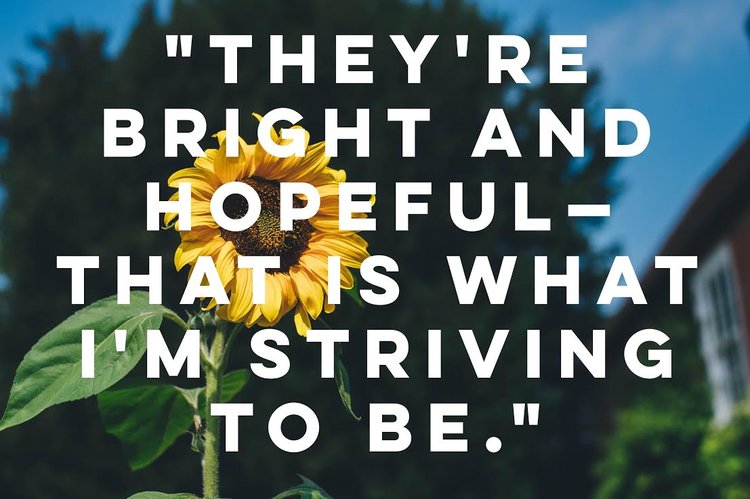
Thank you to Rethink for publishing my blog under a pseudonym, for the graphic and sharing my story of hope over adversity.

Rose is the blogger behind Be Your Own Light blog, which provides great articles about living with mental illness, from both herself and guest bloggers. Below she talks to us about how she has dealt with depression and suicidal thoughts. 

When I was 15 years old, I experienced my first depressive episode. I felt unable to leave the house or see friends as the depression brought about an increase in anxiety . My parents looked after me as best they could and I was taken to see an adolescent psychiatrist who put me on anti depressants coupled with therapy. I gradually got better again with time and managed to do well in my exams.

I was eventually hospitalised voluntarily after more periods of illness and at 16 years old, diagnosed with bipolar affective disorder. Understandably, the diagnosis changed my life. I am now 28 and have been taking medication since then. Not long ago, I survived a suicidal depression that I had in the winter of 2013, 6 months before I went into hospital.

At this time, It was apparent that for several years my medication was not controlling my low moods. I would get really depressed very quickly, feel overly emotional when stressed and felt like I had to hide myself away. I began sleeping too much to escape the inner turmoil and to get respite. Sleep became my balm and escape.

However, it was when I began sleeping from 9-5 pm with a quick break for food, not getting washed and dressed or answering my phone and not being able to get in to work, that the psychiatrist was called to the house to see me.

I remember crying and crying- in such pain in my mind. For me, the depression felt so chemical- I knew I needed to change my medication but I didn’t know why everything felt like ‘wading through treacle’. Why couldn’t I find the joy in life anymore, I asked myself? I just couldn’t cope with the painful negative thoughts and feelings and started thinking irrationally that I would be better off not here in the world.

These suicidal thoughts were extremely challenging to deal with.  I was so scared by them that I would tell my parents constantly how I was feeling. I wanted to get the thoughts out my head and so telling people became my salvation- I believe if I had bottled it up, I may not be here today.

Eventually, over time, my medical team worked together to put me on the right  medication- Lithium. The Lithium has changed and saved my life. My brain chemistry is stable, I no longer feel suicidal or depressed. I get up early in the morning and I want to do things with my day. This took a long time but to anyone feeling suicidal- please reach for help.

You can get better- it is your brain playing tricks on you with an illness. I want to spread a message of hope, recovery and survival- life can be dark but if you hold on there is hope. 

Surviving mental illness while practising Judaism

jewish1

This post is being dedicated to my friend Helen Brown who wanted to know how being an Orthodox Jewish woman works and is compatible with having a mental illness. How supportive were the Jewish community when I was ill and what does Judaism mean to me?

So:

Let me start by saying that I was born into Judaism and raised Jewish, in a Modern Orthodox, United Synagogue Household- meaning I keep Kosher, rest on the Sabbath and observe all the festivals, learn and pray when I can. I also practise ‘tzniut’- dressing modestly and endeavour to live my life with the positive values of the Torah (Old Testament) bridging modern society .  I have a great love for and appreciation of Judaism and I have found that it has kept me going through many difficult times.

Prayer in particular has had a very important resonance in my story. When I was ill in hospital with a bipolar episode two years ago, my friend brought me a tehillim prayer book- the Book of Psalms. Another friend brought me a book of strengthening hopeful quotes from Rabbi Nachman. Every day, I prayed to God to release me from my illness, to give me strength and to give me a full and complete recovery. I prayed that the Doctors and nurses would support and help me, and they did. I found freedom through my religion, even if I couldn’t always understand why this particular test was in my life. My friends also lit candles on the Sabbath with a prayer that I would get better and prayed for me.

The support from the Jewish community during this time was incredible. Rabbis visited me with warm chicken soup, cakes, wisdom, advice and prayers. Friends and family rallied round to visit and bring me food, soft toys, cards and themselves. The kindness was immense and never will be forgotten.

However, there is still a stigma against mental illness in the Jewish community, as there is in most other communities.  When I first became ill at 16, I was ridiculed my many who did not understand the meaning of a bipolar manic episode. To this day, I believe there is a woeful misunderstanding and knowledge of psychosis- delusions or hallucinations. There is also a stigma when looking for a marriage partner, if using a matchmaker. I was taught by many to keep quiet about my illness and I still do not readily give the information unless it will help someone else.

Not everyone understands medication or psychotherapy and I am on a mission to educate everyone so the stigma can fall. I am a Modern Orthodox Jewish woman.  This means I love God and want to live by His laws, whilst enjoying the modern world of theatre, books, cinema and culture too.

I believe that I was ill for a reason, whether its brain chemistry, a test or both. What I do know is that the community now is changing- there is much more support and kindness.

We only have to look at the new Jami (Jewish Association of Mental Illness) Head Room Café (a social enterprise cafe raising money for the charity) to see that. The funding and support Jami is getting and its new prominence.

There is still more to do, but we as Jews (and non Jews) have a duty to support anyone who is ill- whether its in the mind or the body.

Guest Post by Richie: Dealing with anxiety, Live Your Now

everyday
(image:weheartit.com)

I was honoured to be asked to write a piece on anxiety for this wonderful blog.  I’m Richie, and I’m a mindfulness coach – one who happens to have had anxiety for as long as I can remember.  The thing is, I didn’t always know I had it.  I’ve been researching positive psychology methods etc for many years, but I wasn’t coping so headed to see a counsellor who referred me for a course of CBT after having pointed out – Sir, you have bad anxiety.

Me?

Yes I’d had panic attacks, people would describe me as quite reactive, amongst other things – and after all these years, to discover it was my “fight or flight” mechanism going into overdrive & attaching to situations in had no business being in, well, I was not impressed to say the least! How did I miss this? I felt initially extremely put out by this, I saw myself as a “fighter” – I got on with things, my panic attacks were just “stage fright” (I was in radio/music performance etc), my OCD a quirk of creativity and all that jazz! Right?

Wrong.

This is when I began to understand more fully the stigma associated to “mental health”. A somewhat wishy-washy term to people not familiar, or plain ignorant of the facts (as I myself was), as it’s often attributed to needing to just “chill out” or, “stop being so depressed” etc. At some point in life, many people will experience bouts of some kind of mental illness – after traumas, disappointments, or for some no seeming reason at all! But then, even the most healthy people can catch a cold.  And that’s the issue. Mental Health is a physical issue, that cannot be seen, and therefore for some is like trying to see oxygen.

My advice is simple on this matter; for brevity.

Acceptance & ownership

Firstly, accept it’s a physical thing, and take ownership and understand the physical things in the mind that are taking place. This helps separate you from the thought that you ARE your anxiety/depression etc. This is simply not the case.

If you catch a cold, you don’t say you ARE your cold. CBT helped me understand the mechanics of it, and have useful approaches, but for me (and we’re all different), I find mindfulness to have been the most helpful because it teaches to not identify as “being” depression/anxiety etc. This begins a process of dissociation of identifying as “being” depressed/anxious, and instead acceptance of what it is, how it functions, learning how it feels, and gradually gaining a level of understanding and feeling of when it’s occurring – and how it can shape/affect our feelings/emotions and therefore behaviours/reactions.

Experiment with techniques

Secondly, experiment with ways that can help you day to day – of course, seek professional help, but there’s also much that you can do independently. Breathing exercises (massively effective!), reminding yourself that the depression/anxiety doesn’t make you who you are, try things like mindfulness which teach us to detach from thought.

I also personally use meditations, guided or technological, hypnosis, even things like “EFT” (emotional freedom technique – or tapping), reading positive books, listening to uplifting music, and actively managing thought processes as and when I can.  Using mindfulness to compliment allows for being more in touch then, with which techniques are being more effective for you in the moment.

Is anxiety still there? Oh yes! But the more I practice these techniques (and you will find what works for you) and indeed, share them with others, the more aware I become of “anxiety”.

Reframing

Lastly; I have also reframed my anxiety, because without that fight or flight mechanism, our species would not likely still be here! So it’s important! It’s evolved in our species to protect us – and there are times that flood of adrenaline etc is critical. We certainly would not wish to be without it, but the chances a tiger is going to jump out and eat us are hopefully not too prevalent in your neighbourhood…

My experiences prompted me to begin @LiveYourNow & @Rmindrs on Twitter where I post daily mindfulness reminders, engage, and encourage others to talk – and hopefully create a few laughs too! (Laughter releases great neuro-chemicals!)

Be forgiving of yourself, understand you’re on a journey, and when you find things that help you, share them with others. The more we speak openly, the less stigma is attached, and the more others who may be suffering in silence may feel comforted and confident to speak out and seek assistance.  I have been witness to that now multiple times, and it’s truly a wonderful thing when we accompany each other, in compassion, on our healing journeys.

Thank you for reading! I hope it brings even just one person comfort/hope.

To your greatest life,

Richie – @LiveYourNow

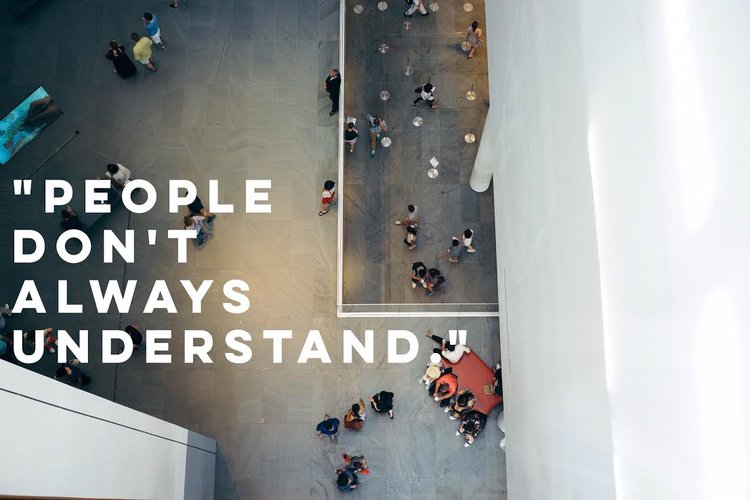
Article for the Monologues Project- ‘People don’t always understand’

monologue3

monologueedit

Be Ur Own Light has teamed up with the amazing Monologues Project for this months #showandtell feature. In it they interviewed us about our journey with mental health and asked questions about our lives.

It is such a pleasure to be working with them. Thank you Monologues Project!

To read the in depth article, click here: http://www.themonologuesproject.org/features/003

monologuerar

A Journey through Psychosis.

butterfly2.

Trigger warning: discussion of psychosis and acute mental health. 

Psychosis is something that I have experienced but havn’t ever fully written about as it can be quite a confusing, painful and scary subject

However,  today I had some time to write a blog about it and thought I would share my experiences to educate others and raise awareness.

What is psychosis?

Psychosis takes many forms- its when your brain goes into a heightened  psychotic state- meaning you could start believing things that aren’t real (delusions), hearing voices or seeing hallucinations, talking to yourself, being convinced you are in grave danger- about to be attacked or killed for example (linked to delusional beliefs). Along side psychosis you may also get what is known as ‘grandiose’ beliefs. This means that you believe you can do absolutely anything or that you have super powers/ can run the world/are a religious saviour, for example.

What is important to note is that every human with psychosis is an individual with unique brain chemistry and so not everyone will present in the same way or have the same symptoms. Furthermore, you may be diagnosed with an illness such as bipolar affective disorder, schizophrenia or schizoaffective disorder which can trigger your unique symptoms or alternatively, psychosis can be brought on by drug use such as ‘skunk’ (a potent form of cannabis) or other hard drugs.

How can we treat psychosis?

Its likely that if your  symptoms are really bad you will be encouraged to  go into hospital so you can be treated under a psychiatrist and given anti psychotic medications. These medications (some older and some new drugs) work to stop the heightened thoughts, delusions, voices etc….. and slowly bring you down from the psychotic state.

This is even more important if psychosis was brought about by drug use, to be in an environment where you cannot take drugs. Furthermore, If you have a diagnosed illness or a suspected illness, the care you will receive in hospital by mental health nurses and psychiatric team is generally good and you will be monitored and watched.

I experienced bad psychosis in 2014 during a bipolar manic episode. While I never heard voices or saw hallucinations, I had very bad delusions about the world and was extremely fearful. I thought that I had been kidnapped and was being watched in hospital by a gang (including the nurses). This eased over time as I was given Haloperidol and tranquilisers to slowly bring me down over a few months by a medical team. Thankfully the medication expertly worked on my brain and I was monitored carefully.

I have written this to say- you can survive psychosis and go back to a relatively normal life. Everyone is an individual so this isn’t the same for everyone, especially if you have addictions. For me though as someone with bipolar disorder controlled on medication, I have been able to get back to a happier and normal, stable life. 

Guest post by Joshua: Tips and Advice on getting through Bipolar

Trigger warning: discussion of suicidal thoughts.

For more from Joshua please email: rebuildrepaircredit@gmail.com

Hello! My name is Joshua, I am one of seven.  1 in 7 people have bipolar disorder. I have noticed that mental disorders are often overlooked or misunderstood. So here I am, stepping up to talk about it in the open.

I would not be here today to write this if had I not gone through my bipolar epiisodes and become stronger. I will not lie and say I have conquered it fully, but I am able to tame the beast . So, I hope I can help you. Are you struggling with any mental disorder? I love you and know you can fight it. It will not be easy, but you can do it.

The devastating effects of bipolar depression aka the main problem

First, a topic frequently avoided is suicidal thoughts.

Have you ever felt suicidal? I sure have.  I wanted to die so badly at such a young age. I broke down crying on the floor after I almost attempted to. Welcome to severe bipolar depression. A very difficult thing to cope with.


Do you still feel suicidal?

Honestly, I think everyone has these feelings. But bipolar and depressed people feel them seep into their hearts and minds much stronger. Suicidal thoughts are a nasty beast, attacking people at their weakest. Mental illness can break even the strongest people- if you are going through it right now, you are so strong!


Do you still feel this way today?

So to answer your question honestly, I do still have thoughts sometimes. Will I ever end my life ? No! I will promise you all that today. Promise me today that you will never do it as well. Stay with us, hang in there, please.  You must fight with everything, to live. You are a wonderful person and you deserve to live as long as possible! So am I! Fight with me!


One in seven? That is a lot of people! Do I know any people with bipolar disorder?

Chances are very high that you know someone dealing with bipolar. Lots of famous people are affected today and also in the past.

‘Never, never, never give up’. – Winston Churchill. I have a poster that I like with a frog being eaten by a pelican. Except the frog is choking out the pelican and not allowing himself to be eaten! Be the frog. So, never ever give up. To succeed in life this is demanded.
My favourite quote is ‘If you’re going through hell, keep going.’ – Winston Churchill

Fight on and continue!


When did you realize you had bipolar disorder?

First, from an early age, I realised I was different. Not in a bad way, but unique. I would say around 7-9 years old, I was already in counselling.  7-9 years old was one of my worst times for sure and I started experiencing bad symptoms aged 13. Mental disorders often begin in puberty due to hormonal changes. Hormones plus bipolar do not mix well. Controlling emotion is a big part of conquering bipolar.


Do you take medicines now? They work well for some. Do they help you?

I have tried many different medications. My team tried their best to see what would work with my body chemistry. Yet, there was a big problem. Every single medication had terrible side effects. The killer for me was the massive migraines.

During high school, trying to function felt downright impossible! I was so depressed I could not get up in the morning.  The medications I tried were challenging for me and didn’t always agree with my body.


Tell me a little more about you. What makes up the mind of a person with bipolar disorder?

I am far from perfect, but on a great path. So I am not here to brag. Everyone is intelligent in their own ways. I have always been intelligent as well. So my point is that you should do your best to not let this hold you back. It does not have to be a disadvantage. Also, many people with bipolar are highly intelligent.

I have always loved people. So I always try to see the best in them.  I am a triple full-time dad and entrepreneur.  I have started multiple successful businesses. Currently, I run websites. RebuildRepairCredit.com is a free credit repair clinic I started. Every single day I better myself. Now I try to better the world around me every day as well. You too can do the same. Improving yourself is the best investment you can make.


What else is difficult when you have bipolar disorder?

There are manic times. More recently I have learned to harness these gifts. However, if you are not careful these gifts, they can be challenging.. They were most of my life. Manic episodes can leave you awake for days or weeks and longer! Have you ever been awake that long? Sleep deprivation is torture. Be kind to these people! As I said before I have been awake nearly a month straight with 5-minute naps. This was a manic episode worsened by the wrong medication. Antidepressant only without mood-stabilisers can do this! Finally, in manic periods someone with bipolar may do things they would not normally do.

Final tips and advice on getting through bipolar

First, be sure to seek professional help when needed.  These can be lifesavers. Sometimes a professional ear can break down an issue and make it easier to deal with. Keep your chin up! So you will break, you will fall. This does not mean you have failed! Also, you are stronger than your weakest moment. So recover, stronger each time. Fight back!

To conclude, if you or  someone you know  has bipolar disorder,  be kind.  Nobody really knows the struggles another is facing. You may feel broken. Know you are loved and can overcome this. It will take time and lots of effort, but it is worth it. Finally, know you can still lead a full and productive life. Fight past your disabilities whatever they are. Because you are more powerful than your minor shortcomings.


A blog for Bipolar UK- ‘What bipolar means to me’

I am excited to share with you all my first blog for the charity Bipolar UK. Bipolar UK assist those with bipolar disorder and their families, as well as raising awareness.

In this very personal blog, I share what it is like when suffering with a depressive and anxious episode. I hope you enjoy reading it and it helps you feel a little less alone!

The other day I was sitting in my room feeling contemplative and I found one of my journal notebooks from 2011. I’ve been journalling on and off since I was young and have documented a lot of my life as it’s so therapeutic.

In 2004 I was diagnosed with bipolar at the age of just 16. I’m now 28 and have spent the past 12 years managing my illness through medication, therapy and a good support network….’

Click here to read the full article:

https://www.bipolaruk.org/blog/what-having-bipolar-means-for-me

The Counsellors Cafe Blog Collaboration: Social Anxiety- I will get There

sunrise1
(image:google images)

Hi everyone,

I am delighted to announce a collaboration with the wonderful people (Dionne and Victoria) at The Counsellors Cafe. Counsellors cafe is a community for people to share articles and knowledge about their mental health, and links therapists and sufferers.

I have written a blog for them on living with social anxiety which was published yesterday!

I wrote this piece  on social anxiety so I can write with my heart without feeling ashamed and can share what it is like to live with mental ill health at times. This is something that has been a part of my life since I was 15 years old and I will be 28 this year. It doesn’t feel like 13 years have passed since I first got sick, but its true that time definitely passes quickly. ‘

 You can read it here and at their website:  http://www.thecounsellorscafe.co.uk/single-post/2016/11/01/I-Will-Get-There

For more see: http://www.thecounsellorscafe.co.uk/

#beurownlight

Breathe Life Initiative- Tackling Loneliness through Kindness

breathelife

Here at Be Ur Own Light, we support many charitable initiatives. We were contacted by ‘Breathe Life’, an amazing UK charity campaign to combat loneliness in the elderly and wanted to tell you about them so you can get involved wherever you are in the world!.

The campaign says,

‘Every day huge numbers of older people are dying from loneliness. Research has proven that the effects are as bad as smoking 15 cigarettes a day. In the UK alone, one fifth of older people feel lonely. …. We believe small acts of kindness can help loneliness‘ (Breathe Life)

This is sadly not just an issue in the elderly as 53% of those aged 18-34 have felt depressed due to loneliness. As more and more people live on their own, this affects millions of people in UK society alone.

Its time to reconnect with our elders and Breathe Life seeks to do this. Never before have we lived such separated lives from our loved ones, only connected by technology.

To combat loneliness in our society, Breathe Life partnered with Life Links Cheshire have selected 5 Elders- men and women from Cheshire in the North of England with a wealth of widsom, joy and resilience to share to people of all ages. You can email them for 30 days, important questions you want answered and they can share their knowledge with you (and in turn make connections to combat isolation and loneliness).  As the campaign states,

Together, we hope to give older people regular mental stimulation and a visceral sense of self worth by actively creating connections for them in which they feel they are offering something of value to society. We might restore a sense of pride that breaks the deadening effects of loneliness.’

For more information about the Elders, the Breathe life Campaign and how you can get involved:

breathelife


Gratitude to you: with thanks

Recently I have been having the opportunity to grow my little blog here and it is amazingly being read around the world. From the UK to Israel, The USA and Canada to Australia, Italy, Germany, Spain,  Norway, Finland, Croatia, Monaco, Indonesia, India, Peru, China, Hong Kong, Singapore, Philippines, South Africa, Uruguay, Nigeria and Sudan.. I am amazed each day by where people are reading from and I am so so thankful. I write this not to brag but just because its so wonderful for me to reach people from different cultures. 🙂

We now have almost 60 dedicated WordPress followers, over 1,000 followers on Twitter, almost 700 in Instagram and 130 of my close friends and family on Facebook. This week, inspirational acid attack survivor Katie Piper liked one of our posts on Instagram about positive affirmation which was incredibly exciting!

We hope to grow the blog to spread light around the world for those suffering with mental health issues. I love receiving your supportive comments and sharing in online conversations with you all.

Today I am feeling so happy and thank you for engaging. I am also excited to announce a blog collaboration with Counsellors Cafe UK website, which will hopefully be posted in the next few weeks  and  Jewish Association of Mental Illness, who may be using my blog posts in the new year.

I am also thankful to Louie Rethink Mental Illness and Tim at Time to Change for getting me published before I even started publicising my blog.

With love xxxthankyou1