Its nearly here everyone! Just 4 days until our country (the UK) stops and celebrates Christmas (or uses the day as a chance to see family because they’re off work, like we do!).
The pressure is taken off for me during this period because its just a chance for relaxation for us as we’re Jewish, we don’t have the same expectations for the day as others. However, I know for many people Christmas is a stressful time where they see family they don’t normally see and may feel they have to hide how they are truly feeling with their mental health. The pressures are also on for the cost of food and gifts during this time and many people get into debt too.
We already have less daylight during this time and with the Covid pandemic a lot of people are feeling lower and more anxious . This has been the new normal for us all for over a year and particularly here in England where we have record numbers of Omicron Covid cases- but aren’t yet in lockdown.
I know I have been feeling a bit more anxious lately to do with Covid and other things… but I am also going to be kind to myself and give myself a break and time off work to relax also! I love sitting eating Quality street or a Terrys chocolate orange (yum) with loved ones and watching a good film like The Holiday… thats my favourite. Second is the Muppets Christmas Carol. Third Love Actually. Whats yours?
(image: lilartsy: Pexels)
I am lucky my bipolar is in remission and I am stable on medication. So I don’t have to worry about severe depressive or manic episodes right now. But, I still need to look after myself or practise self care- lots of sleep, not too much sugar, and check in with myself or my therapist if needed if my anxiety flares.
Obviously, over Christmas lots of NHS mental health professionals aren’t available but you can reach out to helplines such as Samaritans 116 123 (UK) if you need someone to talk to who will just listen.
You can also text SHOUT to 85258 if you’re in crisis and need support.
In an emergency, if you have a phone line to a hospital outpatient crisis team that are working over Christmas, call that and if not in an emergency you may have to go to Accident and Emergency (but there could be long waits).
Wishing you all a very happy holidays, a peaceful festive season. This time can also be hard for people with alcohol or drug addictions or eating disorders, as Christmas is often a time with plenty of alcohol and triggering things.
Remember that its OK to be struggling but tell people you trust and reach for support. May your Christmas/ holiday season be merry and bright- and if it isn’t, remember things can get better from here, you can recover and you can be helped. Always tell someone you trust if you feel suicidal or want to harm yourself, so you can be protected and helped through these feelings.
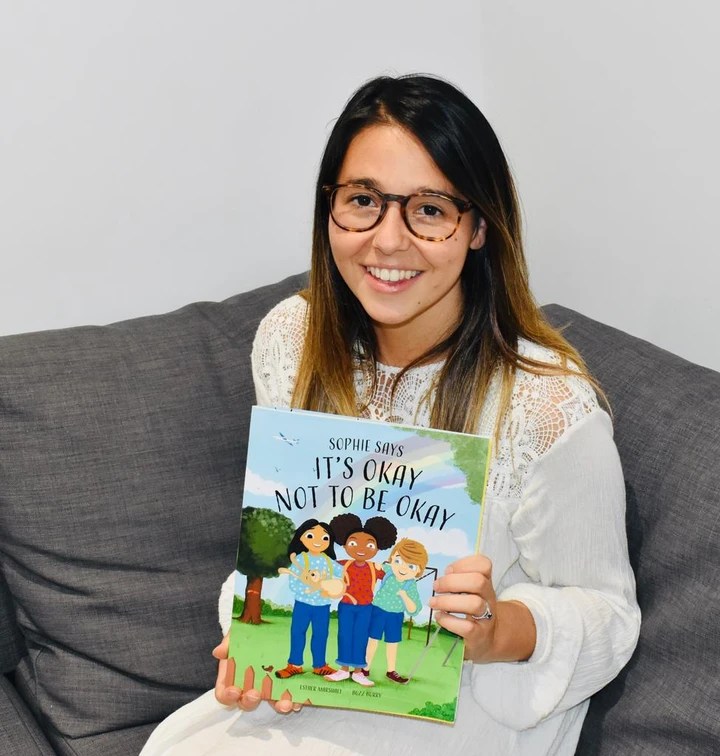
I am absolutely delighted to read and review this incredible childrens book from the Sophie Says series by author and award winning campaigner Esther Marshall (with illustrator Buzz Burry).
Esther’s story is close to my heart as not only is she from my own community but her late sister Rebecca z’l was a doctor who had bipolar disorder and sadly passed away a few years ago, while Esther was writing her second book. Esther has shared that it was her sister who encouraged and inspired her idea to write the childrens books that she couldn’t see for her own child (in terms of positive messages, inspiring rolemodels and diverse characters in terms of both race and gender). Through her sister’s struggles, Esther also began to include positive mental health messages on talking and sharing emotions, self belief and self esteem too.
Esther has said,
“I knew from the second my son was born I wanted to teach him that girls were just as strong and powerful as boys, that people from different backgrounds to him could teach him things and he should listen and be kind to everyone. The problem was, all the books I could find to read to him had:
Mostly male characters (even the animals)
Little to no diversity or representation
No female role models he could look up to
So I decided that if I couldn’t find the book I wanted to read to my son, I’d better write my own.
I want all children to know and believe that they can achieve their dreams regardless of gender, race, religion or class”,
Esther at Sophie Says has not only thought about what stories she wants to tell through the books, but what messages children reading them will take and absorb. She has partnered with illustrator Buzz Burry and comments, ‘we are helping children bypass harmful stereotypes before they set in by changing the face of children’s literature. Our mission is to enable all children to grow up feeling equipped and empowered to face their futures. To learn more about themselves, others and the world around them. We are helping parents to teach their children positive messages and providing a toolkit to navigate some of the trickier conversations.‘
Esther very kindly gifted me copies of her first two books- Sophie Says I Can I will– which is about a little girl Sophie with big dreams and no limits. and Sophie Says It’s Okay Not To Be Okay which focuses on Sophie, Jordyn and Jamie on their journey as they learn that it’s okay to talk about their feelings and it’s okay not to be okay. The books are for children in the early years, ages 3-7 years and reading the books with either parents, carers or teachers is recommended. Esther told me she has ‘tried to create books which cater to both home and school so that it can be embedded in both parts of a child’s life and become the foundation of them building resilience at an early age.’
Sophie Says It’s Okay not to be Okay is a very special book- and one of the first I have seen to address children’s mental health in an age appropriate way, to teach children about their emotions and that it’s OK to feel sad, scared or worried. The book follows Jamie who is looking down and feeling sad but whose best friends Sophie and Jordyn help him through and Sophie tells him ‘its okay not to be okay’. They take him to the zoo to help him feel better and speak to Sophie’s older sister Meghan who is wise and will give good advice. Esther named the character after Meghan, Duchess of Sussex who she met with Prince Harry and other young leaders and was inspired by (she gave them a copy of the book too!)
Meghan (the character) says this important message,
”It’s okay to be sad and okay to feel down. Just make sure you have good friends around. There may be days when you feel you’re alone but around us, you’ll always be at home. Its Okay not to be okay”
The book also reinforces self belief and esteem , reiterating that ‘YOU are enough!’ and encourages children to talk about their feelings because it can help. Jamie then says he will speak about his feelings in a place he feels safe in the zoo,
‘I don’t really know how to describe how I feel As I can’t work out what’s in my head and what’s real.
He said ‘ a smile may be what you see, but that’s not what I feel inside me
There are times I feel quite alone because these feelings are unknown
Some days I’m happy and some days I’m sad and other days I just feel so bad’
(image: Esther Marshall/Buzz Burry/Sophie Says)
His friends then show him support and love, take him to the funfair, all while reinforcing positive kindness and support- ‘Yes we can!” . The book talks positively about the kindness of friendships always being a safe space to talk. This is so important for children particularly in the early years who are learning to understand their feelings.
Esthers writing is beautiful- on one of the last pages of the book she says ‘Whatever you do, be kind, you never know what’s going on in someone’s mind’.
The book was informed by her sister Rebecca’s struggle with mental illness (bipolar disorder). Esther has said, ‘I had always planned to write another book all around mental health to help children understand their feelings and talk about them more openly, and I sadly lost my sister, Rebecca, to mental illness as I was writing it. So the second book Sophie Says It’s Okay not to be Okay is dedicated to her memory’.
Esther wanted to amplify the message and so it was released on World Mental Health Day. The book provides a toolkit for parents who want to help their children to express their own emotions.
She has been visiting schools and doing zoom readings of her book to share the messages for her. Esther told me, I would love that as a result of children reading the Sophie Says books that children understand these vitally important lessons through a fun way of learning and it helps them build resilience and confidence to go out and achieve their full potential whilst being able to understand and manage both their physical and mental health. .’.
Esther is a true force of nature and someone who inspires me so much. She has just released a third book in the series Sophie Says Be Proud of Who You Are which is about Sophie and the rest of the Sophie Says crew on their exciting seaside adventure as they help their friend Priya build her confidence, as they guide her through believing in herself and being proud of who she is. The perfect book to help your child build their confidence and self esteem!
I would recommend the Sophie Says books to all parents, teachers and carers of young children. I can’t wait to see how this brand grows and what Esther achieves (she has achieved so much already!). She should be rightly proud of her work and all she has created.
To learn more about Sophie Says and buy the books click here
Hi, I’m the founder of Sophie Says and the author of the books within the series. The idea for the first book (Sophie Says I Can, I Will) came to me after having my son, Asher (who is the first and most important reader of all the books!).
I knew I wanted him to grow up understanding that both girls and boys could achieve anything that they set their minds to, but I couldn’t find any books that featured a female lead character (a human one, not an animal one!) that really represented the message I wanted to teach him. So I thought, if I can’t find the story I want to tell, I’d better write it myself.
I was gifted two books in exchange for an honest review. Any links are unpaid. These books are incredible.
Providing support to anyone with a mental health issue is challenging, to say the least. But when that person is your spouse, the situation is even more complicated. At worst, it’s confusing and overwhelming. At best, you might be walking on eggshells. However, being there for your partner during this difficult time will ultimately bring you closer together.
Here are a few ways to support your spouse so you both can emerge from this stronger than you were before.
1. Help Them Help Themselves
In the United States, nearly half of those with clinical-level mental health issues don’t seek help. Instead, they try to handle their illness on their own or simply give up hope, both of which can quickly send them into a downward spiral.
Therefore, if you notice potential symptoms of a mental illness in your spouse, it’s important to encourage them to seek help. Work together to find a therapist, counsellor or physician (doctor) who can provide medical advice or guidance.
2. Understand the Diagnosis
Once they see a professional and receive a diagnosis, read up on their condition. Maybe you’ve noticed some of the accompanying symptoms but failed to attribute them to their mental illness. Now that you’re more aware, you can stay calm and avoid feeling triggered or attacked when these symptoms show up in everyday life.
On the other hand, if your partner hasn’t visibly shown signs of depression, anxiety or other issues, you might have been unaware of their suffering. Understanding their diagnosis will help you notice symptoms in the future so they don’t have to go it alone any longer.
3. Implement Support Tactics
Now that you know what to look for, you might notice more mental health flare-ups, so what should you do when things start going south? Implement support tactics specific to their condition.
For instance, if your spouse is dealing with depression, you might notice they’ve neglected to wash the dishes or do the laundry. In this situation, consider offering to complete these chores yourself or suggest doing them together.
4. Be a Good Listener
Sometimes, your loved one will want to talk about their experiences or past trauma that may have prompted their mental illness. When they express interest in discussing things, create a safe space for them by being a good listener.
Pay attention to every detail in an effort to better understand their perceptions and beliefs. Let them talk it out without worrying about how to respond. Then, when you do react, try to do so not from a place of judgment, but of empathy and compassion. Validate their feelings to help them accept their emotions and move on.
5. Be Patient
It may be difficult to hear, but certain mental illnesses can ebb and flow for years without reaching a resolution. There’s no magic timeframe for recovery.. Therefore, it’s best to let go of idealised timetables and take things day by day.
This is when love becomes a choice and your commitment to one another carries you through — for better or worse. Instead of running away, resolve to stay steadfast and patient. Instead of holding their illness against them and growing bitter, choose to see it as yet another challenge you can overcome together. No matter how long it takes, you’ll be there to give them support, encouragement and affection.
6. Practice Self Care
If you’ve ever been on an aeroplane, you know the flight attendant recommends putting on your own oxygen mask before helping others. After all, you can’t assist others if you don’t take care of yourself first. The same is true in your marriage — and every other relationship, for that matter. Therefore, it’s incredibly important that you practice self care and take care of your own mental health before trying to help your spouse with their issues.
Take time to be alone each day. Revisit an old hobby or pick up a new one like knitting or journaling. Mind-body exercises and autoregulation techniques can also relieve stress and help you tune into sensations you wouldn’t have otherwise noticed. Engaging in these activities will help you stay healthy and better support your spouse during this difficult time.
7. Keep the Love Alive
Mental health issues and the symptoms that accompany them can become all-consuming. However, it’s important to focus on your relationship apart from this conflict to keep your bond strong and the love alive.
Spend quality time together, go on dates and continue to communicate openly. Do things that bring you both joy and focus on enjoying each other’s company. Doing so will remind you why you fell in love in the first place and give you more reason to fight for your spouse’s mental health and your relationship as a whole.
Communication Is Key
After some time, you and your spouse may begin to resent the patient-caretake dynamic. When these sentiments arise, communication is key. Talking about your feelings will help you understand one another better and may put you on a level playing field again. Once you realise that it’s you two against the world — and not against each other — you can take on mental illness together and emerge on the other side stronger than ever.
This article was written by freelance writer Kara Reynolds, Editor in Chief at Momish.
Many of you know that I support a charity very close to my heart- Christmas For CAMHS. I volunteered with social media and raising awareness. A few years ago, it got charity status and this is so exciting but it still needs your help and donations, so read on as to why its so important to me and those children in hospital!
In 2004, when I was just 16, i was admitted to an NHS CAMHS (children and adolescent mental health unit) at the Priory Hospital North London for depression and psychosis- part of my bipolar disorder on Christmas Eve. Even though I am Jewish, I remember opening a wrapped present (can’t remember what it was) that the staff had organised for us out of their budget. The other patients also left me notes and cards. But the truth is there was no charity giving us presents and we were away from our families, all very ill- so the staff just did the very best they could under the circumstances.
Then, in 2018, I heard about a charitable enterprise set up by a lovely doctor and trainee child psychiatrist called Ro who wanted to do something about the lack of equality children in mental health units had. She and her volunteers were sending presents to children on CAMHS wards across the UK and asking for donations.
Christmas For CAMHS is a registered charity who provides special Christmas gifts every year for children and young people who are inpatients in child and adolescent mental health (CAMHS) wards across the UK over the Christmas holiday period.
They want to make children and young people who are inpatients over the festive season feel thought-about, special and included – our individual gifts for each young person to keep, as well as gifts for their ward, help us to do this.
They have been hugely supported over the past few years by generous donations from the public and have received much gratitude as a result from inpatient units. However, they are only able to provide gifts with your charitable donations.
To find out how you can donate money or gifts please visit their donations page to see the Justgiving page and Amazon gift list.
They say:
Christmas For CAMHS was originally set up because volunteers saw a huge disparity in the way CAMHS units were treated over the festive period compared to other NHS services for children and young people. They wanted to do something to change that.
Children are admitted to CAMHS units to receive support and treatment for mental health issues, such as psychosis or depression or eating disorders like anorexia. There are no official figures for how many children will spend the festive season in CAMHS units across the UK, though we often give gifts to over 1500 young people. While many members of the public and corporate donors give Christmas gifts to children’s hospitals or children’s wards in general hospitals, CAMHS units, which are usually based away from other services, are often forgotten, or not known about. We don’t think this is right.
Every year they talk to every CAMHS unit in the UK to see what gifts their young people would like. Then, with your generous donations, they buy beautiful and thoughtful gifts for young people in almost every unit across the country.
We also include, where possible, some small fidget toys, a gift for the ward like a board game or sports equipment, some activities to do during the festive period and extra gifts for particularly vulnerable young people who are looked after children or who have a refugee background. We also send them an advent calendar full of inspiring quotes and pictures of cute pets. Sometimes we’re able to include a homemade card or two too.
The gifts are assembled at a packing weekend in Bath by our volunteer elves and then whizzed around the country in plenty of time for Christmas! As a charitable organisation, we rely 100% on fundraising and your generous donations. Each penny goes directly to making the magic happen.
(image: Christmas4CAMHS)
So please, support Christmas For CAMHS- if you can donate a gift or money that would be incredible. As a former child patient, the loneliness you feel is unbearable-lets work together to stop the inequality and forgotten children!
I started back in therapy consistently (weekly), 2 months ago in August after reoccurrence of panic attacks. I have been working with a really brilliant therapist for the past two years who is a specialist in trauma and EMDR therapy. EMDR stands for eye movement desensitization and reprocessing therapy and is a way to help you process and confront traumatic memories, with the aim of reducing their impact on your life. Its a very good therapy for people struggling from PTSD (Post traumatic stress disorder). Although I do not have the full disorder, I do have some PTSD symptoms according to a therapy questionnaire, from being sectioned and in hospital in 2014 and other traumas that occurred around the same time.
My PTSD symptoms include:
– Panic attacks (palpitations, sweating, negative thoughts, fight or flight adrenaline and needing to cancel feared event) triggered by certain situations which remind me of the past traumatic events. This includes fear of medical appointments now including going to hospitals for myself or the drs surgery.
– Social anxiety- what will they think of me?
-Other fears over traumatic events – i can get triggered and feel flooded with panic.
So, as you can see, a lot to deal with and unpack in therapy. And figuring out my identity as a 33 year old woman with bipolar disorder (thankfully stable) and what the future could hold.
I have to say that finding an excellent therapist has been a lifesaver. I look back to where I was 2 months ago and generally (without jinxing it) my nervous system has calmed down a lot, I have been anxious but able to enter certain situations I couldn’t have done 8 weeks ago. My medications keep my mind stable and my husband and family are a wonderful support too. I love my work and can do it from home. I am really lucky in so many ways.
It is still a major work in progress for me, getting back to the person I once was. I prefer to work from home and I also am unable to go out as much alone as I would want. However, I am starting to go out more with others and I will keep working to find freedom from fear for myself.
If you’re feeling stuck or alone or fearful, reach for help. I have been very lucky to have help with funding my therapy sessions (shout out to my incredible parents) but they are so needed. I know not everyone has this.. the waiting lists for the NHS are so long and I was on them for years without support. My local borough also does not fund trauma therapy which was frustrating at the time.
Thanks for reading the update, feel free to share your therapy experiences with me,
i feel quite emotional writing and sharing this with you! And remember- to keep reaching, growing, and above all healing. Healing is so important for our mental health if you can access it,
Eleanor x
PS- while writing this blog. I was listening to the Sugababes originals Mutya, Keisha and Siobhan (MKS) sing No regrets which has the lyrics.. ‘I choose life’ . Listen here to this live version (not an ad, genuine love): https://www.youtube.com/watch?v=MfdYE7BkEsw
Bipolar disorder affects roughly 46 million people worldwide in 2017, according to the Our World in Data. While there remain several challenges for people living with bipolar disorder and to their caregivers, health experts believe that current developments have reduced symptoms and improved quality of life.
Bipolar disorder is a very common cause of disability and needs treatment . It is ranked by the World Health Organization as the 6th leading cause of disability in the world with the inadequacy of treatment, resulting in higher rates of ill health and worsening of symptoms. The following are the seven 7 facts everyone should know about bipolar disorder.
Fact No.1 – Bipolar disorder looks a lot like classic depression.
Formerly called manic depression, bipolar disorder involves extremes of emotions, when not well controlled. It is associated with mania, depression, or both. People who have it may undergo a depressive state for some time – that is, weeks to months – before entering the manic state. The depression period usually comes afterward, and the cycle repeats. In some cases, people experience both. They appear very agitated and energetic and sometimes this can tip into psychosis..
Both mania and depressive episodes range from mild to severe patterns. Because the clinical manifestations of bipolar disorder mimic other psychiatric anxiety disorders, it takes years at times for doctors to find the correct diagnosis.
Fact No. 2 – Bipolar disorder is characterized by dramatic shifts in mood and behaviour.
Some people with bipolar disorder experience cycles of manic and depressive episodes, which can be sudden and occurring several episodes a year. The cycle can shift quickly depending on the type and severity of the condition. Elevated mood associated with mania is defined by irritability, euphoria, and labile mood, whereas depression is often expressed by loss of interest, inability to function day to day and extreme sadness.
Fact No. 3 – Bipolar disorder has symptoms of mania and depression at the same time.
There are different variations of bipolar disorder, namely bipolar I, bipolar II, cyclothymia, and bipolar unspecified. These conditions are marked by mania, depression, hypomania, or mixed manic and depressive episodes. In mixed bipolar type, there is a rapid and severe mood fluctuation in a quick sequence or simultaneous fashion without recovery in between.
Fact No. 4 – The mood episodes of bipolar disorder can vary from person to person.
The diagnosis of bipolar disorder is based on the clinical presentation. However, the symptoms can be unspecific and variable from one person to another throughout the disease. Thus, making the prediction cycles of a person with bipolar difficult.
For some people,. a person with bipolar disorder undergoes two (2) cycles of mood changes with mania taking place in spring or fall. However, mood stabilising medication greatly reduces episodes.
Fact No. 5 – There is no known single cause of bipolar disorder.
It is thought that bipolar disorder may run in families. In terms of biochemical cause, the manic and depressive cycles of bipolar disorder are associated with the excess or depletion of certain neurotransmitters in the brain, such as catecholamines, dopamine, and norepinephrine.
Trauma may also trigger bipolar episodes.
Fact No. 6 – There is treatment available for bipolar disorder.
The goals for treatment available for bipolar disorder are stabilisation of symptoms, prevention of relapse, and improvement of social functioning.
Pharmacotherapy, particularly antipsychotics, antidepressants, mood stabilisers, are the mainstay treatments for bipolar disorder. The HHS Public Access cited Lithium as the best drug for relapse prevention. T
In addition to medications, long-term maintenance for people with bipolar disorders may include psychosocial treatments that focus on education, stress management, detection of relapse, and developing a healthy lifestyle.
Fact No. 7 – People with bipolar disorder can and do lead happy, healthy lives.
It is possible that people with bipolar disorder can have happy and healthy lives. Realistically speaking, the quality of life faced by people with bipolar can be challenging when they have episodes or if they dont take or find the right medicines. This is because they continue to face challenges on their way to recovery, such as availability and choosing the right medication, ease of access to non-pharmacologic therapies, and finding the right balance of the medicine and non-pharmacologic treatments. In a qualitative study conducted by the International Journal of Bipolar Disorder, researchers revealed that some people with bipolar disorders explicitly struggle with managing their symptoms, maintaining relationships, and continuing to experience some form of stigma. Thus, regular contact with their health care provider is essential, as it provides a supportive environment for them.
While the cause of bipolar disorder is unknown, certain factors contribute to its development. Bipolar disorder remains a global health challenge. At this present time, there is no cure for bipolar disorder, but the current treatments have proven to mitigate their symptoms and improve quality of life.
8 weeks ago when I last wrote, we were about to move into our new home. We have now been settled in and been there 5 weeks. It is so exciting and we have been overwhelmed with love. Moving though is a big life change and has triggered my mental illness again.
Lurking under the surface is my Bipolar/ PTSD anxiety disorder. If I do a lot and am more active, I can’t cope. I always try and do more than I am able and then end up crashing into panic- insomnia, racing anxious thoughts mainly and having to cancel plans. Social anxiety becomes heightened. Last week, I went to my mother in laws in Essex three times and also went to a family wedding (which was so special!). Both were lovely, but on Saturday night, my anxiety was triggered, thinking about going back home and socialising the next day- and my body and mind said Enough. This is too much.
Being on your own when you’re anxious and can’t sleep (but everyone else is) is one of the worst places to be. I actually posted an Instagram message at 6am about how I was feeling because I didn’t want to wake anyone up. People were really kind. I slept for maybe 2 hours and felt teary and emotional on Sunday, but had support from Rob and my family too.
The past few days my anxiety has been unleashed and remains high. I am writing this from my Mums house today as I didn’t want to be on my own again working in our flat . I have booked a session in with my therapist too because I am waking up feeling panicked. Its like my body and brain are trying to protect me from something, an old fight or flight response. I keep having regular panic attacks where I shut down, cry and hide in bed. Speaking to my therapist I know will help me process and clear the triggers behind whats going on.
Living with this is debilitating- but I will not be beaten. I will keep doing all I can to improve my low mood and anxiety, to keep going despite any setbacks and to try to heal my mind and soul so I can feel more confident and happier again.
Thanks for reading, I send love to anyone struggling
I really wanted to write today because the sun is shining, apple blossom is on the trees and Spring is finally here! I always feel more hopeful and happy once Spring is here but living with bipolar disorder and an anxiety disorder can mean that some days are harder than others.
This week, I have really struggled with low mood and social anxiety. I’m an optimistic person and sometimes I pack too much into my days and end up having a panic attack because I can’t cope. This is what happened to me yesterday when I decided it would be a great idea to pack in too much, including going across London and delivering many Body Shop orders to my customers and friends. My social anxiety was so high (I think largely due to being in lockdown) , I just wanted to hide and I ended up sleeping to escape my feelings and feeling super low. I am lucky that I understand what to do when this happens and I have a husband and family who support me too. I am still in therapy for my panic disorder and it has improved a lot but there are times when it gets triggered like this week.
I have also found that I am worrying more about what people think of me- if I have said the right or wrong thing or upset anyone. Its so silly but due to past rejection I get scared and those fears bubble to the surface.
On Friday, I had a really productive therapy session. There are a lot of worries about the future that I still hold and being able to unpack them in therapy is really useful for me. I am doing EMDR trauma therapy but a lot of it is talking out and facing those triggers one by one. I have a very good relationship with my therapist and having a session often calms my mind.
In positive news, last week I became an aunt to a beautiful baby girl, Cara Harriet who is the sweetest little baby. She is a joy and light in all our lives and I feel so lucky to have a little niece! My sister and brother in law are amazing 🙂
And in other good news, in April, my essay in the Book of Hope by Jonny Benjamin MBE and Britt Pfluger will be published alongside many others I look up to (Dame Kelly Holmes and my friend Hope Virgo). So there are good things as well as bad!
I am doing a lot better- I dont rapid cycle, I havn’t had an episode of mania or hypomania since 2014. My brain seems to like Lithium and Quetaipine (a mood stabiliser and anti psychotic). I have to learn to be kind to myself and practise self care, because my social anxiety is a fear response from the past.
Being kind to myself is of utmost importance. Heres a list of what I do when I am having a bad day: take a nap, have a bubble bath, read a book, hug the guineapigs and Rob, talk to Rob, a friend or family member, put on a face mask, cry, breathe and listen to calming music, watch a good TV show (I have been watching First Dates Teens), book in a therapy session, eat something nice, put some make up on, wash my hair, wear an uplifting perfume.
I havn’t done a personal blog for a while because things have felt pretty…. the same. We are all going through such a difficult year where we feel in limbo, stuck with the dark, cold nights and little to distract ourselves- we can’t travel, go on holiday, see friends indoors in person . It can all feel bleak and frustrating with Covid 19 and this new world we find ourselves in.
I am lucky that my mental health hasn’t taken a nosedive, although there have been days where I have felt low, anxious and overwhelmed. I love my work for the Body Shop and my writing, but there are times when I just want a break. We were planning on maybe going away somewhere in the UK, but then Tier 3 restrictions hit London, so we will be at home over the Christmas break. Instead, I have made sure I have taken time for myself and rested- so that things don’t get too much.
I opened my book Bring me to Lightthis morning- I don’t often read it as I wrote it. But, it fell on this page- a poem about Bipolar that a fellow friend and patient wrote when we were on the hospital day unit in 2014. She also had bipolar disorder and was in there for her recovery.
It said,
Believe
In
Progress
Options
Laughter
and
Recovery
She kindly let me keep her poem- at the time, I needed hope, healing and faith- that I could get better. That Bipolar wouldn’t ruin my life.
I did get better. I have been so much better on my new medication. I met an amazing man who is now my husband. I found a career I am able to do with my PTSD and new friends and a team of people around me who are wonderful. Life is good.
However, a small part of me is scared. Scared to get ill again or be hospitalised. Scared of the psychosis that wrecked my life. Scared of whether or how I can become a mother whilst on Lithium or whether we will need to look at surrogacy as the meds can cause birth defects and there is a strong risk of post partum psychosis and pre or post natal depression for me with my bipolar. I am scared that if I carried my own child, I could end up on a hospital ward again- but a mother and baby one. I don’t want that to happen.
In my book Bring me to Light I wrote, ‘ Sometimes I still feel like the scared sixteen year old, sitting in that psychiatry room at the Priory North London, being given a diagnosis of bipolar disorder. …I have learnt that thanks to Lithium and therapy, bipolar disorder does not have to be my life.’
But knowing Lithium’s impact on my physical body too is scary. Weight gain. Acne. Water retention. Potential issues with kidney function/diabetes in future. Not being able to breastfeed on it or possibly carry a baby due to the severe risk – I have the most acute form of Bipolar and become very ill without medication.
These issues are so personal and I and Rob have been processing them for a while. We lost Robs dad to brain cancer in July and I didn’t feel able to blog about children before now. But, when the time is right and we speak to a perinatal psychiatrist and plan for a child, I want to write about it- maybe even a new book.
In the mean time, I am excited for new births in our family and I am just living and enjoying being well, being healthy.
I never see myself as someone with a disability- I always look for the Light. But, there are limitations and drawbacks to having this illness, even when it is in remission. It is biological and impacts on things I never realised when I was diagnosed in 2004. At the age of 32, these are becoming more real than ever and its scary. But, I want to smash the stigma and so I will write about what I can.
I wish you all a wonderful , relaxed festive season with good mental health- Happy Chanukah and Christmas.
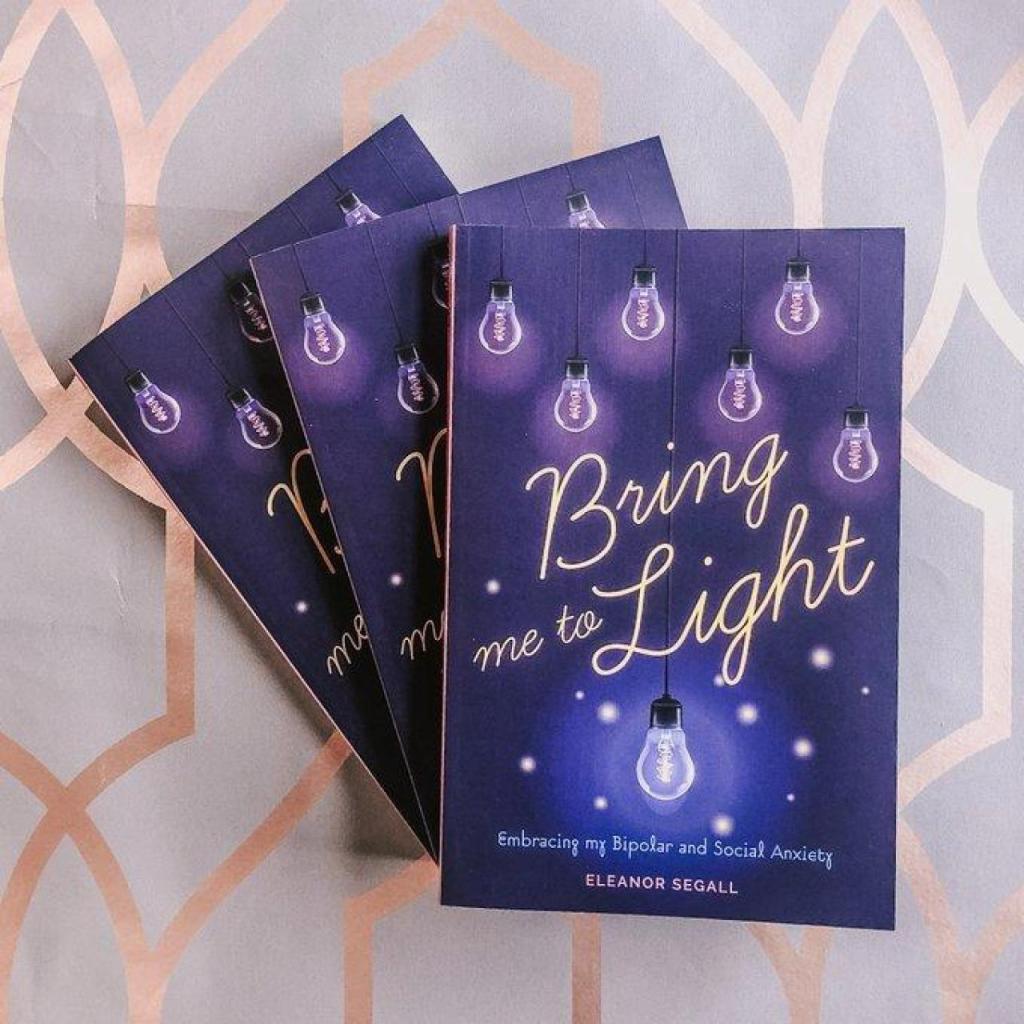
Yesterday, on 5th November, my book Bring me to Light: Embracing my Bipolar and Social Anxiety (with Trigger Publishing) turned one!
Today, I got this lovely review from a Twitter follower Robin so I thought I would share it here:
‘It is an amazing book, really enjoyed reading it. An honest and open account of life with bipolar, your strength of character shone through. Thank you for being so open and writing it. – Robin Josephs
I wrote my book to help others and dispell the stigma about severe mental illness. Everyone is human and everyone has mental health. Whether you have never suffered or whether you have depression, anxiety disorders, eating disorders, schizophrenia, bipolar, OCD, BPD or EUPD, self harm, addictions, PTSD etc- I would love everyone to be more open if they feel able.
I hope my book explains what being in hospital can be like but that you can recover.
You can get your copy on Amazon and in all good book shops now 🙂
Happy bookversary to me! Thank you to YOU for supporting my blog, reading this and helping get my book deal. To everyone who has bought a copy and to my fab editors Stephanie and Katie.








 beurownlight.com