How Baths, Saunas and Spas benefit mental health and relaxation: Guest post by Lori Longoria

Anything that takes care of your mental health and relaxation needs is something to give top priority in life. We are often overwhelmed by everything we have to do each day. There are deadlines at work, your family that needs attention and other commitments that can trigger stress. Therefore, it is important to be good to ourselves and do things that rejuvenate the mind and body often.


There are a lot of things you can do to relax the body and mind. You pick these things by looking at what makes you happy or brings you peace. These are things that help you defeat physical and mental fatigue. For some it is taking a walk, others love to run when they are stressed while others prefer to have a nice meal and a glass of wine. Whatever the case, everyone needs something they can do to help alleviate stress otherwise there is a risk of having a nervous breakdown.

Some good activities that promote mental health and relaxation are spa treatments, taking a bath or spending time in a sauna. These three options allow you to pamper your body and spend some quality time alone or with friends relaxing. Apart from the benefits they provide to your body, they are also excellent for mental rejuvenation and can help you improve your mental health.

What are the benefits of having a bath?

Soaking in a bathtub is a great way to treat your body. The sensation is entirely different from taking a shower. It is important to take a bath at least once a week. There are so many great things it does for your body.

–  Beat mental fatigue with a bath

Apart from cleansing and relaxing the body, a bath also helps relax the mind. It feels amazing to soak in the warm water and just let your mind go blank. Water has healing properties especially when it flows over your body, or you soak in it. As the water massages your tension away, it sends a feel-good message to the brain that causes you to let go of all anxiety. It also helps get rid of any mental stress that is caused by fatigue.

You can improve the mental benefits of your bath time by using essential oils, aromatic candles and lighting incense. There are essential oils that are great for mental relaxation such as lavender, ylang-ylang, and bergamot. Also, some aromatic candles made of citrus; rosemary and cinnamon are great for boosting your mood.

–  Clear migraines, anxiety, and depression

If you suffer from anxiety or depression and have problems with sleeping, then a warm bath is one of the solutions you need to explore. A soak in a nice, fragrant, warm bath will help you relax before you go to bed such that you will have no problem falling asleep.

If stress or anxiety is causing you to have a migraine, then you know how hard it is to go to sleep with a pounding head.

Taking a warm bath will help improve your circulation which is great for easing headaches. You can do it anytime to deal with tension headaches. All you need is to fill the bath with some warm water, pour in some relaxing bath oil and soak your tension away.


–  Baths for pain relief

If your body is in pain, then it will affect your mental state. For example when you are exhausted there are high chances that you will feel sad, stressed and in extreme cases depressed. However, when you take a relaxing bath it takes all the aches away and in many cases makes you feel like a new person. It means that your mind will  hopefully also respond well to you having a bath and washing all the fatigue away. So anytime you are feeling down consider taking a warm or cold bath to kick away the blues.

If you don’t feel able to do this, be kind to yourself.

Can time in a sauna help with depression?

Saunas are another way to pamper your body and improve your mood. It involves having a steam bath which helps you sweat out toxins. Apart from detoxing the body by opening the pores and promoting sweating, saunas can be good for your mind.

When you are in the sauna, it causes your blood circulation to improve which promotes sweating. The increase in blood circulation can invigorate you and help you feel refreshed so that if you are feeling tired or low, you come out feeling fresh and recharged. After a day of having a steam bath, you can be sure that you will sleep well.

Why do spas help with stress?

One place you can go to for a leisurely bath or time in the sauna is the spa. A spa is a great place to visit for mental health and relaxation. It’s created to make sure that your body and mind get pampered in all ways possible.

–  Great treatments for the body and mind

There are so many treatments to choose from in a spa such as massages, body scrubs, body wraps, aromatherapy, and others. It’s a great place to take someone dealing with fatigue and low mood and even chronic ailments- if they are able.  

–  Get away from all the pressure

One good reason that the spa is good for rest and rejuvenation, as well as mental relaxation. You get to take some time away from your regular life to go somewhere for  quality rest time. Most of these places are tucked away in quiet areas far away from the hassle and bustle of our daily lives.

Just the act of getting away from your work, family and other stressful commitments and going away to this place where you can rest can help to calm an anxious mind.


–  Expert therapists

The therapists in spas are trained to handle their clients in a way that will help them overcome stress or exhaustion. When giving a massage, they know just how to do it so that your fatigue goes away and your whole body gets relaxed. If you tell them you have a migraine or a tension headache, they know the pressure points in the body to manouvre so that you get relief.

Taking a bath, having a steam bath or visiting the sauna are great ways to pamper your body. However, the best thing about doing these things is the positive effect on your mental health. It’s important to invest in activities that promote mental health and relaxation often to avoid burnout.

The next time you feel stressed why not take a bath, visit a spa or spend time in the sauna to promote relaxation!

This post was written by Lori Longoria of walkinshowers.org
Taking a Mental Health Day: Retriggering the Anxiety Cycle by Eleanor

‘Sometimes you’ve got to face the darkness to step into the Light again’– James Arthur ‘Sermon’
I just want to start this post by saying that I am doing alright- I just have moments of bad anxiety or panic when triggered by specific issues. This week, I have been feeling more anxious than normal and when this happens I often have to take a step back, take a mental health day to rest and relax and recover.

As many of you know, I have social anxiety and this manifests in various ways. At the moment, I have issues with body image as I have put on a lot of weight over the past 5 years- partly due to medication and partly to lifestyle (I love sugar and don’t move as much). However, this means that in some situations,  my anxiety gets a bit heightened.

Early mornings are also the worst time for me in terms of anxiety so I try and do things later in the day now.

So what do my mental health days look like?

Sometimes they can involve:

– Sleeping or resting if needed for a few hours
– Watching something funny- today I watched the Windsors Royal Wedding special
– Speaking to a friend
– Eat something healthy that I love (and sometimes eating chocolate.. which I am trying to stop)
– Taking space and time from work to breathe. As I am self employed, I make my own hours so I know this isn’t the same for everyone.

Listening to relaxing music, taking a bath, doing something mindful eg colouring or going for a walk if I feel able are also good.

I am looking forward to a more restful weekend and taking care of my mental health. Once I’ve had a mental health day I usually feel better, more rested, calmer and centred.

Overwhelm is hard but it doesnt have to rule everything.

I’d love to hear about what you do when overwhelm sets in, to help ease the tension?

Love,

Eleanor x 

When Life begins to whirlwind: Finding self care. by founder Eleanor

I havn’t written here for several weeks, because I have felt a little bit like Dorothy and Toto the dog at the start of the Wizard of Oz film, when they are caught in the hurricane.

Sometimes life sweeps you up in its path and can get very busy. This for me at the moment is not a bad thing. My boyfriend- now fiance and I got engaged about 2 weeks ago. If you didnt know (WordPress followers) he proposed to me at the Shard here in London, overlooking the sunset over the river Thames and Tower Bridge/ Tower of London. It was super romantic and very very special. We are both so excited.

However, in the community we come from, we have had to organise an engagement party and ceremony quite quickly and do all the admin that comes with coordinating families. My parents are divorced and my Mum has remarried which means we have more family than normal too.

So, getting 200 emails in just a week and a half was not easy but we did it! We also got our families together for a meal and went to visit grandparents too. As well as organising other plans.  Its been a lovely yet overwhelming time and so grateful for everyones love and kindness.

Sometimes I literally have to take myself away from planning so I can cope. I was doing a lot of it myself but decided for my health (and bank balance) that I need to get back to work properly- and do what I love, writing

When I feel overwhelm I just tell my support network and take a breather. Its the only way. Self care is hugely important.

I will also be writing an article for Metro on stress and insomnia during engagement period. Thankfully I am sleeping a lot better now but in the first few days after we announced our engagement, I struggled to sleep due to adrenaline overload.

I have also enjoyed the summer like sun here in London and being in nature at the weekend (we had a bank holiday- day off work).

Sometimes life does feel like a whirlwind- whether that is positive or negative. What is important is to ride out the storm and take time for you. This is what I am learning….

Love,

Eleanor    xx

Extract from my Metro article on Homelessness and Mental health issues

This is an extract from a Metro.co.uk article that our founder Eleanor wrote and researched on rough sleeping, homelessness and mental health issues. To read the full article click here: http://metro.co.uk/2018/04/10/homelessness-and-mental-health-whats-being-done-to-help-7421391/

The ‘Beast from the East’ put homelessness under the spotlight in February and March as rough sleepers faced freezing conditions. But a more persistent problem among homeless people, which is little talked about, is the prevalence of mental health issues. As someone with bipolar disorder, who has never been homeless, I wanted to investigate what support there is out there for homeless people with mental health conditions.

Anyone can be affected by homelessness, regardless of age, race or sex. Among homeless people, 44% have been diagnosed with a mental health condition, according to Homeless Link. Homeless link points out that homelessness is a stressful, lonely, traumatic experience, which has a major impact on mental health.

In summarising some of its research into homelessness and mental health, Crisis says: ‘Serious mental health issues, such as schizophrenia, bipolar and post traumatic stress disorder are more common among homeless people. ‘Suicide rates are nine times higher, demonstrating the very real need of effective support’

Homeless people with mental health issues, particularly rough sleepers, often have less access to mental health professionals due to their lack of address or their complex needs. Being homeless is extremely overwhelming. Treatment may be the last thing on the mind of a homeless person with a mental health condition when they are focused on finding a way to get food and a place to sleep. The prevalence of drug and alcohol addictions is an added problem.

According to Crisis: ‘Homeless people are more vulnerable to alcohol and drug use. ‘Multiple diagnosis of substance and mental health issues can be a barrier. Rates of alcohol and drug use are four times higher than in the general population.’

Understandably, addiction can get worse when someone is homeless, due to the stress. St Mungo’s is charity that has conducted research into this area and affected change in legislation. Its investigation ‘Stop the Scandal’, looks at mental health and rough sleeping. The charity called for a national strategy to end rough sleeping and changes to the law.

Following St Mungo’s campaign, in 2017 the government backed the Homelessness Reduction Act. This legislation, which came into force on 3 April, is designed to prevent people becoming homeless and to give councils more power to tackle the issue. The government also committed to halve rough sleeping by 2022.

St Mungo’s is leading the way on this. It said: ‘Our experience is that homeless people are treated poorly and often labelled and judged. ‘People see drink or drugs behind rough sleeping, but rarely think about mental health. ‘Mental ill-health can affect anyone, but people sleeping rough face adverse weather conditions, fear and isolation’.


Read more: http://metro.co.uk/2018/04/10/homelessness-and-mental-health-whats-being-done-to-help-7421391/?ito=cbshare

Twitter: https://twitter.com/MetroUK | Facebook: https://www.facebook.com/MetroUK/

What happens during a Manic episode: Bipolar One Disorder Tales by founder Eleanor

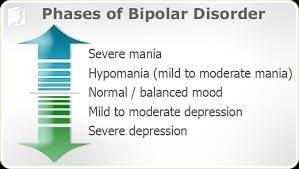
When most people think of bipolar disorder, they may think of the two opposing poles that make up the illness. High and low. Manic and depressed. Many also believe that all people with bipolar flit between these moods constantly and that the illness is severe or alike in everyone who has it. This is not the case.

There are two types of bipolar disorder. I have the first one – Bipolar affective One disorder, which means that I have serious manic episodes which include psychosis (loss of touch with reality). This has happened to me twice in my life and both times I have needed hospitalisation. Bipolar two is characterised by lesser manic episodes (hypomania) and more mixed states.

mania2

(image: https://www.34-menopause-symptoms.com/mood-swings.htm)

Being Bipolar One is very challenging. When I get ill, I get really really sick. Loss of insight, loss of reality, needing anti psychotic medicines now- ill. Ill to the point of being sectioned under the mental health act due to lack judgement and insight. Believing that my family are out to get me and people are going to harm me – ill.  Really unwell.

When one of these serious manic episodes strikes for me, my thoughts begin racing and I can’t concentrate. I don’t sleep, I am more creative in the short term but a gibbering wreck in the long term. I start believing I can do things that I can’t rationally. I am super vulnerable and I speak much faster. I may not make much sense and when the delusions begin, I start believing I am going to be harmed.

Luckily, these episodes are kept at bay by a host of excellent medications including Lithium and Quetaipine. I also take anti depressants to keep the low periods at bay in my life.

Full blown psychosis and mania for me are very rare but they do happen. In 10 years, from 2004-2014 I did not have a hospitalisation. I was depressed and anxious but I was able to recover at home.

I had no hypomanic or manic episodes for a decade! No psychosis. One therapist even questioned my diagnosis, before my 2014 hospitalisation.

Mania for me means danger. That danger means I am more vulnerable. I have to be very careful who I surround myself with during those times. I don’t drink alcohol to excess or take drugs, but some with this kind of mania do. Or they spend lots of money or engage in risk taking behaviours such as sexual activity.

I have learnt that as long as I take my medication regularly, get enough sleep, eat well (and don’t engage in long haul travel) that I can keep my symptoms at bay. If my medicines work! (this is always a fear.. that they could stop working).

Mania for me strikes out of the blue sometimes. I also have to be careful that my mood stabiliser medicine is holding me- as with high doses of anti depressants, mania can be triggered without it.

When in psychosis in hospital I have thought the following untrue delusions

– I am being harmed by my family
– There are CCTV cameras watching and filming me in my bedroom/ hospital room
– I have been abused in some way (my mind convinces itself)
– I am being held by a criminal gang (in hospital)

These delusions have always disappeared over time, with excellent care from psychiatrists and psychologists, anti psychotic medicine and good support from family.

I don’t get these when well, and rarely have to go through them. I am learning to accept that my brain chemistry is not the same as other people and having bipolar, a chronic illness, is not my fault. I just do the best I can to manage symptoms and keep myself as well as possible.
If you want to share your story of mania and bipolar, please do write below.

There is hope and recovery after mania. Thank you to all on the Facebook group who voted for this one.  

Love, Eleanor x


Guest Post: Making the Climb: 4 Tricks to begin the fight against Drug Addiction by Kara Masterson

It all started at a party you attended a few months ago. You were feeling down after the big break up, and you just wanted to feel good again. Someone at the party offered you some pills, and they made you feel better than you had felt in a long time. Before you knew it, you were a regular user. At first the confidence and the euphoria were too irresistible to pass up.

Once hooked, you always knew how to get ahold of your drug of choice. It was always just a phone call away. Unfortunately, one thing lead to another and now the pills are not having the same effect they used to provide you with. In fact, you need more to get the same feelings, but coming down has been much more difficult on you than you ever imagined it could be. In a particular low moment, you started to think that it might be time to fight your drug addiction, but where do you begin?

Admitting Your Problem

As with most problems, fighting a drug addiction begins with admitting to yourself that you definitely have a problem with drugs. If you are not committed to this being the truth, then you will find it is difficult to see a commitment to overcome the addiction through to the end. When you are certain that you want to give up your addiction and will do anything to make that a reality, then you are ready to take the journey necessary to reclaim your life back from drug addiction.

Disassociate from Your Connection

As long as you can call someone to enable you to continue in an addiction, you will be driven by the addiction to do so. To fight and overcome a drug addiction, you must break all ties with the people who enable you. By making this commitment, you are getting rid of the source of your addictive behavior.

Build a Support Network

To give yourself the best chance at overcoming addiction, you need to identify the people you can trust that have your best interests in mind to confide in about your drug addiction. This could be friends, family members or even someone like a pastor or teacher.

The important thing is that you gather people around you who love you and are willing to help you see your recovery all the way through. Sure, some of these people may be disappointed to learn about your addiction at first, but ultimately those who have your best interests in mind will want to help you reclaim your life and will be there for you in times of weakness.

Get Professional Help

The next step in your treatment is to locate and visit a rehab facility that can help you to get clean from drugs. Detoxing from narcotic substances can sometimes be a difficult path to walk down, but it is best dealt with by working with professionals like Kick Recovery Coaching or someone similar who have helped countless people through this process. They will not only be able to help you know what to expect, but they can provide you with ways to get through the detox phase that are rooted in the latest drug addiction treatment options.

The road ahead may not be an easy one, but it is definitely better than not seeking any help at all. The simple reality is that drugs ruin lives, but you do not have to be a statistic or a willing victim. By taking up the fight to reclaim your life from a drug addiction, you will come out the other end of this journey a much stronger person for it.

Kara Masterson is a freelance writer based in the USA.

We are 2 Years Old! Blog Anniversary of Be Ur Own Light!

Wow! I can’t believe that Be Ur Own Light has turned 2 years old! We celebrated our second blogiversary on 1st March so I am a few days late but it doesn’t matter.

This blog has provided me with so many amazing opportunities so far. I have met more and more people who are like minded and want to speak about their own mental health to battle stigma. I have met some incredible people online too and such wonderful contributors. I love also finding and telling untold stories.

The blog  has really grown this year into a good mental health resource. We have had lots of contributors which has been fab. I (Eleanor, founder of blog) have also started a new career as a mental health writer and journalist. That is largely down to the success of the blog and I have truly found a niche. Be Ur Own Light is also a shortlisted finalist in the Health and Social care individual category of the UK Blog Awards 2018! Thank you for all your support of the blog and what we do.

I have written this year for Metro.co.uk, Glamour Magazine (online), No Panic, Happiful Magazine and Happiful.com, Counselling Directory, Mind, SANE, Time to Change, STOP Suicide,  Jewish News, Equilibrium Magazine, World Union of Jewish Students,
and been featured in Cosmopolitan UK, Elle UK and Prima.

Thank you to all these amazing people who have provided guest blogs this year. I have been humbled to work with experts and people with lived experience, to provide information and tell others stories to help end the stigma and provide a resource on mental health.

So thank you to these guest bloggers who gave me such wonderful content. There is more to come. This year March 2017-18 thanks to:

Hannah Brown- Recovery from Anorexia
Time With-  Therapy queries
Charlotte Underwood- Recovery from depression/ suicide
Trysh Sutton- Pure Path Essential Oils

Ariel Taylor- Trichotillomania guide
Jon Manning- Mental health in schools
Channel 4 and Lloyds Bank- Get the Inside Out campaign
Stephen Galloway- Inspirational lyrics
Eugene Farell AXA PPP- Loneliness tips
Peter Lang- PTSD and recovery
Kaitlyn W- Light beyond self harm
Jess Harris- Organ donation
Sam- Recovery from bipolar disorder
Ryan Jackson- Reasons for drug and alcohol addiction stigma
Redfin.com- Seasonal Affective disorder
United Mind Laughter Yoga- Job and wellbeing
Christina Hendricks- on PTSD
Reviews Bee- Child Mental Health
Consumer Money Worries- Mental Health and money
Stephen Smith- OCD and nOCD app
Arslan Butt- University students and mental illness
Tony Weekes- Unity MHS
Ellie Miles- Fighting Health Anxiety
Hope Virgo- Anorexia and recovery
Ann Heathcote- Government and mental health
Jasmine Burns- Strategies to help Binge eating
Bill Weiss- Surviving Opiate withdrawal
Jessica Flores- Bipolar 2 – depression
Jay Pigmintiello- Mindfulness and Meditation
David Baum- 365 Challenge for PTSD awareness
Karen- Mental health professional with anxiety
Dr Stacey Leibowitz Levy- CBT
Lucy Boyle- Burnout Syndrome
Diamond G Health Informer- Technology and mental health
Juno Medical- Anxiety Disorders

Thank you to everyone! This year we aim to cover even more mental health issues and disorders in our quest to provide information and be a home for all.

This year I have also written personal posts about my fight with my anxiety disorder, bipolar disorder, mental health and dating, mental health and weight gain, NHS waiting lists and therapy,  book reviews for Trigger Press for Hope Virgo and Karen Mantons books, Workplace and mental health stigma, Reading as therapy and more! Time to Talk Day and Eating Disorder Awareness Week marked and many conversations had eg stigma about psychiatric medication.

We have won various awards from other bloggers- Liebster, Sunshine, Mystery and Top 30 social anxiety blog and Top 100 bipolar blog from Feedspot.com.

I am so excited that we have over 4,000 followers on Twitter, almost 600 on WordPress, over 2000 on Instagram and of course my loyal Facebook followers too.

Thank you friends and supporters! Heres to a great year talking about all things mental health and normalising it to all.

Eleanor x

Extract from my latest Metro.co.uk article: 6 people share their experiences of friendship during Mental Illness

metrofriends

(image: Ella Byworth for Metro.co.uk)

I have bipolar disorder and four years ago I was hospitalised for a severe manic episode.

Without the love, kindness and support of my friends, I definitely would not have recovered as well.

Their support reminds me I am not alone and helps me to feel loved and safe. But mental ill health can be frightening for those who do not understand it, and sometimes friendships can be lost when one person experiences a mental health condition.

Some people may find it hard to cope with symptoms of a friend’s illness and, as such, cut ties or back away.

Jessica Valentine, psychologist at the Brighton Wellness Centre spoke to Metro.co.uk. She says: ‘Sometimes having a friend with a mental health illness can be draining. ‘On the other hand, it’s good to experience the journey of mental health; the ups and the downs, from a personal level. ‘You really get to ‘feel’ your friend come out of the depression. And, it somewhat makes you feel that you are living it too, side by side, helping them.’

The Mental Health Foundation explains that friendship can ‘play a key role in helping someone live with or recover from a mental health problem and overcome the isolation that often comes with it.

It advises that many people who manage to hold onto friendships while experiencing a mental health condition can see those friendships become stronger as a result.

I wanted to see the role of friendships in other peoples’ lives, either when they were coping with a mental health condition, or when they had witnessed a friend in crisis.

Here six people explain their experiences:

Read their experiences and rest of article: http://metro.co.uk/2018/03/01/6-people-share-their-experiences-of-friendship-during-mental-illness-7343290/?ito=cbshare

Twitter: https://twitter.com/MetroUK | Facebook: https://www.facebook.com/MetroUK/

4 Things Holding You Back from Therapy and Why They’re Not True: Guest Post by Time With

Taking a leap into the unknown always requires bravery. Now think of that ‘unknown’ as yourself. All those dark, niggly or somewhat strange parts of ourselves we keep buried away in the hope that they might just disappear if we keep pushing them away for long enough. Yup, therapy is totally exposing – and frankly, terrifying. So it’s little wonder we find ourselves coming up with a million and one excuses to explain why it’s not for us. Avoidance runs through our veins – it’s human nature. But it also holds us back, and at its very worst, avoidance can stall us from moving forward and reaching our potential.


Sometimes it’s worth digging a little deeper to properly explore our reasoning. That way we can be sure we’re not standing in the way of our own progress. Below we’ve listed some of the most common excuses we hear when it comes to therapy (and why we think they’re mostly rubbish!)


“I don’t know where to start”

It’s true, in the past finding a therapist has been anything but easy. Sifting through directories packed full of conflicting approaches and unfamiliar terms… It’s hardly surprising we’re left scratching our head wondering what any of it means. But fortunately, those days are now firmly in the past. Searching for a therapist online is quick and easy. There’s no need to get carried away in lots of research, now you can just work your way through a few simple questions and be connected directly with the right therapists nearby. If you’re interested in finding a therapist best matched to your needs, TimeWith’s online questionnaire matches you with suitable therapists in minutes.


“I can’t afford it”

This is valid- there’s no two-ways about it, therapy isn’t cheap. But in reality, it’s a small price to pay when weighed up alongside its many benefits. Good therapy has the potential to completely transform your life. Whether you want to learn how to relate better in your relationships, manage stress and flourish in your career, or you simply want shed light on recurring behaviours or patterns… Therapy has the potential to do all those things (and more).


Also, it’s important to remember that therapy isn’t forever. It’s not about making a lifetime commitment. It’s an investment, and there’s a really wonderful feeling that comes with the decision to invest in your own mental and emotional wellbeing. If money’s an issue, never be afraid to ask your therapist about concessions. Lots of therapists offer what’s known as a sliding scale meaning they can offer a discount according to your financial situation.


“What can a stranger offer me that my friend’s can’t”

To think of therapy as a friendly heart-to-heart is to misunderstand it completely. There’s no doubt in the value of having a good, solid support system in our friends and family. But your therapist isn’t your friend – in fact, there are very strict rules around that in therapy. Your therapist will always remain neutral allowing them to take a uniquely objective standpoint. It can be easy to get so wrapped up in our own story that we don’t see the broader picture. By extension, friends and family are part of our story. They can be happy or sad for us, but they will always have something at stake in our life. It’s only inevitable that this colours their advice and approach, whether they mean to intentionally or not.


Habits, patterns, thoughts… Whether we like to admit it or not, we’re more alike than we think. Whilst our experiences in life will be completely different, the coping mechanisms we adopt to deal with what happens to us in life very often follow similar patterns. Therapists are trained to recognise these signals and guide us towards coming to our own realisations. The best moments in therapy are those a-ha moments – the kind that friends and family struggle to provide us with, no matter how much they love us.


“What’s going to change”

Everything, potentially. But of course, what you get out of therapy comes down to what you’re prepared to put into it – as with most things in life. Film depictions of therapy have done us a disservice for the most part. Despite appearances, therapy isn’t about rambling on Woody Allen-style about our neuroses. Don’t get us wrong, the talking part’s great! But what therapy’s really good at is finding solutions.

It’s all too easy to bulldoze our way blindly through life living out the same patterns time and time again. Good therapy is about taking accountability for the way we are. But that can only happen when we dig deeper and understand the whys. Far from self-blame, this process actually allows us to forgive ourselves for thoughts or behaviour we haven’t liked. To understand that it was the only way we knew how. But with this new awareness also comes the responsibility to change… There aren’t any excuses anymore.

This is the heart of therapy – we slowly peel back the layers to see ourselves in the clear light of day, no pretences. It might seem scary at first, but in reality, it’s liberating.

TimeWith is a service dedicated to helping people reach the right therapist. Run through a quick online questionnaire and connect with suitable therapists in your area.

Extract from my article for Metro UK: How to Improve on-screen depictions of Mental Illness

metrodepiction

This is an extract from an  article our founder Eleanor Segall wrote for Metro.co.uk. To read the full article click here:

http://metro.co.uk/2018/02/21/how-to-improve-on-screen-depictions-of-mental-illness-7315828/

As someone with bipolar disorder, I am often intrigued by depictions of mental illness on TV and film. For many years, mental illness has been stigmatised, and this has been reflected on screen. Thankfully, this stigma is beginning to be broken down, but it is still present.

In her award-winning article, Mental Illness in the Media, for the International Bipolar Foundation, Hosana Tagomori, who was a high school student when she worked on the piece, wrote: ‘The media often portrays characters with mental illness as incomprehensible, tortured and convoluted… the entertainment value often gets in the way of an accurate portrayal. ‘Patients are perceived as dangerous or insane, due to the inaccurate portrayals in media, where the character is almost always hopeless, deranged, and dangerous.’ ‘It is quite easy to subconsciously absorb these misconceptions.’

Indeed, this is a challenge that those of us with mental health issues face. We want our illnesses to be portrayed correctly and accurately on screen, without having to watch stereotypes. Depictions of mental health can be disappointing

Tagomori wrote: ‘In the television series Homeland, the bipolar character always seems to be the pop-eyed, insane mess who is constantly going ballistic: ranting, drinking and screaming’. While this can be true for some people with bipolar in the middle of a manic episode, it is not a balanced approach to the illness. We know that people with bipolar disorder can often be stable and well on medication and that a long time can elapse between episodes.

Portrayals of those with mental illness as ‘insane messes’ raises dangerous misconceptions, including that people with mental health problems will never get well. For me, a brilliant representation of bipolar disorder and postpartum psychosis appeared on EastEnders in 2015.

This centered around a story line for pregnant character Stacey Fowler (played by Lacey Turner), who has the disorder and experiences a psychotic episode after giving birth. Before watching the scenes in which Stacey has psychosis, I was concerned how it would be shown on screen, but I needn’t have worried. Sensitive, accurate portrayals of mental illness on screen can help to educate viewers EastEnders worked directly with the charities Mind and Bipolar UK to create the story line, so the script and performance were as accurate as possible.

In 2015, Dominic Treadwell Jones, producer of the story line spoke to the Radio Times, he said: ‘EastEnders have worked closely with Mind, Bipolar UK, other experts in the field and women with personal experience to show a story that is true and painful, while also filled with the usual twists and turns viewers have come to expect from EastEnders. Lacey is one of the most raw and intuitive actresses on TV.’

Also speaking to the Radio Times about the EastEnders story line, Clare Dolman, vice chair of Bipolar UK, said : ‘As the national charity supporting people with bipolar, we’ve been glad to work closely with the BBC on Stacey’s storyline. ‘There is a very high risk that women with bipolar will become ill when they have a child and 20-25% of them will have a postpartum psychosis, so it’s fantastic that EastEnders are raising awareness of this devastating condition.’

In the scenes where Stacey is experiencing psychosis, the character believes she is the Virgin Mary and that her baby is Jesus. She experiences delusions and auditory hallucinations. I was concerned about how I would feel watching it, but what I most felt was a sense of pride that British television was portraying bipolar correctly, sensitively and appropriately.

Read more: http://metro.co.uk/2018/02/21/how-to-improve-on-screen-depictions-of-mental-illness-7315828/?ito=cbshare

Twitter: https://twitter.com/MetroUK | Facebook: https://www.facebook.com/MetroUK/