When you’ve developed an addiction to a specific drug or substance, it takes a lot of work to break that addiction. While there are those out there who can use a “cold turkey” approach to addiction, most people have to put in a significant amount of work in order to even begin experiencing healing.
Thankfully, that work comes with tools that can serve people in other areas of their lives. If you’ve been suffering from a substance abuse problem, consider some of the incredible tools that go into helping a person experience a better life.
Replacement Methods
While the cold turkey method works for some people, it oftendoesn’t work for the rest because they’ll simply hit a point where they either relapse or replace it with something just as harmful. For example, there are people who were able to break a drug habit but the replacement was that they started to overeat instead. Overeating is harmful in its own way as it can lead to different health problems such as obesity and chronic diseases. When you get professional treatments, you’re able to learn how to break a bad addiction and replace it with constructive hobbies and habits.
Professional Therapy
One of the worst things you can do is try to turn a friend or family member into your personal therapist. Their logic is only going to get you so far when you’re trying to beat an addiction. When you’re committed to getting professionalsubstance abuse treatment, you’ll be able to sit and talk with therapists. When a professional has a specialization in treatment for substance abuse, they’re able to recognize signs and symptoms that need to be addressed in order to gain a better approach to your healing journey, along with an insight into methods that are more likely to help you cope with things like detox, cravings, and the specific stressors or triggers that turned you towards drugs in the first place.
Self-Awareness
Self-awareness is so important for each person to have. When you’re aware of yourself, you’ll be able to recognize how much you can handle something. You’ll be able to recognize where you need to course-correct. When you’re working through an addiction treatment program, self-awareness development is an incredible tool because it shows you what needs healing, how you’ve coped with trauma, and more. When you’re aware of yourself, you’ll position yourself to make better choices.
You’ll have to maintain a level of self-discipline that most don’t really want to exert. Think about the millions of people who lose weight. When you’re overweight and stuck on a plateau, weight loss seems impossible. However, if you look at the many testimonials and people who’ve lost weight, you know that it is possible. Use this same logic for your journey through a substance abuse addiction. It is more than possible. Look for examples of people who fought their addiction and won. Use their stories as tools to help you keep going. With this goal, you can dedicate your time to the process, use these tools, and experience a better life. Be kind to yourself and keep going! This article was written by Kara Masterson.
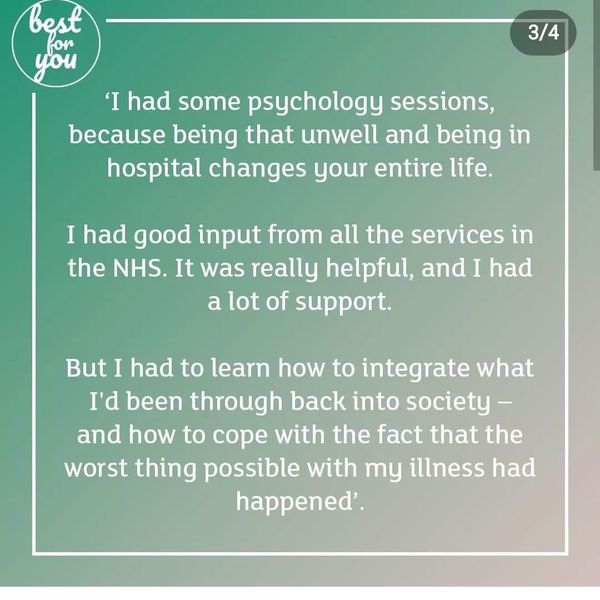
Yesterday was the first NHS meeting with the Perinatal (pre conception/birth) Psychiatrist. I didn’t know what to expect from it, though a few weeks ago I had the non NHS meeting with a very good consultant psychiatrist. They were both lovely women who are very good at their jobs- I had had to initially try for a private referral due to NHS waiting lists, but then managed to get an NHS appointment.
I was a bit nervous to see how the NHS would handle it, as they will be who I have care with going forward, so I was pleasantly surprised to be treated with respect and insight and kindness. I know that sounds weird, but those of you who know what my hospital admission in 2014 was like, will know that it wasn’t all plain sailing. Due to lack of insight, decisions happened about me and not always with me and so to feel empowered for me and my husband is very important.
Essentially these meetings now I have been well for a long time, are to plan ahead and discuss psychiatric history, what medications are needed, how it can be managed and what this would mean for a foetus and baby too. Birth carries a strong risk of relapse with the bipolar disorder, including the risk of psychosis and depression and so medication particularly for me needs to be planned carefully. I will need to be monitored once pregnant.
I am on 3 different types of psychiatric medication and also a contraceptive pill. Before we start trying to have children, I will need to have a time of withdrawal from the pill, which could send my hormones all over the place (i used to have PMDD symptoms where I felt very depressed and suicidal on periods so this is a slight concern). Then I may need to taper down one of my medicines (possibly sertraline) with the assistance of the mental health team, to reduce the effect on a baby. As baby will have a time of withdrawal from medications after birth while in hospital- which scares me too that they will be affected temporarily so want to make sure any baby is safe, as do the team I will work with.
The Dr also mentioned I would need to be in hospital for 5 days after birth so my Lithium level can be monitored (too high it can be toxic to humans) and I will need regular blood tests also- which are a source of anxiety, I hate hospitals due to past trauma. There was also a mention of needing to stop Lithium pre Labour and my Lithium levels as a result being quite high from birth too. So this information is good, knowledge is power but its also a bit terrifying to factor this all in.
I am scared but its also…. exciting in a weird way. Despite not yet trying to fall pregnant for a number of reasons so far- (which include possible bipolar relapse and changing meds/ time frames and starting a new job role), I have wanted to be a mother my whole life and I have more challenges than most due to the psychiatric and hormonal changes and how the baby would be. I question whether I am doing the right thing too by trying for a natural pregnancy in future and thats really hard. But egg harvesting and surrogacy is not easy either.. and its like going between a rock and a hard place at times with the best thing to do.
The doctors also mentioned I should visit a mother and baby hospital unit during my pregnancy to see what its like and what support is given- as my worries about it being like a severe psychiatric ward are high. Apparently, its a much calmer, supportive and therapeutic environment. I don’t want to be in hospital but these are the types of things one has to factor in with the bipolar being biological with mood changes.
Rob is endlessly supportive – we are embarking on a somewhat unknown journey – but are now armed with way more information from both psychiatrists and are very thankful to live in the UK.
So, this will be the last update from me on this for a while but knowledge truly is power and I know that with the help of our healthcare system- mental health teams and perinatal psychiatry/ obstetrics, my family, medication, self care etc I should be safeguarded and cared for well.
When the time is right, we pray our miracle will manifest.
Thanks for reading,
Eleanor x
PS shout out to my parents, Rob and family for their constant support.
Fashion is a powerful force. It has the ability to make people feel confident, empowered, or at its worst horrible about themselves. It can have a positive impact on mental health and self-esteem if you find something pieces that make you feel good about yourselves. On the other hand, fashion can also have a negative impact on self-esteem and mental health if you’re constantly exposed to images and messages that make you feel inferior or unhappy with who you are. Especially with the inward turn of the pandemic, its hard for people to feel happy and confident about themselves.
The Psychology of Fashion
Fashion is a multi-billion-dollar industry and a big part of many people’s daily lives. It’s a subculture that’s easy to invest in. And, like any other trend, fashion comes and goes, so you’re always in control of how much you invest in it. The psychology of fashion reveals the different aspects of how fashion impacts people’s self-esteem. From the way people perceive others based on the way they’re dressed, to how people present themselves to the world by choosing outfits, fashion has a strong psychological effect on everyone.
Body Image
Our bodies are such an important part of life, and it’s normal to have some insecurities about them. Still, as you grow older, many people struggle with body dysmorphia or an unhealthy obsession with one’s appearance. Constant exposure to images of other people’s bodies that are unrealistic and unattainable can be harmful to your self-esteem, especially in young people who are still forming their self-image. This can lead to eating disorders, body dysmorphia, low self esteem and depression and anxiety. Looking at images of gorgeous models wearing clothes you can’t afford or fit in can makes you feel left out or confused. It’s fun to keep up with trends, but try to avoid getting stuck in a rut of hype culture.
(image: Hannah Morgan at Unsplash)
So what should I do?
You can’t ignore fashion and societal trends- but it’s important to not let fashion (or what is popular to wear) become something that defines who you are. It’s a fun accessory, something you should do for enjoyment, creativity, and confidence. For people who have found themselves struggling with their mental health due to the psychological effects on body image, it’s important to seek help. Talk to your friends and family members, or seek professional help if you need it. There are many ways to find happiness in style- whether you’re into vintage clothing, a specific designer, or a particular style like athleisure. You can read blogs with good recommendations, and wear things that you love, like that pair of perfect trainers or Men’s Off-White Hoodies. There’s something for everyone, and it’s important to have fun with it!
Fashion and societal expectations of how one should look can have a big impact on mental health, so it’s important to be mindful of it. It is also hard to be bombarded with negative messages on body image via social media. The body positive movement has sprung up because of this narrative- showing curvier models and embracing your flaws as beautiful.
There are also many ways to wear your favourite clothes in a way that makes you feel good about yourself, without negatively impacting your mental health. Focus on what makes you feel like the best version of yourself!
This article was written by a freelance writer and contains do follow links.

The UK has an ageing population, with statistics indicating that there are 5.4 million people aged 75 years. A further breakdown also shows that persons aged 85 years and above make up 1.6 million of the population. Indeed, the ageing years are characterised by failing physical and mental health. However, science and society continue to devise ways to make the period less stressful.
Here are some guidelines on how:
The essence of mobility
As people age, one of the first things that deteriorate is mobility. The depletion of muscle tone, coupled with bone issues, may inhibit movement. Usually, it sets in gradually, and when nothing is done, mobility can decrease by as much as 70% to 80%. At that point, an ageing person may need walking aids to support their body weight. However, mobility issues can be thwarted if counter-measures are taken in time.
Geriatricians (primary care doctors for the aged) advise ageing persons to dedicate some minutes of their days to walk. According to these experts, 150 minutes in a week is adequate. When the elder individual has enough energy, an average of 20 minutes daily is perfect. However, another person with mobility issues can engage in a guided basic workout for at least 15 minutes a day. Among the elderly, the risk of falling is incredibly high. This may therefore require a specialised alarm for elderly persons. This is worn like a wristwatch and can be used to monitor the number of daily steps, call for help when needed, etc. So, as you encourage an older person to take mobility issues seriously, it helps to ensure that it’s done safely.
Reinforced social networks
It is essential to belong to a strong and supportive social network during the later years. Retiring from active duty and work can trigger depression. Although statistics indicate that depression in older adults is less prevalent than in the younger generation, it is still a cause for concern. Research in UK care homes revealed that 40% of the ageing generation endure chronic depression. This is likely due to the separation from their immediate family and friends.
Fortunately, this can be resolved when these seniors are encouraged to participate in social engagements. It can be in the form of a support group, a reading club, or other recreational groups purposely for older adults. As simple as these social networks may seem, they play a vital role in their life. It generates a sense of belonging, which subsequently promotes healthy mental well-being.
Attention to regular quality sleep
According to the British Geriatrics Society, insomnia is prevalent amongst elderly people. Whether housed in a care home or not, the difficulty in initiating and maintaining sleep is a hurdle many older adults cannot cross without help. Insomnia is both a physical and mental well-being issue. This explains why experts say it should always be tackled from both angles.
In other words, as doctors prescribe pills to aid sleep, it is advisable to focus on the root cause of insomnia. It is possible to boost sleep quality by speaking to medical professionals and also assessing if there is a mental health cause to the insomnia too.
Elderly adults need both physical and mental health care as they transition into this new phase of life. These are just some ideas to help.
As I started opening this page to write this blog post, on youtube, the Jessie J live concert I was listening to flicked on to one of my favourites of hers, ‘Who You Are’.
The lyrics:
‘Don’t lose who you are
In the blur of the stars
Seeing is deceiving
Dreaming is believing
its Ok not to be OK
Sometimes its hard to follow your heart
Tears don’t mean you’re losing
Everybody’s bruising
Just stay true to who you are.’ (Jessie J)
I wanted to write a post on what to do when you feel alone. This sums it up- self care and staying true to yourself.
Its ok to cry. Let the emotion out, feel the grief/fear/sadness/anger. Allow it to be present and wash over you. Crying can be healing.
2. Seek support from a loved one, someone you trust or a helpline like Samaritans. You are never truly alone even if you don’t have a supportive family or friends- though it is harder.
3. Write out your feelings on paper in a journal or talk about them with a therapist if you can access one.
4. Do a little activity to make you feel a bit happier– talk to a friend, sing, paint, write, do sport- whatever your thing is- do it.
5. Find a support group- Mind run good ones or a local charity to you.
6. Remember – these emotions, these feelings will pass like clouds eventually. This too shall pass. make sure you keep speaking, sharing and healing yourself.
7. If you are feeling very depressed or at crisis point, call a helpline or go to your GP.
8. Make sure you eat, drink and look after yourself. If this isnt possible- see point 7.
Sometimes we can all feel alone or lonely in the world. Its a part of being human. But taking small steps towards looking after ourselves and our mental health can be really helpful.
Social anxiety is quite common but it affects people in different ways, situations and circumstances. Some people may find they have anticipatory anxiety before certain events, like interview days, big events like weddings and public speaking. But for those that suffer with everyday social anxiety this can be equally debilitating.
Living with social anxiety can be tough because it literally affects everything we do. From the choices we make, activities we participate in, opportunities that are presented to us and naturally, the way we live our lives. It can also have a huge impact on the direction of our life and how it unfolds.
For many people living with social anxiety, it can range from mild to very extreme. It’s often triggered due to particular circumstances. Big events such as:–
Going on a date
Meeting new friends
New job interview.
It can also be triggered by everyday events. For example:-
Going to the supermarkets or the shops
Speaking with the cash register assistant
Asking for directions
Walking around in public places.
In order to address the many challenges of social anxiety, we need to understand the specific causes.
Causes
Social anxiety manifests itself as tension in the body, elevated heart rate, paranoia, awkwardness, inhibition, not being able to express ourselves in certain moments where we want/need to. This is often caused by the beliefs and the ideas that we hold in our mind. When these are triggered, or we are provoked/threatened by the particular circumstance, this is when the anxiety kicks in.
In our everyday existence, we have two types of thinking.
One type of thinking is known as logistical thinking. This is simply our organisational logical thinking such as, today, I need to get the train. Or we may have thought when we go to the shop, I’m going to buy apples today, they are on the list, together with potatoes and rice. It’s very logistical. This kind of thinking holds no real emotion and is more matter of fact.
However, most people living with social anxiety describe themselves as self-conscious and this is an accurate description of the second kind of thinking, known as self-referential thinking.
Self-referential thinking is where we are referring back to ourselves.
For example… we might have the logistical thought, OK, I need to get the train. But then self-referential thinking would come in, making us consider, what happens if I miss the train? What happens if I’m late for work? What happens if the train is delayed? What will people on the train think of me? Should I be getting the train to work rather than driving?
This is where we apply personal meaning to our circumstances and to the logistical tasks of the day. We give it meaning that relates back to our self-image and identity. Within this, self-referential thinking is where a lot of anxiety is created.
Examples of self-referential thinking
Note: everyone is unique and everyone has their own thought patterns, leanings and identity. Here are some examples of self-referential thinking that can provoke anxiety in people:-
What will people think of me?
What if they don’t like me?
I hope I don’t come across as being awkward.
What if I embarrass myself?
Are they looking at me?
What if I make a mistake?
All of these thoughts can be considered seeds. The first domino in the sequence triggers the momentum of catastrophizing self-referential thinking. This can lead to a sense of anxiety, dread, panic or embarrassment.
(image: Cloudlead blog)
Struggle with social anxiety
I actually used to really struggle with social anxiety and this would prevent me from speaking in front of groups. It would make me feel very self-conscious and on edge when I was in supermarkets, when I was around people in public places. I’d often worry about what other people were thinking of me or how I was coming across and I really used to beat myself up over this. It made me feel as though I was somehow inferior or there was something wrong with me.
In my quest to beat social anxiety, I tried a lot of things to try and overcome this. Some of the things I found most impactful were part of my own professional therapy training.
During our practice sessions with my colleagues, we would get to work through many of our fears and anxieties. That provided me with a great deal of relief and clarity.
Another thing that really helped me was the concept of self-acceptance. Because it’s often the things that we reject about ourselves that we then project onto other people. So if we don’t like the shape of our body or the way we look, we will assume that perhaps other people won’t like that either. But that is a projection of our mind onto these people.
It’s none of our business what other people think, it matters more about what we think and self-acceptance is a beautiful concept. A practice where we draw in the things that we feel such great resistance to. Then we seek to embrace it, accept it and claim ownership over it. That way we take back our power and finally give ourselves permission to exist as we are, without judgement or criticism.
After all, this is about reclaiming your sovereignty, your identity, your freedom from these thoughts, insecurities and worries. These are the things holding you back from living your best life, enjoying your life and fulfilling your potential.
Comedians have social confidence
Take comedians for example, they often talk about embarrassing moments and they talk about all the taboo topics such as farting and other awkward encounters whilst everyone in the audience cringes with laughter at the shock factor.
But whilst the audience cringes with laughter, the comedian stands there proudly and boldly, proclaiming to the world. They take ownership of their so-called insecurity or embarrassing moments and they do so with confidence. That’s because a confident person is a self-accepting person. They have claimed ownership over their embarrassing moments and taken their power back from them.
Bringing self-awareness into your thoughts
The first stage of transforming your anxiety is bringing self-awareness to your thought process. The question you need to ask yourself is: What is making me feel anxious?
Some people are afraid of judgement, criticism, embarrassment, drawing attention to themselves, being the odd one out, being rejected.
Whatever it is to you will be unique and if you spend time thinking about this, you will begin to get a clearer understanding of what’s really generating all of this anxiety. It can be helpful to use a notepad and pen for this exercise.
Social anxiety is just a symptom of an unconscious behavioural response. The good news is that it can be changed because all behaviours can be changed. This isn’t something that you’re born with. This isn’t something that you’re destined to live with for the rest of your life. It is something that can be resolved and there are many ways to do this.
Taking the right path for you
Some people feel inspired to take the route of exposure and setting themselves social challenges. This is done in the way of, OK, if I’m afraid of talking to people or more afraid of what people think, I’ll set myself a challenge. Every time I go out in a social situation, I’ll ask someone for the time or ask the shop assistant, how are you doing today?
But whilst that’s all very well for a lot of people living with social anxiety, it can be very intense and confronting, even just getting to that stage can be challenging. So for that reason, professional one to one therapy can be really helpful for this.
Some recommendations would be to first find a therapist that you trust, that you feel a genuine connection with them. Always check to see if they have a proven track record for helping people get results, and that they really are an expert in their field.
Once you find that connection, build that trust and learn to enjoy your unique character, your anxiety levels will fall as you take back control.
Social anxiety is an unconscious behavioural response that’s generated by our beliefs and thought processes, all of which can be challenged and changed..
Conclusion
At some point in our lives, the vast majority of humans on this earth will experience a degree of anxiety in certain social settings. How we react, adapt and behave within these settings is dictated by our attitude and perception of the experience.
Physical (physio) therapy sticks out as an important part of the recovery process if you find yourself in pain or overcoming an injury. Continuing to do your physical therapy may seem overwhelming, so you could end up losing your motivation. This means you should find some ways to keep yourself motivated, so you can enjoy all the benefits of physical therapy.
Ask Someone to Help You
If you struggle with motivation, you can always talk with people close to you for some help. For example, if you have a family member you trust, you can mention your lack of motivation. From there, you can ask that person to keep you motivated and check in with you, so you can stick with the physical (physio) therapy and overcome your injury.
Sometimes, motivation simply requires another person to help you out. If you let someone work alongside you, then you don’t have to tackle the challenge on your own. Having the additional support can help you remain motivated and stick with the therapy process.
Remember the Potential Benefits
Sometimes, people don’t like to go through physical (physio) therapy since they may feel pain and spend multiple hours tackling the process. For example, if you deal with sciatica pain, you may feel excruciating back pain while you go through therapy. Since you may not want to deal with the pain, you may lose your motivation to continue.
You need to remember the benefits of physical (physio) therapy, so you can stick with it. After all, you can lower your pain in the future if you effectively treat it now, so make sure you remember this point whenever you want to quit.
Make Note of Your Progress
When you go through physical (physio) therapy, you may overlook the progress you make if you focus on the negatives. For example, if you don’t like spending an hour every few days working on your physical (physio) therapy, you won’t realise the progress you made. If you change your mindset to focus on your progress, you may build your motivation up again.
This means you should remember how much time and hours you put into the process to help you stick with it. That way, you can get a better understanding of how much it helped you out since you can see how much you have progressed compared to the beginning.
Enjoy Every Victory
On top of tracking your progress, you should also celebrate each victory you experience. For example, if you go through physical (physio) therapy to help you walk again, you should celebrate once you take your first step. Even though it may not seem like much, reminding yourself of each of these moments can help you feel motivated to continue.
Even the smallest victories can help you with motivation, so make sure you never overlook them. You can enjoy the first step, but you should also celebrate every step you take. You can apply this type of thought process to any therapy you need to participate in.
Create a Timeline for Yourself
Sometimes, people need to know how much they must dedicate to the process if they want to keep themselves motivated. For example, if you need to go through physical therapy twice a week for a month, you can note how many days you have left. This means if you just finished your second session, you only have six more to go through.
Creating a timeline like his can help you visualise what you still need to do. You can mark these days on a calendar to keep track of each important date, so you can make sure you go through the whole process and finish it.
Conclusion
Maintaining your motivation requires you to focus on your mind, since doing so will help you look at the situation positively.
Make sure you keep yourself in a good headspace and boost your mental health, so you can get through the recovery process and get back to your usual life. Self care is so important.
This requires tons of effort on your part, but you can help yourself to get better and recover.
It’s no secret that parenting is hard. But what many people don’t realise is just how hard it can be on your mental health. Juggling the demands of work, children, and a household can be overwhelming – and it’s easy to let your mental health take a backseat. But this isn’t good for you or your children. In this blog, we will discuss nine tips on prioritising your mental health while raising children!
1) Make time for yourself.
One of the best ways to prioritise your mental health is to make time for yourself. This might mean setting aside a few hours each week to do something you enjoy or simply taking some time out each day to relax and rejuvenate. You must make this time for yourself, as it will help you recharge and be more effective when dealing with the demands of parenting. Your mental health is extremely important and and a part of taking time for yourself. It’s essential for you to seek out the help that you need when you feel as though you are struggling. If you would like to talk get in touch with Psymplicity.
If finding time for yourself seems impossible, start small. Even five minutes of relaxation can help clear your mind and improve your mood. And if you have older children who can look after themselves for a little while, use that extra time to focus on YOU.
2) Accept that you’re not perfect.
One of the biggest traps parents fall into is the belief that they have to be perfect. This is simply impossible, and trying to achieve it will only lead to frustration and stress. Accepting that you’re not perfect is essential in taking care of your mental health.
It’s OK to make mistakes. It’s inevitable! What’s important is that you learn from them and move on. Don’t dwell on your mistakes, as this will only aggravate your mental health. Instead, focus on what you can do to improve things going forward.
3) Don’t be afraid to ask for help.
Asking for help is another sign of strength, not weakness. If you’re struggling with your mental health, don’t be afraid to ask for help from friends or family members. They may not be able to solve all your problems, but they can offer support and understanding.
If you feel like you need more assistance, consider seeking professional help. Many qualified therapists can help you manage your mental health. Don’t be ashamed to ask for help – it’s one of the best things you can do for yourself and your children.
Asking for help is not only good for you, but good for your children. When you ask for help, you are telling your children it is okay to do so, and you will model excellent behaviour that will support them in their own lives and battles. It can also be important to seek support for your children if they need it. When your whole family is getting the support they need, then you can all live happier, more fulfilling lives. Seeking support for your children can help you. Many parents feel like they have to be the ones supporting their children. But you can only do so much. There comes a point where your children may need outside support. For example, if your children are neurodivergent or have learning disabilities, then specialised learning disability support from a professional will be able to tailor help to their individual needs.
4) Set realistic expectations.
One of the leading causes of stress for parents is unrealistic expectations. We often expect ourselves to be able to do everything, and this can lead to a lot of frustration and unhappiness. It’s important to set realistic expectations for yourself and your children. This means acknowledging that you won’t always be able to meet everyone’s needs, and that’s OK.
It’s also important to remember that children are individuals and will develop at different rates. Don’t compare your child to others – this will only lead to dissatisfaction on your part and potential mental health issues for your child. Instead, accept your child for who they are, and work with their strengths and weaknesses.
5) Take care of your physical health.
Your physical health is just as important as your mental health. When you’re feeling stressed and overwhelmed, it’s easy to neglect your well-being. But this is a mistake! If you want to take care of your children effectively, you need to take care of yourself first.
Ensure you’re getting enough sleep, eating healthy foods, and exercising regularly. These things will improve your physical health, but they will also boost your mental wellbeing. And when you feel good physically, it’s easier to deal with the stresses of parenting.
6) Set boundaries.
It’s important to set boundaries with your children, as this will help them learn how to respect your time and space. As parents, we often put our children’s needs before our own, but it’s essential that you take care of yourself too. Otherwise, you’ll quickly become overwhelmed and stressed.
Set clear boundaries for yourself and your children – make sure they know when to stop playing and start doing their homework, for example. It can be challenging to enforce boundaries sometimes, but it’s crucial that you do so to maintain your mental health.
7) Monitor your children digitally.
With the rise of technology, it’s more important than ever to monitor your children’s digital habits. Screens can be addictive and damaging to a child’s mental health, so it’s essential to set rules and limits on how much time they spend in front of them.
If you’re unsure where to start, try setting a timer and limiting screen time to a certain number of hours per day. You can also install parental control software on your child’s devices to help limit their access to harmful content. You can also keep an eye on them by using innovative new technology, you can click this link to buy it at Family Orbit. Finally, remember that it’s OK to unplug every once in a while – get out into nature, read books together, and have conversations without screens!
8) Spend quality time as a family.
One of the best ways to improve your mental health as a parent is to spend quality time with your children. This doesn’t mean spending hours watching TV or playing video games – it means being engaged and present with your kids.
Spend time talking, laughing, and simply enjoying each other’s company. Play games, go for walks, cook dinner together – do whatever feels fun and natural. When you take the time to connect with your children on a deeper level, it strengthens the bond between you and helps improve your mental well-being too!
9) Use meditation to release stress.
Meditation is a great way to deal with stress and anxiety. When you’re feeling overwhelmed, take a few minutes to yourself to meditate. This can be done in any quiet space, and there are many different types of meditation to try. If you’re not sure how to get started, plenty of guided meditation apps and YouTube videos are available online. Or, if you prefer, find a local meditation class or workshop. With regular practice, meditation can help you manage your stress levels more effectively and improve your overall mental health.
Mental health is just as important as physical health, and you must take care of ourselves as a parent or carer. These eight tips are an excellent place to start, but remember that everyone is different. So find what works best for you and your family, and don’t be afraid to ask for help when you need it.
This article was written by a freelance writer and contains affiliate links.
We all have been through it or at least heard about the term ‘retail therapy’ before. To many, retail therapy is the act of shopping to relieve stress. It is a coping mechanism that can be used to deal with emotional issues.
A study by the University of British Columbia found that people who shopped when they were feeling sad or angry were more likely to feel better afterward. Shopping may be a way for people to temporarily forget about problems and focus on something else. For many, getting over a bad day could be as easy as going to the online shop adidas offers or visiting your local retail store.
Retail Therapy does not work for everyone, and some may find it counterproductive because it can lead to feelings of guilt and shame after spending money on items that are not needed or wanted. So, what benefits can we get from retail therapy, and is it something that can work for you?
What are the Benefits of Shopping as Therapy?
Shopping is a great way to improve mental health. It can be a form of physical and emotional therapy. Shopping in store can be a form of physical therapy as it allows people to get up, walk around and explore new places.
It also provides an opportunity to take care of oneself by indulging in self-care. Shopping can be an emotional therapy as it allows people to express themselves through buying things they want or need, while getting rid of the things they don’t want or need anymore.
Relaxation
There are many ways to improve your mental health. Many people choose retail therapy as a way to relieve their stress and improve their mood. Retail therapy is an effective way to unwind because it helps people to change the focus of their thoughts from negative thoughts, such as worry or anger, towards positive thoughts, such as excitement or anticipation.
Sleep Improvement
It is important to note that retail therapy has been shown to have positive effects on mental health, but it should not be used as a replacement for professional help. There are different types of sleep deprivation, and insomnia is one of them.
Sleep deprivation can lead to mood swings, irritability, trouble concentrating, and more serious problems like obesity or diabetes. In a similar way, Insomnia can lead to depression or anxiety disorders, which can lead to other problems such as substance abuse or an eating disorder.
Improved Mood and Happiness
There are many reasons why retail therapy can help you improve your mood. One of them is that it makes you feel like you have accomplished something, which boosts your self-esteem. Another reason is that retail therapy is seen as self-care and an easy way to distract yourself from negative thoughts or feelings.
Self Control
Retail therapy provides you with a sense of control and relief. You can use it to distract yourself from your negative thoughts and feelings. While retail therapy is not always a good idea, it can be helpful in some situations. For example, if you are feeling frustrated or lonely, retail therapy might provide you with the joy and excitement that you need to feel better about yourself. It’s important to remember that the benefits of retail therapy are temporary and that this technique should be approached with care.
Disadvantages of Retail Therapy
While there are many advantages and benefits to retail therapy, there are many ways that it could have a negative effect on you. So, it’s essential to remember that retail therapy is not for everyone. It has been proven to be helpful for people who have depression and anxiety, but it also has its downsides. People who have a shopping addiction can find themselves in a difficult situation when they feel the need to buy something new every time they are feeling down or sad.
The person will not be able to control their shopping habits because of their addiction and wants the feeling of gratification from buying something new. They may also buy things impulsively without thinking about what they need or even if they have the money for it. When this happens, the person might start making poor financial decisions which could lead them into debt or bankruptcy.
It’s important that you lookout for signs of shopping addiction while taking part in retail therapy.
Signs of Shopping Addiction
Shopping addiction is a serious problem that is becoming more and more common. It can lead to numerous mental health issues, such as anxiety, depression, and stress. It’s important to be able to tell the difference between the occasional shopping spree and a full-blown addiction. Signs of shopping addiction include:
Spending too much money on clothes or other items for yourself or others
Having difficulty controlling your spending
Spending hours at a time looking for things to buy
Feeling guilty or ashamed after shopping
Putting off, paying bills, saving money, or doing other important tasks in order to spend money on things you don’t need
Once you find yourself showing signs of your addiction, it is important to get help because it can lead to mental health issues. It can also lead to a lack of self-control, which in turn can lead to other problems.
Knowing When To Getting Help
So, to answer the question: Can retail therapy help with your mental health? The answer is yes, but that yes comes with a warning beside it.
While retail therapy can be great for helping your mental health. It’s important for you to remember that everything should be taken in moderation. Retail therapy is great for helping you to get over a bad day today. However, when it starts to have a negative effect on your mental health instead of helping, it’s time for you to get professional help.
Don’t ever spend more than you have and if you find that you are regularly. support is available for you. You are not alone.
This article was written by a freelance writer and contains affiliate links.
To anyone that needs a song to inspire them, pick them up, that they can relate to.. see this beautiful performance by Nicolina Bozzo, an American idol contestant, covering the Sara Bareilles song She Used to be Mine.
This gives me goosebumps as it builds.. the lyrics are beautiful but Nicolina puts even more emotion into it…
She’s imperfect but she tries
She is good but she lies
She is hard on herself
She is broken and won’t ask for help
She is messy but she’s kind
She is lonely most of the time
She is all of this mixed up
And baked in a beautiful pie
She is gone but she used to be mine
……..
For the girl that I knew
Who be reckless just enough
Who can hurt but
Who learns how to toughen up when she’s bruised
And gets used by a man who can’t love
And then she’ll get stuck and be scared
Of the life that’s inside her
Growing stronger each day
‘Til it finally reminds her
To fight just a little
To bring back the fire in her eyes
That’s been gone but it used to be mine
Remember you are a survivor and you can do anything you want in life.Thank you Nicolina for this performance.