Im not coping perfectly right now, but that’s OK: Lockdown Life by Eleanor

hopenikki

(image: Pinterest)

Hope will carry you through. At the moment it feels like fear is taking over at times! Everything is so uncertain with the current global pandemic and routines changing, being unable to source certain freelance work, having to stay indoors a lot, not being able to see friends or family in person. People dying and being hospitalised. Everything is scary. Add to that the fear of death, the fear of the virus whenever I go out and you have…

Anxiety overdrive!

I was in self isolation a few weeks ago for what could have been mild Covid 19- I had a dry cough, sweats and fatigue. I recovered and am fine and still don’t know if it was Coronavirus or something else.

Then, the UK went into a form of lockdown.

I am not coping perfectly with all this. I’m trying my best to put routine and structure into my days. Some days I am so tired from it all, I need an afternoon nap in order to be more productive. I wake some days feeling anxious about what is to come, it all feels so surreal. One night, I sat and cried as everything felt too much with trying to balance work and life.

But, I wiped my tears, talked it out with family and felt better.

One thing I have started is a project called Corona Cards which sends handmade cards to people feeling lonely or needing cheering up in isolation. I now have 3 other team members (Bex, Donna and Abigail) making cards and its been really enjoyable. We send them by post to UK residents at no cost to them and you can follow us on Twitter @corona_cards and Instagram @coronacards1.

We have sent about 30-35 cards already and you can request them by asking me or messaging our pages. We hope it helps people’s mental health, particularly anyone very low or suicidal.

Crafting and focusing on the project has helped me a lot, I go for a short walk to the postbox to post them and therefore have a purpose to my walks! To know it is helping people also means a lot, and I have had 2 back in return which is lovely.

Thankfully, I can still have sessions with my therapist by Zoom and I have family support too. It is such a strange time in all our lives and it is understandable that anxiety and fear will creep back in. Especially if we have loved ones who are ill or we have existing mental health conditions.

I have learnt that life is a long game. Obviously, simply telling you to think a particular way isn’t helpful, but if you can slowly train your brain with help , then you’ll get a much better perspective on everything surrounding life and Covid. By no means does this suggest that we should all look miles away in the future and think about retirement properties or what your grandkids will be like, it simply means that you should take stock of the most important things around you and prioritise those.

I am thinking of those who are ill, particularly the ones I know about personally and wish them a full recovery.

A wise friend of mine told me this week that it is OK to take time for yourself. To just be, to look after your mental health. She is right.

So right now, despite feeling like I should be constantly working or busy with Pesach cleaning, I will be looking out for self care and I hope you will too. Keep focusing on gratitude.

Wishing all my Jewish friends a happy Pesach and everyone else a good Easter break.

How are you feeling?

Eleanor x

Covid 19: Positive and Negative for Mental health and Work? Guest blog by Danielle Strouther

hajoon1

(image: morefamousquotes.com)


For anyone that’s suffering from anxiety, OCD or other mental health conditions, living through a pandemic is not a walk in the park. 

A time of crisis is enough to cause panic in anyone. If you’re already struggling with a ‘normal’ day, the added stress means it’s even more difficult to keep your head above water. 

But, it might not all be bad news. Using mental health data commissioned by Adzooma, there may be some light at the end of this tunnel. 


Why we should care about mental health

COVID-19 is a pandemic, with just under 500,000 people affected around the world as of March 26th 2020. 

To put things into perspective, mental health currently affects 676 million people worldwide. It’s not a pandemic, it’s an epidemic.

Mental health isn’t contagious. You don’t contract depression from shaking hands with someone that has it. But it is a crisis that’s often overlooked. In fact, 70-75% of people with mental illness receive no treatment at all, choosing to remain silent. This is particularly true in men, who make up 75% of all suicides. In the UK, men aged 40-49 have the highest suicide rates in the country.


Mental health caused 44% of all sick days 

1 in 5 employees have called in sick to avoid work. And no, this wasn’t because they simply didn’t want to go. It’s because their mental health had become too much for them to do their job. 

Rather than be honest, 90% of people lied about it, using another reason for their absence. 

In 2019, there were 602,000 total cases of work-related stress, depression or anxiety in the UK. That’s 44% of all health-related sick days.

The cost of this is projected to be between £39.4 billion to £99 billion each year for businesses. If you break this down, it can cost employers £1,300 per employee if they don’t have the mental health support in place for their staff. 

“My mental health has impacted my work. It’s caused me to leave jobs, to call out some days when it’s just too much for me to do normal day to day activities. I also have tried to go into work on days where I’m not 100% and my quality of work and productivity have suffered.”

Rhea – Via Adzooma. 


69% of people say working at home helps with mental health

Here’s the light at the end of the tunnel. According to research, 69% of people believe that working at home improves their mental health.

Around the world, offices are shutting en-masse, sending entire workforces to complete their jobs from the comfort of their own homes. If there’s ever a time that people needed space to focus on their mental health this would be it. 

Its given employees the space they need to recover mentally. Beyond that, it’s showing employers that their business is capable of functioning remotely.

The positive outcome of this is that hopefully after the COVID-19 crisis, we can set up a world where employees aren’t needed in an office every day. A world where employees are free to work at home and care more for their mental health – reducing office-based overheads and the cost of sick days. 


Astonishing mental health data

The data on mental health was complied by interviewing employees of a range of digital marketing and technology companies, including Google, Facebook and The Independent. It revealed stark information about the current state of mental health, such as: 

  • 67.9% of people state that their mental health has impacted their work. 
  • 57.5% of people state that work has a negative impact on their mental health. 
  • Only 32.1% of people have told their employer about their mental health. 
  • Of the 67.9% of people staying silent on mental health, 83.3% of them don’t plan on ever telling their employer. 
  • 66% pf people feel that their work is understanding about their mental health. 
  • But 46% of people feel like they don’t have enough mental health support at work. 
  • 90.4% of people believe working flexible hours can help with mental health. 
  • Only 24.4% of people have mental health first-aiders at their work. 
  • 91.7% of people believe there should be more services for mental health.
  • 89.9% of people think the government doesn’t do enough to support mental health. 
  • Only 28.6% of people currently access mental health services. 
  • But if more services were available to them, 66.7% would access them. 

Access the full data here. 


A push for positive change 

One of the best things to come of out the COVID-19 pandemic is people working together. 

Communities are being brought closer and we’re showing compassion and offering help in brand new ways. If you’re ever unsure of that, just watch a video of people coming together to applaud everyone who’s working to stop the virus every single night. It’s a wonderful show of camaraderie. 

It’s a global crisis and we’re in it together. Now, hopefully, we can carry on this momentum to help with mental health and continue the fight for better mental health support. 

With support, we can get better. We can push for positive change to help the crisis. Without support, it will only get worse.

Together, let’s take action and break the silence.


dannii (2)

This guest blog was written by Danielle Strouther. She is currently writing lots of words about all kinds of unique subjects at Adzooma and searching for a word she likes more than discombobulated. She has a masters in Film and Television, so can tell people she knows what’s good on Netflix.




How Debt can have a huge impact on your Mental health by Ian Sims

With the coronavirus outbreak, it is a worrying time for many of us financially. With that in mind, today we would like to share this about debt and mental health: 

Worries about money can hugely influence your overall wellbeing. A study conducted in 2019 showed that 9.5 million people in the UK have issues with their mental health, in direct relation to money woes, whilst a staggering 18 million worry about lack of money daily (source:N26).

How mental health impacts your finances

Research conducted by National Debtline indicates that approximately one in four adultswill experience an issue with their mental health within any given year. It is worth noting mental health incompasses a range of conditions and experiences, including:

● Anxiety

● Depression

● Bipolar disorder

● Phobias

● Schizophrenia

● Dementia

It is also worth highlighting that having a mental health issue or condition does not automatically mean you will struggle with finances or debt. However, it may make it harder to deal with. Research indicates that around half of all adults in the UK who are having debt problems also have a mental health issue (source: National Debtline).

It can causes a vicious cycle of problem health and finances

Unfortunately, feelings of stress, anxiety and even depression relating to growing fears about lack of money can lead to a vicious circle. It can impact your finance management abilities in a variety of ways. For example, serious anxiety or depression may cause you to lose energy or avoid your debt entirely. This may lead someone to avoid keeping up to date of their finances.

Problems with mental health could also affect finances if it means that it reaches a serious point where the person is required to take time off work. Depending on their individual circumstances (such as whether they are entitled to sick leave or not) this could mean a sharp reduction in their income. Unfortunately, this might have the unintended impact of making their mental health worse.

Other signs that debt is causing an impact on one’s health mentally include:

● Become overwhelmed or sick at the thought of the debt you are in

● Starting to withdraw completely from family and friends due to debt anxiety

● Symptoms of preexisting mental health conditions such as depression, are worsening

● Struggling to eat properly

● Struggling to sleep

● Regularly underperforming at work

What you can do if you are in debt and struggling with mental health

Do not suffer in silence, there are a number of places you can turn to that are confidential and free. This includes services such as the Samaritans or Mind. There are also debt charities dedicated to providing advice on how to get out of your debt, such as StepChange and National Debtline.

If you are looking to lower or consolidate your debts, you can look at debt management companies, but please note that they make take a fee for using their services

If you need help in the current crisis with getting Universal Credit or other welfare benefits for job loss or want to know more about managing your finances, check out the government and money websites such as MoneySavingExpert by Martin Lewis.

This blog was written by expert and freelance writer Ian Sims.


Coronavirus Thoughts: Acts of Kindness and Mental Health by Eleanor

01-Hope-Quotes-That-Will-Instantly-Lift-You-Up-Nicole-Fornabaiord.com-shutterstock-760x506

(image: Readers Digest)

Dear friends,

This has to be the strangest time in all our lives. Not being able to leave the house for fear of passing on a deadly virus, all the family working from home, worrying that symptoms are indeed Covid 19.

This outbreak has already infected friends and potentially family. I think I may have had a mild version and have been isolating for at least a week already, and now until the danger passes. Thinking of all my friends who are affected and anyone who has the virus or whose life is being disrupted because of it.

There are good things happening- acts of kindness, communities pulling together, sunshine and flowers and spring blooming. Supermarkets opening for NHS workers and the vulnerable, the homeless being housed in hotels, financial help from the government (although can we please help our self employed workers more?).

I do worry though about the impact the virus will have on those with mental health conditions. My appointment with a psychologist to help me with my PTSD has been postponed and no new date given. I can’t go to see my therapist either but I think will organise a Skype call so that we can continue the EMDR trauma therapy I have been having. Medication supplies are so far unaffected.

I am lucky to live with family at the moment and have the support of my husband, mum and step dad and wider family too. For those living alone, having to buy groceries and navigate this new and scary world alone is terrifying for them. I was heartened to see this week, the Jami appeal for the vulnerable in the Jewish community. Mental illness does not discriminate and with all the pressures at present, suicide remains a real risk. We can combat this through checking in on friends and family regularly and signposting them to emergency support such as the Samaritans or crisis teams.

It is a scary time but we all must pull together and reach out to each other, by video call, phone call, whatsapp message or more and try, from our homes, to look after the vulnerable and our neighbours.

Most importantly, we must look after ourselves and our households and try to stay well.

How are you coping?

Love,

Eleanor x

5 Ways Therapy Can Heal your Family: Guest blog by Samantha Higgins

5 Ways Therapy Can Heal Your Family (1)

Therapy can be very helpful for families, and your family could benefit from therapy, too. Professional counselling is a proven method to help with all kinds of issues impacting families, and any issues plaguing your family could also be addressed.

To help you pinpoint just how therapy could help your family, you should look into the various situations where therapy might be useful. In particular, you should consider these five ways therapy can heal your family.

1. When Having Marital Issues

You can get assistance with all types of marriage issues when you get help from a therapist. If you have entered a new marriage, you can learn how to adjust to the roles that come along with that. If your marriage is on the rocks, you can get assistance, too.

If cheating has become an issue and you need an infidelity therapist, professional help is without a doubt a good idea. Therapy can help you deal with all of the emotions, assist you with any grieving, and provide guidance on how to move forward.

2. Dealing with the Loss of Loved Ones

The loss of loved ones can impact your family to the point where professional help is needed. If your family has lost someone, you can have short-term effects and long-term effects. When your family loses a loved one, you always run the risk of issues developing further. This is especially the case if it was your family member who died.

You will not be the only one to benefit from help. Children can learn to grieve and deal with the new family structure. Parents can learn how to better take on leading a home by themselves, and other family members can sound off and get feedback, too. Often a loss of a loved one requires people to take on new roles and responsibilities. Therapy can help your family if dealing with those situations.

3. Help with Children with Behavioural difficulties

If you have a child or children that are struggling with poor behaviour, you should consider therapy. Not only can bad behaviors be stopped and corrected, but they can also be prevented from impacting your family in the future.

Your children will be assessed by a therapist and reasons for their behaviour can be identified. Then, your family can heal. You all will be able to prevent more poor decisions from taking place, and you will have all kinds of resources to make sure this happens.

4. New Family Dynamics

If you have introduced a new dynamic to your family eg a blended or step family or new sibling or spouse, you might need some professional help. Failure to make sure there is a smooth transition could have horrible consequences for you. You run the risk of family members feeling lost in the new dynamic. 

Whether you have a new spouse or a new child, these changes could cause issues for your family. Seek out professional services through therapy to mitigate issues from harming those you love. Your family can morph into the new family you know it is capable of becoming. You all deserve this.

5. Substance Abuse and Mental Health

Substance abuse and mental health are issues that definitely warrant therapy at times. Both of these issues can ruin your family’s well-being. If you are dealing with substance abuse or mental health matters impacting your family, you do have options for help. Therapy will help you unlock those options.

Did you know that around 20 million Americans deal with addiction issues? And did you know that almost 44 million Americans deal with mental health issues? If you and your family are dealing with either or both of these problems, you are not alone whether you live in the USA or not. You should consider turning to therapy to help your family overcome these issues.

Your Family Can Indeed Heal

If any of the five issues above touch close to home for you, you have a way out. You do not have to let these issues tear apart your family that you love. Your family does not have to hurt so much anymore.

Each of the aforementioned five areas can be assessed, addressed, and improved when problems are there for your family. There is hope for your family with therapy, and your family absolutely can heal.


This blog was written by freelance writer Samantha Higgins.


Wednesday Wisdom: NEW: Inspirational Life Quotes by Eleanor

watercolour

(image: freepik.com)

I do love a good inspirational quote, don’t you? If you follow me on my Eleanor Segall page on Instagram, you will often find my days marked with a life motto, positive affirmation or idea, to get me in a great mindset for the week.

So today I thought, let’s break the mould.. and do it on my blog.

Each Wednesday (or another dedicated day of the week) I will be sharing my inspirational quote of the week, to inspire you, share some wisdom that I am enjoying and hopefully help make you feel less alone with your struggles.

This week, I have been realising again that when life gets stressful, we need to take a step back, get out in nature and be with people we love. As we move towards Spring and Summer, I can’t wait for more sunshine.

I hope that your week is filled with good things,

Eleanor 

X


We are 4! On Be Ur Own Light’s Fourth Blog Anniversary by Eleanor

fourcandle

Its Today- 1st March 2020 and Be Ur Own Light is 4 years old! (cue the streamers!)

I still remember starting this blog as an outlet for my fears, thoughts and emotions dealing with my bipolar and anxiety. The blog started as a way to tell my friends and family how I was feeling and has evolved into working with guest bloggers and now brands/ partners on sponsored wellness posts too! Writing the blog and sharing thoughts has been so therapeutic and it has taken me on  a journey that I could not have imagined.

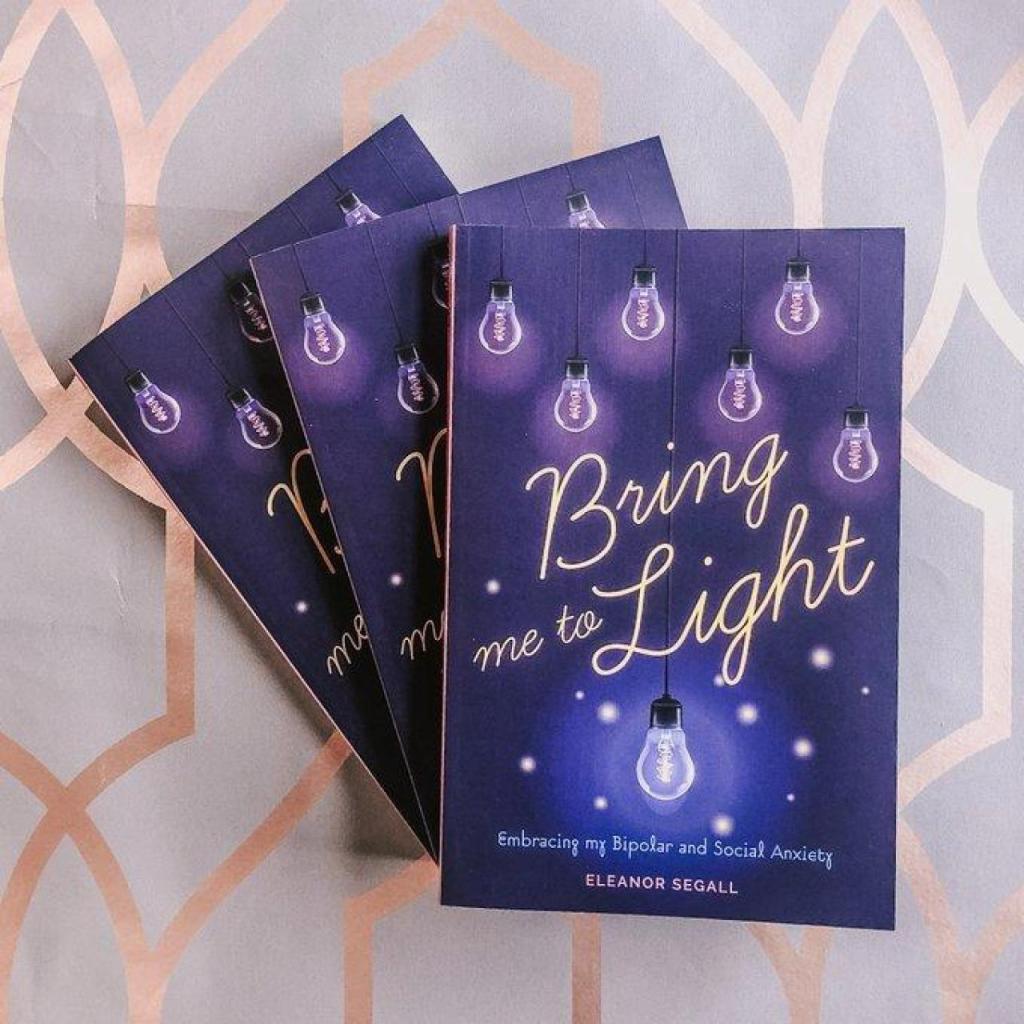
In November 2019, I published my first book Bring me to Light with Trigger Publishing which is the book of my life story with bipolar disorder, anxiety and my life in general (travelling, going to drama school, starting a career as a writer). The blog has also grown so much this year and is currently nominated in the Mental Health Blog Awards for Blogger of the Year, thank you to our nominee!

Additionally, Vuelio awarded us as a Top 10 UK Mental Health Blog for the second year running and interviewed me (Eleanor) about working as a blogger!  Thanks also to Feedspot.com and My Therapy App for listing us in their mental health blog lists too for social anxiety and bipolar!

This year, I have written about World Bipolar Day for the Centre of Mental Health, about my search for EMDR therapy on the NHS, living with depression in winter, about writing my book and new life changes (getting married) and 2020 new year round up with hopes for the future. We also promoted mental health campaigns such as Shout UK text line (founded by the Duke and Duchess of Cambridge and Prince Harry and Meghan),  Christmas 4 CAMHS, Time to Talk Day and Mental Health Awareness Week. Additionally, I spoke in Essex with my Dad about our joint story with bipolar for the Jami Mental Health Awareness Shabbat and we also spoke at Limmud Conference in Birmingham!

This winter I did some interviews for the book which can be seen on the Book tab above and also received some lovely reviews. It was amazing to appear in Happiful Magazine’s bonus wellness Mag this January (edited by campaigner Natasha Devon) and to write for Glamour and Bipolar UK. I also enjoyed being interviewed for the Jewish News and Jewish Chronicle! Hopefully at some point I will do podcasts about it too and more interviews.

From March 2019-2020, the blog has attracted wonderful and talented guest bloggers wanting to spread their messages about mental health and wellness.

We have also worked with the following brands on sponsored and gifted posts and hope to work with many more this next year :  YuLife, Nutra Tea, Essential Olie, Loveitcoverit on mental health apps, I-sopod floatation tanks, Core Wellness Maryland, Wellbeing Escapes Holidays.

My guest bloggers have written about their recovery and living with mental illnesses, as well as advice on how to improve your mental health. There a posts for whether you are going through a divorce, a bereavement, are stressed or have anxiety. We also had posts with people’s first hand experiences of mental illness including a brave post about being a sibling of someone with mental illness and one of living with an eating disorder. Furthermore, Be Ur Own Light has also covered World Mental Health Day and Time to Talk Day this year, featuring personal mental health stories as a way to raise awareness and fight misconceptions.

We have also covered new books coming out, a mental health fashion brand and a song about social anxiety, as well as posts about different therapies to help you.

bloglogo

Thank you to my amazing guest bloggers (non sponsored) March 2019-2020 for your fantastic content:   

Ashley Smith- How Massage Therapy helps Anxiety Disorders

Emily Bartels- 5 tips for a mental health emergency plan

Dale Vernor- Understanding PTSD by Gender 

Tan at Booknerd Tan- How audio books and walking has helped anxiety

Emma Sturgis- Loving yourself, tips for a body positive life

EM Training Solutions- How to maintain mental health at work

David Morin- On social anxiety and talking to others

Lyle Murphy- How equine therapy can help those with mental health issues

Charlie Waller Memorial Trust- Best of Musicals event

A Time to Change Hypnotherapy-  Hypnotherapy for self esteem

Nu View Treatment Center- The connection between anxiety and substance abuse

Shout UK- Royal family launches mental health text line

Mental Health Foundation – Mental Health Awareness Week  May 2019 Body Image

Emerson Blake- Coping with the stress of becoming a single parent

The Worsley Centre- A guide to therapies and finding the right one for you

Byron Donovan at Grey Matter – How I recovered from depression to form a fashion brand 

Luci Larkin at Wooley and Co Law- How to reduce stress and maintain mental health during a divorce

Nat Juchems- How to keep your loved ones memory alive after bereavement

Emily Ilett- on her book ‘The Girl who Lost her Shadow’

Mark Simmonds- an interview about his book ‘Breakdown and Repair’ with Trigger Publishing

Curtis Dean- 5 facts about music for stress relief

Robert Tropp- How quitting illegal drugs helps anxiety in the long term

Aaron James- the difference between psychotherapy and counselling

Dr Justine Curry- 4 ways to help a friend with bipolar disorder

Christmas 4 CAMHS campaign for children in childrens mental health wards

Ani O- 4 ways to ease the fear of doctors appointments

Katherine Myers- Ways that spending time outdoors can improve your mental health

Anita- 5 ways to lift you out the slump of seasonal depression

Chloe Walker- taking care of your child’s mental health

CBT Toronto- how to deal with social anxiety and depression

Katy- a true story with anorexia and OCD

Vanessa Hill- Life changing habits to bring into the new year

Rachel Leycroft- Expressing social anxiety through songwriting

Shira- Living with a sibling with mental illness: the meaning of normal

Capillus- 10 signs you may have an anxiety disorder

Brooke Chaplan- When therapy isn’t enough 

Jami Mental Health Awareness Shabbat 2020 

Mike Segall- Time to Talk Day- 9 years undiagnosed, my story with bipolar disorder

Jasveer Atwal- Living with PCOS and managing mental health

Leigh Adley at Set Your Mind Free- How CBT helps children with anxiety

Lizzie Weakley- How to heal and move forward when you have an eating disorder

Sofie- Living with an eating disorder

Thank you so much to all of you and I am excited to see what 2020-21 brings for the blog!

Be Ur Own Light continues to be read globally and I love receiving your messages about the blogs and finding new writers too.

Heres to a 2020 of positive mental health, of fighting the stigma against mental illness and creating a positive and supportive community here. 

Happy 4th birthday Be Ur Own Light!  ❤ May this be an enlightening year of growth for us.


Love and Light always,

Eleanor    

xxx

Looking to the Future and Life Dreams: by Eleanor

Hi friends,

It has been a while since I have written a personal blog as there has been so much going on here that I was just focusing on getting through it all. Robs dad had surgery to remove a second brain tumour and is thankfully recovering well, the surgeon amazingly got all the cancer. Success.

Alongside this, I have been in therapy since November with a wonderful therapist and we are doing EMDR (Eye Movement Desensitisation and Reprocessing therapy). This therapy helps to process trauma that can get ‘stuck’ in the brain if not processed. That trauma can stem from childhood upwards- I was an anxious child from an early age even though I had a good childhood! I have also been through a lot due to my bipolar episodes and hospitalisations. So, I am working with my therapist to process memories and we are doing it slowly.

My therapist will either ‘tap’ on the side of my legs while I recall the memory to help process it or my eyes will follow a light or her finger as we process. Understandably, there has to be a lot of trust in this type of relationship as well as me being protected and not triggered by the therapy. For this, we have developed a ‘safe place’ memory that I go to when we bring up anything too distressing. We have just started to go deeper with this and I will update you with our progress. I am far less anxious than I was and it has been really helpful to build a positive, working relationship with my therapist.

The reason I started therapy was because I was having intense panic attacks and finding it difficult to manage my life due to it. I hope that by working on these triggers that I can react differently and live a healthier and better life. Stay tuned!

A month or so ago, I also went to see my psychiatrist for the first time in 2 years, mainly as I had worries about my weight and physical health. My medications means I have put on a substantial amount of weight and this is worrying me health wise more than anything. I have been advised to diet and exercise and maybe work with a nutritionist. So, this will also be a new journey and I will try my best with this, not easy as the meds may stop me losing weight due to slowing metabolism or encouraging cravings. We considered reducing my Quetaipine, a mood stabiliser and anti psychotic to help but because I have been more mentally stable, I have decided to keep it at the same dose for now.

Rob and I have also started to look at new homes, which has been good. There is a lot happening right now and important that I rest, look after myself and keep calm.

Life with bipolar disorder can be uncertain. I have some fears about the future, which I will talk about in another more detailed post. My medicines thankfully keep me mentally well, but coming off them for future life changes eg pregnancy could be a big risk for me and one I am not sure I should take due to being bipolar 1 (risk of mania and psychosis). This is not currently imminent, but is still a future fear, especially as I love children. A decision for a later date.

Overall though I am hopeful and excited about life and will keep you all updated with my therapy and health journey and news.

Thanks for reading and following Be Ur Own Light as we come up to our 4th anniversary,

With love,

Eleanor x


9 Years Undiagnosed: My Life with Bipolar Disorder, for Time to Talk Day: Guest blog by Mike Segall

timetotalkdaydad1

(image: Time to Change)

*Trigger warning: discusses thoughts of suicide and mania, please read with care *

This blog has been courageously written by my Dad, Mike, about his journey with bipolar disorder and the hurdles he faced in getting a diagnosis. For those of you who have read my book, you’ll know some of this. This is the first blog that Mike has written for us and I want to share it on today, Time to Talk Day by the charity Time to Change.  So here is Mike’s story….


My experience of Bipolar 1 Disorder was that I was undiagnosed for 9 years. I was never sent to a psychiatrist and was put on the wrong medication (I hadn’t heard of mood stabilisers and seemingly neither had my doctor).

So- What is Bipolar Disorder? (formerly known as Manic Depression)

To me, Bipolar symbolises the two extreme poles of mood- mania and depression. The North Pole is Mania. Mania is wonderful for me- you think you can be anyone, you think you can do anything, achieve anything, You are flying. You think ‘why can’t everyone be like this and experience everything?’. You are much more uninhibited. You may shop more, you spend more money, You think you can FLY!

But you can’t fly and you fall, you fall off a cliff into varying degrees of  deep, dark depression, which can last for months.

Bipolar disorder is  a chemical imbalance in the brain that causes periods of depression and periods of abnormally elevated mood, mania. The elevated mood is significant, known as mania or hypomania depending on its severity and whether symptoms of psychosis are present. Psychosis means when your mind lose touch with reality, with delusions or hallucinations.

During mania, someone feels abnormally, happy, energetic, irritable and not requiring sleep they often appear to be bouncing off the walls, starting new projects, trying to achieve too much. In some cases, addictions during mania may also present.

During depression, someone with bipolar disorder may be crying, experiencing negative thoughts and giving poor eye contact. You will notice this if you ever have a conversation with someone who is depressed. They may also be suicidal or talk about self harm.

My Story:

My first manic episode occurred in 1991 and I went to the doctor and was prescribed Valium (an anti anxiety calming medication), which was handed out like sweets in those days.

The Valium didn’t do me any harm but they certainly didn’t do me any good. In the next 9 years, I had three manic episodes followed by three increasingly devastating depressive and suicidal episodes, the last of which lasted 5 months.

In my first manic episode I was going out a lot late at night to clubs and bars and spending too much money. My second and third manic episodes were much more controlled as I recognized what was going on but I was still much more outgoing than usual and spending too much money.

My depressive episodes were serious and eventually suicidal and lasted 3, 4 and 5 months respectively. I often stood on the edge of a London Tube platform thinking about ending it all. I would drive down the motorway at speed not turning the corners until the last possible moment. I would stand in the bathroom with hands full of tablets thinking about overdosing and ending my life. Mostly, I was at home in bed doing nothing but sleeping , eating and surviving.

The person you would meet today is not the person you would have come across at that time.

Looking back there was no real connection made between these episodes and I wonder 1. Why I was never hospitalised and 2. Why I wasn’t diagnosed more quickly.

First of all, 30 years ago far less was known about Bipolar Disorder so the doctors weren’t quick to diagnose it. Secondly, it was only after 9 years that my GP reviewed my file and noticed that I had never been referred to a psychiatrist.

This was the breakthrough that changed and saved my life.

I went to The Priory hospital to see a psychiatrist, describing my episodes. Within 45 minutes I had a diagnosis,

”You have a mental illness. It has a name, It is Bipolar 1 Affective Disorder. You have it for life and it is treatable with the drug Lithium.”

Lithium balances out the chemical imbalance so you end up between the poles and mood is then stabilised. I am pleased to say that in the past 20 years, the medication has worked for me and has stabilised my bipolar disorder, so I no longer get episodes of mania or depression.

I am also pleased to say that as quite an emotional person I still experience the normal feelings and emotions that come with everyday life.

Starting on Lithium is not easy as you have to be weaned onto it. There are side effects, the most common being weight gain and you have to have regular blood tests to make sure the level of Lithium in your bloodstream is correct (non toxic) and it is not affecting your kidneys.

I do wish that I had been diagnosed earlier and not had to suffer manic and depressive episodes as I did.

These are the 4 takeaways I would like you to have from reading this, this Time to Talk Day:

1. With mental health it’s good to talk about it , It’s good to fight stigma and it’s good for your own healing.

My journey started in 1991 and I would hear things like ”you’ve got a weakness. Why don’t you pull yourself together?”, which were unhelpful

2. Think about how you can help people in your community by recognizing the signs that someone has depression or mania.

3.  Live a positive life- I am an example of a bipolar sufferer who can maintain a positive life. Bipolar is an illness that needs treating. It is treated with medication but it can take time for the medication to be right as each person has individual brain chemistry.

4. Listen to those who are struggling. Most of us listen to reply. If you watch two people deep in a conversation or you are in one yourself your focus will be very much on the other person and you will be listening at 90%.

But if you are listening to understand and you are feeling and sharing their emotions then you are truly listening at 100%. Check out the Samaritans help line too.


mikesegall

(image: Mike Segall)

Mike Segall is a professional speaker and mental health advocate, sharing his lived experience with bipolar disorder to groups in the UK. He is also the father of the founder of this blog, Eleanor.

Talking for the Jami Mental Health Awareness Shabbat 2020 by Eleanor

jamimhas1

As some of you will be aware, back in 2017-2018, I helped as a volunteer with fellow volunteers (Lisa Coffman and others) to found the Mental Health Awareness Shabbat (Jewish sabbath) in our communities across the country here in the UK. The initiative, led by the mental health charity Jami and conceived by Rabbi Daniel Epstein, now runs in 150 Jewish communities.

This year, my dad Mike and I were delighted to be asked to share our father and daughter journey with bipolar disorder to Chigwell and Hainault Synagogue.

I have social anxiety- which includes at times a fear of public speaking. In December, I had a breakthrough, where I spoke for a short time at a conference called Limmud alongside my Dad and read from my book Bring me to Light. So, when we were asked to do this talk at Chigwell, I felt it could be possible.

I armed myself with the fact that I knew kind people in the community including the Rabbi and his wife and friends of my husband Rob (its the community he grew up in). I also wanted to share my story to help other people.

So, we stayed with a lovely lady in the community and had friday night dinner with the Rabbi and his family. On Saturday morning, I woke up feeling a little nervous but took my trusted anxiety medication for when I need it- Propranolol, and walked to the synagogue with Dad.

I managed not to have a panic attack and the thought of speaking to help others got me through (as did distraction, deep breathing and drinking a glass of water).

So, at the end of the service, we were called up to speak. Dad went first and talked about his journey with bipolar disorder from when it started for him in 1991 to finding recovery. Then, it was my turn.

I stood up there in the pulpit speaking to a packed audience with a prepared speech. I felt scared but also empowered and began to relax into the talk. I knew that by sharing what happened to me, being sectioned and so ill and talking openly, that I could break stigma and touch others. I was also so proud of my Dad for speaking so openly.

It was only after, when talking to people after the service, that we realised that about 150 people came to listen to our talk! We had some important conversations with people after our talk including someone very newly diagnosed and someone else whose niece had bipolar and is currently very ill.

I couldn’t and still can’t believe I was able to do that. However, since I have been very tired so trying to de-stress and rest as much as I can!

We just want to thank everyone who came to hear our talk and supported us, to every person who thanked us for coming and shared their stories with us. We are so grateful for such a positive reception and thank Rabbi Davis and the Chigwell community for having us.

The Mental Health Awareness Shabbat has had events in communities all across the country. It runs yearly and you can find out more here