Last few days: UK Blog Award Voting, Aftermath of Mind Article and Working on my Anxiety

ukblogaward

Its been a really busy few days on Be Ur Own Light blog. My first blog for Mind Charity on living with bipolar disorder was posted (you can read it in the below post) and I had the most amazing, positive reaction to it. I had emails and Twitter messages, some from people who are struggling and who wanted advice, others with bipolar who just wanted to chat because they didn’t know anyone else with the illness and some who wanted to help me to fight stigma via writing on the blog. Others merely expressed dissatisfaction with their own care. I’ve heard every single voice on all the different platforms and want to thank all of you for responding to my article in such a wonderful and important way. I have tried to respond to everyone who has written to me, liked or commented. I write to fight stigma and to break those barriers down and thank Isobel at Mind for helping me to share my story.

Then, in true Eleanor style, this week would be the week too that the voting for the UK Blog Awards 2018 opened! I have been nominated in the Health and Social Care Individual Category and need you all to VOTE for me to be shortlisted and get to go to the awards as a top 10 blog in my category (or a potential winner).

So please click here  https://www.blogawardsuk.co.uk/ukba2018/entries/be-ur-own-light-mental-health-recovery-blog    

Then type in your name, email and the health and social care category. Voting closes on December 22nd so thank you so much! I appreciate any votes. Thank you too to everyone on my Facebook (and my Dads), Whatsapp, LinkedIn, Instagram and Twitter who have voted for Be Ur Own Light, it means the world.

Lastly, I am still job hunting but still experiencing some anxiety around work situations. I know that things will improve if I just do as much as I can. I am also working with a therapist to tackle this. I am now on Day 9 of Holly Matthews 21 Day Smile Happy Me Project and it helps me to look at things more positively, so will keep up with that.

Have a great weekend friends- new guest blogs are being posted next week 🙂

Eleanor x

Guest Post: ‘Don’t count the days it may take for Recovery, make the days count’- On PTSD by Christina Hendricks at www.mentalhealthzen.com

Ptsd
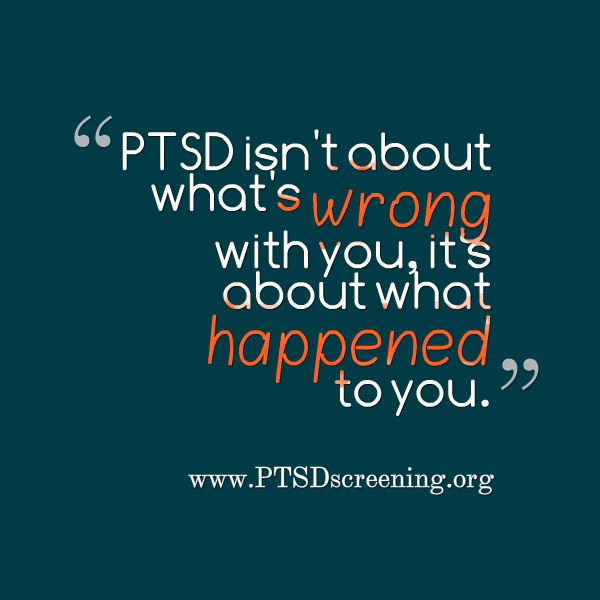
(image: PTSDscreening.org)

Trigger warning: contains descriptions of PTSD symptoms

“Don’t count the days it may take for recovery, make the days count. Seeking timely professional help boosts healing, instills hope and ensures recovery,” said 51-year-old Michael Hughes (name changed), a highly decorated firefighting veteran from New York as he stepped out of the therapy room after an intense session of trauma-focused psychotherapy. “Mental health issues are just like any other disease where recovery takes time. You need to have faith, be positive and stay strong,” he said with a smile.

Michael revealed that his job gave him post-traumatic stress disorder (PTSD) and that he got the problem from what he had seen. His 25-year stint as a firefighter with the Homeland Security and Emergency Services fetched him multiple laurels, but at a great price, which he continued to pay for years. After 22 illustrious years of service, he was diagnosed with PTSD because of which he was discharged from service.

Years of attending innumerable incidents of horrendous fire and fatal high-rise blazes gave him nightmares later. Frequent flashbacks of infernal flames engulfing entire blocks of buildings, scenes of the injured and dying being pulled out of the debris, and thick, choking clouds of black smoke adding to the mayhem became an inevitable part of his life. The impact of his job was so powerful that even watching television shows involving fire accidents would send shudders down his spine, waking him up in either cold or hot sweats.

Soon the mental agony made him feel as though the entire world was crashing down on him. Moreover, the fear of becoming an object of scorn and ridicule was so overpowering that he hesitated to express what was going on in his mind. He feared what seemed very real to him, may seem illogical or unreal to others around him. He knew that each traumatic experience of the past was gradually taking its toll on his mental health. The truth was the post-traumatic stress was wreaking havoc on the inside, while he still managed to look seemingly fine on the outside.

But it was a matter of time that he reached a stage when he completely lost all control over his emotions. Even the smallest of fire sparks or the sight of someone hurt or injured would make him upset and depressed. Nevertheless, what was controllable once, had become uncontrollable. Even the smoke coming from a cigarette would trigger a series of vivid flashbacks of a major fire accident, evoking painful memories of the past.

However, it was one ear-deafening Fourth of July, which blew the lid off. The non-stop pompous bright flashes and earth-shattering aerial fireworks all around him became unbearable. The petrifying sounds brought gut-wrenching scenes repeatedly to his mind. The ghastly flashbacks unleashed chronic unrest and panic attacks. He felt so low he contemplated his own life and what it meant. But as fate had ordered it otherwise, a well-timed intervention by his wife Amy (name changed) made him rethink his decision. “Sometimes it’s okay not to feel okay,” were the precise words she used. Her comforting words encouraged him to fight his condition by seeking support. He finally felt assured that his wife wouldn’t view his vulnerability as a disgrace.

Michael’s involvement with numerous emergency situations in both natural and man-made disasters during the course of his career compelled him to bottle up an ocean of emotions, anger, sadness, losses and grief. Finally, on hitting rock-bottom, it was in the mental health rehab that he was diagnosed with depression and anxiety, in addition to PTSD. Besides, the most important lesson which he learnt was to speak his mind. He realized that his family needed to know what he was going through so that they could help in some way or the other. Secondly, he realized that any mental problem should be viewed as a chronic mental health condition, requiring regular visits and check-ups, monitoring of treatment adherence, effectiveness and tolerability, and spreading awareness about the disorder.

The mental health specialists at the rehab, recommended Prolonged Exposure (PE), Cognitive Processing Therapy (CPT) and Eye-Movement Desensitization and Reprocessing (EMDR), in addition to a PTSD K9, to help Michael cope with his condition. Additionally, he was advised to workout with a personal trainer six days a week. Michael knew that it would take a long time to heal the scars of more than two decades, but he was confident that soon the damage will no longer be able to control his life.

Factors that prevent individuals from seeking help

“The brave men and women, who serve their country and as a result, live constantly with the war inside them, exist in a world of chaos. But the turmoil they experience isn’t who they are; the PTSD invades their minds and bodies” – this excerpt from Robert Koger’s 2013 bestseller Death’s Revenge is probably what Michael experienced during a significant chunk of his firefighting years. Apart from the existing confusion and lack of awareness, other reasons that force most individuals employed in emergency services battling similar mental conditions to not seek professional help are:

  • Seeking help could lead to undesirable consequences: The fear of being denied promotions or being ignored due to the stigma surrounding mental health could be a major reason for many to keep quiet.
  • Avoiding any form of discreditable dismissals: Studies suggest that being branded as mentally ill could lead to dismissal, negatively impacting the benefits of such individuals, including their chance to secure employment elsewhere.
  • Being cut off from access to treatment: Postings of emergency services staff across isolated locations worldwide could be another reason.
  • Screening for mental health is viewed in poor light: Popular notions of stigma, guilt and shame that surround mental disorders can prevent many individuals from seeking the required support.
  • Facing problems is a manly thing: “PTSD affects only non manly men,” is one of the biggest misconceptions nurtured by most men in uniform. This attitude need to change completely or else things could blow up to devastating proportions.

Acknowledging mental disorders is the first step to recovery

Living in a socio-cultural set-up where any symptom of mental problem is viewed as a sign of weakness often tends to reinforce the stigma surrounding mental ailments. In fact, even near and dear ones, including family members, don’t seem to prioritise mental health disorders as they would other physical illnesses. According to the National Alliance on Mental Illness (NAMI), around one in five adults (approximately 43.8 million people) in the United States experiences mental health disorders in a given year. Moreover, one in 25 American adults (approximately 9.8 million) is also known to experience a chronic mental health problem, interfering with major life activities.

But the support of family members can work wonders in eradicating the stigma linked to mental health. In fact, studies suggest mental health disorders, such as depression and anxiety, have their own way of hoodwinking even the most cheerful of people into believing that their existence is good for nothing and disgraceful. It can drain energy and happiness, shatter sleep patterns, eat up vigour and vitality, disrupt concentration and hamper functioning, leaving the individual in a constant state of dejection.

Mental health professionals insist on managing mental illness just like other chronic physical health ailments like hypertension and diabetes. The need of the hour is to encourage family members to stand with their loved one’s in providing the support and strength. Acknowledging the truth that there is a serious problem, and that their loved one is fighting a battle within is the first step to recovery. In fact, it is another way to direct people to professional mental health care services.

This article was written by mental health blogger Christina Hendricks at www.mentalhealthzen.com . Featuring case studies of real people with Post Traumatic Stress Disorder.


On Developing Positivity and Hope: A Self Development Journey

stars1
(image: motivation grid)

Its a brand new week. I have of late been struggling with anxiety attacks again (when I go to sleep sometimes the feared situation pops up in my mind and stops me from doing what I want to do) so I am taking time to heal myself and be more positive. I want to find hope and live a more positive life so I can live the life I want to live.

This prompted me to start my friend Holly Matthews 21 Day Happy Me Project. This blog is not an advert for it, but the course is something I am doing for me, using positive affirmations and thinking, the law of attraction and goal setting to find techniques to live a happier, healthier life. So, I have printed off my work book, listened to the first webinar and audio and aim to set a few mini goals and start work. Also, Holly is awesome and a big inspiration to me!

My anxiety disorder is  a struggle- I still can’t seem to get it under control, its like taming a beast. However I hope that through finding a more positive mindset and talking out my feelings in therapy (separate to this project) that I will start to feel better again.

I am working on self development at the moment, however long it takes but must remember to be kind to myself and keep going through the storms.

Hitting the Pause Button: Taking a step back to promote Wellness

pause1
(image: https://blogrhiaepoitiers.wordpress.com/2015/04/23/il-est-temps-de-faire-une-pause/)

Last week was particularly tough for me as I have written about and I felt really down. So this week, I decided to hit the pause button and just relax as best as I could, before attending job interviews next week. I am staying at my Dads in the countryside this week and while I have been doing a little bit of job hunting/ applying, I have mainly been resting and trying to promote as much relaxation as possible. I felt so drained and stressed out last week when I received some difficult news and knew I should take a step back in order to promote my wellbeing. I am feeling so much better, after having lots of sleep and not beating myself up over what went wrong.

Sometimes, I think that when we go through hard times, it can be all consuming. Your brain replays the upsetting event and tries to analyse it and think where you went wrong or if you could have done something differently. This week, after several days of this, I have chosen to pause. I have had to, for my own sanity. I am also lucky that even though financially things can be hard, I have the support of my family. Not everyone has that. That has made me be able to be more positive as well. I know that I am one of the lucky ones in that.

Last night, I went to the cinema to see Paddington 2 which was adorable. A very sweet, happy, family movie. Just what was needed really!

I know that things will get better again and am trying to draw on my strength and past experiences to be resilient and move forward. It is never easy. I am hopeful this week that I will get there, and part of that is from pausing and regrouping.

Mental Health Stigma and the Workplace: Part Two

timetochangestigma
(image: Time to Change Wales)

I am going through a particularly challenging, and at times, upsetting period in my life at the moment. This involves job applying and interviewing and facing job rejection. I was recently rejected for a job that I really wanted and knew I could do, having interviewed there and had a positive reaction. It is really hard when you try your best and put yourself out there to follow your dreams, to have it thrown back in your face. There is a blessing in every lesson – as India Arie would say.

For me, in the past, I have had times where I have had periods of sickness off work. These have been due to anxiety and panic attacks as I have written about before. However, I am working on this in therapy at the moment and feeling so much more positive and resilient about work and life in general. I love working, I am good at it and I am able to hold down work and hope I start in a job I love soon.

I have a goal and know I will get there. Its very difficult sometimes when you have time off because it doesn’t matter what its for, the workplace penalises against you for it via sickness records. You are seen as unreliable, incapable and not a good employee, there is job stigma- even if you woke up and had a panic attack and had to force yourself in, it has a knock on effect for the job search and life in general. There is still a stigma as to how you are seen.

So- I have been seeking support to help me in the past month and I feel I know what I am, where I am going and what I want to be. I will keep being resilient in the face of setback and I will achieve my dreams of being a teacher, with the support of loved ones.

It is really tough, it makes me feel low and down on myself- but I will emerge stronger. I hope that one day the workplace changes to see employees with mental health issues as an asset and not a burden. I am also really thankful for my new therapist at the moment- everything will be alright in the end.

New Look Site on Be Ur Own Light: a Mental Health Recovery Blog!

I wanted to make Be Ur Own Light clearer to access and easier to read aesthetically. I hope you like some of the minor changes to make it more accessible.

Welcome too to all our new followers- we are nearly at 300 on WordPress and over 3,000 on Twitter and over 2,000 on Instagram.

Be Ur Own Light is written to challenge mental health stigma and more posts will be published shortly.

Thanks,

Eleanor, founder of Be Ur Own Light

Guest post: How nOCD App helps thousands with OCD- Obsessive Compulsive Disorder by Stephen Smith

stephensmith
In the summer of 2014, I was tired of struggling with OCD, Obsessive compulsive disorder, so I decided to do something about it and begin my app, nOCD. nOCD, standing for “No OCD”, is an online platform that I believe would have helped me during the worst of my struggles and that currently is already helping thousands of others with OCD today. The platform is designed to help people with OCD during all four phases of treatment: 1) coping with the onset of OCD symptoms, 2) selecting a care team, 3) actively managing OCD treatment, and 4) maintaining OCD treatment progress.

My team and I at nOCD are able to address each phase of treatment using a unique combination of highly vivid content and 21st century technology. For instance, people with OCD can view our content on Instagram or Twitter at @treatmyocd and download nOCD for free on the App Store (m.treatmyocd.com/saveslives).

People with OCD say the app has been a major difference maker. It gives people guidance in the moment of OCD episodes, a structured platform to do Cognitive Behavioural Therapy (CBT) exercises, a community to talk with others (in beta), and real-time data 24/7. Here is more information about how it works:

  1. SOS Guidance: nOCD offers members clinically effective guidance in the moment of any OCD episode, using OCD specific Cognitive Behavioural Therapy. During an episode, members can hit the button “SOS” on their phone, which tells the app to immediately provide Mindfulness Based Cognitive Therapy and Acceptance Commitment Therapy (Response Prevention). For instance, if the member is obsessing, nOCD will ask questions such as: “Are you experiencing an Obsession or a Compulsion?”,  “What Obsession are you experiencing?”. “What triggered the Obsession?” And “How intense is your anxiety?” Then, based on the answers, nOCD will offer specific Acceptance Based Therapy guidance, to help the member effectively respond to the obsession without doing a compulsion. We believe the SOS feature can empower people with OCD to live their lives fully, knowing help is always in their pocket.

  2. Structured ERP ExercisesnOCD provides members with the tools and organization needed to consistently do planned OCD treatment exercises regularly and effectively, acting like a mental gym. The main challenge with doing these planned mental exercises is that they instigate anxiety. Since the anxiety alone can reduce OCD treatment adherence rates, the app attempts to remove all pain point. It offers members the ability to create loop tapes, scripts, and drawings. It also has built in exercise reminders and educational tips.

  3. Custom Therapy : nOCD customizes the entire treatment process to each member, helping augment therapy with licensed clinicians. Patients can customise their hierarchies, their compulsion prevention messages (acceptance based messages), their ERP schedule, and more.

  4. 24/7 In-App Support Group :Inside the nOCD app, people with OCD can join different support groups and anonymously post to each groups wall. We’ve created a platform where people can support each other through treatment and learn quickly that they are, in fact, not alone.
  5. Real-Time Data Collection: It collects real-time data about every aspect of the patient’s condition and treatment. It also longitudinally displays the data for every patient and clinician to see at any time. nOCD protects each users PHI data to the highest degree possible. For example, it uses a dedicated (encrypted) Ec2 instance on Amazon Web Services, SSL connection, Touch ID login access, LastPass Password security, and new, monthly, VM keys. nOCD is a HIPAA compliant commercial enterprise.


We have won the Sunshine Blogger Award!

sunshineblogger

Thank you to Sue at http://www.myloudbipolarwhispers.com for nominating Be Ur Own Light as one of their Sunshine Bloggers! Sue wrote, ‘I believe this great group of people and their blogs bring a lot of joy and sunshine and education into the lives of many people and I also pray these lovely people have a lot of joy and sunshine in their lives every day.’

Thank you so much Sue for this beautiful accolade and for paving the way in battling stigma against bipolar disorder and mental health in general! You are a star in a dark world 🙂

So these are the rules except I can’t think of 11 people to nominate, so I will do 4!

Rules for “The Sunshine Blogger Award”

  1. Thank the blogger who nominated you and link to them.
  2. Answer the eleven questions asked.
  3. Nominate 11 other bloggers. (I am doing 4)
  4. Create 11 new and different questions for them to answer.
  5. List the rules.
  6. Include the “Sunshine Blogger Award” logo in your post somewhere

    Sue has asked me to provide answers to the following questions:

    How old are you?  29

    How old were you when you were diagnosed with mental illness, or other type of chronic and/or invisible illness or grief?  Diagnosed with bipolar affective disorder at 16, lived with anxiety disorder from 17/18

    Where do you live? London, UK

    What makes you happy? Sunshine, sunflowers, autumn leaves, chocolate, Reading books and of course my boyfriend, friends and family.

    What makes you angry: War, refugees still having to flee, terrorism and mental health stigma

    When was the last time you experienced mental illness stigma or any other type of stigma or discrimination? A few years ago when someone refused to set me up on a date with someone they knew due to my illness being disclosed.

    What is your favorite kind of candy?  Cadburys chocolate

    What is your favorite season and why? Autumn (Fall)- because its so cosy and I love fairy lights, hot chocolate, snuggling in blankets, autumn leaves etc.

    How long have you been blogging? Here on WordPress for almost 2 years and before that on Blogger and elsewhere for 2 years. I am a writer so am always blogging.

    Do you prefer a sunny or a cloudy/rainy day? Usually sunny but there is something very cosy about watching the rain from inside.

    I nominate the following because they are rays of light in the blogging world, sharing, writing and wearing their hearts on their sleeves. They sparkle in tackling mental health stigma and I am so proud to have them as Followers of my blog.

    Alexis Rose-  https://atribeuntangled.com/

    Paul McGinley- https://paulmcginleymentalhealth.wordpress.com/

    Christina at Sea of Words- https://seaofwordsx.wordpress.com/

    Happiness Hunt Blog      https://thehappinesshunt.wordpress.com

    These are the following questions they must answer:
    1) Why did you start your blog?
    2) How long have you been blogging and what is your passion?
    3) Which country are you based and what is mental health care like there?
    4) What is your favourite movie?
    5) If you could chose one actor to play you in the film of your life who would it be?
    6) What has helped you on your recovery journeys?
    7) Where would you most want to travel to?
    8) What is your favourite food?
    9) Why do you like writing?
    10) Which song makes you smile?
    11) If you could pick a spirit animal who would you pick?

    Congratulations on the award !

Looking after Mental Health as a Student and Beyond: for World Union of Jewish Students on World Mental Health Day

This blog is one of a series of blogs that Eleanor, founder of Be Ur Own Light, wrote for the World Union of Jewish Students- www.wujs.org.il/blogs . It was prepared for World Mental Health Day written by young Jews about their experiences dealing with mental health.

eltwitter

In 2007, when I was 19,  I started my BA (Hons) in Drama and English Literature at Goldsmiths, University of London. Goldsmiths is a quirky, art school with an area of excellence in the arts. It was the perfect place for me to study, despite the distance to South London!

Having grown up and gone to primary and secondary school in Bushey, Hertfordshire in a close knit Jewish community, leaving my comfort zone behind was both nerve wracking but exciting. I was thrilled to be studying what I loved and being on a new journey. In my first year, I lived in halls and made lots of new friends .

However, it had only been 3 years since I had been diagnosed (at the age of 16) with bipolar disorder. Bipolar is a serious mood disorder where you can get low, depressive moods and at the other end of the spectrum- high, manic moods. Bipolar can be medicated with mood stabilisers and anti depressants, and I was very good at keeping to my medicine regime and of course avoiding alcohol, not so easy in a student environment!

Throughout my 3 years at Uni, although my Bipolar symptoms were largely kept at bay, I did suffer from social anxiety which impacted slightly on my Drama degree. Anxiety is something that I have lived with for a long time. When you are diagnosed with a mental illness as a teenager, you don’t want to be different. As I had been in hospital as a teen due to a bipolar episode and had to go down a year at school to catch up, getting to university was a victory for me. In fact, just three years before I began my degree, doctors had told my parents that due to the severity of my illness, I may not make it to university. I was so pleased to prove them wrong!

Yet, I did still feel different and although I loved my course, I did have times when my anxiety impacted. Studying Drama was (and is) a love and passion of mine. I loved creating characters, learning acting theories and forming performances with my fellow drama students. However, when I was feeling at my worst throughout my 3 years at Uni, there were times when I felt I couldn’t perform on stage.

In those times, my university tutors were hugely supportive and I disclosed to them that I was struggling with my anxiety disorder. I only ever had positive support and was set an alternative writing assignment instead, which meant I could still get my degree.

My advice if you are struggling with anxiety, depression or other mental health conditions at university is to do the following:

  1. Disclose your condition to your tutors (and particularly a supportive form tutor) if your illness is impacting on your work. It is not weakness to disclose, rather if you do, then the University can help. University has a duty of care to you to make sure you are safe and well. Once disclosing, you will often find that you will be highly supported by staff. Sometimes too, the University pastoral department can get involved to help you and refer you to counselling If needed. You are not alone.
  2. Be honest and kind to yourself. If you are living away from home, there is temptation not to tell your family or friends what is going on. You may think that you will be worrying them but actually having a strong support network really helps, so speak to those who are supportive and get some advice as to what you should do.
  3. If you are really struggling and cannot continue on the course, speak to University about it and see if you can defer a year. Also, make sure you make a GP appointment to discuss what is going on with your mental health- or if you are under a psychiatrist- go and see them.
  4. Try not to isolate yourself. At uni, I found strength from joining Goldsmiths Jewish society and later becoming President of it, working with local Rabbis and meeting Jewish students from all over the world. Its important if you can and are feeling well enough, to make new friends and try out new clubs in the Student Union. In London, we have UJS- Union of Jewish students, which I found really helpful to join. In my third year, I was on the events committee and organised a bar night, Booze 4 Jews London. Having those connections was really helpful to me and I enjoyed my time at university even more.
  5. Remember there will be times when Uni can be challenging. Whether its being away from home, meeting new people, having difficult assignments and lots of independent work, writing a long dissertation… know you can and will get through it but make sure you have the right support in place.
  6. If you are really struggling ie feeling very depressed, suicidal or want to harm yourself- please do share this with your doctor, family or someone you trust, so you can get the right support. You can also call Samaritans and various helplines.  It may help you to take time out of university to get well.

In my experience, my universities (after Goldsmiths, I did a year at Royal Central drama school) really supported me with my anxiety and mental health. Remember to speak out, get help and support and know you can still get your degree despite your health challenges – you are not alone.

Eleanor Segall is a mental health writer, blogger and advocate. She went to Goldsmiths University from 2007-10 and did her masters at the Royal Central School from 2011-12. She lives and works in London, England.

http://www.wujs.org.il/blogs/looking-after-mental-health-as-a-student-and-beyond-eleanor-segall

On being kind to myself: Mental health update

darling1

Life at the moment is much slower than normal as I am not in full time work. I have the time to write and blog and pitch articles, and to work on social media. I have the time to read and I have started a book blog (bookstagram) on Instagram. I can see friends and catch up with family.

However, for me, I am waiting to see my Doctor next week to discuss ways they can support me better with my morning panic. I desperately want to be working and be doing all I love. Its quite exhausting if I am honest, because I so want to be applying for jobs and doing and feeling 100 percent .

The key is being kind to myself and practising self care. I know I can get better again from the anxiety and be productive again but I need proper and sustained support from my medical team. I hope I can get it soon and that they will really help me. I have so much support from my family, boyfriend and friends but they can only do so much.

Life with this is not easy at all- but I know, like my other mental health challenges, that I will overcome this again. I just must have the support in place from my medical team and the right therapy. So lets hope that my almost 2 year wait for therapy will end soon!  I am reading self help books too in addition and trying to do all I can. I just hope that help for my anxiety disorder will finally arrive.