
Achieving positive change in Mental Health: Guest post by Tony Weekes of Unity MHS

inmyright

My name is Tony Weekes. I feel honoured to have been invited to post on Be Ur Own Light. I have witnessed at first-hand the mental suffering of close family members. In trying to ease their suffering, I have tried, sometimes succeeded, other times failed, to surmount the problems – which they have faced – caused by the current care system’s serious lack of funding and the resulting lack of cohesion.

I am not a professional in the field of mental health but I could not sit back and do nothing. So, I founded Unity MHS, a grassroots movement to revolutionise mental health care in the United Kingdom through education, recognition and intervention.

As a not-for-profit Company limited by guarantee (not a charity), Unity has no shareholders. Therefore, our driving force is the commitment we maintain on our mission rather than personal or financial gain. Our mission is two-fold:

  • To challenge the way society views mental health.
  • To facilitate vast improvement in access to ongoing care and socio-economic empowerment for those suffering with any kind of mental ill health.

I strongly believe that when mental health is viewed with the same level of importance as physical health, the funding necessary for the care system to operate as one unified force will be made available in an instant. Additionally, considering the component parts of the current system, I believe that most of the logistics required for UK mental health care to shine already exist. It is the consistent lack of investment which has allowed the system to show great strain under the pressure it faces.

The general-public are only now becoming aware of the possible mental health crisis we face as a country, or even as a planet. The conversations are becoming increasingly more open. However, it is only a widespread shift in public opinion, which will give the greatest burden of illness in the UK the priority status and corresponding national investment it desperately needs.

Hence, I set-off on my mission by writing In my right mind – a book which seeks to tackle this crisis from angles which may never have been considered in the public domain – to instigate that shift in the public’s perception of mental health.

Moving onto the second part of our mission, we aim to facilitate improvements through ongoing education, recognition and intervention in mental health. How can this be achieved?

Education:

There are two social entities which represent what should be the front line on a proactive approach to mental health. These are our schools and our families. The teachers at the school which my children attend actively promote working in educational partnership with parents. We believe this should and will also be the case with their mental well-being. Schools and parents will be given the tools they need to build resilience and notice signs of mental distress in youngsters at home and in the classroom. This will also give us all the knowledge to observe and act accordingly in the case of adolescents or even adults showing the signs of mental illness.

At Unity, we have developed a program with this aim and are in talks with a number of schools about implementation.


Recognition:

The earlier that the possibility of any form of illness is recognised, the sooner it can be diagnosed and the more effectively it can be treated before it gets more serious. The importance of early-  recognition for the whole system, cannot be over-estimated. Once we have the knowledge required to notice what may be the early signs in any setting, with a good treatment plan in place then arguably any form of mental illness can be managed over time with persistence.


Intervention:

In many instances, in-patient care will be necessary. Arguably, this is the area where the current system is showing the greatest signs of strain as there are simply not enough beds available. This results in patients sometimes being discharged before they have received the level of care needed or in other instances, people being admitted for care hundreds of miles from home, away from their all-important support network.

For any form of serious illness, varying degrees of rehabilitation are needed to ensure that recovery from the illness can be sustained once a patient is discharged. Our greatest challenge is to generate all the resources necessary for these beds and the other resources necessary, to be made available sustainably. With the right treatment, for the right amount of time, followed by ongoing care and support in the community, social and economic empowerment would make positive long-term recovery more likely and hopefully minimise the risk of relapse.

The NHS is a world leader, Unity will also make mental health care here world renowned.
tonyw

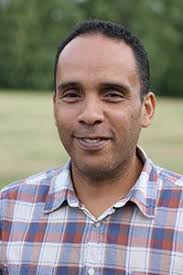
Tony Weekes is a mental health activist and founder of grassroots movement Unity MHS and author of the book, ‘In My Right Mind’. He campaigns for better mental health and can be found at www.unity-mhs.org  and his book at www.unity-mhs.org/book. Tony can be contacted at progress@unity-mhs.org

Looking after Mental Health as a Student and Beyond: for World Union of Jewish Students on World Mental Health Day

This blog is one of a series of blogs that Eleanor, founder of Be Ur Own Light, wrote for the World Union of Jewish Students- www.wujs.org.il/blogs . It was prepared for World Mental Health Day written by young Jews about their experiences dealing with mental health.

eltwitter

​In 2007, when I was 19,  I started my BA (Hons) in Drama and English Literature at Goldsmiths, University of London. Goldsmiths is a quirky, art school with an area of excellence in the arts. It was the perfect place for me to study, despite the distance to South London!

Having grown up and gone to primary and secondary school in Bushey, Hertfordshire in a close knit Jewish community, leaving my comfort zone behind was both nerve wracking but exciting. I was thrilled to be studying what I loved and being on a new journey. In my first year, I lived in halls and made lots of new friends .

However, it had only been 3 years since I had been diagnosed (at the age of 16) with bipolar disorder. Bipolar is a serious mood disorder where you can get low, depressive moods and at the other end of the spectrum- high, manic moods. Bipolar can be medicated with mood stabilisers and anti depressants, and I was very good at keeping to my medicine regime and of course avoiding alcohol, not so easy in a student environment!

Throughout my 3 years at Uni, although my Bipolar symptoms were largely kept at bay, I did suffer from social anxiety which impacted slightly on my Drama degree. Anxiety is something that I have lived with for a long time. When you are diagnosed with a mental illness as a teenager, you don’t want to be different. As I had been in hospital as a teen due to a bipolar episode and had to go down a year at school to catch up, getting to university was a victory for me. In fact, just three years before I began my degree, doctors had told my parents that due to the severity of my illness, I may not make it to university. I was so pleased to prove them wrong!

Yet, I did still feel different and although I loved my course, I did have times when my anxiety impacted. Studying Drama was (and is) a love and passion of mine. I loved creating characters, learning acting theories and forming performances with my fellow drama students. However, when I was feeling at my worst throughout my 3 years at Uni, there were times when I felt I couldn’t perform on stage.

In those times, my university tutors were hugely supportive and I disclosed to them that I was struggling with my anxiety disorder. I only ever had positive support and was set an alternative writing assignment instead, which meant I could still get my degree.

My advice if you are struggling with anxiety, depression or other mental health conditions at university is to do the following:

  1. Disclose your condition to your tutors (and particularly a supportive form tutor) if your illness is impacting on your work. It is not weakness to disclose, rather if you do, then the University can help. University has a duty of care to you to make sure you are safe and well. Once disclosing, you will often find that you will be highly supported by staff. Sometimes too, the University pastoral department can get involved to help you and refer you to counselling If needed. You are not alone.
  2. Be honest and kind to yourself. If you are living away from home, there is temptation not to tell your family or friends what is going on. You may think that you will be worrying them but actually having a strong support network really helps, so speak to those who are supportive and get some advice as to what you should do.
  3. If you are really struggling and cannot continue on the course, speak to University about it and see if you can defer a year. Also, make sure you make a GP appointment to discuss what is going on with your mental health- or if you are under a psychiatrist- go and see them.
  4. Try not to isolate yourself. At uni, I found strength from joining Goldsmiths Jewish society and later becoming President of it, working with local Rabbis and meeting Jewish students from all over the world. Its important if you can and are feeling well enough, to make new friends and try out new clubs in the Student Union. In London, we have UJS- Union of Jewish students, which I found really helpful to join. In my third year, I was on the events committee and organised a bar night, Booze 4 Jews London. Having those connections was really helpful to me and I enjoyed my time at university even more.
  5. Remember there will be times when Uni can be challenging. Whether its being away from home, meeting new people, having difficult assignments and lots of independent work, writing a long dissertation… know you can and will get through it but make sure you have the right support in place.
  6. If you are really struggling ie feeling very depressed, suicidal or want to harm yourself- please do share this with your doctor, family or someone you trust, so you can get the right support. You can also call Samaritans and various helplines.  It may help you to take time out of university to get well.

In my experience, my universities (after Goldsmiths, I did a year at Royal Central drama school) really supported me with my anxiety and mental health. Remember to speak out, get help and support and know you can still get your degree despite your health challenges – you are not alone.

Eleanor Segall is a mental health writer, blogger and advocate. She went to Goldsmiths University from 2007-10 and did her masters at the Royal Central School from 2011-12. She lives and works in London, England.

http://www.wujs.org.il/blogs/looking-after-mental-health-as-a-student-and-beyond-eleanor-segall
​

Living with Bipolar Disorder: my True story- for Counselling Directory Website

elliesegall

Be Ur Own Light author Eleanor tells her story for Counselling Directory. 

Article: http://www.counselling-directory.org.uk/experience_236.html

I was diagnosed with bipolar affective disorder at just 16 years old. I had been admitted to hospital after a year of depressive and anxious episodes, followed by a hypomanic episode (a lesser episode of mania). People with bipolar have a mood disorder which means our moods can become extreme and oscillate between low and high.

After a year of not understanding what was happening, I finally came to accept the diagnosis. You see, bipolar runs in my family. There is evidence it can be genetic but, as I was so young, no one suspected that my depression and hypomania could be bipolar disorder. I was hospitalised as a teenager in 2004 due to a mixed state of depression and psychosis (where your mind loses touch with reality).

Luckily, with medication and support, I was able to live a fairly ‘normal’ life for several years. Despite having to go down a year at school, I made it to University and completed a Bachelors and Masters degree. I went travelling with friends to India and Ghana, regularly took my medication – mood stabilisers and antidepressants – and was supported by various psychiatrists and therapists, as well as my wonderful family and friends.

But the trauma of what I went through caused an increase in my anxiety levels and I developed social anxiety, fearing what others thought of me. I also became slightly agoraphobic and suffered from panic attacks. Bipolar is such a complex disorder and sometimes anxiety can be a part of the depressive side of the illness.

Over time, I believe that my main medication stopped working. This coupled with several life events, meant I became unwell fast. In 2013, I began to sink into a very low depressive state which led to suicidal thinking. I became very unwell, but supported by my family and upped dosages of medicine, I got better again. However, this was short lived.

In 2014, I spiralled into the worst manic episode of my life. I had racing thoughts and pressured speech, was very fearful of those around me and began to experience delusions (false beliefs about the world). I was incredibly vulnerable and unwell. Unfortunately, the episode happened very quickly and although I hadn’t been in hospital for 10 years, suddenly I found myself there, waiting to be treated.

Being in hospital this time was hard; it took a while for the psychiatry team to bring me down from the manic state. I was in hospital for four months, attending therapy groups (I loved art therapy) and working with occupational therapists, nurses and a wonderful psychiatrist who believed I would get well again.

I did get better again in time. I had a further four months of support when I left hospital, where I was put on the correct mood stabiliser for me – Lithium – which has helped keep the moods at bay. I attended day therapy sessions on anxiety management, recovery, art and social groups and I slowly came out of my shell again. I was in shock and quite traumatised at what had happened to me. However, over time and with support, I accepted it and began to recover.

Since that difficult time, I have worked for and volunteered with mental health charities and supported communal projects. I also started my blog, Be Ur Own Light, in 2016 to explain to family and friends about my mental health. It has been read worldwide and its aim is to tackle mental health stigma and share real-life stories.

I also began to write for the Huffington Post UK, Rethink Mental Illness, Time to Change and Bipolar UK, amongst others. Writing is therapy for me.

My message would be that the right medical team, coupled with support networks, psychotherapy, medication and doing things you love to do, can help you feel much better and find recovery. I, like so many with mental health issues, am still a work in progress but to reach any form of recovery is a big milestone and I will fight to remain well. You can too.

Reading as therapy: A Lifelong book journey and Mental health

booknook
(image: The Tiny Life)

I have always loved reading books as an escape, as a way to jump into someone elses world and on a journey with a character- whether they fall in love, travel, have difficulties in their lives and overcome them. I often have two or three books on the go and more books than shoes! My book shelves are full- and although I have a Kindle,  I still love having the actual paper book in front of me.

This led me recently to start a Book Instagram blog (bookstagram) to share what I am reading and chat with like minded people! I share what I have been reading each week and yes I am a book geek 🙂 but it fills my heart to read and share. You can join my book journey at @elsbookshelf

I studied English and Drama at University and I have always loved stories. And creating my own too. For me, reading is a kind of therapy. It helps me take my mind off my own mental health struggles and it allows me to discover new authors, new characters and get inspiration in my own writing. Mostly though, I just love the creativity and joy in reading.

Thats what its all about, finding joy in the little things.

In terms of my health, I am stable at the moment but waiting a week to see my new psychiatrist. I feel like I can’t job apply at present because I don’t know fully what I can cope with and I want to make sure I get some proper support and psychotherapy.

Will write an update at some point with it all, but in the mean time, you will find me curled up with a book or spending time with my boyfriend, friends and family. And hoping I will get better and be able to hold down work fully soon.

On being kind to myself: Mental health update

darling1

Life at the moment is much slower than normal as I am not in full time work. I have the time to write and blog and pitch articles, and to work on social media. I have the time to read and I have started a book blog (bookstagram) on Instagram. I can see friends and catch up with family.

However, for me, I am waiting to see my Doctor next week to discuss ways they can support me better with my morning panic. I desperately want to be working and be doing all I love. Its quite exhausting if I am honest, because I so want to be applying for jobs and doing and feeling 100 percent .

The key is being kind to myself and practising self care. I know I can get better again from the anxiety and be productive again but I need proper and sustained support from my medical team. I hope I can get it soon and that they will really help me. I have so much support from my family, boyfriend and friends but they can only do so much.

Life with this is not easy at all- but I know, like my other mental health challenges, that I will overcome this again. I just must have the support in place from my medical team and the right therapy. So lets hope that my almost 2 year wait for therapy will end soon!  I am reading self help books too in addition and trying to do all I can. I just hope that help for my anxiety disorder will finally arrive.

Guest post: What can the UK government do to cultivate good mental health? by Ann Heathcote at Worsley centre of Psychotherapy

mentalhealthblogger
According to statistics revealed by mentalhealth.org.uk 65% of people in the UK have experienced a mental health problem in their lives at one time or another. What’s more revealing is that just a mere 13% of us say that we live with high levels of good mental health in our daily lives.

These stats suggest there is much to do to improve the state of our mental wellbeing, but to turn things around will require help from the powers that be, namely Government.

But is the UK Government doing enough to ensure that current and future societies have good mental health. And if you believe they could more, what action can be taken to fix this prevailing problem?

We reached out to some of the leading voices on mental health issues to get their opinion.

See full article at https://theworsleycentre.com/what-can-the-uk-government-do-to-cultivate-good-mental-health/


Ann Heathcote opened The Worsley Centre for Psychotherapy and Counselling in 2001, as a centre for the provision of professional psychotherapeutic services.

The Worsley Centre is a warm and welcoming environment for people wishing to undertake counselling and psychotherapy. The practitioners at the Centre care deeply about each individual’s mental health and well-being. They all share a passion for providing high quality therapeutic services.

Experts share strategies to stop Binge Eating. Guest post by Jasmine Burns

BED

Binge eating is a very serious disorder. Someone who has binge eating disorder will most likely be of normal weight, therefore making it hard to recognize if they have it by just looking at them. Signs and symptoms that you or someone you love have this disorder can include of the following:

  • Eating a lot of food in one sitting
  • Keep eating even when you are physically full
  • Dieting often without losing weight
  • Keeping food around you at all times

Binge eating can have vastly negative effects on your health and life. The impacts are not just physical but also emotional. Binge eating generates shame, guilt, anxiety and depression. These are emotional stressors that can cause your blood sugar levels to go awry.

We have sought out the expertise of professionals who share ways you can have control over this disorder. Please read through them to learn coping mechanisms.

https://www.thediabetescouncil.com/53-experts-share-life-changing-tips-strategies-stop-binge-eating/

Smiling through the rain: Early morning anxiety and life with bipolar.

heart1

Its been almost a week or so since I have written a blog and thats because life has been hard lately. Due to my early morning panic attacks and increased anxiety about leaving the house at that time, I couldn’t get in to work. Luckily, I can do online work on home doing social media and writing, so that is one major plus point. However, currently I am seeking extra support about my morning anxiety and fears.

I have lived with my anxiety disorder for most of my life- it comes in times of stress or times when I get triggered by something I can’t always explain- having to get up early and achieve, having to show up in the morning despite feeling so quivery and vulnerable, having to feel like I can cope- when inside I feel so scared. For reasons I can’t always pinpoint.

I have tried so many therapies and I would say with me, I have to use things in combination like breathing techniques, meditation, distraction, colouring and exposure therapy. However, now I would very much like  to find a psychological therapy that works for me. I have had 3 lots of cognitive behavioural therapy, which for me doesn’t seem to take away the fear. It is helpful for understanding limiting beliefs  like ‘I’m not good enough’  or ‘ I can’t do this, I will mess up’  and then understand where these fears come from and how they impact on life.

Briefly I will explain that I believe these limiting beliefs have come about because of trauma. The trauma of being hospitalised a few years ago for my bipolar disorder and having to learn to live life and get back to normality again despite disruption. The trauma of not feeling good enough, not feeling like I can live up to my perfectionist standards- not wanting to let people in my life down or me down . Feeling like I have to really achieve and be good at everything I do, because this belief has helped me fight, fight, fight for life and everything in it.

I, like many others with mental health issues, am hard on myself. I have a little voice though that won’t be tamed and is constantly pushing me to achieve and help people, help myself, be better. This is because I know the pain of setback. I know the pain of fear. and I know the pain of being confined to a hospital ward. So when I am well- nothing will stop me. The panic attacks may stop part of my life, but they won’t stop me from telling my story and reaching others. They wont stop me from being able to live and being able to touch peoples hearts through my writing (this is what I strive for).

Right now, I am dreaming about so much and hoping to put these dreams into reality. I will get therapy and I will get better with much effort and time. I will not let this keep me down- because I, like so many with my conditions, am a fighter and I will make sure that I live life to the full.

And part of this therapy is writing on my blog and being authentic, real and honest. And being blessed and thankful for my medical team, family, boyfriend, friends and support networks. Support is everything and I am so lucky.

Thanks for reading <3.

Nobody’s Perfect: An Update on life with Anxiety

wewere1

I have put off writing for several weeks just because its so hard to make sense of everything going on in my brain, in terms of my anxiety disorder.

I have had so many good things in the past few weeks but I am also battling anxiety around work. I love my job but past events relating to employment have made me afraid subconsciously. I very much need to unpack these fears with a therapist- I have been on the therapy waiting list for a year and a half. In a few weeks, I will be seeing my new psychiatrist (roughly the 12th/13th one in 13 years due to high staff turnaround!)  and I hope that he will escalate my therapy. I desperately need help with this as I get morning panic attacks around these fears. Despite using self help methods like meditation, these fears can be all consuming and stop me from going into work.

It is incredibly difficult for me to write about this because its so personal and because I love what I do. However, I have been struggling and I hope by writing that yes, I do get panic attacks about my fears, I can also make others feel less alone.

I did get some respite from these fears and work have been very supportive of me. I was able to go with my friend for a week on holiday to Madeira, a Portugese island off the main land near North Africa. Its a beautiful island, filled with terracotta roofed houses, turquoise seas, dolphins, whales and  turtles, friendly people, bright sunshine and palm trees. We went on a boat trip and got to see some spotted dolphins and relaxed in and by our hotel swimming pools. Not to mention the love for Cristiano Ronaldo on the island, as he is from there and the airport is named after him! It was a really restful and fun trip. I wasn’t anxious all week- as it seems to get triggered by specific fears and situations.

I just hope to get back to full health again and get some extra support around the fears that are fuelling my panic.

I tend to beat myself up about having an anxiety disorder and feeling ‘incapable’ of doing certain things. I am learning self love and to be calmer and to just see my anxiety as a hurdle to be overcome. I may be a perfectionist who hates letting others down
– but I am learning, like the Jessie J song, that Nobodys Perfect. 

Guest post: 5 Tips to Survive Opiate Withdrawal by Bill Weiss

drugs1

Bill Weiss shares his knowledge about drug and opiate addiction and how to recover, talking us through the withdrawal process in a safe way. It must be done under medical supervision.

An addiction to heroin or one of the many prescription opiates, such as Vicodin or Percocet, comes with intense withdrawal symptoms. For many, the withdrawal symptoms are what drive them into an early relapse, in hopes of ending the symptoms rather than enduring them.

 The withdrawal process can be unbearable, but there are ways to make it easier. In order to prevent early relapse, let’s break down the opiate withdrawal timeline and how a person can alleviate some of those symptoms.

The Opiate Withdrawal Timeline

One thing that’s important to keep in mind is that each person’s withdrawal process will be a bit different from the other. Withdrawal symptoms fully depend on the individual, his or her habits while using, and the addict’s brain chemistry. Opiate withdrawal symptoms can range from mildly uncomfortable to severe and debilitating.

 The reason opiates cause such intense withdrawal symptoms is because of the effect they have on the user’s brain. Opiates impact the opioid receptors, which are found in the central nervous system. By targeting the opioid receptors, they adjust the brain’s response to pain while the drug is in the user’s system. This causes both physical and emotional effects, numbing the pain both physically and emotionally. Medically, this is why many doctors prescribe opiates as a pain killer.

 Unfortunately, if a person uses opiates long enough, it alters the chemistry of the brain. Eventually, the brain relies on the drug to control any amount of pain, big and small. When a person abruptly stops providing this supply of opiates to the brain, everything suddenly becomes unbearably painful as the body is no longer able to regulate pain. This sudden onset of pain signals flooding the brain is withdrawal.

 The early stage of withdrawal typically lasts for 24 to 48 hours, and it can start anywhere from a few hours to 30 hours after the last use of the drug. This can include muscle soreness, irritability, trouble sleeping, sweating, a rapid heartbeat and a lack of appetite.

 Fortunately, that earliest stages are the toughest. Later withdrawal symptoms can also be difficult, though, as cramping, shaking, nausea and vomiting may continue. The worst of these later withdrawals usually ends within a few days of sobriety, though for some may continue on for several weeks.

 Most people find that the majority of their withdrawal symptoms are gone after about a week. There may be some lingering anxiety and nausea afterwards, which can lead to a lack of appetite. Cravings for opiates, however, often last much longer.

Getting Through the Withdrawal Process

Opiate withdrawal is no picnic, but finding the right strategy to get through it can help. These are five of the best ways to get past those withdrawals for a successful detox and recovery.

1. Try Tapering

A popular method for people to stop using opiates is the taper technique. As the name suggests, it involves the person slowly tapering down the amount of opiates he uses. The benefit of this technique is that it causes less severe withdrawal symptoms than if the person simply decided to quit abruptly. However, it requires the mental discipline to keep reducing the amount of opiates used and eventually stopping use entirely.

 Just like a user will develop a tolerance for opiates and keep needing larger doses to get high, that process also works in reverse. If he can cut those doses down gradually, he’ll need less of the drug and his brain chemistry will start getting back to normal. For many, another option is to supplement the detox with Vivitrol. Vivitrol breaks the cycle of opioid addiction by lessening the symptoms of withdrawal.

2. Join a Support Group

One of the hardest parts of withdrawal is going through it alone. They can break a person down mentally and physically. A great way for the person to get support and stay on the right track is finding an addiction support group in his area.

 There are many ways that a support group can help with opiate withdrawal. Other members of the group can provide suggestions on what helped them get through the withdrawal process. Support groups also offer constructive activities, such as boosting self esteem during addiction recovery. These activities are crucial to surviving the withdrawal process and preventing relapse.

 Most importantly, being part of a group lets the person know that he is not alone in his struggle. If he has felt down on himself, a group of people who understand what he’s going through can help him maintain high self esteem.

3. Try Over-the-Counter Medications

Many of the most common symptoms of opiate withdrawal can be reduced by using popular over-the-counter medications. Tylenol and ibuprofen are two options that can help a person deal with the fevers, muscle aches, chills and sweating that come with withdrawal. Keep these medications on hand so that you can take them as needed.

4. Keep Getting Nutrients

Because of the nausea caused by opiate withdrawal, it’s often hard to eat or drink. This can make withdrawal even more difficult due to the lack of nutrients being consumed.

 Stocking up on foods that are easy to eat is a smart move before detoxing. Bananas are one option that tend to go down easy, or the person can purchase meal-replacement shakes. Multivitamins are a great choice for ensuring the person gets all the nutrients he needs even during withdrawals.

5. Set Up a Schedule in Advance

As the withdrawal process is an intense one, it is best to clear your schedule in advance. There are two key points to clearing your schedule during withdrawal.

 First, clear your schedule of any important responsibilities. Besides the fact that the symptoms will prevent you from doing anything at all, anything that you do during withdrawal will likely be of very low quality. If you are working then take time off of work, if possible. Find a safe, quiet, and secluded place in which you can focus on getting through the detox without any added stress.

 Second, is to set up a different daily routine. Routine is a problem when it comes to drug use because people often get used to their drug habits based on their daily routines. Many grow accustomed to using at a specific time of day, such as before bed or after getting home from work. Adjusting that daily routine can help the person avoid specific triggers that make him crave opiates.

 It may not be possible to avoid withdrawal symptoms entirely, but you can at least make them more bearable. With the right approach, you will be able to get and stay clean of opiates, rebuild your life and develop better coping habits to deal with life.

 Bill Weiss is an advocate of long-term sobriety. As a member of the recovery community, he feels it is important to spread awareness of alcohol and drug misuse in America and beyond. Being personally affected and having family members struggling, it is a personal quest of his to get the facts about substance misuse to light, ultimately enlightening people about this epidemic.

bill1