How to Avoid Burnout during a Pandemic: Guest blog by Jade Mansfield at the Worsley Centre

teepublic1

(image: Tee Public)

One of the major causes of burnout happens when we’re in situations with minimal amounts of control over what we can do. Nowadays, it can seem like stress and burnout are a normal part of modern day working life. The World Health Organisation listed burnout as an occupational phenomenon and they define burnout as “a syndrome conceptualised as resulting from chronic workplace stress that has not been successfully managed”.

During the coronavirus pandemic, there has been a lot of pressure to spend our time focused on productivity. These have been seen in the form of achieving full productivity at work or working from home and also being productive by working on self-improvement. The focus on productivity came from the idea that if you focus on driving forwards during the pandemic, this will help get you get through it. While this is true some people, others will need this time to focus on their mental health and simply do less. Getting through a pandemic is not a one size fits all. 

Put simply, you should listen to your body and do what you want to do, instead of what the world says you should be doing. Acknowledging that we are all living in an impossible era is the important first step. There is an adaptation period that needs to happen and this period will be longer for some people than others.

While you should try your best to fulfill your work duties, you are allowed to voice if you are struggling. You do not need to work full time, learn a new language, start baking, take up a new hobby and exercise more if you don’t want to. Take it one step at a time, if you finish work or finish your working from home hours and want to spend your free time on something productive, then do and if you don’t, relax. 

How to avoid burnout

While we have covered a little on current pressures to be productive, this section will dive into the absolute fundamentals.


Get enough Sleep

Key workers, those working from home and those who have been furloughed all need sufficient sleep. This can be particularly difficult for key workers who are working long, hard shifts and also for those who are simply stressed out by living through a pandemic. 

Typically, during your normal routine, you need six to eight hours of sleep each night.but if you’re doing more than your usual routine, you will need around eight hours a night, plus one period of relaxation during the day. Relaxation can be just sitting somewhere quiet for 10 minutes.  If you’re approaching burnout you need eight to nine hours of sleep each night, plus two breaks. 

Stress can make it difficult to sleep, so be mindful that to get a good night’s sleep, you’ll need to combat your stress levels. 


Exercise More or Exercise Less

Exercise helps alleviate stress which is great for creating a good sense of well being. Those who exercise regularly can experience increased energy and productivity. Regular exercise will help you get a good night’s sleep, which will go a really long way for your mental health. 

The most important thing when exercising during a stressful time is that you only exercise when you’ve had enough rest. Otherwise, you may plummet yourself further into burnout, especially if you don’t usually exercise. You need to listen to your body, nobody seems to tell you to exercise less, but if you’re burned out, you should. 


Don’t Ignore Stress

Short-term stress that is manageable could easily turn into burnout over time. You should voice your stress to employers if you’re still working and reach out for any available help. You can also practise deep breathing, meditation, and other relaxation techniques that can help calm you.

Keeping your mind on track and continuing practicing positive thinking. Small techniques like these can work surprisingly well. It can be extremely difficult to remove ourselves from high stress and demanding roles, but just by taking five minutes out where you can really make a difference in terms of mental health. This will positively impact on your ability to do your role as well as everyday tasks. 

Outside of work, try and not put yourself in situations that may cause you unnecessary amounts of stress. Your brain can only take so much psychological stress at one time.  

If productivity is really what you want to improve on during the pandemic, remember that productivity is not the start, it is the end product of other positive actions you’ve taken to get there. Productivity without burnout will happen when you look after your mental health.
This blog was written by  writer and psychologist Jade Mansfield – The Worsley Centre, a centre for Psychotherapy and Counselling.

My crippling Anxiety once floored me. Now I wouldn’t be without it : Guest blog by Emma Johnson at Worry Knot Jewellery

emmajohnson2

(image: Emma Johnson at Worry Knot)

Trigger warning: talks about self harm, anxiety, depression and mental illness 


For 10 or so years, throughout adulthood, I have battled on and off with something invisible and something I still don’t fully understand myself.

Generalised Anxiety Disorder. 

I’m now 29 but my illness started at about the age of 21. In my third year of University, I started to dread things, I started to worry about everything I said, did and I started to question if anyone liked me. I have always been apologetic but this was different. I felt like apologising for walking into a room. 

I was unable to switch off, unable to focus on my University work and I withdrew a lot socially. Life moved quite slow back then. 

For me I knew this was out of character. I’ve always been fun loving and outgoing, with a smile on my face. I became confused about who I was. I developed an uneasy feeling that would take almost 8 years to learn to sit with.

During the first few years of my disorder, I definitely still achieved a lot. I often feel my disorder makes me thrive more, sort of like overcompensation, a little bit like proving people and myself wrong. I graduated with a BSc in Psychology and at the age of 24, I went on to gain my MSc in International Development.

I don’t think I truly recognised these achievements until about the age of 27. 

Whilst studying my MSc life changed quite a lot for me. I had gone through a bad break up in my younger years but then I finally met someone who lifted me back up, who challenged my thoughts, someone who was completely different to me in every way. This was oddly comforting for me, a bit like escapism from my own ruminating thoughts. 

Then I entered the world of professional work. I started out as a fundraiser, and in my most recent role I tried my hand at facilitating group therapy. In 5 years I have moved through 4 jobs within the charity sector. Sometimes part time.

During this time my anxiety disorder would often become too much. I often sunk low and developed bouts of depression. I would cry and sob. I was back and forth to the GP, often teary, often red in the face and always a bit embarrassed, even though I didn’t need to feel embarrassed.

At one point I was signed off sick from work, bed bound for 3 months, with no motivation at all, just me, myself and my catastrophic thoughts. I was pretty exhausted, shaky, drained and more confused than ever. My physical symptoms manifested as sweating, chest pains, palpitations, shortness of breath and the odd panic attack. 

One thing I started to do was open up, I began to share things with my partner and colleagues. They let me cry if I needed and at the same time my GP was stabilising and finding the right medication to suit me. But I was clearly still unwell.

I quit another job I enjoyed through my inability to cope and my lack of self esteem. My Imposter Syndrome led me down another uneven path.  Always overworking. Always overthinking. Always overcompensating. I didn’t slow down until I was forced to.

Another behavioural symptom of my anxiety is skin picking and nail biting. In early adulthood I would sit for 3 hours picking at my face and over the years I have made the skin around my thumbnail so sore it would bleed. It is now scarred.

My need to fiddle with something to ease anxiety is always apparent. Earlier this year, I was talking to my friend about making jewellery and how cool it would be to make my own. I have always been into accessories, fashion and jewellery so I said I’d love to make something I can wear and carry with me discreetly but also fiddle with, to stop me from picking so much. 

She mentioned worry beads and I was intrigued. I wanted to make my own twist on them. A prettier version, merging them with jewellery design that I would more likely wear, so I did and my life has changed. I have started a small business called Worry Knot.

necklace1

(image: Emma Johnson at Worry Knot)

Alongside selling calming jewellery, I’m blog writing. I’m advocating more widely about the importance of opening up when confusing and sometimes debilitating symptoms develop. Not only is it therapeutic for me to make my jewellery but it’s extra therapeutic playing with this jewellery a few times a day. 

Having something to focus on, things to make and to write about has been crucial in managing my own anxiety, especially at such an anxious time for the world. I hope my jewellery can go on to help those feeling anxious not only now but going forward into the future too.

emmajohnson1

beads

(Images: Emma Johnson)

For more information please visit:  www.worryknot.co.uk and instagram.com/worryknotuk

You can also find me @worryknotuk on Facebook and Instagram.


Emma Johnson is a writer with lived experience of mental health issues. She is the founder of Worry Knot, a jewellery brand to help others who have anxiety.    worryknot


How to help Teens with Mental Illness succeed at School: Guest blog by Brooke Chaplan

teenmentalillness

(image via B Chaplan)

It can often feel like the educational system is not set up to deal with anyone who falls outside of a fairly narrow set of parameters. If you know a teen who is dealing with a mental illness, you have most likely seen ways that the system fails to help him or her. If you want to help that teen succeed, though, you can take a few of the steps below.


Seek Out Treatment

The first, and perhaps most important, step is always ensuring that the teen in question is actually receiving treatment for his or her illness. While you might think that the teen’s coping skills are up to the task of school, the truth is that professional help is still the best way to stay on track. Whether this means therapy, medication, or a combination of the two, seeking out treatment is always a wise first step, from a doctor (GP) or psychiatrist if needed.


Find the Right School

The next step requires taking a look at the school environment. Some students do well in a typical school, while others might need a more therapeutic environment. Even choosing a smaller college prep high school may be the best way to help out a teen who has to deal with significant emotional problems. The setting in which education occurs matters, so make sure that your teen has the support he or she needs.


Create a Support Network

Make sure that the teen in question doesn’t have to do it all on their own. Setting up a support network that involves friends, therapists, and even teachers is a great way to give your teen a bit of extra help when it comes to dealing with the tough days. While you should be careful with how you talk about your teen’s illness, it’s also a good idea to make sure that others are aware of what he or she is going through.


Involve the Teen

Finally, give the teen a stake in his or her success. Let him or her be part of the decisions about schooling, therapy, and finding the right support. Developing a sense of agency is a must for any person who deals with a mental illness, so start the process sooner rather than later.

Don’t be afraid to seek out help when your teen is struggling. Find a good therapist, build support networks, and make sure that you’re making the right educational sources.

With the right kind of help, your teen can be quite academically and emotionally successful.


Brooke Chaplan is a freelance writer and blogger. She lives and works out of her home in Los Lunas, New Mexico. She loves the outdoors and spends most of her time hiking, biking, and gardening. For more information, contact Brooke via Facebook at facebook.com/brooke.chaplan or Twitter @BrookeCha

How Debt can have a huge impact on your Mental health by Ian Sims

With the coronavirus outbreak, it is a worrying time for many of us financially. With that in mind, today we would like to share this about debt and mental health: 

Worries about money can hugely influence your overall wellbeing. A study conducted in 2019 showed that 9.5 million people in the UK have issues with their mental health, in direct relation to money woes, whilst a staggering 18 million worry about lack of money daily (source:N26).

How mental health impacts your finances

Research conducted by National Debtline indicates that approximately one in four adultswill experience an issue with their mental health within any given year. It is worth noting mental health incompasses a range of conditions and experiences, including:

● Anxiety

● Depression

● Bipolar disorder

● Phobias

● Schizophrenia

● Dementia

It is also worth highlighting that having a mental health issue or condition does not automatically mean you will struggle with finances or debt. However, it may make it harder to deal with. Research indicates that around half of all adults in the UK who are having debt problems also have a mental health issue (source: National Debtline).

It can causes a vicious cycle of problem health and finances

Unfortunately, feelings of stress, anxiety and even depression relating to growing fears about lack of money can lead to a vicious circle. It can impact your finance management abilities in a variety of ways. For example, serious anxiety or depression may cause you to lose energy or avoid your debt entirely. This may lead someone to avoid keeping up to date of their finances.

Problems with mental health could also affect finances if it means that it reaches a serious point where the person is required to take time off work. Depending on their individual circumstances (such as whether they are entitled to sick leave or not) this could mean a sharp reduction in their income. Unfortunately, this might have the unintended impact of making their mental health worse.

Other signs that debt is causing an impact on one’s health mentally include:

● Become overwhelmed or sick at the thought of the debt you are in

● Starting to withdraw completely from family and friends due to debt anxiety

● Symptoms of preexisting mental health conditions such as depression, are worsening

● Struggling to eat properly

● Struggling to sleep

● Regularly underperforming at work

What you can do if you are in debt and struggling with mental health

Do not suffer in silence, there are a number of places you can turn to that are confidential and free. This includes services such as the Samaritans or Mind. There are also debt charities dedicated to providing advice on how to get out of your debt, such as StepChange and National Debtline.

If you are looking to lower or consolidate your debts, you can look at debt management companies, but please note that they make take a fee for using their services

If you need help in the current crisis with getting Universal Credit or other welfare benefits for job loss or want to know more about managing your finances, check out the government and money websites such as MoneySavingExpert by Martin Lewis.

This blog was written by expert and freelance writer Ian Sims.


Mental Health Tips to get you through Coronavirus Lockdown: Guest blog by Chantal Shaw

If you’re stuck at home during the Coronavirus outbreak and need some tips to help with your mental health, you have come to the right place.

Being on lockdown can make us all feel depressed and more anxious. Self care for ourselves and our families are more important than ever.

Here are some suggestions of things to do to help your mental health and self care at the moment:

– Follow an exercise video- Listen to guided relaxation (I recommend channels ‘Relax for a while’ and ‘Michael Sealey’ on Youtube).

– Write down your thoughts and feelings in a journal- this helps to clear your mind.

– Nourish your body with healthy food and stay hydrated, so important to get help with groceries if possible and drink lots of water.

– Have a bath to help relax you and keep you feeling good.

– Watch stand up comedy on Netflix, Amazon Prime or on TV. 

– Do a puzzle, if you enjoy them.

– Play a board or card game.

– Limit your exposure to the news to once a day if you are able to stop anxious thoughts. 

– Bake/ cook – good for being mindful and creating something delicious, with a sense of achievement.

– Read a book and let your mind imagine.

– Go for a walk in nature (responsibly and if your country’s guidelines allow you to!).

– When you get up- make your bed and don’t stay in pyjamas all day, to get you into a good routine and positive mindset.

– Have a phone or zoom chat with positive influences in your life.

– Tidy your home as best you can.

– Play upbeat music (and dance or sing).

– A few drops of pure lavender oil in your bath or a lavender pillow spray to help you fall off to sleep and help reduce anxiety.

– Learn a new skill- many online courses are being offered.

– Break down the tasks that are overwhelming you in to small achievable chunks.


If you are having persistent overwhelming negative thoughts or feelings please tell someone- speak to a trusted friend or family member, your GP, the Samaritans on 116 123 (UK- you can also email them if you prefer), a counsellor.

Things can and will get better.

Our mental health is just as important as our physical health, look after it.


Chantal Shaw is a guest writer from the UK and the sister of our founder Eleanor.

We are 4! On Be Ur Own Light’s Fourth Blog Anniversary by Eleanor

fourcandle

Its Today- 1st March 2020 and Be Ur Own Light is 4 years old! (cue the streamers!)

I still remember starting this blog as an outlet for my fears, thoughts and emotions dealing with my bipolar and anxiety. The blog started as a way to tell my friends and family how I was feeling and has evolved into working with guest bloggers and now brands/ partners on sponsored wellness posts too! Writing the blog and sharing thoughts has been so therapeutic and it has taken me on  a journey that I could not have imagined.

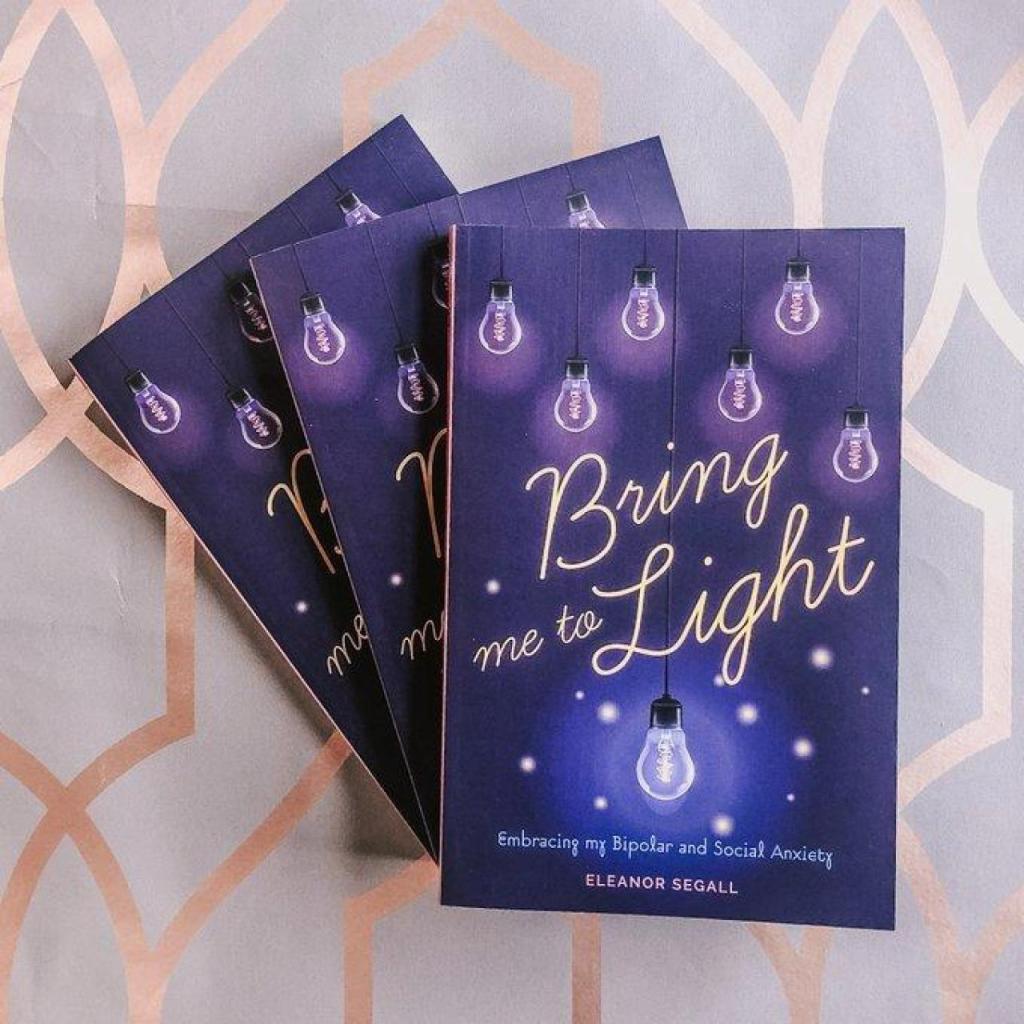
In November 2019, I published my first book Bring me to Light with Trigger Publishing which is the book of my life story with bipolar disorder, anxiety and my life in general (travelling, going to drama school, starting a career as a writer). The blog has also grown so much this year and is currently nominated in the Mental Health Blog Awards for Blogger of the Year, thank you to our nominee!

Additionally, Vuelio awarded us as a Top 10 UK Mental Health Blog for the second year running and interviewed me (Eleanor) about working as a blogger!  Thanks also to Feedspot.com and My Therapy App for listing us in their mental health blog lists too for social anxiety and bipolar!

This year, I have written about World Bipolar Day for the Centre of Mental Health, about my search for EMDR therapy on the NHS, living with depression in winter, about writing my book and new life changes (getting married) and 2020 new year round up with hopes for the future. We also promoted mental health campaigns such as Shout UK text line (founded by the Duke and Duchess of Cambridge and Prince Harry and Meghan),  Christmas 4 CAMHS, Time to Talk Day and Mental Health Awareness Week. Additionally, I spoke in Essex with my Dad about our joint story with bipolar for the Jami Mental Health Awareness Shabbat and we also spoke at Limmud Conference in Birmingham!

This winter I did some interviews for the book which can be seen on the Book tab above and also received some lovely reviews. It was amazing to appear in Happiful Magazine’s bonus wellness Mag this January (edited by campaigner Natasha Devon) and to write for Glamour and Bipolar UK. I also enjoyed being interviewed for the Jewish News and Jewish Chronicle! Hopefully at some point I will do podcasts about it too and more interviews.

From March 2019-2020, the blog has attracted wonderful and talented guest bloggers wanting to spread their messages about mental health and wellness.

We have also worked with the following brands on sponsored and gifted posts and hope to work with many more this next year :  YuLife, Nutra Tea, Essential Olie, Loveitcoverit on mental health apps, I-sopod floatation tanks, Core Wellness Maryland, Wellbeing Escapes Holidays.

My guest bloggers have written about their recovery and living with mental illnesses, as well as advice on how to improve your mental health. There a posts for whether you are going through a divorce, a bereavement, are stressed or have anxiety. We also had posts with people’s first hand experiences of mental illness including a brave post about being a sibling of someone with mental illness and one of living with an eating disorder. Furthermore, Be Ur Own Light has also covered World Mental Health Day and Time to Talk Day this year, featuring personal mental health stories as a way to raise awareness and fight misconceptions.

We have also covered new books coming out, a mental health fashion brand and a song about social anxiety, as well as posts about different therapies to help you.

bloglogo

Thank you to my amazing guest bloggers (non sponsored) March 2019-2020 for your fantastic content:   

Ashley Smith- How Massage Therapy helps Anxiety Disorders

Emily Bartels- 5 tips for a mental health emergency plan

Dale Vernor- Understanding PTSD by Gender 

Tan at Booknerd Tan- How audio books and walking has helped anxiety

Emma Sturgis- Loving yourself, tips for a body positive life

EM Training Solutions- How to maintain mental health at work

David Morin- On social anxiety and talking to others

Lyle Murphy- How equine therapy can help those with mental health issues

Charlie Waller Memorial Trust- Best of Musicals event

A Time to Change Hypnotherapy-  Hypnotherapy for self esteem

Nu View Treatment Center- The connection between anxiety and substance abuse

Shout UK- Royal family launches mental health text line

Mental Health Foundation – Mental Health Awareness Week  May 2019 Body Image

Emerson Blake- Coping with the stress of becoming a single parent

The Worsley Centre- A guide to therapies and finding the right one for you

Byron Donovan at Grey Matter – How I recovered from depression to form a fashion brand 

Luci Larkin at Wooley and Co Law- How to reduce stress and maintain mental health during a divorce

Nat Juchems- How to keep your loved ones memory alive after bereavement

Emily Ilett- on her book ‘The Girl who Lost her Shadow’

Mark Simmonds- an interview about his book ‘Breakdown and Repair’ with Trigger Publishing

Curtis Dean- 5 facts about music for stress relief

Robert Tropp- How quitting illegal drugs helps anxiety in the long term

Aaron James- the difference between psychotherapy and counselling

Dr Justine Curry- 4 ways to help a friend with bipolar disorder

Christmas 4 CAMHS campaign for children in childrens mental health wards

Ani O- 4 ways to ease the fear of doctors appointments

Katherine Myers- Ways that spending time outdoors can improve your mental health

Anita- 5 ways to lift you out the slump of seasonal depression

Chloe Walker- taking care of your child’s mental health

CBT Toronto- how to deal with social anxiety and depression

Katy- a true story with anorexia and OCD

Vanessa Hill- Life changing habits to bring into the new year

Rachel Leycroft- Expressing social anxiety through songwriting

Shira- Living with a sibling with mental illness: the meaning of normal

Capillus- 10 signs you may have an anxiety disorder

Brooke Chaplan- When therapy isn’t enough 

Jami Mental Health Awareness Shabbat 2020 

Mike Segall- Time to Talk Day- 9 years undiagnosed, my story with bipolar disorder

Jasveer Atwal- Living with PCOS and managing mental health

Leigh Adley at Set Your Mind Free- How CBT helps children with anxiety

Lizzie Weakley- How to heal and move forward when you have an eating disorder

Sofie- Living with an eating disorder

Thank you so much to all of you and I am excited to see what 2020-21 brings for the blog!

Be Ur Own Light continues to be read globally and I love receiving your messages about the blogs and finding new writers too.

Heres to a 2020 of positive mental health, of fighting the stigma against mental illness and creating a positive and supportive community here. 

Happy 4th birthday Be Ur Own Light!  ❤ May this be an enlightening year of growth for us.


Love and Light always,

Eleanor    

xxx

Living with PCOS and Managing Mental Health: Guest blog by Jasveer Atwal

pcos1

(image: Jasveer A)

I have lived for over 2 decades with PCOS (Polycystic Ovary Syndrome), yet I had not been diagnosed until in my 30’s. PCOS means you have many follicles on your ovaries, which are underdeveloped sacs. These sacs are unable to release eggs and so ovulation does not occur. There is no medication to cure PCOS but there are alterations, you can make to your life, to make it somewhat manageable.

The indicators for PCOS normally follow the lines of acne, excess hair and irregular periods. All of which I have had since my teenage years (quite obviously). These symptoms were considered separately and the dots were not connected until I went to India to see a dermatologist. As soon as I discussed the aforementioned symptoms, she asked me whether I had been diagnosed with PCOS to which I said no and looked completely dumbfoundedShe asked me to get this checked out and to cut out dairy and sugar, as this was part of the cause of my acne and also helped in my diet. Luckily, I don’t like cheese anyway (how could I not? I know) and so this wasn’t too taxing on me.

Diagnosis

I, then returned to the UK and insisted on having an ultrasound and within 30 seconds it was quite clear I had PCOS. I didn’t really look into it much further, as I was told the only way to look into managing it was with birth control and being active. I didn’t want to use any medication and I was already considering going to the gym. There wasn’t much around PCOS at the time except for the NHS diagnosis.

Little did I know that there was more to PCOS, than the anxiety inducing symptoms of acne and excess hair. For years, I had always had trouble losing weight from my belly and this was after changing my diet to include more wholegrains and less sugar.  But, even after making these changes I had always found that it was really easy for me to put on weight and then extremely hard to lose it. Which I know, is a common problem for most but I found this, even when I was really conscious of what I was eating.

Management and Mental Health

I started going to the gym but this was really hit and miss, as I found it really hard to be consistently active. There would be some points where there wouldn’t be much difference to my weight that just led me to give up. But after some time I decided, I wanted to strengthen my body and started going to the gym to work on my strength.

Working on my strength meant, I was also losing weight as I was more active, however I have still not been able to shift the belly fat. This started becoming extremely frustrating and after looking into it more, PCOS also impacts weight because another symptom is insulin resistance. In short, this means that the body doesn’t respond properly to insulin it makes. Which in turn raises your blood sugar levels and your weight is then affected. It is more common that PCOS sufferer’s bellies, want to hold onto the fat more dearly!

I am now on a mission to get those highly coveted abs. It is a tougher journey than someone without PCOS but it’s about figuring out what works well for your body. I have found that overall exercise is an integral part of my everyday life.

I currently exercise many times a week, which is excessive for some but I find that I need it to manage my mental health and weight. I am finding this difficult at the moment for a number of reasons:

  1. It’s the winter and I suffer from SAD
  2. PCOS also means I have anxiety, low mood and fatigue
  3. Its cold outside and sometimes have to spend 10 minutes scraping my car

So I am trying to battle through these hindrances by going as much as I am able because the exercise helps with my low mood. Trying to be consistent is the best thing for me, otherwise I become entangled in a catch 22 situation which derails the work I have put in place to manage my PCOS.

However, I have also realised that listening to my body and taking a break now and again may be all I need to ease the impact on my mood/anxiety. You constantly have to be aware of how you are feeling which I have found difficult as, I don’t always want to give into the low moods. But sometimes staying in the duvet longer in the morning, may help my mood more than dragging myself to the gym.

Living

Though I am able to manage the effects of PCOS on my body, changing my diet made changes to my body and skin. With my hair I have had to resort to laser treatment. I have recently started to look more into managing my stress, a lot of the stress when I was younger was due to the acne and excess hair.

There were days my acne would cause me not to go out or really dread it. Constantly having to get rid of hair which is conventionally not seen as ‘ladylike’ became tiring. And there were many days, which turned into weeks where I didn’t want to have to manage this anymore. I slowly started making changes and started to see some results. My acne reduced and I was able to work off the weight. However, my anxiety and low mood remained.

For this, I realise I need to manage my stress more intentionally and work on what affects me, my triggers and how I can reduce stress and anxiety. It’s different for each individual. I have found it is something you can manage and I have become more persistent and resilient as a result of having anxiety and low mood related to PCOS.


This guest blog was written by blogger Jasveer Atwal, who lives in the UK. She blogs at https://shelved.blog/ and you can find her on Instagram  @shelvedblog .

5 Steps to help your Mental Health, Depression and Anxiety: Sponsored by Core Wellness Maryland

pexels1

(Image: Pexels)

Depression and anxiety can feel totally overpowering and overwhelming. It can consume you in ways in which it controls you. Your thought patterns, emotional responses, physical energy, and even your short term memory are all affected by depression and anxiety. And because it can feel so dominating, it is vital that you do not try to deal with it alone. Therapy, counselling and all the help that you can possibly get, should always be your first plan of action.

However, there are small yet effective steps that you can practice to cope and manage the severity of your depression and anxiety. Below I’ve listed 5 actions and activities that you should implement into your life daily, while also sticking to an action plan as explained above.

  1. Do something spontaneous, random and out of your usual routine. Depression can make life feel monotonous and mundane to say the least. You do the same things again and again, every day. Or you literally do nothing at all. Duvet days are no longer a Sunday treat, but a compulsion of the mind as you lack the motivation or energy to even leave the bed. That is why forcing yourself to do something spontaneous and different can feel like a breeze of fresh air. And it absolutely does not need to be a demanding task. Keep it simple, keep it easy, and then slowly build up on it on days you feel slightly better. Some ideas are:
  • A quick walk in the morning around the block.
  • Cooking an easy meal.
  • Tidying up something you’ve been procrastinating on.
  • Playing with your pet.
  • Doing easy home diys or even a bit of gardening.

The choices are endless, so feel free to add your own ideas. But just bare in mind that you should start off by keeping it simple and easy so that it doesn’t burn you out or mentally drain you. The feeling of doing something out of your routine, mixed with the feeling of satisfaction of completing a motive, can be a powerful and revitalising feeling.


2. Practice gratitude. Make a list.

Grab a pen and paper and write down all the things you own, love and appreciate. All the good things that you have experienced. All the happy memories. The good nostalgia. Things you find beautiful. Add the weirdest or silliest of things – if they make you smile then they should be on this list! Do this daily, even if you don’t feel like it, or even if you can only think of one thing on some days. Trust me, it all counts when you look back on your list a week later, a month later, 6 months later and so on.


3. Hold on to that pen and paper because I want you to play a game.

Write the first word that comes to your mind without thinking about it. Then write another word, and then another. Carry on adding to this list for a minute or two. No matter how random, or weirdly nonsensical the words that pop up in your mind are, just carry on writing it and adding it to your list. Once you’re done, analyse your list. Some might actually have absolutely no meaning or weight to your emotional state, but you will definitely find a good bunch that will shed some light to two things: feelings and thoughts that are hidden in your subconscious mind. Additonally,  feelings that you have been suppressing.

If you try to do this daily, you should begin to notice a pattern. Same words might pop up. Or similar words. Or words that are more negative/positive then the days before. It’s a good and unique way of tracking your thought patterns and emotions, while releasing pent up thoughts and feeling that you might’ve not even realised are there. Plus it’s fun!


4. Create a positivity board.

Get yourself a board and pin up things that signify your dreams and goals, things that you love and that make you happy. Photos, newspaper or magazine cut outs – anything and everything that defines you or who you want to be. Keep adding to it, and every time you feel your worst, look at this board and think of each thing you have included on it. And remind yourself why.


5. Train yourself to be more aware of your surroundings.

Use your 5 senses to their potential. This is practicing mindfulness. Depression can  numb our senses down. Noise can feel like just noise. When really it could be laughter, trees rustling, birds chirping, baby’s cooing, rain tapping, and so many other beautiful things. Depression tells us it’s noise and chaos.

Be more mindful no matter where you are, and you’ll begin to notice things you otherwise wouldn’t have, you’ll see the beauty and peace where you normally see chaos and mental exhaustion. Listen to the rain, notice the beautifully formed clouds above you, look how the trees sway with the wind, feel the rain on your skin. It’s the little things that are the most impactful. And being mindful can calm the heart and soul.

That’s my 5 steps for you. Remember no one and nothing can define you except yourself. Not even depression, not even anxiety. Celebrate this day, and use these steps to improve the quality of your life, even if you don’t suffer from a mental health disorder. If you have any steps of your own, then comment below! 


This sponsored post was written for you by Core Wellness Maryland CEU, who can be found at https://corewellceu.com/

How to Deal With Social Anxiety, Social Phobia and Depression: Guest post by CBT Toronto

Millions of people around the world suffer from social anxiety, social phobia, and depression. Unfortunately, due to the stigma that is still associated with mental illness around the world, many people try to hide their problems and suffer in silence. Left untreated, social anxiety, social phobia, and depression can lead to isolation, physical health problems, and even suicide. 

Fortunately, there are many treatment modalities available,. This can help sufferers obtain the support and relief that they need and deserve. Here, we will focus on some simple yet effective ways that you, or someone that you love, can alleviate social anxiety, social phobia, and depressive symptoms with tact, integrity, and verve.


Risks of Having Social Anxiety Disorder and Depression

Certain individuals may be genetically predisposed to social anxiety disorders or clinical depression, as well as seasonal affective disorder, chronic stress, anger, and generalized anxiety disorder. However, other non-genetic factors may influence whether or not a person develops a social anxiety disorder or depression in their lifetime.

For instance, if you are currently dealing with substance abuse issues, such as excess consumption of alcohol or narcotics, then you may be at an increased risk of developing a social anxiety disorder or chronic depression. Unfortunately, many people will turn to drugs and alcohol in an attempt to numb their pain. This puts their bodies at risk of developing a tolerance or resistance to such illicit substances; which can lead those individuals down a path of destruction.

If you are having trouble communicating with others, whether at home or work or are having trouble being productive in your day-to-day life, then you may be suffering from a cognitive impairment or mental health disorder. If you notice that you are not responding to the treatment that your doctor or mental health care professional has prescribed, whether it be cognitive behavioural therapy, psychotherapy, or medication. 

If so, please speak to your doctor, as they may need to adjust your treatment or try a new treatment method. Suicidal ideation is also a serious red flag, and if you have suddenly developed severe thoughts of harming yourself, please seek immediate medical attention.  

What Prevents Social Anxiety Disorder Patients From Accessing Mental Health Care?

Many people who suffer from social anxiety ,blame themselves for their issues. As such, they may refuse to seek outside help to address and rectify their health problems. Furthermore, many people who suffer from SAD are actually unaware that such a condition exists, or may not know who to turn to in order to receive the necessary treatment. 

In fact, it can be argued that many doctors, and most of the general public, are unaware of SAD or how to best tackle the matter. As such, there may be very little help available to those who suffer from the disorder; whether it be medical, moral, or emotional.


Does Social Phobia Run in Families?

There have been studies conducted indicating that a person’s risk of developing a social phobia disorder may be elevated if someone in their family has or had the same issue. Moreover, the correlation vs causation interplay between psychiatric and serotonin disorders is also something that many medical experts in the field are aware of. 

That is, while most agree that there is a marked connection between SAD, depression, and serotonin, medical experts are uncertain about which comes first in terms of driving said correlation between the disorders.


How to Deal With Social Anxiety Disorder

SAD can often be overcome by getting moral support from friends and family. The key is to interact with loved ones in a respectful and supportive environment so that the person can overcome their problem. Also, it should be noted that many people who suffer from chronic depression do not actually understand why they feel the way they do. 

In other words, many of the feelings or behaviours that they exhibit are automatic and deeply ingrained into their thought process and psyche. It is the responsibility of their loved ones to care and support them by sympathizing with their condition and helping them process their emotions in a safe and healthy manner.

In addition, many studies have found that patients with SAD who undergo cognitive behaviour therapy report a significant improvement in their anxious or depressive symptoms. In some cases, patients may be treated with a combination of cognitive behaviour therapy and medications. This could include Busperione, Remeron, Paxil, Celexa, Trintalex, or other medicines that are commonly used to help those who suffer from anxiety or depressive disorders.

Also, if your symptoms are relatively minor, then there are techniques that you can implement yourself to obtain near-immediate relief. For instance, if you find yourself in a situation that elevates your stress and anxiety levels, then you can practice deep-breathing exercises before the situation escalates.  

If you suffer from social anxiety, then you should try to slowly cultivate your social connections. Doing so can not only help you eventually overcome your social anxiety but may also help alleviate feelings of depression that often result from social isolation. This is known as exposure therapy and can be helpful.

There are other ways to help deal with anxiety and depression. For instance, studies have found that listening to music that you enjoy releases hormones that help promote relaxation. Exercise has many mental as well as physical health benefits. The release of oxytocin and endorphins can help counteract the release of cortisol and other harmful hormones that can exacerbate anxiety and depression.  A healthy and balanced diet can help rectify certain hormonal balances and nutritional deficiencies that can cause lethargy, depression, irritability, and anxiety in some people.

Most importantly get help from a GP doctor or therapist if things are getting too much. Don’t be ashamed to ask for help.

This guest post is by CBT Toronto, based in Canada.

If you would like to learn more about social anxiety treatments in Toronto or would like to obtain social anxiety treatments in Toronto, then please visit our website or give us a call at 416-817-8925. We specialize in PTSD, OCD, BDD, depression, couples therapy, and anxiety disorders.


Reflections on Winter Mental Health: by Eleanor

I’m in a time in my life right now where I am finding things hard, which includes public speaking about my book. I have come to the conclusion that however painful that is, I can still do my freelance writing and social media work and I can still communicate with my book and blog readers. So all is not lost.

Public speaking induces fear in me, so I am going to start by making some videos when I feel able and sharing online. I also hope to be supporting my Dad at a talk he is giving on our story with bipolar this weekend, more on that after the event.

I am going through a period of depression at the moment (probably part of my bipolar, the winter and long nights/dark days and a reaction to life circumstances). As I am medicated, its not terrible, but I do experience heightened anxiety. I also freeze in fear and going out can sometimes be a challenge. The book was a blessing but I didn’t realise how exposed I would feel sharing it with the world.

This will get easier and I know how lucky I am to have a warm home, food on the table, a husband and family who love me and some very good friends. My sister has been my personal cheerleader too and we are helpful to each other too- she is wonderful.

I am now 9 weeks into therapy and I feel like its going to take a while to deal with all the trauma I have been through. Last week, I made a timeline of events for my therapist and we ranked traumas in order of how painful they are. Eventually, in the new year, we will start to process them in a safe space. EMDR (rapid eye processing) works in this way and will hopefully clear the blockages, fear and pain away so I can thrive again.

I am learning to be kinder to myself. To take time for me. To take breaks. To try not to feel guilty or selfish for working part time from home- I am learning that depression and anxiety are difficult but I am incredibly grateful for my blessings.

There are good things. My book being featured in Happiful Magazine this week and looking forward to Chanukah, Robs birthday and the Christmas break with family/friends. I also continue to be paid to write from home and am working on future plans. However, I am slowing down in order to recover from a very busy year!

How are you feeling this Winter? What helps you?

Eleanor x