5 Ways Therapy Can Heal your Family: Guest blog by Samantha Higgins

5 Ways Therapy Can Heal Your Family (1)

Therapy can be very helpful for families, and your family could benefit from therapy, too. Professional counselling is a proven method to help with all kinds of issues impacting families, and any issues plaguing your family could also be addressed.

To help you pinpoint just how therapy could help your family, you should look into the various situations where therapy might be useful. In particular, you should consider these five ways therapy can heal your family.

1. When Having Marital Issues

You can get assistance with all types of marriage issues when you get help from a therapist. If you have entered a new marriage, you can learn how to adjust to the roles that come along with that. If your marriage is on the rocks, you can get assistance, too.

If cheating has become an issue and you need an infidelity therapist, professional help is without a doubt a good idea. Therapy can help you deal with all of the emotions, assist you with any grieving, and provide guidance on how to move forward.

2. Dealing with the Loss of Loved Ones

The loss of loved ones can impact your family to the point where professional help is needed. If your family has lost someone, you can have short-term effects and long-term effects. When your family loses a loved one, you always run the risk of issues developing further. This is especially the case if it was your family member who died.

You will not be the only one to benefit from help. Children can learn to grieve and deal with the new family structure. Parents can learn how to better take on leading a home by themselves, and other family members can sound off and get feedback, too. Often a loss of a loved one requires people to take on new roles and responsibilities. Therapy can help your family if dealing with those situations.

3. Help with Children with Behavioural difficulties

If you have a child or children that are struggling with poor behaviour, you should consider therapy. Not only can bad behaviors be stopped and corrected, but they can also be prevented from impacting your family in the future.

Your children will be assessed by a therapist and reasons for their behaviour can be identified. Then, your family can heal. You all will be able to prevent more poor decisions from taking place, and you will have all kinds of resources to make sure this happens.

4. New Family Dynamics

If you have introduced a new dynamic to your family eg a blended or step family or new sibling or spouse, you might need some professional help. Failure to make sure there is a smooth transition could have horrible consequences for you. You run the risk of family members feeling lost in the new dynamic. 

Whether you have a new spouse or a new child, these changes could cause issues for your family. Seek out professional services through therapy to mitigate issues from harming those you love. Your family can morph into the new family you know it is capable of becoming. You all deserve this.

5. Substance Abuse and Mental Health

Substance abuse and mental health are issues that definitely warrant therapy at times. Both of these issues can ruin your family’s well-being. If you are dealing with substance abuse or mental health matters impacting your family, you do have options for help. Therapy will help you unlock those options.

Did you know that around 20 million Americans deal with addiction issues? And did you know that almost 44 million Americans deal with mental health issues? If you and your family are dealing with either or both of these problems, you are not alone whether you live in the USA or not. You should consider turning to therapy to help your family overcome these issues.

Your Family Can Indeed Heal

If any of the five issues above touch close to home for you, you have a way out. You do not have to let these issues tear apart your family that you love. Your family does not have to hurt so much anymore.

Each of the aforementioned five areas can be assessed, addressed, and improved when problems are there for your family. There is hope for your family with therapy, and your family absolutely can heal.


This blog was written by freelance writer Samantha Higgins.


We are 4! On Be Ur Own Light’s Fourth Blog Anniversary by Eleanor

fourcandle

Its Today- 1st March 2020 and Be Ur Own Light is 4 years old! (cue the streamers!)

I still remember starting this blog as an outlet for my fears, thoughts and emotions dealing with my bipolar and anxiety. The blog started as a way to tell my friends and family how I was feeling and has evolved into working with guest bloggers and now brands/ partners on sponsored wellness posts too! Writing the blog and sharing thoughts has been so therapeutic and it has taken me on  a journey that I could not have imagined.

In November 2019, I published my first book ‘Bring me to Light‘ with Trigger Publishing which is the book of my life story with bipolar disorder, anxiety and my life in general (travelling, going to drama school, starting a career as a writer). The blog has also grown so much this year and is currently nominated in the Mental Health Blog Awards for Blogger of the Year, thank you to our nominee!

Additionally, Vuelio awarded us as a Top 10 UK Mental Health Blog for the second year running and interviewed me (Eleanor) about working as a blogger!  Thanks also to Feedspot.com and My Therapy App for listing us in their mental health blog lists too for social anxiety and bipolar!

This year, I have written about World Bipolar Day for the Centre of Mental Health, about my search for EMDR therapy on the NHS, living with depression in winter, about writing my book and new life changes (getting married) and 2020 new year round up with hopes for the future. We also promoted mental health campaigns such as Shout UK text line (founded by the Duke and Duchess of Cambridge and Prince Harry and Meghan),  Christmas 4 CAMHS, Time to Talk Day and Mental Health Awareness Week. Additionally, I spoke in Essex with my Dad about our joint story with bipolar for the Jami Mental Health Awareness Shabbat and we also spoke at Limmud Conference in Birmingham!

This winter I did some interviews for the book which can be seen on the Book tab above and also received some lovely reviews. It was amazing to appear in Happiful Magazine’s bonus wellness Mag this January (edited by campaigner Natasha Devon) and to write for Glamour and Bipolar UK. I also enjoyed being interviewed for the Jewish News and Jewish Chronicle! Hopefully at some point I will do podcasts about it too and more interviews.

From March 2019-2020, the blog has attracted wonderful and talented guest bloggers wanting to spread their messages about mental health and wellness.

We have also worked with the following brands on sponsored and gifted posts and hope to work with many more this next year :  YuLife, Nutra Tea, Essential Olie, Loveitcoverit on mental health apps, I-sopod floatation tanks, Core Wellness Maryland, Wellbeing Escapes Holidays.

My guest bloggers have written about their recovery and living with mental illnesses, as well as advice on how to improve your mental health. There a posts for whether you are going through a divorce, a bereavement, are stressed or have anxiety. We also had posts with people’s first hand experiences of mental illness including a brave post about being a sibling of someone with mental illness and one of living with an eating disorder. Furthermore, Be Ur Own Light has also covered World Mental Health Day and Time to Talk Day this year, featuring personal mental health stories as a way to raise awareness and fight misconceptions.

We have also covered new books coming out, a mental health fashion brand and a song about social anxiety, as well as posts about different therapies to help you.

bloglogo

Thank you to my amazing guest bloggers (non sponsored) March 2019-2020 for your fantastic content:   

Ashley Smith- How Massage Therapy helps Anxiety Disorders

Emily Bartels- 5 tips for a mental health emergency plan

Dale Vernor- Understanding PTSD by Gender 

Tan at Booknerd Tan- How audio books and walking has helped anxiety

Emma Sturgis- Loving yourself, tips for a body positive life

EM Training Solutions- How to maintain mental health at work

David Morin- On social anxiety and talking to others

Lyle Murphy- How equine therapy can help those with mental health issues

Charlie Waller Memorial Trust- Best of Musicals event

A Time to Change Hypnotherapy-  Hypnotherapy for self esteem

Nu View Treatment Center- The connection between anxiety and substance abuse

Shout UK- Royal family launches mental health text line

Mental Health Foundation – Mental Health Awareness Week  May 2019 Body Image

Emerson Blake- Coping with the stress of becoming a single parent

The Worsley Centre- A guide to therapies and finding the right one for you

Byron Donovan at Grey Matter – How I recovered from depression to form a fashion brand 

Luci Larkin at Wooley and Co Law- How to reduce stress and maintain mental health during a divorce

Nat Juchems- How to keep your loved ones memory alive after bereavement

Emily Ilett- on her book ‘The Girl who Lost her Shadow’

Mark Simmonds- an interview about his book ‘Breakdown and Repair’ with Trigger Publishing

Curtis Dean- 5 facts about music for stress relief

Robert Tropp- How quitting illegal drugs helps anxiety in the long term

Aaron James- the difference between psychotherapy and counselling

Dr Justine Curry- 4 ways to help a friend with bipolar disorder

Christmas 4 CAMHS campaign for children in childrens mental health wards

Ani O- 4 ways to ease the fear of doctors appointments

Katherine Myers- Ways that spending time outdoors can improve your mental health

Anita- 5 ways to lift you out the slump of seasonal depression

Chloe Walker- taking care of your child’s mental health

CBT Toronto- how to deal with social anxiety and depression

Katy- a true story with anorexia and OCD

Vanessa Hill- Life changing habits to bring into the new year

Rachel Leycroft- Expressing social anxiety through songwriting

Shira- Living with a sibling with mental illness: the meaning of normal

Capillus- 10 signs you may have an anxiety disorder

Brooke Chaplan- When therapy isn’t enough 

Jami Mental Health Awareness Shabbat 2020 

Mike Segall- Time to Talk Day- 9 years undiagnosed, my story with bipolar disorder

Jasveer Atwal- Living with PCOS and managing mental health

Leigh Adley at Set Your Mind Free- How CBT helps children with anxiety

Lizzie Weakley- How to heal and move forward when you have an eating disorder

Sofie- Living with an eating disorder

Thank you so much to all of you and I am excited to see what 2020-21 brings for the blog!

Be Ur Own Light continues to be read globally and I love receiving your messages about the blogs and finding new writers too.

Heres to a 2020 of positive mental health, of fighting the stigma against mental illness and creating a positive and supportive community here. 

Happy 4th birthday Be Ur Own Light!  ❤ May this be an enlightening year of growth for us.


Love and Light always,

Eleanor    

xxx

Taking a Weekend Break, Finding your Perfect Wellbeing Holiday : by Wellbeing Escapes

euphoria

(image: Wellbeing Escapes, Euphoria Retreat)

It’s cold and wintery here in England and you will be dreaming of relaxation and calm, a retreat away from the stresses of daily life. Thinking about a health and wellness escape in the UK or abroad? Go no further than Wellbeing Escapes who are experts at bringing you the finest wellness holidays.

From yoga and meditation and digital detox retreats to luxury spa holidays in the Maldives, Greece and Morocco, there is something for everyone! Wellbeing Escapes say they offer an award winning service with flexible pricing and discounts to make sure you get the most out of your booking.

Wellbeing Escapes gifted me a wonderful pack of spa products which gave me a flavour of their unique wellbeing holidays, as these are used by their partners. This included various oils and room sprays (with calming scents like lavender) designed to help you relax and recharge.In looking at their holidays, I would like to focus on the weekend spa retreats, as often we just want to take time out at the weekend to revitalise.

Wellbeing Holidays say,
’If you are in need of some rest and relaxation, a weekend spa break is the perfect solution. Hop in the car and be at an idyllic countryside retreat in a few hours or take a short flight over to Europe for some added vitamin D. Spend time with a partner, a best friend or simply take some time for some well earned me-time. We’ve designed our exclusive spa programmes which make weekends that extra bit special. Relax with a selection of massages, facials, body scrubs and get your heart beating fast with the daily group fitness classes and then simply relax by the swimming pool.’


Spa weekend break in Europe:

Euphoria Retreat- Mystras, Greece

wellbeingescapes1

(image: Wellbeing Holidays, Euphoria Retreat, Greece)
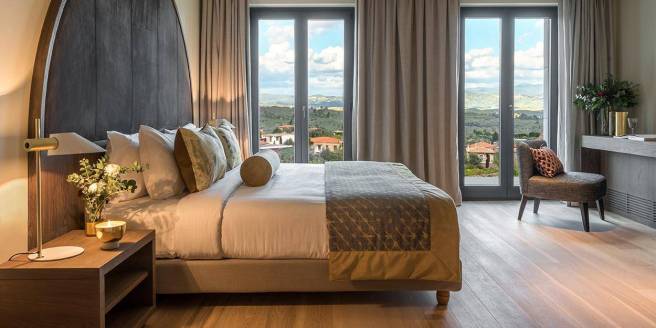
Euphoria Retreat is in a beautiful destination in Mystras, Greece. Euphoria means a state of wellbeing for body and mind, helping you to heal and transform your health. Relax in the beautiful turquoise pools and spa, in idyllic surroundings. This retreat serves to help physical, mental and spiritual balance, with a complete digital detox too (so no phones in the spa). There are personalised treatments , consultations, dietary guidance, exercise and mental coaching to help you achieve the concept of a blissful life (Euphoria).

Facilities include treatment rooms, outdoor pool, sphere pool, relaxation areas, tepidarium, Finnish sauna, infrared sauna, ice fountain, steam room, experiential showers, speleotherapy-salt room, watsu pool, sanctuary deprivation pool, Californian hot tub, gym, Pilates studio and yoga!.

You are also near a UNESCO world heritage site at Mystras, so there is a lot to explore.

For more about this beautiful, calming retreat see:

wellbeingescapes2

(image: Wellbeing Escapes, Euphoria Retreat)

Other weekend breaks abroad include Portgual, Venice, Merano (Italy), Cyprus, Morocco and Spain (Marbella and Alicante). See here: https://www.wellbeingescapes.com/all-hotels/weekend-spa-breaks-t119


UK Weekend Spa Break
Grayshott Health Spa, Surrey, UK

grayshott1

(image: Wellbeing Escapes, Grayshott Spa)

Want to get away but don’t want to go abroad? Wellbeing Escapes have your perfect weekend spa break. They say, ‘Idyllically set in the 47-acre estate of gardens and grounds which used to be home to Alfred Lord Tennyson, Grayshott Spa is brimming with old world charm and elegance. The spa is located close to Guildford in the village on Grayshott which approximately one hour by train from London. Inside the historic country house, Grayshott has been refurbished to combine the best of old and new, creating a relaxing and comfortable atmosphere.’

The house and spa have beautiful grounds and woods to walk peacefully in nature. Just one hour from London, you can escape quickly and easily to this wonderful retreat. Grayshott is renowned for its holistic approach to wellbeing through therapies to alleviate emotional and physical stress. Example treatments include Reiki, Aroma face massage, detox salt baths and more. You can relax in the spa steam rooms and sauna or play golf, tennis and swim in the indoor and outdoor pools.

There are 59 rooms and suites and a delicious balanced menu. Group classes include yoga, aqua fitness, power walks and tai chi, to help restore balance.

What are you waiting for? To get some wellness and calm back into your life, visit this health spa today.

grayshott2

(image: Wellbeing Escapes, Grayshott Spa)


You can contact the award winning Wellbeing Escapes to book your break in the UK or globally now at https://www.wellbeingescapes.com/ . ‘Pioneers in wellness travel since 2005’

Eleanor received a gifted pack of spa products,  in exchange for a blog on wellbeing escapes. 

Looking to the Future and Life Dreams: by Eleanor

Hi friends,

It has been a while since I have written a personal blog as there has been so much going on here that I was just focusing on getting through it all. Robs dad had surgery to remove a second brain tumour and is thankfully recovering well, the surgeon amazingly got all the cancer. Success.

Alongside this, I have been in therapy since November with a wonderful therapist and we are doing EMDR (Eye Movement Desensitisation and Reprocessing therapy). This therapy helps to process trauma that can get ‘stuck’ in the brain if not processed. That trauma can stem from childhood upwards- I was an anxious child from an early age even though I had a good childhood! I have also been through a lot due to my bipolar episodes and hospitalisations. So, I am working with my therapist to process memories and we are doing it slowly.

My therapist will either ‘tap’ on the side of my legs while I recall the memory to help process it or my eyes will follow a light or her finger as we process. Understandably, there has to be a lot of trust in this type of relationship as well as me being protected and not triggered by the therapy. For this, we have developed a ‘safe place’ memory that I go to when we bring up anything too distressing. We have just started to go deeper with this and I will update you with our progress. I am far less anxious than I was and it has been really helpful to build a positive, working relationship with my therapist.

The reason I started therapy was because I was having intense panic attacks and finding it difficult to manage my life due to it. I hope that by working on these triggers that I can react differently and live a healthier and better life. Stay tuned!

A month or so ago, I also went to see my psychiatrist for the first time in 2 years, mainly as I had worries about my weight and physical health. My medications means I have put on a substantial amount of weight and this is worrying me health wise more than anything. I have been advised to diet and exercise and maybe work with a nutritionist. So, this will also be a new journey and I will try my best with this, not easy as the meds may stop me losing weight due to slowing metabolism or encouraging cravings. We considered reducing my Quetaipine, a mood stabiliser and anti psychotic to help but because I have been more mentally stable, I have decided to keep it at the same dose for now.

Rob and I have also started to look at new homes, which has been good. There is a lot happening right now and important that I rest, look after myself and keep calm.

Life with bipolar disorder can be uncertain. I have some fears about the future, which I will talk about in another more detailed post. My medicines thankfully keep me mentally well, but coming off them for future life changes eg pregnancy could be a big risk for me and one I am not sure I should take due to being bipolar 1 (risk of mania and psychosis). This is not currently imminent, but is still a future fear, especially as I love children. A decision for a later date.

Overall though I am hopeful and excited about life and will keep you all updated with my therapy and health journey and news.

Thanks for reading and following Be Ur Own Light as we come up to our 4th anniversary,

With love,

Eleanor x


Living with an Eating Disorder: Guest blog by Sofie

This is a first person, brave and honest account by Sofie of her feelings about her eating disorder, which are her personal views. Trigger warning: please be careful as this discusses eating disorders and real emotions around them. We promote healing and recovery, where possible. So here’s Sofie….


I miss it every day! My first thought as I wake up in the morning and my last before I drift off for the night. It is a visceral longing. That’s the burden of an eating disorder. It’s an imposter that invites itself into your life and fulfills a need. It seemingly bestows upon you new abilities and strips you of weaknesses. However, with every freedom that it grants, there is a toll to pay.

My story doesn’t begin with a girl unhappy with her body, not many eating disorder stories do. My story starts with a girl lost within her own life. A girl who longed to feel she had a purpose and a direction — a child who yearned to feel an ounce of control. Anorexia gave me that control.

It gave me the power to defy human nature. It gave me a harsh look that proved I was oozing with discipline. Each bone like a spear warding off feelings and disappointments. I was never clueless as to why I starved myself. I never thought I was on a diet gone wrong. I wept many tears over the fact that my death-defying mission for control had made me so susceptible to vanity and left me a slave to the numbers on a scale, but how else was I to measure my discipline?

I miss it every day! I forget the aches, the pains, the fights, the hopelessness. I long for the feeling of achievement and forget the complete and utter sense of THIS IS NOT ENOUGH. STILL, I AM NOT ENOUGH. I long to go back almost every moment. To flee the life I have, to rewind and go back. For me, disappointment is much harder to face without the false comfort of the hunger, without the excuse of the failing body and protective blanket of a hazy mind.

So am I in recovery? I don’t know. I feel a sense of helplessness in my recovery like I have been dragged here by circumstance, and for now, my situation doesn’t sit comfortably with me. However, I know what I have to tell myself when it stings that my body no longer hurts: I can’t be a nice person while starving. I replay in my mind countless occasions where I behaved more like an animal than a human. I so desired to be successful, but I never wished to be a monster.

So, for now, this realisation is the guard I wear against the intrusive longing. It isn’t a bulletproof armour. The thoughts still wound, but for now, I am still standing, and I don’t need to judge the situation further than that.

And so, the greatest gift any therapy has given me is the clarity to place my love of others above my hatred of myself.

I can live a healthier life as a gift to those I love, who don’t deserve to be tortured by my demons. I must try and look after myself for my family and friends.


This blog was written by guest blogger Sofie, to discuss the truth around living with an eating disorder. If you are worried someone you love has an eating disorder, you can contact charities including Beat and speak to a GP or psychiatrist.

Living with PCOS and Managing Mental Health: Guest blog by Jasveer Atwal

pcos1

(image: Jasveer A)

I have lived for over 2 decades with PCOS (Polycystic Ovary Syndrome), yet I had not been diagnosed until in my 30’s. PCOS means you have many follicles on your ovaries, which are underdeveloped sacs. These sacs are unable to release eggs and so ovulation does not occur. There is no medication to cure PCOS but there are alterations, you can make to your life, to make it somewhat manageable.

The indicators for PCOS normally follow the lines of acne, excess hair and irregular periods. All of which I have had since my teenage years (quite obviously). These symptoms were considered separately and the dots were not connected until I went to India to see a dermatologist. As soon as I discussed the aforementioned symptoms, she asked me whether I had been diagnosed with PCOS to which I said no and looked completely dumbfounded. She asked me to get this checked out and to cut out dairy and sugar, as this was part of the cause of my acne and also helped in my diet. Luckily, I don’t like cheese anyway (how could I not? I know) and so this wasn’t too taxing on me.

Diagnosis

I, then returned to the UK and insisted on having an ultrasound and within 30 seconds it was quite clear I had PCOS. I didn’t really look into it much further, as I was told the only way to look into managing it was with birth control and being active. I didn’t want to use any medication and I was already considering going to the gym. There wasn’t much around PCOS at the time except for the NHS diagnosis.

Little did I know that there was more to PCOS, than the anxiety inducing symptoms of acne and excess hair. For years, I had always had trouble losing weight from my belly and this was after changing my diet to include more wholegrains and less sugar.  But, even after making these changes I had always found that it was really easy for me to put on weight and then extremely hard to lose it. Which I know, is a common problem for most but I found this, even when I was really conscious of what I was eating.

Management and Mental Health

I started going to the gym but this was really hit and miss, as I found it really hard to be consistently active. There would be some points where there wouldn’t be much difference to my weight that just led me to give up. But after some time I decided, I wanted to strengthen my body and started going to the gym to work on my strength.

Working on my strength meant, I was also losing weight as I was more active, however I have still not been able to shift the belly fat. This started becoming extremely frustrating and after looking into it more, PCOS also impacts weight because another symptom is insulin resistance. In short, this means that the body doesn’t respond properly to insulin it makes. Which in turn raises your blood sugar levels and your weight is then affected. It is more common that PCOS sufferer’s bellies, want to hold onto the fat more dearly!

I am now on a mission to get those highly coveted abs. It is a tougher journey than someone without PCOS but it’s about figuring out what works well for your body. I have found that overall exercise is an integral part of my everyday life.

I currently exercise many times a week, which is excessive for some but I find that I need it to manage my mental health and weight. I am finding this difficult at the moment for a number of reasons:

  1. It’s the winter and I suffer from SAD
  2. PCOS also means I have anxiety, low mood and fatigue
  3. Its cold outside and sometimes have to spend 10 minutes scraping my car

So I am trying to battle through these hindrances by going as much as I am able because the exercise helps with my low mood. Trying to be consistent is the best thing for me, otherwise I become entangled in a catch 22 situation which derails the work I have put in place to manage my PCOS.

However, I have also realised that listening to my body and taking a break now and again may be all I need to ease the impact on my mood/anxiety. You constantly have to be aware of how you are feeling which I have found difficult as, I don’t always want to give into the low moods. But sometimes staying in the duvet longer in the morning, may help my mood more than dragging myself to the gym.

Living

Though I am able to manage the effects of PCOS on my body, changing my diet made changes to my body and skin. With my hair I have had to resort to laser treatment. I have recently started to look more into managing my stress, a lot of the stress when I was younger was due to the acne and excess hair.

There were days my acne would cause me not to go out or really dread it. Constantly having to get rid of hair which is conventionally not seen as ‘ladylike’ became tiring. And there were many days, which turned into weeks where I didn’t want to have to manage this anymore. I slowly started making changes and started to see some results. My acne reduced and I was able to work off the weight. However, my anxiety and low mood remained.

For this, I realise I need to manage my stress more intentionally and work on what affects me, my triggers and how I can reduce stress and anxiety. It’s different for each individual. I have found it is something you can manage and I have become more persistent and resilient as a result of having anxiety and low mood related to PCOS.


This guest blog was written by blogger Jasveer Atwal, who lives in the UK. She blogs at https://shelved.blog/ and you can find her on Instagram  @shelvedblog .

Talking for the Jami Mental Health Awareness Shabbat 2020 by Eleanor

jamimhas1

As some of you will be aware, back in 2017-2018, I helped as a volunteer with fellow volunteers (Lisa Coffman and others) to found the Mental Health Awareness Shabbat (Jewish sabbath) in our communities across the country here in the UK. The initiative, led by the mental health charity Jami and conceived by Rabbi Daniel Epstein, now runs in 150 Jewish communities.

This year, my dad Mike and I were delighted to be asked to share our father and daughter journey with bipolar disorder to Chigwell and Hainault Synagogue.

I have social anxiety- which includes at times a fear of public speaking. In December, I had a breakthrough, where I spoke for a short time at a conference called Limmud alongside my Dad and read from my book Bring me to Light. So, when we were asked to do this talk at Chigwell, I felt it could be possible.

I armed myself with the fact that I knew kind people in the community including the Rabbi and his wife and friends of my husband Rob (its the community he grew up in). I also wanted to share my story to help other people.

So, we stayed with a lovely lady in the community and had friday night dinner with the Rabbi and his family. On Saturday morning, I woke up feeling a little nervous but took my trusted anxiety medication for when I need it- Propranolol, and walked to the synagogue with Dad.

I managed not to have a panic attack and the thought of speaking to help others got me through (as did distraction, deep breathing and drinking a glass of water).

So, at the end of the service, we were called up to speak. Dad went first and talked about his journey with bipolar disorder from when it started for him in 1991 to finding recovery. Then, it was my turn.

I stood up there in the pulpit speaking to a packed audience with a prepared speech. I felt scared but also empowered and began to relax into the talk. I knew that by sharing what happened to me, being sectioned and so ill and talking openly, that I could break stigma and touch others. I was also so proud of my Dad for speaking so openly.

It was only after, when talking to people after the service, that we realised that about 150 people came to listen to our talk! We had some important conversations with people after our talk including someone very newly diagnosed and someone else whose niece had bipolar and is currently very ill.

I couldn’t and still can’t believe I was able to do that. However, since I have been very tired so trying to de-stress and rest as much as I can!

We just want to thank everyone who came to hear our talk and supported us, to every person who thanked us for coming and shared their stories with us. We are so grateful for such a positive reception and thank Rabbi Davis and the Chigwell community for having us.

The Mental Health Awareness Shabbat has had events in communities all across the country. It runs yearly and you can find out more here 

10 Signs that you may have an Anxiety Disorder: Guest post by Capillus

You might feel like a worrier—someone who is unable to let the little things slide, who becomes agitated by small shifts in your schedule, who is kept up at night at the thought of something you said earlier in the day. We all feel worry now and then, but there are people who have an inclination to feel concern and apprehension more than others. If you’re someone who often finds yourself feeling uneasy, fearful, stressed-out, and tense, you might have Generalized Anxiety Disorder (GAD). 

Worrying over the Small Things 

Are the most basic daily tasks—brushing your teeth, taking out the garbage, commuting to work—stressing you out on a regular basis? Do you find that your usual routine is becoming burdensome, making you feel short of breath and unable to focus elsewhere? If so, it’s likely that you’re undergoing some form of GAD. This is a common symptom of GAD, in that people will become overwhelmed by activities that once were normal, leading them to feel stressed and burdened in the face of small tasks.   

Insomnia and Sleep Issues 

Whether it’s due to obsessive cyclical thinking or worrying about things that might have happened earlier in the day, there are many people who are kept awake, either unable to sleep at all or regularly disturbed from their sleep during the night. Insomnia can be brought on by various factors, either by an inability to quell your mind prior to going to sleep or increased cortisol levels, which will leave your body in its “fight or flight” mode even at night. 

Daily Fatigue 

Often as a result of insomnia or poor sleep, daily fatigue can be another symptom found in people with GAD. Without enough rest in the evening, the body and mind will feel sluggish during the day, leaving you exhausted and unable to focus.

Other factors can lead to such fatigue, but they might be wrapped up in other factors of anxiety, whether you are using stimulants such as coffee or alcohol to mentally balance yourself during the day or you are stress-eating unhealthy food as a reaction to increases in overall anxiety. 

Upset Stomach and Indigestion

GAD manifests itself in many different symptoms, and some of the most common ones are physical. A common side effect people have when struggling with GAD is stomach distress, including indigestion, constipation, diarrhea, ulcers, and more. Anxiety itself can lead to stomach issues, but, as said above, other lifestyle decisions made while struggling with anxiety can further exacerbate digestion issues, including poor diet, increased alcohol consumption, poor sleep, etc.

Difficulty Concentrating

A common side effect found in people dealing with GAD is the inability to focus during the day. Laboured by concerns, fears, and fatigue, those with GAD will sometimes find it difficult to completely focus on a task without being derailed by some other worrying quality or event. 

General Agitation and Discomfort

Quick to become aggravated by general unease and things not going your way? Do you feel ill when attempting to talk in public or in under-populated social scenarios? Are shifts in your daily routine cause for unease and panic? These can all be signs of GAD, as the mind becomes easily perturbed by occurrences and situations it might not expect or want. It’s a struggle to deal with such responses, and it can be difficult to break yourself out of such negative cyclical thinking under such circumstances, but you should do your best to be aware of when such thinking crops up. 

Muscle Pain and Discomfort 

One side effect of anxiety often not discussed is that of physical pain. Whether it’s muscle tension, tension headaches, hand tremors, chest tightness, or feeling as if you’re unable to breathe, anxiety can lead to detrimental physical responses that might be cause for concern. 

Hair Loss and Thinning 

Along with other physical effects that anxiety can bring about, one of the more common ones is an effect on hair. GAD can lead to hair becoming thin, brittle, and falling out, both on the head and around the body. For some people already struggling with genetic hair loss, anxiety can lead to hair loss and thinning becoming increasingly worse. Thankfully, there are treatment methods available to facilitate hair regrowth, so you shouldn’t be too worried if you notice the first signs of thinning. 

Panic Attacks

You’re likely to know a panic attack if you’ve ever experienced one. Brought about by an intense feeling of fear, unease, and physical symptoms, panic attacks can be a debilitating response to extreme anxiety. The level of response will depend on the person and the level of anxiety, but they are serious reactions to the feeling of a perceived threat. Please reach for medical support from a doctor, if you need it.

Self-Deprecation

If you are regularly feeling down on yourself, feeling as if you cannot meet the standards of perfection or do not match the image you have of yourself, you might be struggling with anxiety. GAD can often leave people obsessed with a self-described definition of who they should be, and anything beneath that can be a never-ending cause of compounding insecurity. If you feel as if you don’t look good enough, aren’t performing as well as you should, or are unsure of your general abilities at work, school, or elsewhere, these underlying feelings might be brought on by anxiety. 

While some of these signs can be symptoms of generalized anxiety disorder, it is important to remember that we shouldn’t self-diagnose ourselves with general mood disorders. If you’re concerned that you might have GAD, you should meet and discuss these symptoms with your primary care physician (in the UK, GP) or a therapist—someone who can provide you with a diagnosis and thus help you alleviate said symptoms for the betterment of your mental health.  


This unsponsored guest blog was written by Capillus at www.capillus.com , a hair loss treatment brand with medical expertise.


‘The Meaning of Normal’: Living with a sibling with mental illness : Guest post by Shira

It hasn’t been normal for so long that sometimes I forget what normal should feel like. When I try to think about it, it feels like a glimpse into someone else’s life, and I am an invasive stranger, trying to reach something that doesn’t belong to me.

What is normal?

Sometimes I think I remember it.

Sometimes I think that normal is that time when I was six and you were three and we didn’t fight. When we played hand in hand like every other child, and our entire world was pink and purple, and the most important thing to us was that our dolls had shiny blonde hair.

And we would play every game under the sun, from barbies to dollhouse to the convoluted imaginary ones that only we knew the rules to, and even then did we ever really know the rules?

I was a witch and you were the princess. We were both witches. We were both princesses. I stole your magic time machine but you found another one, and our living room became the entire universe as we ran through it, believing wholly in the pictures we created, the way that only children can.

But did we ever really exist like that? Were we ever those idyllic children, the children that every parent wishes to have?

Maybe our normal is all the times when I was ten and you were seven and we would push and shove and slap. You were my younger sister who could do no wrong and I was the older one, always blamed for both our shares of misdemeanours.

“You should know better!” They would shout

“But she started it!” I would pout.

“It’s not true!” your bottom lip would stick out.

I think we all know that I probably did start it.

We would fight and yell and cry and shout, never giving in, never admitting that we were wrong. Because we weren’t wrong. We were both right, all the time, every time, and the other was always painfully mistaken. And we roared and yelled and scratched each other, but knew only to cry when a parent was looking. And if nobody was looking, well then nobody would see if we punched back just one more time.

But were we ever really like this? Two demonic screaming children who were never silent and never content with just each other? Were we really the children that every parent dreads to have?

Maybe our normal is the way we grew apart as we grew older. When I was 15 and you were 12 and I would pretend not to know you as I walked past you in school. And maybe our normal is the way we would come home from the same school at the same time separately, both of us walking different routes from the bus because being seen with one another would be unacceptable. Maybe that’s what all teenagers do. Maybe that really was our normal.

Maybe our normal was what came next.

Maybe the years we didn’t talk to each other was what we were always heading towards. Because one day we would put down the dolls, and one day we would run out of things to fight about and we would just…exist.

One next to the other.

Sitting in silence.

Neither speaking.

Neither bothering to reach out first.

Because now I’m 18 and you’re 15 and I don’t remember the last time I spoke to you. The house is thick with anger, so thick that it poisons every interaction, and I couldn’t even tell you what I’m angry about. Because the sister I played with, the sister I happily fought with but would jump on anyone else who dared fight with her is in pain. So much palpable pain, and for the first time I couldn’t just make it go away.

Was I angry with you?

Yes.

Was I angry with myself?

Yes.

And so I let this become our normal. A normal where two siblings exist side by side, but don’t even know how to speak without offending. Where everything I say hurts you and everything you say angers me.

So we made this our new normal.

And I don’t care.

I don’t care.

I don’t.

I care.

And now I’m 20 and you’re 17 and I’m 3000 miles away. But this is our normal now. We don’t speak. We can’t speak. But it doesn’t even matter because there’s nothing to speak about anymore. How can I ask how you are when I already know the answer, and I know it’s not an answer I want to hear. How can you ask how I am when you’re too focused on making it through your own day without worrying about mine?

And anyway, it’s been a long time since we told each other how our day was. Not since I was 14 and you were 11 and we would awkwardly walk home from the bus stop together, backpacks moving up and down and up and down as we compared notes about school, neither of us loving it, neither of us willing to admit that out loud.

But we are not those children anymore, and we don’t have any shared experiences to talk about anymore.

I wonder if you miss me like I miss you. I wonder if you count down the days to my birthday too, hoping that we will both make it past 17 and 20, willing time to hurry up even though maybe all I really want to do is turn back the clock.

And then you are 18, and it’s been 18 years since I sat by your tiny cradle in the hospital and cried when we left, maybe because I wanted another chocolate bar from the hospital vending machine, or maybe because secretly I don’t want to leave my baby sister in a cold hospital far far away.

But now you are 18 and I’ve still left you in a hospital far away and it’s still just as hard to leave you there as it was all those years ago. But a 21 year old can’t lie down on the floor and have a tantrum so I keep going and keep going and this is our normal now.

A normal where you’re there and I’m here. A normal where we won’t speak for months on end but then I text you and tell you I miss you and now you answer me too, and I think you miss me too. A normal where we joke and laugh at stupid posts we see on Instagram,  tentatively, both of us till remembering when you were 14 and I was 17 and we ripped each other apart with words until neither of us said anything at all. Is this our normal now?

What is normal?

I looked it up for you.


NORMAL:

  • Conforming to a standard, usual, typical, or expected


But who gets to decide what that standard is? How do we know when something that once wasn’t normal now is, and if what was once normal is now anything but? Do we decide that? Or do others who stand by and watch get to decide that for us?

I’m sure someone could tell you the scientific answer. I’m sure there is a video out there with a detailed and meticulous answer laid out for us to study.

I’m sure somebody could tell us the answer. Maybe we haven’t even been normal, maybe we always were.

Maybe the imaginary games of our childhood were always meant to turn into imagined grievances causing real rifts. Maybe we were meant to grow apart and then come back together again, a little rougher but a little kinder. Maybe none of it was normal, or maybe all of it was.

Sometimes I wish I could change all of it. If I hadn’t said what I said that one day, or if I hadn’t slammed my door that one time, or if you hadn’t called me that name under your breath, things would all be different now.

But sometimes I know I can change none of it. And maybe that’s ok. Maybe if we hadn’t played all those games as children, if we had never walked down the road together from school, if I had never sent the texts you eventually answered, things would all be different now.

Normal isn’t for us to decide, it isn’t for me to determine. All I know is our normal is all we have, and I wouldn’t change us for the world.

About:

Shira is a writer living in Israel, drawing on every day life experiences. Her sibling lives with a diagnosed mental illness and she has bravely shared their story here.


5 Ways Essential Oils can help your Mental Health and Wellness. By Essential Olie

Essential oils have made incredible strides in popularity over the last decade. There are hundreds of people that swear by essential oils as a cure for almost any ailment. That might not be quite accurate, but essential oils do have definite benefits.

One of the benefits of doTERRA essential oils that has some of the most research is with mental health. Because scent is so strongly tied to emotion it makes sense that essential oils would be able to help with your emotional state. Especially if you are using the correct oil and method of inhaling the scent.

Finding the oil that works best for you can be a process but it will certainly smell great. There are a lot of different ways that essential oils can help with mental health difficulties. These are five of the most notable ways essential oils can help your mental health and overall wellness. 


1. Diffusing

Probably the most common way to inhale essential oils is by using a diffuser. A diffuser works when you put a couple of drops of your chosen oil into a diffuser filled with water. The mix of water and oil turns into a vapor that fills your home with a pleasant scent that can help alter your mood.

The diffuser is especially a great method if you are trying to affect your mental health. Because scents are so tightly tied to emotion, surrounding yourself with a pleasing scent can turn your entire mood around. That includes making you calmer or happier on a bad mental health day. 

Great oils to use in your diffuser for a bad mental health day are lemon, grapefruit, bergamot, jasmine, and lavender. Lavender is also a great choice if you want to sleep or need to destress. Finding the oil that makes the most difference for you might take some time but the natural benefits of essential oils are definitely worth the time.


2. Massages

A massage in itself is a great way to help you manage mental health issues. It is not a cure-all but it is certainly helpful and a great resource. Adding essential oils to a massage help increase the health benefits and works double on your mental well-being. 

It has been found that massages do help some people with depression and anxiety. Because a massage is great for releasing toxins and helping you relax it is a natural way to lessen stress and depression. Making it an aromatherapy massage and letting your massage therapist rub oils into your skin that make you feel happier is a wonderful way to improve your mental health.

There are even studies done that show aromatherapy massages can have great benefits for people struggling with their mental health. Allowing your body the healing effects of a massage can help with both your physical and mental health. Adding in the natural benefits of essential oils to help the massage along only helps you feel better faster and for longer.


3. Carrier Oils

Something a lot of people do not realize is how powerful essential oils can be. They are a concentrate that, while natural, can still be harmful if not used properly. Putting essential oils on your skin without a carrier oil can result in reactions and even burns if you are not careful.

Luckily, carrier oils are wonderful and have benefits of their own. Coconut oil is a prime example of carrier oil that allows you to get the most out of your chosen essential oil. You can use the mix of coconut oil and essential oils as a lotion so your skin can absorb the mood-lifting benefits or as a hair product so the calming scent stays with you all day.

Jojoba oil and St. Johns Wort are also excellent carrier oils. Jojoba oil is very similar to coconut oil in its uses and benefits. St. Johns Wort can actually make certain oils digestible if you feel an oil would be more effective ingested. You should always make sure oil is safe to ingest and talk to a doctor before you start trying to take essential oils orally.


4. Spa Day

Giving yourself the time you need to relax and destress is a wonderful thing to allow yourself. It is very common for people to feel they are not allowed mental health days or that they do not have an excuse to be so stressed. Everyone needs a break some days and allowing yourself that break can be of great benefit to your overall wellbeing.

Letting yourself have a small spa day is a great way to relax and also incorporate essential oils into your self-care routine. Putting a few drops of a calming oil into your bath or a diffuser in your bathroom will help you calm down and give you all the benefits of using essential oils. Even just lighting a candle with some essential oils in it before bed is a good way to relax and get better sleep.

Incorporating essential oils into your self-care routine or adding them to a spa day is a great way to make sure you are soaking up all the benefits essential oils provide. Especially the calming and stress relieving oils will be helpful to you during a mental health day or a spa day. Letting yourself enjoy the calming benefits of essential oils while you give yourself a break is a wonderful thing to do for your mental health and overall wellness.


5. On Fabric

Putting oils on fabrics is especially helpful for children. It can also work for adults who need help sleeping or who prefer their clothes to smell a certain way. Putting a few drops of oil onto a fabric allow that piece of fabric to provide the healing benefits of the essential oil while smelling great for quite a while.

Many parents find putting a few drops of a calming oil on their child’s favorite stuffed animal is a good way to help them stay calm and have a better sleep. The same applies to adults who put a little bit of oil on their pillowcase or bath towels. Even a few drops of oil in your laundry can provide a great smell with mental health benefits.

Office workers might find it helpful to have a calming oil on their desk chair or oil to help them concentrate. Students might prefer an oil dotted on their hoodie or scarf to sooth them during tests and classes. Putting a little bit of oil on fabric to allow the soothing health benefits to stay with you all day is a great way to soothe children and adults alike.

Essential oils are an amazing natural way to improve your mental and overall health. They have been proven to have calming benefits as well as mood-altering benefits. Using them as a resource to benefit your mental health is a natural way to make yourself feel better.

Important to note:

You should remember that essential oils are not medicine and should not be the only way you are trying to fix your mental health. Talking to a doctor or therapist is always a good place to start while using essential oils to help. There are a number of ways you can use essential oils to benefit your mental health as well as just your overall state of wellbeing.

Using a diffuser for your home, massages for your body, oils for your skin, and fabric for when you are not in your home will allow you to incorporate beneficial essential oils into every part of your life. 

Remember to give yourself a break and your brain a chance to recuperate so you can always be functioning at your best. Those are just a few of the amazing ways essential oils can help with your mental health and overall wellness.


This sponsored content was written for you. Learn more about Essential Olie- essentialolie.com.au.