The Benefits of Seeking Mental Health Support and Help.

When it comes to our mental health, it can feel like a good idea to keep our feelings in. However, talking about your thoughts and worries is extremely powerful. Seeking the right advice, whether it be from a friend or a professional, can help you achieve better mental wellbeing. For those who worry about speaking up about their issues, here are five reasons why you should. 

Find the best solution

Whatever you are dealing with, speaking to an expert or a friend may help you find the best solution. There is no use in being left in the dark and not working on it. The issue may never be resolved if you avoid talking about it. 

For instance, you may have been in a recent accident on the road and worry about who to talk to to get the help and compensation you need. It will be best to seek advice from your local car accident attorneys to ensure you can overcome the issue and find the best solution.


Or you may be struggling with an addiction, in which case seeking out an expert in Rational Emotive Behavior Therapy (Rebt) may help you get back on track.

Peace of mind

Those dealing with feelings of stress or anxiety can benefit from seeking the right advice to know that they are not alone. There are millions of people worldwide that deal with these emotions. Although you may feel alone, seeking advice will help you understand you are not and can be supported.

Speaking up to a friend or expert can give you peace of mind and continue with life with less weight on your shoulders.


Save you time

You may need advice for financial reasons or legal issues from an expert. Instead of trying to resolve the issue yourself, you can ask an expert to deal with the issue of concern for you. You will get the best result and save you time.

Life can be too short to waste time. Thus, always seek advice when you are spending too long trying to resolve an issue. 

Build up confidence

Seeking advice can also make you more confident to confide in friends or experts in the field in the future. If you are someone who often tries to deal with issues alone and feels stressed, or doesn’t find an ideal solution, then start asking for help. You will save time and reduce stress whilst building up the confidence to ask for help on a more regular basis.

Improve your wellbeing

Whatever you are asking for advice on, from finances to mental wellbeing, you will be able to improve yourself. You may feel happier or acquire knowledge that you did not know before. Thus, you can feel happier and better informed. 

Even if the advice you receive leaves you with one small tip, that one tip could help you resolve the issue if it is recurring. Or, you can offer advice to someone else and help them when they require assistance. 

The next time you question whether it is worth asking for advice, think back to these tips and reassure yourself.

Samaritans Helpline: 116 123 (UK)

This article was written by a freelance writer .

What is the Connection between Mental Health and Addiction by Jennifer at Mandala Healing.

(image: Unsplash)


Everyone has their own mental health. But people who are addicted to drugs, alcohol, or any other substance abuse are more prone to develop mental illness. While on the other hand, individuals who have mental illnesses are also more prone to developing drug, alcohol, or substance addiction. 

People struggling with addiction and mental health problems have complained about the co-occurring disorder. However, it can be tough to identify which one is the primary. A mental health diagnosis, such as clinical depression, can undoubtedly worsen an individual’s problems with addiction. Similarly, a person experiencing addiction may find that their mental health declines as their use grows. 

If these conditions are left untreated, then co-occurring disorders can lead to a nasty cycle of repeated addiction and worsens mental health symptoms. To overcome addiction and mental health issues, professional care is necessary at a rehab center like Florida Addiction Treatment

But before that, it is vital to understand the relationship between addiction and mental health when looking for help for yourself or a loved one. Because both addiction and mental health diagnoses are chronic medical conditions, they can be treated and managed with the right and approachable treatment while they cannot be cured. 

Understanding the Link Between Mental Health and Addiction:

You might wonder if mental illness can cause addiction or if addiction creates the perfect storm leading to mental health problems. However, in most cases, it is rarely clear which one manifested first. 

Addiction to drugs and alcohol or any other substance can occur due to people self medicating if they suffer from any mental health disorder. Self-medicating with addiction in times of crisis may provide temporary relief at first. But it may help you feel more comfortable connecting with your peers or boost your confidence. However, this is part of the danger of the link between mental health and addiction. 

Continued use is hazardous and develops the risk of addiction. What you look at as a remedy to your problem can quickly put you on a brutal cycle of misuse and abuse. 

Long-term use of addiction often produces side-effects such as anxiety and depression. Taking addictive substances alters your brain chemistry, and extended use of it only increases your chances of developing mental illness. 

People coping with these specific mental health conditions are more likely to get addicted to drugs or alcohol (but not in every case)-

  • Major depressive disorder
  • Anxiety disorders
  • Personality disorders
  • Bipolar disorders
  • Post-traumatic stress disorder (PTSD)
  • Attention-deficit hyperactivity disorder (ADHD)


Potential Causes of Co-Occurring Disorders:

Addiction and mental health issues can occur because of many factors; however, some potential causes may involve genetics, age, and environmental factors. 

  • Genetics or family history-

Genetics can play a critical part in the evolution of both addiction disorder and mental condition. It has been studied that genes contribute to many health issues.

As genes are passed down from generation to generation, the family history of a disorder is also a strong indicator. Autism, ADHD, bipolar disorder, major depression are all examples of conditions that can be spread through your genes. 

  • Environmental factors-

However, you don’t have to have the genes for a particular disease, which does not mean that you will develop the condition. The environment plays a key role in how their genes are expressed. 

High-stress environments, trauma, physical or sexual abuse can also contribute towards a co-occurring disorder. Looking at your friends and family engage in dangerous behavior like addiction can also play a key factor. People likely to follow the examples of those they are close with. When your close ones behave poorly, you may be more likely to as well. 

  • Age-

Exposure to certain things during teen years can also be an element. Being offered drugs or alcohol at an early age can also contribute to addiction and possibly mental illness. Since at an early age, the brain is still in the developing stage. Developing a mental health illness at an early age may also make you more susceptible to addiction. 

Treatment for Mental Illness and Addiction: 

The best treatment for both disorders is an integrated approach, where both the substance abuse problem and the mental illness are treated together. Whether your mental health or addiction problem came first, long-term recovery depends on getting treatment for both the disorders by the same treatment provider. 

Obtaining professional drug rehab support is a crucial step in getting help for mental health struggles and addiction. Rehab centres aren’t just buildings; they’re your haven, your home away from home. They give you the tools and support to tackle the deep-seated reasons behind your addiction, often linked to mental health. Therefore, it’s highly advisable to find a reputable rehab organisation and start asking questions about how they work. Their helping hand will provide you with much-needed backup on your journey to long-lasting sobriety and a happier life. 

Treatment for mental health may include medication, individual or group counselling, self-care measures, lifestyle change, and peer support.

Addiction treatment may include detoxification, managing withdrawal symptoms, behavioral therapy, and support groups to help maintain sobriety. 

How to Reach for Help and Not Be Ashamed.


It’s unfortunate that even in 2021, there is still a stigma around admitting you need help. There’s a lot of lip service paid to the fact that mental health is important and should be destigmatised in society, but some people react by being a little detached when someone goes through an episode.

That said, there are some norms we can all benefit from discussing and hopefully setting as standard. For one, admitting for help, or simply asking for it, should not be considered something you do when you’re at rock bottom only. It should be a question we can all ask, or an admission we can all make, without feeling like less of a person for it.

Of course, it’s not always easy to do this, because it means giving up the ghost and becoming more honest with yourself, which can sometimes be a painful and quite dizzying process. What does this mean in practice? Let’s discuss that, below:

Consider The Scope Of The Issue

It’s good to consider the scope of the problems you face and to define them. Sometimes, you may need psychologists to help you untangle that issue. However, sometimes it’s best to consider what issues are having the most effect on your life. This might involve a bad habit, or toxic relationships, or just feeling unwell. When you can define the issue, you can begin to find a recovery path or a necessary step forward.

Speak To Someone You Trust

Speaking to someone you trust can be the most effective method of measuring yourself, and of feeling that support when you need it. Sometimes, you might want this person to come with you to seek professional help, or perhaps you just need to get something off your chest. No matter if it’s a family member, a friend, a boss, or even an impartial volunteer listening at the other side of an appropriate charity phone line, being able to articulate the problem in itself can be very freeing.

Find Professional Help

It’s all very well and good to use positive thinking and to recognise that you may need some assistance, but unless you take that step, it’s hard to make progress. From considering talking therapy to speaking to a Doctor, or simply letting your boss know that you’ve been struggling and you may need some extra support at this time, finding the help you need is as important as admitting you need it.

Don’t be afraid to contact a number of professionals to see if they’re suitably assisted to help you. This gives you the highest chance of recovery and to be aided in our struggles, which is something we all deserve from time to time.

With this advice, we hope you can feel more empowered to say you need help when you really do need it.

This article was written by a freelance writer.


Helplines:
Samaritans Uk 116 123

Sending Self Care Packages: A Guide to Sending Gifts

Source: https://unsplash.com/s/photos/selfcare

When our friends and family are struggling with their mental health, it can be lovely to cheer them up with a self care gift.. Sending a gift through the mail can truly brighten someones day. Thankfully, online services and postal offices are generally very helpful when it comes to sending something. The gift could be treats for them to spoil themselves with such as bath bombs, sheet masks, hand and body creams, some inspirational quotes or books or even something soft to cuddle!


Remember that there will be delays during festive seasons

If you’re trying to send a gift during a festive season such as Christmas then remember that the postal system is probably overloaded with packages and there will be delays. Don’t expect things to arrive on time and always plan ahead.

Think about the delivery date

If its for a birthday or you want to get them their self care package quickly, its always possible it may not arrive on time. Always plan for the worst and make sure you ship the item/s early so that it at least arrives to them. Think of lovely ideas to cheer your friend or family member up!

Buy it online and send it directly

If you have any concerns or problems with sending a self care gift yourself then the easiest way to handle this is to buy the item online and send it directly to someone. For example, you could send flowers through a store instead of buying them at a florist, attempting to keep them safe in a box, and then sending it. A self care idea is to send bright flowers like sunflowers- which are happy and hopeful or others such as roses!

Do: Always package it properly

If your item is fragile then you’re going to need some serious packaging if you want it to arrive in one piece. For ultimate protection, use a very sturdy box with plenty of protective materials inside. To add an extra layer of protection, consider putting the item into a box within another box, if you are packaging it yourself! If online, you wont need to worry.

Make sure its from a reputable company, with good packaging

Make sure any self care gift is packaged correctly and with good, strong materials. It’s great that you’re thinking of reusing some old cardboard boxes for your packaging and padding, but you need to make sure that it’s going to withstand some damage during the shipping process and protects the items within. If from a good trusted company, their packaging should be sturdy enough.

Put a Smile on their face!

Be thoughtful and think of things they will love. I always find that inspirational quote cards, some beautiful flowers or chocolates, bubble bath or something humourous will always cheer people up who are going through a hard time!

The Book of Hope is Out Now!

I have written here before but I am so excited to say that the Book of Hope, which features my essay ‘Of Hope and Sunflowers’ and put together by my friends Jonny Benjamin MBE and Britt Pfluger is out now!

Happy Publication Day!


It is such an honour to be in a book with so many incredible people in their own fields talking about overcoming their own adversity and mental health issues.

As I write, the book is currently 16th in the bestsellers chart for all books on Amazon.

Hugely thankful to Jonny and Britt for including me in such a great project.

You can get your copy here: https://www.amazon.co.uk/dp/1509846379/ref=cm_sw_em_r_mt_dp_3VAKJ0JC6HV05ZYMNHW2

Being Kind to Myself: Social Anxiety, Mental Health and Life in Recovery.

I really wanted to write today because the sun is shining, apple blossom is on the trees and Spring is finally here! I always feel more hopeful and happy once Spring is here but living with bipolar disorder and an anxiety disorder can mean that some days are harder than others.

This week, I have really struggled with low mood and social anxiety. I’m an optimistic person and sometimes I pack too much into my days and end up having a panic attack because I can’t cope. This is what happened to me yesterday when I decided it would be a great idea to pack in too much, including going across London and delivering many Body Shop orders to my customers and friends. My social anxiety was so high (I think largely due to being in lockdown) , I just wanted to hide and I ended up sleeping to escape my feelings and feeling super low. I am lucky that I understand what to do when this happens and I have a husband and family who support me too. I am still in therapy for my panic disorder and it has improved a lot but there are times when it gets triggered like this week.

I have also found that I am worrying more about what people think of me- if I have said the right or wrong thing or upset anyone. Its so silly but due to past rejection I get scared and those fears bubble to the surface.

On Friday, I had a really productive therapy session. There are a lot of worries about the future that I still hold and being able to unpack them in therapy is really useful for me. I am doing EMDR trauma therapy but a lot of it is talking out and facing those triggers one by one. I have a very good relationship with my therapist and having a session often calms my mind.

In positive news, last week I became an aunt to a beautiful baby girl, Cara Harriet who is the sweetest little baby. She is a joy and light in all our lives and I feel so lucky to have a little niece! My sister and brother in law are amazing 🙂

And in other good news, in April, my essay in the Book of Hope by Jonny Benjamin MBE and Britt Pfluger will be published alongside many others I look up to (Dame Kelly Holmes and my friend Hope Virgo). So there are good things as well as bad!

I am doing a lot better- I dont rapid cycle, I havn’t had an episode of mania or hypomania since 2014. My brain seems to like Lithium and Quetaipine (a mood stabiliser and anti psychotic). I have to learn to be kind to myself and practise self care, because my social anxiety is a fear response from the past.

Being kind to myself is of utmost importance. Heres a list of what I do when I am having a bad day: take a nap, have a bubble bath, read a book, hug the guineapigs and Rob, talk to Rob, a friend or family member, put on a face mask, cry, breathe and listen to calming music, watch a good TV show (I have been watching First Dates Teens), book in a therapy session, eat something nice, put some make up on, wash my hair, wear an uplifting perfume.

How are you kind to yourself on your bad days?

Love,

Eleanor x

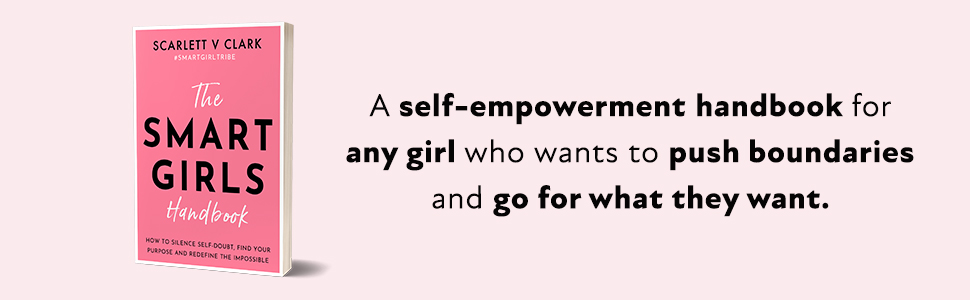
Book Review : ‘Smart Girls Handbook: How to Silence Self Doubt’ by Scarlett V Clark of Smart Girl Tribe

Disclaimer: I got sent a free copy of the book to review but did not receive payment for this review.

I was so excited to receive my copy of this book! I have been following Scarlett Clark’s work for a year or more- she is an incredible woman! She set up a global hub for women on issues that matter, Smart Girl Tribe at the age of only 19! Scarlett is a true trailblazer and entrepreneur, who is all about womens empowerment. Smart Girl Tribe is now the UK’s number one empowerment organisation and as well as being an accomplished motivational speaker, activist and writer, Scarlett can now add author to the list!

On International Womens Day, earlier this month, Scarlett released The Smart Girls Handbook: How to Silence Self Doubt, Find your Purpose and Redefine the Impossible’ with Trigger Publishing (who also published my book!). I often have self doubt and it can be hard to find life purpose too for so many of us, especially if you struggle in life.

(image: Scarlett Clark/ Trigger Publishing)

Using her own story alongside the most popular questions that Scarlett is asked at the many events she runs in schools and colleges, The Smart Girl’s Handbook  aims to help you:

• Discover your talent and find your passion.
• Learn how to deal with fear of failure.
• Cope with anxiety and start speaking your truth.
• Build a strong group of true friends and slay the naysayers.
• Be confident and love yourself.

Each chapter follows the themes above and uses examples from Scarlett’s own life to explore the central idea. Included are tools, tips and exercises to work through, as well as interviews with other ‘Smart Girls’. This is a handbook for any girl who wants to push boundaries and go for what they want.

Scarlett tackles each issue head on, giving examples from her life journey and providing incredible motivational tips. I loved learning more about her, her life story and why she set up Smart Girl Tribe by herself at such a young age. Her fearless attitude and strength of character really stood out to me but also how she empowers other women to be and do the same.

Having lived with anxiety since the age of 15, I have had many years of holding back through fear but I have also achieved a lot too. I will go back to this book for advice again and again! It is an empowering book that will help women of any age, and especially teens and young women to reach for their dreams.

Each chapter has the Smart Girl Tribe promise headings and includes exercises to help you on your way too:

1) I promise to discover my talent and find my passion
2) I promise to learn how to deal with the fear of failure
3) I promise to learn to cope with anxiety and start speaking my truth
4) I promise to slay the mean girls and build a strong tribe of true friends
5) I promise to be confident and love myself unconditionally
6) I promise to be a total #boss
7) I promise to embrace self-care and take a well-needed pause
8) I promise to stand up and help change the world

Thanks Scarlett for being you and publishing this wonderful book too!

If you;d like to read your copy you can here


About Scarlett Clark:
At 19, female entrepreneur Scarlett V Clark set up a global hub for young women. Smart Girl Tribe quickly became the UK’s number one female empowerment organization. Since then she has worked with the UN, the British Council, HeforShe, Women for Women, and spoken at the Houses of Parliament. Now in her mid 20’s, Scarlett is an ambassador for the NSPCC and 50:50 which lobbies parliament and the political parties to be more inclusive of women. With a Masters degree in journalism, Scarlett has written for major publications including Cosmopolitan and Harper’s Bazaar. She is an avid traveller, competitive skier and multi linguist.

Be Ur Own Light Blog turns 5!

(image: Peach Blossom)

Be Ur Own Light is 5! I cant believe its been 5 years since I began this as a therapy blog as I was suffering from severe panic from trauma and lost my job. I love this blog and will continue to write to break the stigma around mental illness.

This year, Vuelio awarded us as a Top UK mental health blog again which is just incredible. We were also nominated in the Mental Health Blog Awards 2020.

This year we have worked with some amazing writers and organisations on mental health. Thank you:

OCD and Break Ups- Brooke Chaplan

Pocket book of love and Happiness- Trigger Publishing review

5 Ways Therapy can heal your family- Samantha Higgins

Why people are using weighted blankets- Calming Blanket

How to make your surroundings more calming if you have anxiety- Daniel Tannenbaum

Mental health tips to get you through lockdown- Chantal Shaw

How debt impacts your mental health- Ian Sims

Life under lockdown: by Chloe Walker

Lockdown and mental health by Graham Morgan MBE

Best employee benefits for mental health: Daniel Tannenbaum

We will beat this, it will get better: Jenny Nguyen

Covid 19, mental health and work: Danielle Strouther

5 ways to evaluate body mind and soul: Daniel Torres

5 ways you can reduce anxiety- Samantha Higgins

How to help teens with mental illness succeed at school- Brooke Chaplan

Stuck in self isolation? Useful DIY projects- Brandon Smith

My crippling anxiety floored me, now I wouldnt be without it: Emma Johnson, Worry Knot Jewellery

UK went into lockdown, I went into meltdown- Nicole

How to help loved ones with alzheimers- Hannah Boothe

How to avoid burnout during a pandemic- Jade Mansfield at Worsley centre

Maintaining a healthy work life balanace- Love It Cover It


On DBT, art and healing- Violette Kay

How to protect your mental health during the pandemic- Mary Davis

How managing my space helps my mental health- Poppy Duffree- Organise with Poppy

Relaxing places to visit to calm coronavirus anxiety

Bamboo sheets for less anxiety at night

Self care tips for 2020- Anthony L

Redecorating your bedroom for improved mental health- Rosette

 5 things that could be triggering your depression- Samantha Higgins

Escaping outdoors is beneficial to mental health- Amy Sloane

How to work and be a mother during the pandemic- Miranda Davis 

Overcoming the impact of substance abuse on mental health- Anita Ginsburg

How to minimise stress for the elderly in senior living- Johnny Kershaws

15 Ways to turn your home into a self care sanctuary- ImproveNet

Living with OCD during a global pandemic- Impulse Therapy

Managing emotions for better mental health

Taking care of your mental health when a loved one passes away

Checking in on your elderly loved ones mental health during the pandemic

Identifying the source of your eating disorder and finding recovery- Anita Ginsburg

Self care activities to do for those who love to be alone- Regina Thomas

Out of Office by Fiona Thomas- book review by Eleanor   

Using yoga to improve productivity at home: Daisy Moss

The difference between a psychiatrist and psychologist- Anita Ginsburg 

Moving to another country- are you escaping your baggage?

10 tips to avoid covid burn out at home and help your mental health

How to help others when you have lived experience of mental health

Coping with menopausal anxiety and panic attacks by LadyCare menopause

Home improvements to help mental health

5 ways a relationship can hurt your mental health- Miranda Davis

Life is Finite

The secret signs of anxiety

Digital detox ideas for mental wellbeing

How can you better your mental health?

Developing a new found confidence in yourself for the festive season

How to plan for your future in difficult times

Depression and what you should know

Planning for the future to ease your mind

and I wrote some personal articles too!


Thank you for continuing to read and for the support for so long, it means everything to me.

Lets keep breaking the stigma!

Love, Eleanor xx

How Can You Better your Mental Health?

Your mental health is precious, and you’ve got to look after it as much as you can. We know sometimes this isn’t the easiest thing in the world as there are so many things that are beyond your control. We also know that even when things are okay, sometimes it’s still difficult to control the way that we feel. But, that’s why we’ve written this article, so that you’ve got some ideas as to the things that you can do to better your mental health. Keep reading if you would like to find out more.

Try To Relieve Whatever Stress You’re Holding

The first thing that we’re going to recommend is that you try to relieve whatever stress you are holding onto. We know that this isn’t easy, and we’re not saying it is, but it’s something that you’ve got to do if you want to recover. Your mental health is not going to benefit if you are constantly stressed. But, the only way that you are going to be able to relieve stress is if you know what is causing it. It’s for this reason that you’re going to have to think yourself or speak to a therapist and figure out what is causing most of the stress. From there, you can work out the best way to destress and take control, and this should ultimately end up improving your mental health. 

Hypnosis Might Be Worth A Try

Have you ever given much thought to trying hypnosis? Professional hypnosis involves interaction with you and the therapist to heal mental health issues going on in your life. For example, you can get hypnosis downloads that will help you to do whatever it is you’re aiming for. Hypnosis will involve your consent and its worth a try- Your mental health is worth it. Search for a recommended therapist.

Try Taking Up A New Hobby

The final thing that we are going to suggest is taking up a new hobby. Your mental health will always be worse if you are not distracting yourself from negative thoughts. You’re going to get too deep into things and you may spiral into anxiety or depression. Instead of doing this, find something that you enjoy doing, thats a positive focus. It can be a sport, or a game, reading, watching TV, completing some arts and crafts, whatever you want to do as long as it takes your mind off of your thoughts for a little while. Become immersed in whatever you are doing, and leave the rest of the world behind for a while.

We hope that you have found this article helpful, and now see some of the things that you can do to better your mental health . Something on this list should help, and if it doesn’t, there are also plenty of other things that can be done as well. Make an appointment to see your GP or therapist if your mental health worsens and take care of yourself- self care is vital.

This article was written by a freelance writer.

The Secret Signs of Anxiety.


(image: Unsplash)

We all think we know what anxiety looks like. It looks like hyperventilating, sweating, and a worried look on someone’s face. But the truth is anxiety looks like a lot of different things to different people, and there are some secret signs of anxiety too. 

While you can’t mask all of the physical signs like hair loss, increased or decreased appetite; a lot of anxiety is dealt with in secret. 

Even if you don’t personally have anxiety, it is important that you can spot the signs of anxiety in your loved ones. It will help you to help them. 

There are some common, yet not totally obvious signs that someone (or yourself) is suffering. It is important that you let them know that there are options for support. Sometimes a good conversation and regular therapy can help. Other times medication and rehabilitation like The Banyans might be the answer.

Headaches

Some headaches are caused by dehydration, and others are caused by stress. A stress headache usually happens because someone is holding their jaw clenched tightly, which causes tension in the neck, shoulders and up to the head. The clenched jaw may last through the night, and this will cause headaches. 

Eczema

Note that stress and anxiety cause an inflammation reaction in the body. This, in turn, will cause eczema to flare up. Another issue is that when people are anxious or worried, they tend to sweat more. The sweat will act as an irritant and increase the impact that eczema is having on the body. 

Sweating

As mentioned above, extra sweating can be a sign of anxiety. This is due to the adrenaline that is running through our bodies. The adrenaline is involved in the fight-or-flight reaction, and that ‘state’ is a high alert state. It causes sweating. 

Bad sleep

If you, or someone you care about, are often talking about how poorly they are sleeping, there is a good chance there is something deeper going on. Most often mental health fluctuations will cause a person to sleep more than usual or not at all. Insomnia, nightmares, sleepwalking, disturbed sleep are all common signs of anxiety and stress. 

Illnesses

Coughs, colds, aches, pains, and generally feeling run down are signs of anxiety too. Stress has an awful impact on your immune system. It promotes and overproduction of the hormones that regulate your immune system. This affects the ability of your body to produce white blood cells to fight infection. The weakened immune system means you are more susceptible to illness. 

Stress and anxiety will also impact your mood. It will make it more difficult for you to regulate your emotions. People who are feeling stress are usually irritable and can have mood swings too. Difficulty concentrating can also be a symptom as well as an issue caused by stress and anxiety. Decision making and memory are impacted too. 

If any of these things sound familiar to your then it is time to take steps to reduce your stress and anxiety levels or have a chat with a friend who is exhibiting signs. 

Make sure you look after yourself and speak to a doctor if you are concerned about your health.


This article was written by a freelance writer.