Supporting Your Senior Parent’s Mental Health.

(image: Andrea Piacquadio: Pexels)

Mental health issues affect nearly one in four seniors in the UK. Loneliness is often touted as a silent killer among those over the age of 65. This is down to changes in lifestyles, living conditions, health and much more. Isolation is common amongst seniors, contributing to increased mental health issues in people reaching retirement years or older.

If you are concerned your parents might be struggling with their mental health, or you want to avoid them experiencing changes to their life and mental health, there are some things you can do to help them.

Additional Support

If your parents are struggling with a change in their abilities, experiencing changes to hearing and vision or are living with poorer health, getting them some help around the home can help them to live in the same way they are used to without harming their physical and mental health. Being able to live in a clean and tidy home, get support with bathing and dressing or leaving the house can boost their mental health and help them feel more confident getting around. Home care services can be instrumental in offering support to seniors who need a helping hand but still want to live independently.

Frequent Communication

One common thing amongst the older generations is that they frequently say they feel they are no longer an essential part of their family’s life and often feel left out, excluded or forgotten about. This is where mental health can decrease rapidly. You can avoid this happening by continuing to include your senior parents in family life, talking to them frequently, and making sure they know they are wanted, loved and can speak to and meet up with you and the rest of the family.

Communities

There are many different communities and support groups of people reaching senior age, and charities such as Age UK always hold events and have outreach programs in place to support the most vulnerable. Getting your parents out and into a community group, volunteer programme, or simply socialising with those in the local area can help give them a purpose, a reason to leave the house, and a chance to mingle with like-minded others.

Recognise Changes

If you are actively involved in your parent’s life, you will be better placed to notice any changes to their physical and mental health as they occur. They could be there doing their usual routines or activities or skipping meals, or eating more. Or they could be withdrawing from people. If you can recognise changes quickly, you can get your parents the right help, be it medical care, health conditions they are experiencing or mental health support.

Being proactive in your parents’ lives can help you stay on top of their activities, mental health, and how they support themselves so you can get them the proper health and support and ensure their mental health isn’t struggling. Many seniors are reluctant to talk about these types of issues, but by showing you care and are worried about them, you can help them to make the right changes so they can live their retirement years happily and enjoy the rest of their lives.

This article was written by a freelance writer.

6 Small Things That Can Help You Manage Your Mental Health by Anita Ginsburg.

(Image: Unsplash: Gabrielle Henderson)

Mental health can be a difficult topic to address, but it is important for everyone to prioritise their wellbeing. There are many ways to manage your mental health, but sometimes the simplest methods are the most effective. This blog post will be discussing six small things that can help you maintain good mental health. These tips are practical, easy to implement, and can make a significant difference in your life.

Keep a Gratitude Journal

It can be easy to focus on the negative aspects of our lives and dismiss the positive. Taking a few minutes each day to jot down things that you are grateful for can shift your mindset and improve your mental wellbeing. Write down three things that you are thankful for each day before going to bed, and reflect on them at any time when you feel overwhelmed or stressed. This practice will help you appreciate the good things in your life and keep you motivated.

Take Breaks From Technology

Technology is increasingly becoming a significant aspect of our lives, and it is often difficult to disconnect. Technology is useful, but it can also be an additional source of stress. To promote good mental health, allow yourself to take breaks from accessing technology and spend more time engaging with people or relaxing in other ways. Read a book, meditate, or go for a walk in the park instead of scrolling through social media. Taking a break from technology can help you unwind and recharge.

Reach Out to Your Support System

The people who care about and support you can play a crucial role in helping you maintain good mental health. Reach out to those in your support system when you need reassurance, affirmation, or guidance. If your family or friends are not readily available, you can always seek professional support through counselling, therapy, or hotlines. Remember that it is okay to ask for help.

Engage in Hobbies or Activities That You Enjoy

Engaging in activities or hobbies that bring you joy can contribute significantly to your mental health. Find new activities or hobbies that you enjoy or rediscover old ones that you may have abandoned. Starting or continuing  collection is also a good way to get out of the house and devote your energy to something new, starting with stores like Go Earth Coins & collectables which have lots of options of things to start collecting. Being creative, learning new things, and experiencing novel experiences can help you feel more fulfilled and satisfied in life. You can also join clubs or connect with groups that share your interests to feel more connected and fulfilled.

Practice Self-Compassion

Being kind and compassionate to yourself should be a core aspect of your daily routine. Self-compassion means recognising your strengths as well as your self-improvement goals, acknowledging your mistakes without excessively criticising yourself, and treating yourself kindly. You can practice self-compassion in several ways, including speaking kindly to yourself, treating yourself to small gifts or experiences, and regularly complimenting yourself.

(image: Unsplash- Tim Mossholder)

Get Enough Sleep

Getting sufficient sleep is essential for both your physical and mental health. Make sure you get enough sleep and avoid stimulants such as caffeine and alcohol, especially before bedtime. Create a sleep-friendly environment, which includes having a comfortable sleeping space, a consistent bedtime routine, and establishing a relaxing bedtime routine, including reading books, taking a warm bath, or meditating to help promote restful sleep.

Good mental health is essential to a fulfilling life, and small things can make a significant difference. Start by implementing these six small things to promote your mental health, and other healthy habits will follow suit.

Remember, maintaining good mental health is a journey, and it requires practice. Take the time to look after yourself, and you will reap the benefits.

Anita Ginsburg is a freelance writer.

The Power of Group Therapy For Individuals Dealing With Chronic Illness: by Lizzie Weakley

(image: Priscilla Du Preez, Unsplash)

Chronic illness can take a toll on one’s physical, emotional, and mental wellbeing. Individuals struggling with chronic (long term) illness often feel lonely, isolated, and anxious, leading to a decline in their overall quality of life. While individual therapy can be helpful, group therapy can offer additional benefits and support. Group therapy allows people to connect with others who understand and relate to their struggles.

A Sense of Community and Connection

The sense of community and connection that group therapy provides can be incredibly powerful for those dealing with chronic illness. Often, those dealing with illnesses can feel isolated and misunderstood. In a group therapy setting, individuals can connect with others who are going through similar experiences and struggles. This can help reduce feelings of isolation and provide a sense of comfort and understanding, with a qualified therapist.

Learning from Others

In group therapy, people can learn from others who are further along in their journey. For example, someone who was recently diagnosed with an illness may feel scared and uncertain about their future. Hearing from someone who has been living with illness for a longer period of time can offer hope and reassurance and also provide practical support.

Psychoeducation

Some group therapy can provide an opportunity for psychoeducation on chronic illnesses. Members can learn about their illness, medications, treatments, and therapeutic interventions that can help reduce their symptoms. This can give them a sense of control and improve their quality of life.

Better Coping Skills

Chronic illness can be overwhelming and stressful; it often requires individuals to develop new coping mechanisms to manage their symptoms. In a group therapy setting, individuals can learn new coping skills from other members. This can include stress management techniques, mindfulness exercises, and ways to manage pain or fatigue. Learning new coping skills can lead to a reduction in anxiety and an improvement in overall mental health.

Mutual Support

Whilst in group therapy, members can offer mutual support to one another. Those who are having a particularly difficult day or week can lean on other members for support and encouragement. Group members can offer a listening ear or share coping strategies that have worked for them. This provides a sense of comfort and fosters a sense of belonging.

Group therapy can be a valuable tool for individuals struggling with a chronic illness. It provides a sense of community and connection, the opportunity to learn from others, psychoeducation, better coping skills, and mutual support. If you are struggling with chronic illness, consider seeking support through group therapy.

Remember, you are not alone. There are others out there who understand and can support you on your journey. You can also be referred for therapy.

Lizzie Weakley is a freelance writer.

Tips For Finding The Right Psychiatrist For Your Needs: by Brooke Chaplan

(image: free image)

Mental health is just as important as physical health and seeking professional help can make a significant difference in one’s life. But choosing the right psychiatrist can be a daunting task. Finding the right person who understands your needs, and creates a treatment approach that suits you, can be overwhelming. In this blog post, we’ll take a look at some helpful tips for finding the right psychiatrist for your mental health needs.

Ask for Referrals (If Private)

Start by asking for referrals from trusted sources such as family, friends, or a primary healthcare provider if you are going privately. You can’t always choose who you get referred to on the NHS, if you live in the UK but have to trust your GP will refer you to someone good. It’s always a good idea to get recommendations from people who have gone through similar experiences and found a psychiatrist that was helpful to them. Additionally, you could check with your GP or local mental health clinic for referrals.

Check Credentials

Psychiatrists are medical doctors with additional education and training in psychiatry. It’s important to ensure that the psychiatrists you’re considering are board-certified in psychiatry, meaning they have undergone a rigorous training and certification process (in the NHS they will be certified). If going privately, check out their education, training, and professional experience to ensure they hold a reputable degree from a top-rated institution and possess the license to operate.

Consider Experience and Specialisations

A well-experienced psychiatrist would be more likely to handle specific issues than a psychiatrist who is new to practice. You’ll want to find a psychiatrist that has experience in treating the specific mental health conditions or concerns you may have. For example, if you’re dealing with anxiety, you’ll want to seek out a psychiatrist who specialises in anxiety disorders.

Insurance Coverage (For USA/ private insurance)

If you have private health insurance, check with your provider to see which psychiatrists are in-network to help out with the cost of treatment. You may also ask your psychiatrist if they offer a payment plan to make their services more affordable. If in the USA, If you don’t have insurance, consider seeking treatment at community health clinics that offer sliding-fee scales. If in UK, this is free via the NHS but can be a long waiting list, if you are not at crisis point.

Trust Your Instincts

Lastly, trust your instincts. You want to feel comfortable with the psychiatrist you choose, so it is important to ensure that their communication style and methods align with what works best for you. During your first appointment with a potential psychiatrist, pay attention to how the psychiatrist speaks, if they listen to you, and how they react to your concerns. It’s important to choose someone you can feel comfortable opening up to.

It’s important to take the time to find a qualified psychiatrist you feel comfortable with, to help manage your mental health. Referrals from trusted sources, verifying credentials, experience, insurance coverage, and your comfort are all important factors in selecting the right psychiatrist to suit your needs. By keeping these tips in mind, you’ll be more confident in your search for the right psychiatrist.

Remember, seeking help is a sign of strength, and a qualified psychiatric professional can help you feel better mentally, emotionally, and physically.

If you’re in the UK: check out`: https://www.rcpsych.ac.uk/

Brooke Chaplan is a freelance writer from the USA.

How Mental Illness Can Affect Our Coping Mechanisms.

(image: Unsplash)

Coping mechanisms are strategies that people use or develop in order to deal with, or avoid dealing with, difficult and stressful emotions or situations. Whilst some people may use exercise, a healthy diet or meditation as a way to process difficult feelings, it can be very easy to fall into unhealthy habits instead, especially if we have pre-existing mental health conditions.  

For example, those who have suffered with eating disorders may automatically fall back into restrictive eating habits or fall into a pattern of binge eating when life gets difficult. Whilst we can easily beat ourselves up for not ‘handling things’ in a healthy and productive manner, it’s important to remember that coping mechanisms serve an instinctive purpose. In times of stress, we seek comfort and safety. On a biochemical level, unhealthy coping mechanisms are serving that purpose.  

That doesn’t mean we should allow them to continue, however. Part of overcoming mental illness is learning how to cope in healthy ways that serve a higher purpose for you long term. Here, we will take a closer look at how mental illness can affect our coping mechanisms, and how you can learn to shift your unhealthy coping habits into more helpful ones. 

Why mental illness makes us vulnerable 

Mental illnesses come in a wide variety, and each person will experience them slightly differently to the next. But essentially, mental illness means that our brains aren’t working exactly how they should. This can warp our perception, and make us feel more anxious, stressed, insecure and prone to depression than we would be otherwise. 

When we are stressed, we seek instant comfort. Our brains instinctively drive us to seek the quickest fix and push us to run away from our cause of stress. This is why when you are really, really hungry, all you want to do is eat sugary foods such as chocolate – your body knows that’s the quickest fix for its hunger, even though you know consciously that it’s not the healthiest option. 

For people with mental illness, this stress response can trigger a repetition of a familiar pattern of negative behaviour that instantly soothes or avoids the initial problem, but also creates bigger issues long term. 

Recognise your behaviour 

It’s important to recognise when we are relying on unhelpful coping mechanisms to avoid facing stress, as they can lead to more serious mental and physical problems. If you are fixating on something that is not going to help you long term, such as obsessive cleaning, isolating yourself from family and friends, or abusing alcohol, you need to consciously recognise the signs that your habits are not serving you. 

You may find it helpful to write down the root causes of your negative habits, and commit to facing the problems head on instead of allowing them to cause you further problems. Talking to someone you trust can be a massive help and relief, and can help you springboard yourself into a better place mentally. 

Make small changes 

Often when our mental health is low, we can feel overwhelmed by the thought of fixing everything. Remember, your perception is magnified when you are struggling mentally, so everything will seem worse and harder than it truly is. Being kind to yourself and committing to changing just one small habit at a time can be really helpful in focusing on what you can achieve – one step at a time.  

Speaking to a health professional can be an intimidating thought, but sometimes it is necessary in order for us to make profound changes to our health and wellbeing. There is no shame in asking for help, and you are not alone. By recognising when our coping mechanisms are beginning to be less than healthy, we can make the choice to improve them. 

This article is written by a freelance writer.

We are 7! On Be Ur Own Light’s 7th Blog Anniversary by Eleanor

On the 1st March 2016, I started this blog as a way to provide therapy for myself- as I was going through panic attacks, (caused by trauma). Can you believe that was 7 years ago?! I can’t! Since then I have had several years of therapy and my life changed so much too for the better- I met my husband, we got married and moved to our first home.

The blog has turned into a book Bring me to Light (with Trigger), writing for Metro.co.uk, Glamour, the Telegraph, Happiful, Rethink Mental Illness, Mind and other incredible organisations, I have partnered with large and small brands, charities, businesses, writers to create content that battles stigma on mental health. We have been awarded as a Top 10 UK blog by Vuelio since 2018 (thank you) and I love to share my story to help others and educate people about bipolar, anxiety, panic disorders, psychosis, mania and mental health in the workplace (amongst other mental health topics!). I have also recorded podcasts and have begun speaking in the community about bipolar with my Dad.

I cannot believe it has been 7 years since I opened up my computer to write- I was struggling. a lot. Writing has been such a therapy and a saviour to me.. and I hope this blog helps you too!

As always, I want to thank all my contributors and brands (sponsored or not), as well as the digital agencies and freelance writers who provide content too.

This year March 22- 23 we have featured (where it says my name, I wrote it!)

How to Stay Motivated When You’re Feeling Lost: Tracie Johnson

Change the Story Campaign- Eating Disorder Stereotypes- Hope Virgo

Performance of She Used To Be Mine (Sara Bareilles) by Nicolina Bozzo- Eleanor

5 Tips on How To Talk To Your Boss About Mental Health- freelance writer

Does Retail Therapy help your mental health?– freelance writer

9 Tips On Prioritising Your Mental Health while raising children- freelance writer

How to Keep a Good Mindset with Physical Therapy – Sierra Powell

Bipolar and Perinatal mental health- Eleanor

4 Types of Alcohol Addiction Services You can Turn To for Help- Rachelle Wilber

How to Transform Social Anxiety – Lewis McDonnell at Phobia Support Forum

What It’s Like To Go Through Severe Depression as a Bipolar Episode- Eleanor

What To Do When You Feel Alone- Eleanor

4 Reasons to Cook For Yourself- freelance writer

Learning to Embrace Schizoaffective Disorder -Mental Health Awareness Week- James Lindsay

Promoting wellbeing, good mental health and reducing stress in the elderly- freelance writer

Top 10 UK Mental Health Blog Award from Vuelio- Eleanor

Mental health, low self esteem, body image and fashion- freelance writer

What It Means To Have an NHS Perinatal Psychiatry Meeting- Eleanor

Unbroken- How Madeleine Black learnt to heal after sexual violence- Eleanor

What Tools Go Into Substance Abuse Treatment- Kara Masterson

Living with Anxiety- Promoting Mental Health and Success In the Workplace- Erin Hallett

How to know if you have an eating disorder and what to do next- Rachelle Wilber

How can I help an alcoholic or addict parent?- Chaye McIntosh

Boost Your Confidence- freelance writer

Taking Lithium for Bipolar Disorder- Side Effects – Eleanor

4 Effective Ways to Boost Your Mood- freelance writer

Knowing when its right to seek substance abuse treatment- Rachelle Wilber

Protecting mental health, a guide- The Mental Health Foundation

Letting go of hurtful memories to be happier- freelance writer

Group therapy and healing- Lizzie Weakley

Mental health medication and heatwave side effects- Eleanor

How to Create Healthy Daily habits- Sierra Powell

3 Journalling Techniques for Improved Mental Health- freelance writer

Looking after elderly parents- freelance writer

Thank you to a mental health nurse for sharing my book – Eleanor

Interview on Living with Bipolar with Best For You NHS- Eleanor

5 Tips for Communicating with Someone with Dementia- freelance writer

7 Tips to Help Your Personality Shine Through- freelance writer

Sleep Expert on how to stay cool on hot nights- freelance writer

Book Review of my book Bring me to Light by Deb Wilk- Eleanor

4 kinds of Therapy to consider- Rachelle Wilber

Coping with Borderline Personality Disorder and Obsessive Compulsive Disorder- Dr Joann Mundin

Are work places doing enough for mental health post-covid? – freelance writer

Mental Health at Work: First Aid products- writer

The Anxiety Train- a New Year- Eleanor

PTSD therapies and what is right for you- Kara Masterson

Managing mental health when you start college/university- freelance writer

Helping elderly relatives take care of themselves- freelance writer

How to Stay Emotionally Healthy during a Divorce- Lizzie Weakley

4 Ways EMDR Therapy can help you cope with Anxiety- Rachelle Wilber

Stuck in a Rut? Try These 4 Things- Dixie Somers

Non Traditional Therapeutic Activities to Try for Anxiety- Brooke Chaplan

Dealing with Dental Anxiety- Lizzie Weakley

Overcoming Seasonal Mood Changes- Brian Thomas

3 Years of my book Bring me to Light- Eleanor

5 Unbeatable ways to unwind- Dixie Somers

Speed Up Bipolar diagnosis to save lives- Bipolar UK- Eleanor

Losing a loved one- coping with anxiety- Hannah Walters

4 Ways to Treat an eating disorder- Lizzie Weakley

Bipolar UK commission announcement on government funding – Eleanor

How Living by the waterfront improves health- Rachelle Wilber

What football has taught me about life and mental health- Rose Atkinson-Carter

Anxiety and climbing, not carrying mountains- Eleanor

How Car accidents affect mental health- Stubbs Law Firm

How can EMDR therapy help you?- Brooke Chaplan

Tips for planning a sensory friendly wedding- Clay Reese

How to manage emotional eating- Lizzie Weakley

Methods for helping addiction recovery- Kara Masterson

How to tell if a loved one needs psychiatric help- Brooke Chaplan

What to do if you have an eating disorder- Brooke Chaplan

Navigating a divorce and preserving your mental wellbeing- Dixie Somers

January anxiety and burn out, how to avoid- Dr Catherine Carney at Delamere

How to cope with ADHD- freelance writer

My talk at the mental health awareness shabbat on bipolar- Eleanor

Tips to help seasonal depression- Obehi Iyobhebhe

How to help support your friends journey to sobriety- Anita Ginsburg

Why self care is so important- Brooke Chaplan

Coping with big life changes- Meghan Belnap

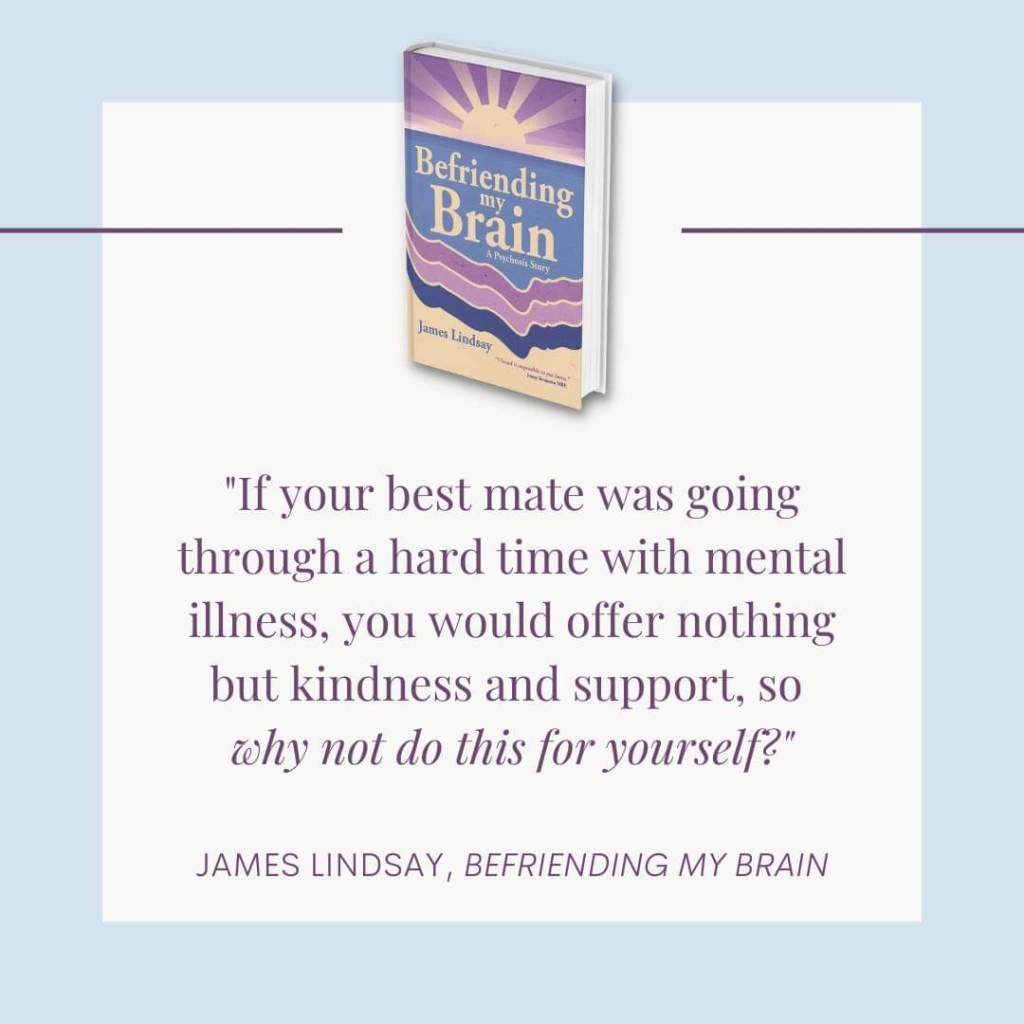
Befriending my brain, a new book on psychosis and recovery by James Lindsay- Eleanor

Thank you all for contributing and I am raising a glass to 7 years of this blog!!

Love and gratitude,

Eleanor x

Befriending My Brain: A Psychosis Story. Exciting New Book by James Lindsay and Cherish Editions

(image: James Lindsay/Cherish Editions)

I first ‘met’ my Twitter friend James Lindsay online when he was first starting to talk about his schizoaffective disorder and psychosis. James also works for Mind doing important work in the mental health sphere and we both live locally to one another. I am really proud of James’s determination, not only in his own life, but to help others through his writing and his new book ‘Befriending My Brain’ with Cherish Editions (Trigger Publishing).

An eye-opening memoir about a young man’s descent into schizoaffective disorder– and the steps he took to regain control of his life.


It’s no secret that, in recent years, mental health has become a major topic of conversation. But just because many people feel comfortable discussing their depression, anxiety or other mental health conditions, doesn’t mean that we have removed all stigma from such diagnoses. This is especially true when it comes to psychotic disorders, which affect less than 1 in 100 people in the UK each year (Mind), thus leaving these disorders shrouded in mystery. It doesn’t help that what the media portrays as schizophrenia or psychosis is not always what the sufferer experiences in real life.


As such, it’s vital that we start to bring psychotic disorders, including psychosis, to the forefront. According to a 2016 report from Public Health England, “psychosis is one of the most life-impacting conditions in healthcare.” But with the proper treatment and understanding, it doesn’t have to be life-altering. The same report states that the sooner someone
is treated for their psychosis, the better the chances that they will recover and return to their normal
lives.


James Lindsay has experienced the ups and downs of schizoaffective disorder first-hand, and his book does the vital work of removing some of the mystery surrounding such a diagnosis. It includes the red flags he recognises in hindsight after psychosis landed him in hospital for the better part of a month, but it also retells the inspiring journey he took to recovery in all aspects of his life.

In his case, psychosis and his path to better mental health gave him a new passion in life: helping others through their own diagnoses and getting their lives back, just as he did. No matter where readers are on their journeys, James’ memoir will resonate and remind them, as he puts it, that “recovery is always possible, and hope is never far away.”

(image: Trigger Publishing/ Cherish Editions/James Lindsay)

I can’t wait to read it and review it too!

You can buy a copy of Befriending My Brain: A Psychosis Story by James Lindsay at Amazon, Trigger, Waterstones, WH Smith and all good bookshops.

MORE ABOUT THE AUTHOR
Hailing from Watford, Hertfordshire, James Lindsay works for Hertfordshire Mind Network and uses his free time to advocate for mental health care by blogging and appearing on podcasts and TV. James enjoys playing football, going to the cinema, spending time with friends and family, and exploring new places, with his partner, Holly. Befriending My Brain is his first book.


Why Self Care Is So Important For Good Mental Health by Brooke Chaplan

(image: free image)

Self-care is a buzzword that has become increasingly popular in recent years, with many people talking about how important it is to take care of ourselves. But what does self-care really mean? And more importantly, what are the benefits of self-care for mental health? Let’s take a look at why self-care is so important and how it can improve your mental well-being.

What Is Self-Care?

Self-care is any activity that we do deliberately in order to take care of our mental, emotional, and physical health. We all need different kinds of self-care depending on our individual needs, but some common examples include getting enough sleep, eating nutritious foods, exercising regularly, and taking time out to relax. Taking part in activities like these can help us manage stress levels and make us feel better about ourselves overall.

The Benefits of Self-Care for Mental Health

Self-care has many benefits for our mental health and well-being. Taking time out to practice self-care can help reduce stress levels, which can have positive effects on our mood and energy levels. It can also help us gain clarity and perspective on problems we may be facing in life as well as helping us feel more connected to ourselves. Regularly engaging in activities such as yoga or meditation can also help us develop coping skills for dealing with difficult emotions or situations. In addition, taking part in activities that give us pleasure, such as reading a book or going for a walk, can boost our moods and make us feel more positive about ourselves and life in general.

Self-Care Tips For Improved Mental Health

If you want to get started with self-care but aren’t sure where to begin, here are a few tips you can use:

• Take breaks throughout the day – even if it’s just five minutes – to recharge your batteries

• Make time for things you enjoy doing, such as reading a book or listening to music

• Get outside into nature whenever possible

• Connect with friends or family members who make you feel good

• Practice relaxation techniques such as deep breathing or visualization

• Eat healthy foods that will nourish your body

• Exercise regularly – this doesn’t have to mean hitting the gym every day! A simple walk around the block will do wonders for your mind and body

• Spend time alone – this could be journaling or simply sitting quietly with yourself

• Be kind to yourself – don’t forget that self-love is one of the best forms of self-care!

• Reaching out and getting psychiatric services also counts as self-care, as you are helping yourself feel better in a professional setting

Self-care is essential for maintaining good mental health and well-being. From eating healthy foods to taking regular breaks throughout the day, there are many simple things we can do every day that will benefit both our minds and bodies.

The key is finding what works best for you personally—what activities bring you joy and make you feel better? By taking some time each day just for yourself—whether it be reading a book or going outside into nature—you will soon start reaping the rewards of self-care!

Brooke Chaplan is a freelance writer.

What Is EMDR Therapy and How Can It Help You?  by Brooke Chaplan

Those with post-traumatic stress disorder undergo a wide variety of symptoms that can interfere with their everyday life. EMDR therapy is intended to help reduce the effects of PTSD on the body. In fact, there have been positive clinical outcomes showing this therapy’s effectiveness for treating addictions, depression, anxiety, chronic pain, and even OCD.

What is EMDR Therapy? 

EMDR stands for eye movement desensitization and reprocessing therapy. This extensively researched therapeutic practice has been proven to help people recover from trauma and PTSD-related symptoms. It’s classified as a psychotherapy method and is notated as an effective treatment offering by the NHS, American Psychiatric Association, World Health Organization, American Psychological Association, International Society for Traumatic Stress Studies, National Alliance on Mental Illness, and so many more. 

What Makes EMDR Therapy Different? 

When you look at the treatment options for traumatic disorders like PTSD, many require in-depth conversing with a licensed therapist. Many patients will spend hours talking about their distressing issues and even complete homework between their therapy sessions.

EMDR therapy doesn’t work like that. Rather, it’s specifically designed to allow the brain to resume its natural healing process. However, it does include an element of talking therapy to help heal.

EMDR Therapy and Your Brain 

The human brain has a natural process for handling traumatic memories and events that happen in our lives. It utilises communication between the amygdala, hippocampus, and prefrontal cortex. The amygdala is the brain’s alarm for a stressful event. The hippocampus helps the brain to learn and share past memories regarding danger and safety. Lastly, the prefrontal cortex is responsible for analysing what’s happening and controlling your emotions and behaviours. 

Who Can Benefit from EMDR Therapy? 

EMDR therapy can be beneficial for a wide variety of patients, including both children and adults. It’s been known to treat individuals who have the following conditions (and more): 

  • Anxiety 
  • Depression 
  • Bipolar disorder
  • Eating Disorders 
  • Performance Anxiety
  • Personality Disorders 
  • PTSD 
  • Sexual Assault Victims 

Basically, anyone who has experienced a traumatic incident in their life can benefit from this particular type of therapy treatment. In fact, most individuals are able to overcome their symptoms in just a few EMDR sessions as compared to ongoing psychotherapy sessions. 

If you or a loved one has suffered a traumatic incident, it may be difficult to move on with your life.

Fortunately, EMDR therapy can be a great solution to help your brain and body successfully process the incident and move on.

EMDR therapy is recommended for all types of patients, regardless of age or gender. 

This article was written by Brooke Chaplan, writer.

Anxiety And Climbing, Not Carrying Mountains. by Eleanor.

(image: Quote CC)

This week was a good week. Generally, my bipolar has been stable for a while. I am able to go to work and hold down two jobs somehow and I also passed my probation (in the words of Borat, Great Success!). But there are times when things are overwhelming and I feel like a wobbly mess. Like today.

I achieved my goals that I came up with when I was in the middle of agoraphobia a few months ago. My panic disorder reset itself to a healthy level thanks to therapy and things improving at work. As such, I have been able to see more people face to face and this week I was able to go to Ronnie Scotts Jazz Club with my Dad to see Natalie Williams and Soul family Motown show (my Chanukah present). We have been before over the years and love going to see them and going with my Dad makes me feel safe as he drives us.

However, I often find that something like that is followed by a day of needing to slow down and look after me as I can feel a little depleted and more anxious. Its just a bit of a pattern my mind goes too. The cold and dark weather also do not help with this and I start just wanting to stay at home. I have also been putting myself under too much pressure and end up exhausted.. any other perfectionists/achievers do the same?

So, I couldn’t go to see friends and some family this weekend and had to cancel arrangements which wasn’t great. However, my baby nephew was born last week and had his Jewish naming ceremony yesterday which was special as Rob and I carried him in on a special pillow. We then hosted my mum and step dad for shabbat (Jewish sabbath) lunch- so I am seeing that as a big achievement despite everything. In the past, I wouldn’t have even been able to attend it- so I know I am in a better place. However, I also had to cancel other family plans which I don’t feel good about.

I think I have just been trying to do way too much as I always do when I feel a bit better and I am sorry to those I have had to let down due to increased anxiety. I know its not my fault, its an illness, but I still feel bad.

One positive, at the ceremony I was able to see my two aunties who I hadn’t seen for a while (which was one of my goals too) so that made me so happy.

Overall, I am doing well but I am still dealing with the panic and anxious thought patterns at times… and its learning a) what the triggers are b) what I can do to help myself when it happens. I have had about a month off from seeing my therapist so probably need another session soon. I think I just need a quiet day watching Netflix.

(image: Grow Together Now)

Rob and I are getting away over Christmas so hopefully that will be a good time to recharge and reset my batteries after a very busy year for both of us.

My sister said to me today to remember to be kind to myself, so that is what I am going to do. Though I do feel a little bit sad at having to cancel plans. Though I look back at the past few weeks and realise that I have done a lot in terms of seeing people- so maybe its all just too much and I need to plan less.

I am mostly healthy and life is generally good. Heres to climbing mountains, not carrying them all the time- and not feeling guilty if I can’t achieve something.

Love,

Eleanor x