5 Steps For Successfully Recovering From Binge Eating Disorder by Lizzie Weakley

(image: Ross Sneddon, Unsplash)

Binge eating disorder (BED) is a severe eating disorder characterised by recurrent episodes of consuming large amounts of food in a short period. This disorder is associated with acute physical and psychological complications that can affect an individual’s quality of life. Recovering from binge eating disorder can be a challenging process, but with the right guidance and support, it can be achieved. This blog post will discuss five tips for successfully recovering from binge eating disorder.

Seek Professional Help

Recovering from binge eating disorder requires professional guidance and support. The first step towards recovery is to seek professional help. Consulting with a healthcare provider (such as the NHS or privately) or a registered dietician can help an individual develop a personalised treatment plan that addresses their unique needs. The medical professionals (psychiatrist, GP) can also screen individuals for underlying health problems that may contribute to binge eating disorder, such as depression, anxiety, or other mental health disorders.

Establish a Support System

Establishing a support system is essential for individuals recovering from binge eating disorder. This support system may consist of family, friends, or support groups. Support groups can help individuals connect with other people experiencing similar conditions and receive emotional support and encouragement. It can also provide information about recovery resources and strategies that have worked for others.

Identify Food Triggers

Identifying food triggers that lead to binge eating can help an individual manage such situations. Food triggers may include certain foods, emotions, or social situations. Identifying these triggers can help an individual prepare and develop strategies to cope with them when they arise. Strategies may include therapeutic skills including distraction techniques, mindfulness, or relaxation techniques.

Embrace Online Binge Eating Recovery Services

Online binge eating recovery resources like Lightwork Nutrition can provide valuable support and information for individuals experiencing BED. Online support groups, forums, and recovery programs offer anonymous access to peer support, real-time chat, and educational resources. Using these online resources can help individuals connect with others facing similar challenges from anywhere at any time.

Cultivate Self-Care Habits

Cultivating self-care habits may improve an individual’s physical and mental well-being, ultimately aiding in their recovery. Self-care habits may include healthy eating habits, gentle exercise, and stress management techniques like mindfulness, yoga, or meditation. These habits enable people to manage stress, boost self-esteem and confidence, and improve overall health and well-being.

BED can have significant impacts on an individual’s quality of life. Recovering from binge eating disorder can be a challenging, yet achievable process for individuals. Seeking professional help, establishing a support system, identifying food triggers, embracing online binge eating recovery services, and cultivating self-care habits can enable individuals to overcome binge eating disorder effectively.

Remember, recovery is a process, and with hard work, patience, and dedication, individuals can experience good mental health and well-being.

This article was written by freelance writer Lizzie Weakley.

How Anxiety Counselling Can Strengthen Mental Health by Miranda Spears.

(image: Pixabay)

Anxiety has become increasingly prevalent in today’s fast-paced and demanding world, affecting individuals of all ages and backgrounds. Fortunately, counselling has emerged as an effective therapeutic approach to help individuals manage and overcome their anxiety. By providing guidance, support, and evidence-based strategies, anxiety therapy can empower individuals to strengthen their mental health and lead fulfilling lives. 

Understanding Anxiety 

Before delving into the role of anxiety counselling, it is crucial to grasp the nature of anxiety itself. Anxiety is a normal human emotion, but when it becomes chronic and interferes with daily functioning, it can be classified as an anxiety disorder. Anxiety disorders encompass a range of conditions such as generalised anxiety disorder (GAD), social anxiety disorder (SAD), panic disorder, and specific phobias. 

Breaking the Stigma 

One of the first steps towards seeking counselling is breaking the stigma associated with mental health. Many individuals hesitate to reach out for help due to fears of judgment or shame. However, anxiety therapy provides a safe, non-judgmental space where individuals can openly discuss their concerns and experiences. Counsellors are trained professionals who understand the complexities of anxiety and can offer empathy and support. 

Identifying Underlying Triggers 

Therapy helps individuals identify and understand the underlying triggers that contribute to their anxiety. Counsellors utilise various therapeutic techniques, such as cognitive-behavioural therapy (CBT) or talking therapies, to explore thought patterns, behavioural responses, and experiences that may be fuelling anxiety. Gaining insight into these triggers is essential for developing the coping strategies individuals need to manage their anxiety more efficiently. 

Learning Coping Mechanisms 

One of the key benefits of anxiety therapy is that people are provided with a diverse range of coping mechanisms tailored to their specific needs. Counsellors can teach relaxation techniques, breathing exercises, and mindfulness practices to reduce present anxiety symptoms. Additionally, individuals learn to challenge and reframe negative thought patterns, replacing them with more realistic and positive ones. 

Building Resilience 

Anxiety therapy focuses on building resilience, which is crucial for long-term mental well-being. Counsellors work with individuals to develop healthy coping mechanisms, improve problem-solving skills, and enhance emotional regulation. Individuals who build resilience become better equipped to handle stressors and bounce back from setbacks, leading to improved mental health outcomes. 

Enhancing Self-awareness 

Another essential aspect of anxiety therapy is enhancing self-awareness. Counsellors help individuals explore their emotions, beliefs, and values, promoting an understanding of themselves. When individuals gain insight into their thoughts and feelings, they can identify and challenge unhelpful patterns, leading to personal growth and improved self-esteem. 

Strengthening Relationships 

Anxiety often affects interpersonal relationships, leading to (often unfairly) strained connections with friends, family, and colleagues. Anxiety therapy provides individuals with the tools needed to improve their communication skills, establish healthy boundaries, and cultivate supportive relationships. Individuals experience a greater sense of belonging and social support by strengthening their relationships, and these elements are vital for mental well-being. 

Preventing Relapse 

Counselling for anxiety helps individuals manage their current anxiety symptoms while providing them with the skills needed to prevent relapse. Learning effective coping mechanisms and developing a toolbox of strategies is important for navigating future challenges with resilience and confidence. Counsellors also provide ongoing support and guidance, ensuring individuals have the necessary resources to maintain their mental well-being. When the underlying triggers are addressed and proactive strategies are implemented, people can develop a strong support system and maintain long-term stability in their mental health. 

Promoting Self-Care and Holistic Well-being 

Anxiety therapy emphasises the importance of self-care and holistic well-being. Counsellors guide individuals in implementing self-care practices that nurture their physical, emotional, and mental health. This may include regular exercise, maintaining a balanced diet, getting sufficient sleep, engaging in creative outlets, and practicing self-compassion. Individuals who prioritise self-care create a solid foundation for overall well-being and cultivate a healthier relationship with themselves and their anxiety. 

Conclusion 

Therapy is a powerful therapeutic approach that can significantly strengthen mental health. By breaking the stigma, identifying triggers, and learning healthy coping mechanisms, individuals can regain control over their anxiety and lead more fulfilling lives. Through building resilience, enhancing self-awareness, and improving relationships, anxiety therapy empowers individuals to face challenges with confidence.

When those struggling with anxiety reach out for professional help, they have ongoing support as they face anxiety and can work toward a brighter, healthier future. 

This article was written by freelance writer Miranda Spears,

About Integrative And Psychodynamic Counselling : by John Graham.

(image: Shea Rouda: Unsplash)

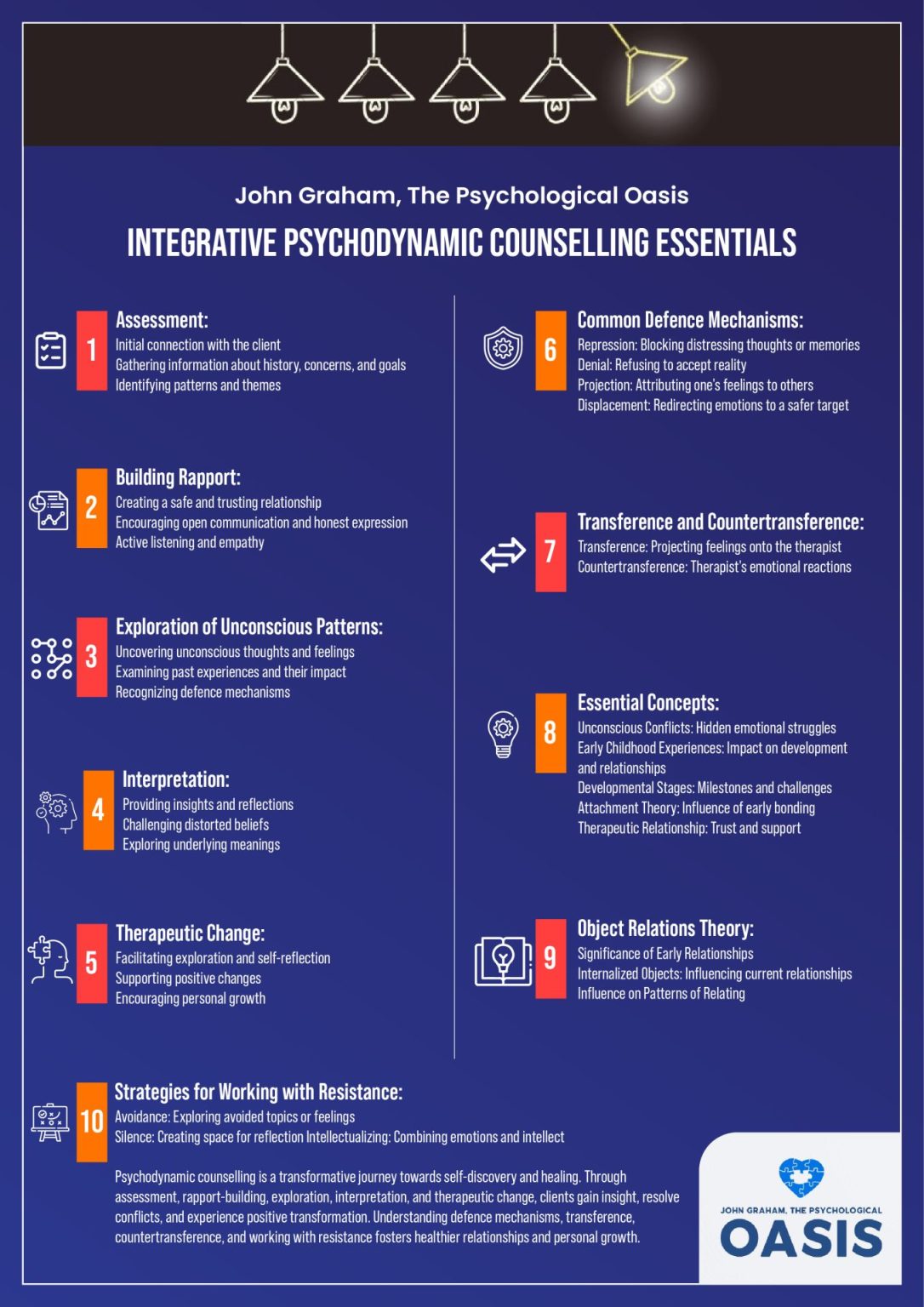
Psychotherapy is critical to the mental well-being of many. While there is little doubt that psychotherapy is effective, like any other process it must follow a systematic pattern to be successful. There are several stages in this process and understanding them makes any kind of therapy session more beneficial for the counsellor and the person in counselling.

Several major steps need to be undertaken for the cycle of dynamic counselling to become a transformative journey of self-discovery and healing for the participant. The first step is assessment. This is where the counsellor finds out as much as possible about the client. After this rapport will be built to create a safe and trusting relationship between the counsellor and the client. 

Exploration of patterns that may be causing specific behaviors based on past experiences is then done and an interpretation is given. The process also involves a therapeutic change in which the client makes strides toward experiencing personal growth.

There are several other stages that the client may go through which can see them projecting feelings onto their therapist and refusing to accept responsibility. All of these are coping mechanisms that must be worked through during counselling.

During psychodynamic counseling, the counselor will seek to go deeper with the patient so that they can identify traumatic experiences from their childhood and any past unconscious conflicts they have hidden that are impacting their lives today.

If you are looking to learn more about psychodynamic counselling and get an in-depth look at all the stages involved.


Infographic Design By “Unlock Your Inner Oasis with John Graham”

The Power of Group Therapy For Individuals Dealing With Chronic Illness: by Lizzie Weakley

(image: Priscilla Du Preez, Unsplash)

Chronic illness can take a toll on one’s physical, emotional, and mental wellbeing. Individuals struggling with chronic (long term) illness often feel lonely, isolated, and anxious, leading to a decline in their overall quality of life. While individual therapy can be helpful, group therapy can offer additional benefits and support. Group therapy allows people to connect with others who understand and relate to their struggles.

A Sense of Community and Connection

The sense of community and connection that group therapy provides can be incredibly powerful for those dealing with chronic illness. Often, those dealing with illnesses can feel isolated and misunderstood. In a group therapy setting, individuals can connect with others who are going through similar experiences and struggles. This can help reduce feelings of isolation and provide a sense of comfort and understanding, with a qualified therapist.

Learning from Others

In group therapy, people can learn from others who are further along in their journey. For example, someone who was recently diagnosed with an illness may feel scared and uncertain about their future. Hearing from someone who has been living with illness for a longer period of time can offer hope and reassurance and also provide practical support.

Psychoeducation

Some group therapy can provide an opportunity for psychoeducation on chronic illnesses. Members can learn about their illness, medications, treatments, and therapeutic interventions that can help reduce their symptoms. This can give them a sense of control and improve their quality of life.

Better Coping Skills

Chronic illness can be overwhelming and stressful; it often requires individuals to develop new coping mechanisms to manage their symptoms. In a group therapy setting, individuals can learn new coping skills from other members. This can include stress management techniques, mindfulness exercises, and ways to manage pain or fatigue. Learning new coping skills can lead to a reduction in anxiety and an improvement in overall mental health.

Mutual Support

Whilst in group therapy, members can offer mutual support to one another. Those who are having a particularly difficult day or week can lean on other members for support and encouragement. Group members can offer a listening ear or share coping strategies that have worked for them. This provides a sense of comfort and fosters a sense of belonging.

Group therapy can be a valuable tool for individuals struggling with a chronic illness. It provides a sense of community and connection, the opportunity to learn from others, psychoeducation, better coping skills, and mutual support. If you are struggling with chronic illness, consider seeking support through group therapy.

Remember, you are not alone. There are others out there who understand and can support you on your journey. You can also be referred for therapy.

Lizzie Weakley is a freelance writer.

How To Safely Treat An Eating Disorder by Lizzie Weakley.

(image: Annie Spratt: Unsplash)

Eating disorders are complex mental health conditions that require a multi-dimensional approach to treatment. They can affect people of all ages, genders, races, and backgrounds, causing severe emotional and physical distress if left untreated. The good news is that there are many safe and effective treatment options available to those struggling with eating disorders. This article will explore some of the most effective ways to safely treat an eating disorder, including therapy, medication, nutrition counselling, and support groups.

Eating Disorder Treatment Therapy

One of the most important aspects of care is eating disorder treatment therapy. There are different types of therapy available to those struggling with an eating disorder, such as cognitive-behavioural therapy (CBT), dialectical behaviour therapy (DBT), and family-based therapy (FBT). These therapies can help individuals identify and change distorted thoughts and behaviours around food, body image, and weight. CBT is particularly effective in treating individuals with anorexia nervosa and bulimia nervosa, while DBT can help those struggling with binge eating disorder and emotional dysregulation. FBT is a family-based approach to treating eating disorders in adolescents and children, which focuses on empowering the family to help the individual recover.

Medication

Medication may also be prescribed to individuals with eating disorders, particularly those with comorbid conditions such as anxiety or depression that are affecting their recovery. Antidepressants can help reduce symptoms of depression or anxiety, while antipsychotics may be prescribed for those with severe symptoms of body dysmorphia, or the distorted belief that their body is flawed. However, medication should be used alongside therapy and other forms of treatment, and under the close supervision of a medical professional.

Nutrition Counselling

Nutrition counseling can be an important part of eating disorder treatment, particularly for those with severe malnutrition or gastrointestinal problems. A registered dietitian can help individuals create a balanced and customized meal plan, learn about appropriate portions, and manage food fears and weight concerns. Nutrition counseling may also include education around mindful eating, intuitive eating, and healthy coping mechanisms. However, it is important to note that nutrition counseling alone is not sufficient for treating eating disorders.

Support Groups

Support groups can be a valuable resource for individuals struggling with eating disorders, as they provide a safe and non-judgmental environment for sharing experiences and gaining support. They can be particularly beneficial for those who cannot afford or access individual therapy, or who prefer a group format. Local and online support groups are available, and many are free or low-cost. Support groups can also provide a sense of community and belonging, which can be helpful in reducing feelings of isolation and loneliness.

Eating disorders can be devastating, but there is hope for recovery. Treatment may involve a combination of therapy, medication, nutrition counselling, and support groups, depending on the individual’s unique needs and circumstances. Recovery is a journey, and it may take time and patience, but with the right support and resources, it is possible. If you or someone you know is struggling with an eating disorder, reach out to a healthcare professional for help. Remember, you are not alone.

Lizzie Weakley is a freelance writer from the USA.

How To Navigate Grief With Self Care and Counselling Strategies By Brooke Chaplan.

(image: free image)

Grief is a difficult emotion to process, especially when it’s the result of the death of a loved one. It can be overwhelming and can seem never-ending. While it’s impossible to rid yourself of grief completely, there are ways to manage it so that you can start living your life again. Read on to learn more about how self-care strategies and counselling can help you navigate your grief.

Self-Care Strategies for Navigating Grief

One of the best ways to deal with grief is through self-care practices. These are activities that allow you to focus on yourself and give yourself permission to take some time away from your feelings. Here are some tips for engaging in self-care while grieving:

Take time away from work or school

Give yourself permission to step away from your daily obligations and focus on taking care of yourself during this difficult time.

Get outside

Nature is proven to help reduce stress levels, so go for a walk or spend some time outdoors in whatever feels natural (hiking, swimming, etc.).

Spend time with friends or family

Surrounding yourself with people who love and understand what you’re going through can be incredibly helpful during times of grief. Talk openly about your emotions—it may help relieve some of the pain.

Find activities that bring joy

Find activities that bring joy into your life—even if it’s just for a few minutes at a time! Whether it’s reading, painting, listening to music, playing sports, or whatever else makes you happy—give yourself permission to do what brings joy.

Counselling Strategies for Dealing With Grief

Sometimes self-care isn’t enough; everyone needs extra support sometimes, and if that’s true for you, grief counseling may be an option worth considering. Talking through experiences with an outside perspective can help make sense of seemingly senseless situations. Counsellors have been trained in techniques specifically designed to help those dealing with loss manage their emotions in healthy ways. Additionally, counsellors also provide other strategies, such as cognitive behavioural therapy (CBT), which is often used as a way to reframe negative thoughts and behaviours associated with grief into more positive ones. This can lead to improved mental health over time for many and provide insight into how best to handle future losses should they occur again. There are other forms of therapy you could try too, so research and find whats best for you.

Grief is an emotion that everyone will experience at some point in their lives—and it doesn’t always come easily or naturally. But by implementing self-care practices such as taking breaks from work or school and finding activities that bring joy into your life, along with seeking professional counselling services if needed, navigating grief becomes less daunting of a task than it may initially seem when faced with a loss of any kind.

Ultimately, no two people will grieve in quite the same way; however, these strategies serve as a starting point for anyone looking for support during this difficult journey we call life.

Brooke Chaplan is a freelance writer from the USA.

We are 7! On Be Ur Own Light’s 7th Blog Anniversary by Eleanor

On the 1st March 2016, I started this blog as a way to provide therapy for myself- as I was going through panic attacks, (caused by trauma). Can you believe that was 7 years ago?! I can’t! Since then I have had several years of therapy and my life changed so much too for the better- I met my husband, we got married and moved to our first home.

The blog has turned into a book Bring me to Light (with Trigger), writing for Metro.co.uk, Glamour, the Telegraph, Happiful, Rethink Mental Illness, Mind and other incredible organisations, I have partnered with large and small brands, charities, businesses, writers to create content that battles stigma on mental health. We have been awarded as a Top 10 UK blog by Vuelio since 2018 (thank you) and I love to share my story to help others and educate people about bipolar, anxiety, panic disorders, psychosis, mania and mental health in the workplace (amongst other mental health topics!). I have also recorded podcasts and have begun speaking in the community about bipolar with my Dad.

I cannot believe it has been 7 years since I opened up my computer to write- I was struggling. a lot. Writing has been such a therapy and a saviour to me.. and I hope this blog helps you too!

As always, I want to thank all my contributors and brands (sponsored or not), as well as the digital agencies and freelance writers who provide content too.

This year March 22- 23 we have featured (where it says my name, I wrote it!)

How to Stay Motivated When You’re Feeling Lost: Tracie Johnson

Change the Story Campaign- Eating Disorder Stereotypes- Hope Virgo

Performance of She Used To Be Mine (Sara Bareilles) by Nicolina Bozzo- Eleanor

5 Tips on How To Talk To Your Boss About Mental Health- freelance writer

Does Retail Therapy help your mental health?– freelance writer

9 Tips On Prioritising Your Mental Health while raising children- freelance writer

How to Keep a Good Mindset with Physical Therapy – Sierra Powell

Bipolar and Perinatal mental health- Eleanor

4 Types of Alcohol Addiction Services You can Turn To for Help- Rachelle Wilber

How to Transform Social Anxiety – Lewis McDonnell at Phobia Support Forum

What It’s Like To Go Through Severe Depression as a Bipolar Episode- Eleanor

What To Do When You Feel Alone- Eleanor

4 Reasons to Cook For Yourself- freelance writer

Learning to Embrace Schizoaffective Disorder -Mental Health Awareness Week- James Lindsay

Promoting wellbeing, good mental health and reducing stress in the elderly- freelance writer

Top 10 UK Mental Health Blog Award from Vuelio- Eleanor

Mental health, low self esteem, body image and fashion- freelance writer

What It Means To Have an NHS Perinatal Psychiatry Meeting- Eleanor

Unbroken- How Madeleine Black learnt to heal after sexual violence- Eleanor

What Tools Go Into Substance Abuse Treatment- Kara Masterson

Living with Anxiety- Promoting Mental Health and Success In the Workplace- Erin Hallett

How to know if you have an eating disorder and what to do next- Rachelle Wilber

How can I help an alcoholic or addict parent?- Chaye McIntosh

Boost Your Confidence- freelance writer

Taking Lithium for Bipolar Disorder- Side Effects – Eleanor

4 Effective Ways to Boost Your Mood- freelance writer

Knowing when its right to seek substance abuse treatment- Rachelle Wilber

Protecting mental health, a guide- The Mental Health Foundation

Letting go of hurtful memories to be happier- freelance writer

Group therapy and healing- Lizzie Weakley

Mental health medication and heatwave side effects- Eleanor

How to Create Healthy Daily habits- Sierra Powell

3 Journalling Techniques for Improved Mental Health- freelance writer

Looking after elderly parents- freelance writer

Thank you to a mental health nurse for sharing my book – Eleanor

Interview on Living with Bipolar with Best For You NHS- Eleanor

5 Tips for Communicating with Someone with Dementia- freelance writer

7 Tips to Help Your Personality Shine Through- freelance writer

Sleep Expert on how to stay cool on hot nights- freelance writer

Book Review of my book Bring me to Light by Deb Wilk- Eleanor

4 kinds of Therapy to consider- Rachelle Wilber

Coping with Borderline Personality Disorder and Obsessive Compulsive Disorder- Dr Joann Mundin

Are work places doing enough for mental health post-covid? – freelance writer

Mental Health at Work: First Aid products- writer

The Anxiety Train- a New Year- Eleanor

PTSD therapies and what is right for you- Kara Masterson

Managing mental health when you start college/university- freelance writer

Helping elderly relatives take care of themselves- freelance writer

How to Stay Emotionally Healthy during a Divorce- Lizzie Weakley

4 Ways EMDR Therapy can help you cope with Anxiety- Rachelle Wilber

Stuck in a Rut? Try These 4 Things- Dixie Somers

Non Traditional Therapeutic Activities to Try for Anxiety- Brooke Chaplan

Dealing with Dental Anxiety- Lizzie Weakley

Overcoming Seasonal Mood Changes- Brian Thomas

3 Years of my book Bring me to Light- Eleanor

5 Unbeatable ways to unwind- Dixie Somers

Speed Up Bipolar diagnosis to save lives- Bipolar UK- Eleanor

Losing a loved one- coping with anxiety- Hannah Walters

4 Ways to Treat an eating disorder- Lizzie Weakley

Bipolar UK commission announcement on government funding – Eleanor

How Living by the waterfront improves health- Rachelle Wilber

What football has taught me about life and mental health- Rose Atkinson-Carter

Anxiety and climbing, not carrying mountains- Eleanor

How Car accidents affect mental health- Stubbs Law Firm

How can EMDR therapy help you?- Brooke Chaplan

Tips for planning a sensory friendly wedding- Clay Reese

How to manage emotional eating- Lizzie Weakley

Methods for helping addiction recovery- Kara Masterson

How to tell if a loved one needs psychiatric help- Brooke Chaplan

What to do if you have an eating disorder- Brooke Chaplan

Navigating a divorce and preserving your mental wellbeing- Dixie Somers

January anxiety and burn out, how to avoid- Dr Catherine Carney at Delamere

How to cope with ADHD- freelance writer

My talk at the mental health awareness shabbat on bipolar- Eleanor

Tips to help seasonal depression- Obehi Iyobhebhe

How to help support your friends journey to sobriety- Anita Ginsburg

Why self care is so important- Brooke Chaplan

Coping with big life changes- Meghan Belnap

Befriending my brain, a new book on psychosis and recovery by James Lindsay- Eleanor

Thank you all for contributing and I am raising a glass to 7 years of this blog!!

Love and gratitude,

Eleanor x

How To Tell If You Or A Loved One Needs Psychiatric Help by Brooke Chaplan.

(image: free image)

Mental illness can affect anyone, regardless of age, gender, or background. It is important to recognise the signs and symptoms of mental illness in order to get help as soon as possible. Knowing what to look for can be tricky, so here are some common warning signs that you or a loved one may need psychiatric help.  

Unexplained Changes in Mood and Behaviour  

One of the most common signs of mental illness is a sudden and unexplained change in mood or behaviour. This could include changes in sleep patterns, eating habits, energy levels, attitude towards others, or motivation levels. If you notice any sudden shifts in these areas that last more than two weeks and cannot be attributed to a specific event or life change, it may indicate an underlying mental health issue.  

Negative Self-Talk or Rumination  

Another sign that someone needs professional help is if they frequently engage in negative self-talk or ruminate on the same thoughts over and over again. For example, if they often say things like “I’m not good enough” or “I can’t do anything right” without any basis for those statements, this could be a sign that something more serious is going on beneath the surface. Additionally, if someone spends hours every day thinking about their mistakes from the past without being able to move forward—this could also be an indication that professional help is necessary.  

Isolation from Friends and Family  

Finally, if someone begins isolating themselves from friends and family members more often than usual—or does not seem interested in having conversations with them—this could be another indicator that something more serious is happening mentally. It’s normal for people to want some alone time once in a while—but if you notice your loved one consistently avoiding social activities and interactions with others over long periods of time—it may mean they need extra emotional support from a professional psychiatrist before they can get back on track.   

Other Behaviours

Other behaviours you should watch out for is frequent tearfulness, self harm thoughts or ideas, suicidal thoughts and ideation- as this indicates someone is reaching a crisis point with their mental health. In some there may be an increase in activity or mania. This can lead to psychosis- where your mind loses touch with reality, common in bipolar disorder and schizophrenia (but can also happen outside these conditions).

Mental health issues are complex and often difficult to recognise at first glance. However, it’s important to understand that early intervention can make all the difference when it comes to managing mental illness effectively. If you notice any of these warning signs in yourself or a loved one—don’t hesitate to reach out for help!

Professional psychiatric services should always be sought out when necessary as this will create better outcomes for everyone involved in the long run. In the UK, that may be via the NHS but due to overwhelmed services, if you can afford private treatment, go down this route as it will be quicker!

This article was. written by Brooke Chaplan, freelance writer.

How Car Accidents Affect Mental Health And What To Do About It: by Stubbs Law Firm

(image: Will Creswick: Unsplash).

Car crashes can be some of the lowest moments in any individual’s life. In the aftermath of any accident, it’s common for medics to immediately focus on any physical injuries sustained by the victims. However, in addition to physical wounds, many victims also suffer psychological trauma that may last long after their physical injuries heal.

Studies by the United States Department of Veteran Affairs reveal that more than 20% of car accident victims develop mental trauma, while approximately 10% of victims develop full-blown post-traumatic stress disorder PTSD. This psychological trauma can significantly lower the victim’s quality of life if not addressed.

Car accidents can affect your mental health in the following ways.

1. Emotional distress

Many people struggle with severe anxiety and emotional distress in the few weeks and months after the accident. Recurring nightmares, fearfulness, and avoidance of any form of vehicle travel are common psychological distress symptoms in the aftermath of a car crash. This psychological trauma can be hard to shake off, especially when physical injuries are permanent.

2. Anger and mood swings

Drivers may struggle with guilt and sadness, especially if they were responsible for the crash. Passengers and other victims may channel their anger and frustrations at the driver for causing the crash. Negative thoughts can affect the victim’s relationships at work, home, and school.

3. Depression

High-stress levels can quickly plunge a car accident victim into depression which causes many people to seek refuge in drugs and alcohol abuse. Common signs of depression may include sleeping disorders, appetite loss, suicidal tendencies, and emotional outbursts. Post-car crash depression can be challenging to diagnose and treat without the involvement of a mental wellness specialist. 

4. Regression in children

Psychological trauma affects kids in many ways that may affect their mental and physical development. Some common symptoms of regression and mental trauma in children may include loss of concentration, poor grades in school, and bed-wetting.

Ways to improve your mental health state post-accident

It’s necessary to seek professional help if the mental trauma lingers over a few weeks and affects your social and family relationship.

Therapy

Recovering from mental trauma after an accident becomes easier when you seek professional help. A psychologist will guide you on the next steps and what medication to take depending on the severity of your condition. Group therapy with other accident victims can go a long way in relieving stress and helping you ease back to your normal life.

Seek legal help

While victims may receive compensation for physical injuries sustained during car crashes, insurance companies may downplay the psychological impact of such events, especially for victims who don’t suffer physical injuries. Psychological trauma can impact your ability to work and provide for your family hence the need to seek compensation through personal injury claims. Your compensation may help pay for therapy and offset any lost income from car crashes. When seeking legal help from an attorney, provide accurate details of the crash and include medical details from your doctor’s consultation.

Stubbs Law Firm is vastly experienced in various legal solutions, from personal injury to insurance disputes. We help car crash victims get justice, and appropriate compensation for all injuries suffered in car accidents.

This non-sponsored article was written by Stubbs Law Firm.

It’s Not Just The Therapist or Psychiatrist Alone: Why Treatment Centres Matter in Mental Health.

(Image: David Travis at Unsplash)

It’s not just the therapist or psychiatrist alone. The treatment centre/hospital matters in mental health.. It’s not that therapists are bad or unimportant; they can be critical in helping people with mental health concerns start on the road to recovery. However, sometimes treatment centres can have a huge impact on mental health and well-being, as a whole.

Lasting Impact of the Environment

First, the environment in which individuals with mental health concerns receive treatment can have a lasting impact on their mental health. Is the institution warm and welcoming to visitors? Or does it feel sterile and cold? Does it have adequate resources to meet the needs of its patients? Or is it underfunded and overcrowded? All these factors can have a significant impact on recovery, as they may create feelings of anxiety or alienation in the patient. For example, if the institute has Knightsbridge Furniture and a welcoming waiting area for visitors, it may make people feel less anxious about their treatment, because the furniture is designed to provide comfort.

Supportive Staff Members

Secondly, supportive staff members are paramount for mental health recovery. Not only do staff members need to be competent and knowledgeable about the latest treatment techniques and practices; they also need to be warm, welcoming and supportive towards their patients. They should be able to provide a safe space for individuals with mental health concerns to explore their thoughts and feelings without fear of judgment or punishment. This will help foster an atmosphere of trust and healing at the treatment centre/hospital.

Accessible Resources

Third, centres should strive to make resources accessible and available to those in need. Mental health concerns can often be complex and multifaceted, so individuals may require a variety of services. Treatment centres should provide access to everything from basic mental health services such as counselling, to more specialised resources like crisis intervention teams or support groups. If these resources are not readily available, then individuals might not get the help they need when they need it.

Appropriate Levels of Care

Fourth, treatment centres must provide appropriate levels of care for the patients they serve. This includes ensuring that each individual gets the right combination of treatment and support based on their specific needs. For example, a patient with severe depression or other severe illnesses may benefit from both medication management and psychotherapy while someone with mild anxiety may only require weekly therapy sessions.

A Holistic Approach

Finally, centres should strive to provide a holistic approach to mental health care. This means taking into account not only the individual’s diagnosis or symptoms, but also their lifestyle, environment, and social support system. Taking these factors into consideration can ensure that individuals receive the most appropriate treatment for their unique needs. Additionally, it can help facilitate long-term recovery and prevent future issues from developing.

It is clear that when it comes to mental health recovery, a treatment centre/hospital plays a vital role in helping individuals achieve positive outcomes. From providing supportive staff members to making resources accessible and offering a holistic approach to care – institutions must strive to meet the needs of those they serve in order to ensure the best possible outcomes.

So, while it is important to have a skilled therapist or psychiatrist, never underestimate the importance of a supportive and well-resourced treatment centre as part of that overall care. Together, they can provide individuals with everything they need to start on their journey to mental health recovery.

This article was written by a freelance writer.