5 Ways Good Physical Health Can Improve Mental Health by Lizzie Weakley

(image: free image)

It’s no secret that physical and mental health are closely linked. When you’re physically healthy, you tend to feel better mentally and emotionally. The reverse is also true; when your mental health is suffering, your physical health often declines as well. That’s why it’s so important to take care of your physical health, especially if you’re struggling with mental health issues. Here are five ways that good physical health can improve mental health.

Improved Mood

When you’re physically healthy, you tend to have more energy and feel better overall. This can lead to an improved mood and a more positive outlook on life. If you’re feeling down, try getting some exercise or eating a nutritious meal. You may be surprised at how much better you feel afterwards!

Increased Relaxation

When you take care of your physical body, it helps reduce stress and tension. Exercise releases endorphins, which have mood-boosting effects, and can also help you sleep better at night. A healthy diet provides your body with the nutrients you need to function properly, which can also help reduce stress levels. If you’re struggling with food intake, consider consulting with a dietician who is trained in mental health. They’ll be able to assist you with services tailored to help you both mentally and physically!

Improved Concentration and Memory

Physical activity increases blood flow to the brain, which can improve brain function. Eating a healthy diet has also been linked with improved cognitive function. If you’re having trouble concentrating or remembering things, try adding more fruits, vegetables, and whole grains to your diet and increasing your activity level. You don’t have to do this all at once, but can gradually adjust your diet to include more whole foods.

Greater Sense of Accomplishment

When you set goals for yourself and then achieve them, it gives you a sense of accomplishment and boosts your self-esteem. Getting regular exercise and eating right are both great ways to set and achieve goals that improve your physical health while also improving your mental well-being. Consider rewarding yourself when you hit certain goals, such as finishing three days of exercising in a row. Before you know it, you’ll be forming healthy habits!

Enhanced Coping Skills

Having good physical health can give you the strength and endurance you need to get through difficult times. When you’re physically healthy, you have more energy to put towards coping with difficult situations. You can also use exercise and healthy eating as positive coping mechanisms when you’re feeling overwhelmed or stressed out. There’s a reason why many people like to go on a walk to clear their mind. Consider adding in these healthy coping mechanisms the next time you’re stressed.

If you’re struggling with your mental health, taking care of your physical health is a great place to start. There are many benefits to be gained from eating right and exercising regularly, not the least of which is improved mental well-being. So if you’re feeling down, try using some of these tips to boost your mood and improve your mental health.

This article was written by freelance writer Lizzie Weakley.

4 Ways To Improve Employee Wellbeing.

(Image: Brooke Cagle: Unsplash)

Considering the wellbeing of employees has never been more important, or more timely. With world events like the coronavirus pandemic having a serious impact on global mental health, more and more employers have begun to more seriously consider the overall wellbeing of their employees, not simply their productivity in the workplace. 

In fact, many employers are beginning to understand how the two are intimately connected.Indeed, it is reported that healthy employees are 74% more likely to be satisfied with their current job than unhealthy employees.

It is therefore important for companies to consider ways to improve employee wellbeing. Below is a list of tips for improving the wellbeing of your employees.

Training and Long-Term Goals

The reason that many employees are unhappy at work is that they feel they have stagnated, spending years in a particular position without any opportunity for growth or new responsibilities. 

It is therefore important to understand the individual professional goals of your employees and how you might deploy training and development schemes to help them achieve those goals. An employee is much happier if they feel they are working towards a goal or new opportunity, not simply stuck in a 9-5 grind. 

It is well worth investing in personal development schemes to help employees recognise and develop their individual talents. These schemes can come in the form of lecture series or workshops, training schemes or bootcamps. 

Flexibility

It has been reported by several studies that allowing employees greater flexibility regarding when and where they work can greatly improve mental health. Allowing flexible working hours  and locations can help employees feel a greater sense of autonomy over their personal and professional lives. 

Obviously this involves a degree of coordination, since employees must still be able to work collaboratively throughout the day, but studies have shown that more flexible scheduling can lead to greater wellbeing and productivity.

(image: Stefan Stefanovic: Unsplash)

Social Engagements

It is important for the wellbeing of employees to work in a friendly and collaborative workplace environment. Creating opportunities for social, non-work engagements for your employees is not just a chance for them to let off steam, it can be a vital way of helping employees build meaningful and productive social relationships with their colleagues.

If staff are on friendly terms, they are more likely to look forward to coming into work, as well as more likely to collaborate successfully with their colleagues on work-related tasks. A social and amicable work environment almost always leads to a happier and more productive workforce.

Creating a healthy office environment, full of friendly social links, can be achieved in several ways. One way is the more informal route of arranging after-work social engagements (or weekend trips) for your employees. Or you could go the more formal route of arranging dedicated team-building days or afternoons. 

There are a myriad of ways of creating a friendly workplace environment, but it is inarguable that doing so will lead to greater wellbeing among all employees. 

Strategize and Focus on Mental health

Many people believe that their mental health issues can at least partly be attributed to the pressures and strains of their professional lives or because they require financial assistance. It is therefore essential for employers to focus on creating an inclusive environment where mental health issues can be discussed and tackled in an open, honest and compassionate way. 

There are many ways in which employees can address mental health issues in the workplace. One is to create, and follow, a comprehensive wellbeing policy. The policy should signpost ways in which the company works to address mental health issues as well as the resources that the company provides for employees in regards to mental health management. 

Creating a workplace environment in which mental health is clearly seen to be a priority will foster a greater sense of emotional security and wellness for your employees.

We are 7! On Be Ur Own Light’s 7th Blog Anniversary by Eleanor

On the 1st March 2016, I started this blog as a way to provide therapy for myself- as I was going through panic attacks, (caused by trauma). Can you believe that was 7 years ago?! I can’t! Since then I have had several years of therapy and my life changed so much too for the better- I met my husband, we got married and moved to our first home.

The blog has turned into a book Bring me to Light (with Trigger), writing for Metro.co.uk, Glamour, the Telegraph, Happiful, Rethink Mental Illness, Mind and other incredible organisations, I have partnered with large and small brands, charities, businesses, writers to create content that battles stigma on mental health. We have been awarded as a Top 10 UK blog by Vuelio since 2018 (thank you) and I love to share my story to help others and educate people about bipolar, anxiety, panic disorders, psychosis, mania and mental health in the workplace (amongst other mental health topics!). I have also recorded podcasts and have begun speaking in the community about bipolar with my Dad.

I cannot believe it has been 7 years since I opened up my computer to write- I was struggling. a lot. Writing has been such a therapy and a saviour to me.. and I hope this blog helps you too!

As always, I want to thank all my contributors and brands (sponsored or not), as well as the digital agencies and freelance writers who provide content too.

This year March 22- 23 we have featured (where it says my name, I wrote it!)

How to Stay Motivated When You’re Feeling Lost: Tracie Johnson

Change the Story Campaign- Eating Disorder Stereotypes- Hope Virgo

Performance of She Used To Be Mine (Sara Bareilles) by Nicolina Bozzo- Eleanor

5 Tips on How To Talk To Your Boss About Mental Health- freelance writer

Does Retail Therapy help your mental health?– freelance writer

9 Tips On Prioritising Your Mental Health while raising children- freelance writer

How to Keep a Good Mindset with Physical Therapy – Sierra Powell

Bipolar and Perinatal mental health- Eleanor

4 Types of Alcohol Addiction Services You can Turn To for Help- Rachelle Wilber

How to Transform Social Anxiety – Lewis McDonnell at Phobia Support Forum

What It’s Like To Go Through Severe Depression as a Bipolar Episode- Eleanor

What To Do When You Feel Alone- Eleanor

4 Reasons to Cook For Yourself- freelance writer

Learning to Embrace Schizoaffective Disorder -Mental Health Awareness Week- James Lindsay

Promoting wellbeing, good mental health and reducing stress in the elderly- freelance writer

Top 10 UK Mental Health Blog Award from Vuelio- Eleanor

Mental health, low self esteem, body image and fashion- freelance writer

What It Means To Have an NHS Perinatal Psychiatry Meeting- Eleanor

Unbroken- How Madeleine Black learnt to heal after sexual violence- Eleanor

What Tools Go Into Substance Abuse Treatment- Kara Masterson

Living with Anxiety- Promoting Mental Health and Success In the Workplace- Erin Hallett

How to know if you have an eating disorder and what to do next- Rachelle Wilber

How can I help an alcoholic or addict parent?- Chaye McIntosh

Boost Your Confidence- freelance writer

Taking Lithium for Bipolar Disorder- Side Effects – Eleanor

4 Effective Ways to Boost Your Mood- freelance writer

Knowing when its right to seek substance abuse treatment- Rachelle Wilber

Protecting mental health, a guide- The Mental Health Foundation

Letting go of hurtful memories to be happier- freelance writer

Group therapy and healing- Lizzie Weakley

Mental health medication and heatwave side effects- Eleanor

How to Create Healthy Daily habits- Sierra Powell

3 Journalling Techniques for Improved Mental Health- freelance writer

Looking after elderly parents- freelance writer

Thank you to a mental health nurse for sharing my book – Eleanor

Interview on Living with Bipolar with Best For You NHS- Eleanor

5 Tips for Communicating with Someone with Dementia- freelance writer

7 Tips to Help Your Personality Shine Through- freelance writer

Sleep Expert on how to stay cool on hot nights- freelance writer

Book Review of my book Bring me to Light by Deb Wilk- Eleanor

4 kinds of Therapy to consider- Rachelle Wilber

Coping with Borderline Personality Disorder and Obsessive Compulsive Disorder- Dr Joann Mundin

Are work places doing enough for mental health post-covid? – freelance writer

Mental Health at Work: First Aid products- writer

The Anxiety Train- a New Year- Eleanor

PTSD therapies and what is right for you- Kara Masterson

Managing mental health when you start college/university- freelance writer

Helping elderly relatives take care of themselves- freelance writer

How to Stay Emotionally Healthy during a Divorce- Lizzie Weakley

4 Ways EMDR Therapy can help you cope with Anxiety- Rachelle Wilber

Stuck in a Rut? Try These 4 Things- Dixie Somers

Non Traditional Therapeutic Activities to Try for Anxiety- Brooke Chaplan

Dealing with Dental Anxiety- Lizzie Weakley

Overcoming Seasonal Mood Changes- Brian Thomas

3 Years of my book Bring me to Light- Eleanor

5 Unbeatable ways to unwind- Dixie Somers

Speed Up Bipolar diagnosis to save lives- Bipolar UK- Eleanor

Losing a loved one- coping with anxiety- Hannah Walters

4 Ways to Treat an eating disorder- Lizzie Weakley

Bipolar UK commission announcement on government funding – Eleanor

How Living by the waterfront improves health- Rachelle Wilber

What football has taught me about life and mental health- Rose Atkinson-Carter

Anxiety and climbing, not carrying mountains- Eleanor

How Car accidents affect mental health- Stubbs Law Firm

How can EMDR therapy help you?- Brooke Chaplan

Tips for planning a sensory friendly wedding- Clay Reese

How to manage emotional eating- Lizzie Weakley

Methods for helping addiction recovery- Kara Masterson

How to tell if a loved one needs psychiatric help- Brooke Chaplan

What to do if you have an eating disorder- Brooke Chaplan

Navigating a divorce and preserving your mental wellbeing- Dixie Somers

January anxiety and burn out, how to avoid- Dr Catherine Carney at Delamere

How to cope with ADHD- freelance writer

My talk at the mental health awareness shabbat on bipolar- Eleanor

Tips to help seasonal depression- Obehi Iyobhebhe

How to help support your friends journey to sobriety- Anita Ginsburg

Why self care is so important- Brooke Chaplan

Coping with big life changes- Meghan Belnap

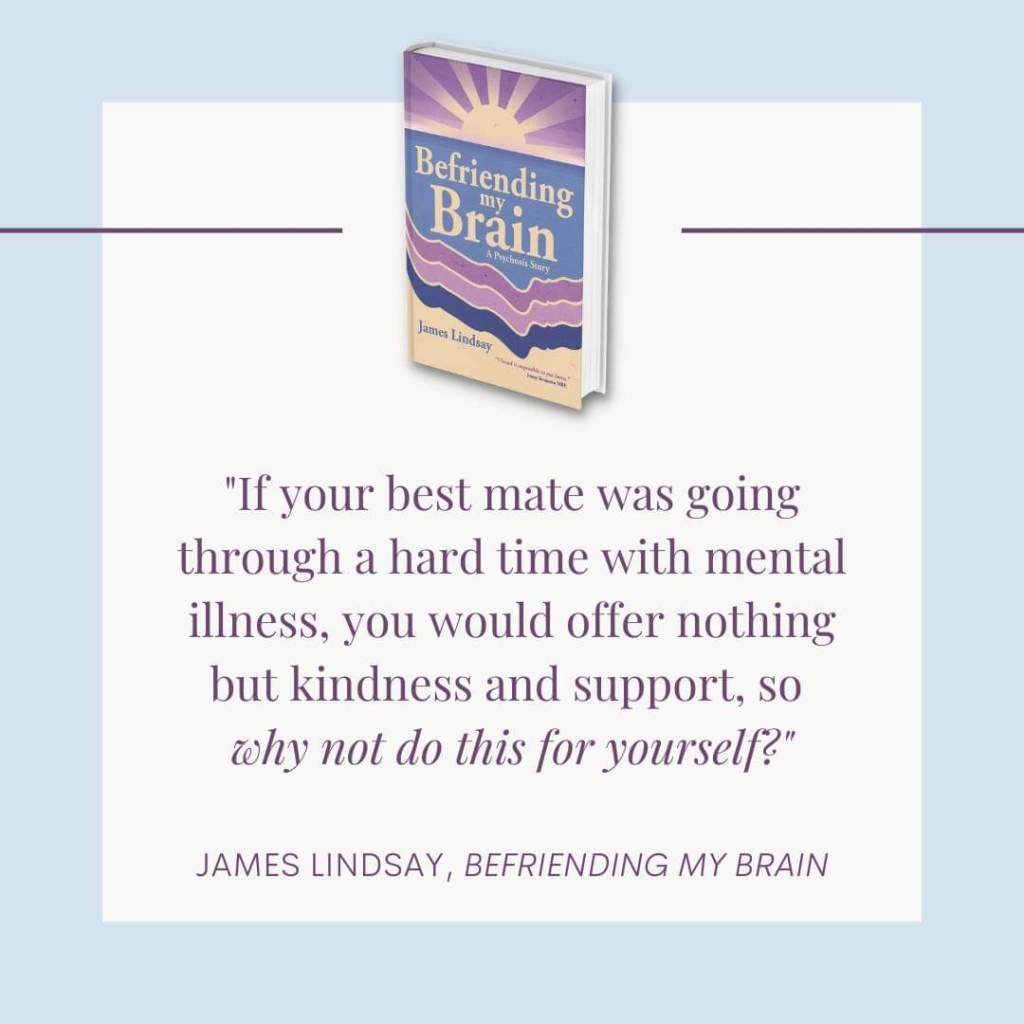
Befriending my brain, a new book on psychosis and recovery by James Lindsay- Eleanor

Thank you all for contributing and I am raising a glass to 7 years of this blog!!

Love and gratitude,

Eleanor x

Befriending My Brain: A Psychosis Story. Exciting New Book by James Lindsay and Cherish Editions

(image: James Lindsay/Cherish Editions)

I first ‘met’ my Twitter friend James Lindsay online when he was first starting to talk about his schizoaffective disorder and psychosis. James also works for Mind doing important work in the mental health sphere and we both live locally to one another. I am really proud of James’s determination, not only in his own life, but to help others through his writing and his new book ‘Befriending My Brain’ with Cherish Editions (Trigger Publishing).

An eye-opening memoir about a young man’s descent into schizoaffective disorder– and the steps he took to regain control of his life.


It’s no secret that, in recent years, mental health has become a major topic of conversation. But just because many people feel comfortable discussing their depression, anxiety or other mental health conditions, doesn’t mean that we have removed all stigma from such diagnoses. This is especially true when it comes to psychotic disorders, which affect less than 1 in 100 people in the UK each year (Mind), thus leaving these disorders shrouded in mystery. It doesn’t help that what the media portrays as schizophrenia or psychosis is not always what the sufferer experiences in real life.


As such, it’s vital that we start to bring psychotic disorders, including psychosis, to the forefront. According to a 2016 report from Public Health England, “psychosis is one of the most life-impacting conditions in healthcare.” But with the proper treatment and understanding, it doesn’t have to be life-altering. The same report states that the sooner someone
is treated for their psychosis, the better the chances that they will recover and return to their normal
lives.


James Lindsay has experienced the ups and downs of schizoaffective disorder first-hand, and his book does the vital work of removing some of the mystery surrounding such a diagnosis. It includes the red flags he recognises in hindsight after psychosis landed him in hospital for the better part of a month, but it also retells the inspiring journey he took to recovery in all aspects of his life.

In his case, psychosis and his path to better mental health gave him a new passion in life: helping others through their own diagnoses and getting their lives back, just as he did. No matter where readers are on their journeys, James’ memoir will resonate and remind them, as he puts it, that “recovery is always possible, and hope is never far away.”

(image: Trigger Publishing/ Cherish Editions/James Lindsay)

I can’t wait to read it and review it too!

You can buy a copy of Befriending My Brain: A Psychosis Story by James Lindsay at Amazon, Trigger, Waterstones, WH Smith and all good bookshops.

MORE ABOUT THE AUTHOR
Hailing from Watford, Hertfordshire, James Lindsay works for Hertfordshire Mind Network and uses his free time to advocate for mental health care by blogging and appearing on podcasts and TV. James enjoys playing football, going to the cinema, spending time with friends and family, and exploring new places, with his partner, Holly. Befriending My Brain is his first book.


Helping Elderly Parents With Their Wellbeing.

(image: Ivan Samkov, Pexels)

We all – if we are so privileged – age enough to become ‘old’. We grow into our faces, our experiences and our futures and we do so over a long period of time. Not everyone is afforded the chance to grow old, of course, but those who do are lucky to get there. When you have senior parents that have reached an advanced age, you have to expect there to be changes in your relationship dynamic. As parents age they may need more help, they may be more aggressive, they may be resistant to any help or support. The worst part is that when you try to help your parents, you may find them resistant to that help – and that can be difficult to manage. 

Every situation for a family is unique and so you have to adapt and adjust to the limitations that you are facing in your specific dynamic. Understanding how to help elderly parents without being overly safe is not easy. It’s actually really hard not to suggest senior living or other support systems to parents who aren’t open to that idea – you need them to feel open to help first. Once you have that, you will find navigating the future far simpler. Helping elderly parents needs some movement, and here are our suggestions to help you to do just that.

Empathise. With your parents, you need to empathise and show them that you get it; their life is hard and it’s not easy for them to manage their own expectations. Sometimes, you may be pushed out by the frustration and moodiness that your parents display. It’s vital that you are empathetic and understanding because as hard as it is for you to deal with the changes, consider how they feel? Consider how they are managing the things happening to them right now. It’s going to be huge for them to go from independent to totally dependent on others and losing that independence takes a lot of getting used to.

Call your parents. You need to do what you can to maintain contact with your parents. Calling them regularly and helping them to understand that you are at the end of the phone is going to be a game changer for them. Set reminders on your phone to remind them that you are there, that you love them and that you want to know how they’re doing. Senior parents often feel like a burden and you can avoid that and make it something you change for them.

Don’t do it alone. Helping elderly parents is so much easier when you’re not alone in it. You shouldn’t have to be the only person holding up the house, right? Well, don’t be. Rope in the help of others and make a point of sharing the mental load as much as the physical load. In addition, you can explore assisted living options such as the village at East Farms and other facilities that provide comfort and care for the elderly.  You shouldn’t take all of the responsibility for yourself because all you’re going to do is burn out. Communication is key if you want to make sure that you have the right support. 

Look for the problems. It may feel counterproductive to look for problems before they happen but doing this will help you to figure out the right plan of action for support. Knowing emergency contacts, knowing their medical contacts and understanding their surroundings is so important if you want to ensure that your parents are safe. Seeking out the problems will help you to prepare to fix them and some days, you need to fix them! If you have the essentials sorted, you’re going to find it a much smoother journey.

Be their advocate. As they’re your parents, it makes sense to advocate where you can. Being their voice when things get tough is going to help them and you to find life easy. If they have an illness, ensuring that you all have a good grasp of what to expect will help you to keep moving forward and prevent anyone moving backwards. Knowing their conditions, their medications, their appointments and more is vital if you want to be a good advocate for them in times of need.

Encourage activity. This is something you can do together: walks, swims and sports. Many aging parents find remaining active difficult and it’s important to do that together to help both parents stay social and active. If your parents are active they are helping their health and that’s what you need from them the most, too! Going to sports, senior groups, churches/ religious places, museums and more will help them to maintain their activity and their friendships. It’s super needed for balance and to improve their mood, cognitive thinking, strength and more. Aging parents can participate in senior programs and it’s something that will make them feel energised and vital in the world. 

Assist them with downsizing. Parents living in larger houses often need space but not too much space. Cleaning and organising is much harder in a larger home and you can help them to downsize without being bossy or demanding. Realising that you can help without pushing is important. You don’t have to be bossy about it all and ensuring that they don’t feel like you are hiding their memories is important. Your parents may argue at the idea of downsizing, but that’s natural when they haven’t ever planned to! 

Help your parents to create a memory book. You want to show your parents that you are there for them and it’s common for senior parents to experience short term memory issues that take time to build. Creating memory books is important for them to know who they are and what their homes have meant to them. Fill it up with scrapbook pages, photos, places and pets through the years so that they can use it and flip through it whenever they are feeling down.

Helping elderly parents is a pull on the heartstrings and you should ensure that you are equipped where possible.

This article was written by a freelance writer.

How To Cope With The Big Changes Life Throws At Us By Meghan Belnap.

(image: unsplash)

No one’s life is perfect. At some point, we all face difficult challenges and struggles that can leave us feeling lost, powerless, and alone. If you’re currently dealing with a big life change, know that you’re not alone. Here are some tips for how to cope with the big changes life throws at us. 

Acknowledge that change is hard, and give yourself time to grieve the loss of what was 

Acknowledging the difficulty of coping with emotional hardships in life can be the first step toward healing. Change is never easy and it is natural to experience grief or sorrow over losing something familiar or safe. Taking the time to sit with those feelings will help give space for understanding rather than running away and pretending like everything is fine. Being compassionate to yourself throughout this process can allow you to accept the struggles you are facing, ultimately helping you venture forward. 

Lean on your support system – friends, family, therapist, etc. 

When grappling with emotional struggles in life, it is helpful to remember that you are never alone. Caring and reliable support systems of friends, family, and therapists can make a significant difference in your journey of healing. A strong foundation of accepting people will lift your spirits and provide valuable perspectives on your situation. You might find this through your community at school, going to a local group therapy meeting, or through a religious or other network.  Every individual has different needs when it comes to dealing with emotional difficulties; leaning on those around you as a source of comfort can be an extremely supportive outlet, as you navigate through trying times. 

Find healthy coping mechanisms that work for you 

When dealing with difficult emotions, it is essential to find healthy ways to cope. Each person has different needs and preferences when it comes to finding relief from emotional hardships. Luckily, there is an abundance of coping mechanisms available. Whether it’s exercise, journaling, painting, or something else entirely, identifying which coping activities work best for you can help reduce stress in your life and give you an outlet for negative emotions. Being proactive in finding techniques that bring relief is the foundation for healing. 

Create a new routine or structure for yourself to help with the transition 

When dealing with emotional struggles in life, creating a new routine or structure for yourself can provide much-needed comfort and stability. This can range from something as simple as coming up with a plan for your daily tasks or an overarching chart that breaks down what you want to accomplish each week. Furthermore, it may be beneficial to set aside time where you can focus on self-care or just unplug and take a breather from the world around you. Though this type of change may seem daunting at first, having an established plan can give us control, which is often otherwise lacking during hard times. By putting confidence in yourself and investing effort in your goals, you can take strides on the path toward healing. 

Be patient with yourself 

Making a major change in life can be traumatic, and it is important to be patient with yourself as you adjust. Healing often happens one step at a time, so allow yourself the time and space to take whatever baby steps are necessary to feel better. Finding people who understand and can offer meaningful support along your journey is important, but make sure that the people you turn to also help you focus on your sense of strength and purpose rather than simply engaging in a pity party. With patience, you will eventually discover that you’ve healed enough that growth can start to occur. 

Going through tough changes in life is never easy, but there are ways to make it more manageable. Acknowledge your feelings, reach out for support, find healthy coping mechanisms, and be patient with yourself. Give yourself time to grieve and adjust, and eventually, things will start getting better. Remember that you’re not alone – Lean on your loved ones and professionals for help when needed. You’re worth it. 


Meghan Belnap is a freelance writer who enjoys spending time with her family. She loves being outdoors and researching new topics that help to expand her horizons. You can often find her buried in a good book or out looking for an adventure. You can connect with her on Facebook right here and Twitter right here.

Why Self Care Is So Important For Good Mental Health by Brooke Chaplan

(image: free image)

Self-care is a buzzword that has become increasingly popular in recent years, with many people talking about how important it is to take care of ourselves. But what does self-care really mean? And more importantly, what are the benefits of self-care for mental health? Let’s take a look at why self-care is so important and how it can improve your mental well-being.

What Is Self-Care?

Self-care is any activity that we do deliberately in order to take care of our mental, emotional, and physical health. We all need different kinds of self-care depending on our individual needs, but some common examples include getting enough sleep, eating nutritious foods, exercising regularly, and taking time out to relax. Taking part in activities like these can help us manage stress levels and make us feel better about ourselves overall.

The Benefits of Self-Care for Mental Health

Self-care has many benefits for our mental health and well-being. Taking time out to practice self-care can help reduce stress levels, which can have positive effects on our mood and energy levels. It can also help us gain clarity and perspective on problems we may be facing in life as well as helping us feel more connected to ourselves. Regularly engaging in activities such as yoga or meditation can also help us develop coping skills for dealing with difficult emotions or situations. In addition, taking part in activities that give us pleasure, such as reading a book or going for a walk, can boost our moods and make us feel more positive about ourselves and life in general.

Self-Care Tips For Improved Mental Health

If you want to get started with self-care but aren’t sure where to begin, here are a few tips you can use:

• Take breaks throughout the day – even if it’s just five minutes – to recharge your batteries

• Make time for things you enjoy doing, such as reading a book or listening to music

• Get outside into nature whenever possible

• Connect with friends or family members who make you feel good

• Practice relaxation techniques such as deep breathing or visualization

• Eat healthy foods that will nourish your body

• Exercise regularly – this doesn’t have to mean hitting the gym every day! A simple walk around the block will do wonders for your mind and body

• Spend time alone – this could be journaling or simply sitting quietly with yourself

• Be kind to yourself – don’t forget that self-love is one of the best forms of self-care!

• Reaching out and getting psychiatric services also counts as self-care, as you are helping yourself feel better in a professional setting

Self-care is essential for maintaining good mental health and well-being. From eating healthy foods to taking regular breaks throughout the day, there are many simple things we can do every day that will benefit both our minds and bodies.

The key is finding what works best for you personally—what activities bring you joy and make you feel better? By taking some time each day just for yourself—whether it be reading a book or going outside into nature—you will soon start reaping the rewards of self-care!

Brooke Chaplan is a freelance writer.

Are You Slipping Into Seasonal Depression? Tips to Help By Obehi Iyobhebhe

(image: Sydney Sims: Unsplash).

It’s a day like every other day before, but you can’t find the motivation to follow your typical routine. On average, you’d jump out of bed, drink a hot cup of coffee, and catch up with morning shows and podcasts before hitting the gym or work. But you somehow don’t feel like doing anything today; this happens at a particular time of year.

Seasonal affective disorder (SAD) is depression associated with seasonal changes, e.g., winter, fall (autumn), or summer. People tend to associate seasonal depression with “winter blues,” but it also appears in other seasons, and how to differentiate it from sadness is that SAD occurs in the same season every year for you.

Symptoms of seasonal depression

The symptoms of seasonal depression are divided into three categories:

General symptoms

● Loss of interest in activities you enjoy

● Sluggishness or hyperactivity

● Low moods that last all day, every day

● Insomnia or oversleeping

● Increased carbohydrate craving

● Loss of focus

● Low energy

● Suicidal ideation

Fall and winter SAD

Seasonal depression in the winter typically starts in the fall and lasts until after the winter, and these are the symptoms:

● Oversleeping

● Craving foods high in carbohydrates

● Weight gain

● Tiredness

Spring and summer SAD

Summer depression is more common during spring until summer, and the symptoms include:

● Weight loss

● Insomnia

● Anxiety

● Increased irritability

Are you slipping into seasonal depression?

As somebody who experiences seasonal depression in the winter, I can subjectively say there’s no ultimate method to cure or treat SAD, but there are tips to help you navigate it.

Tip #1: Identify the events that lead up to the seasonal depression

Are you in college and anxious about going home for winter break? Or you’re a mom about to spend her entire summer with extended family and it’s sapping your energy? It’s best to understand what happens when you experience seasonal depression so you understand the major problem and how to tackle it.

Tip #2: Don’t spend time alone

I understand how tempting it is to avoid people when you’re in a low mood, but spending time alone can make you brood over your intrusive thoughts, keeping you in a more depressed state. It’s best to invite your friends over if you don’t have the energy to see them and feel able to have them round. You don’t have to go too far out of the house or your comfort zone as long as you don’t spend too much time isolated.

Tip #3: Say NO to plans that make you feel uncomfortable

When you’re experiencing seasonal depression, you could be inclined to accept invitations just to escape the feeling of sadness, guilt and worthlessness. But you will only feel more drained by going to places you don’t want to be. Look after yourself.

Final tip

The ultimate hack that works for me during seasonal depression is being open about my suicidal ideation. Whether it’s second-hand suicidal or intrusive thoughts, I have a friend I can be vulnerable around, and I tell them everything that goes on in my mind during that period.

“What if they get tired of listening to me complain?”

It’s normal to feel guilty when you constantly complain to one person about your problems – you could feel like a burden and want to step back. But if that trusted friend or family member has never told you to stop talking or coming to them, you should keep going to them. And if that friend ever tells you that they are tired of hearing you complain, it doesn’t mean they hate you – your friends have probably internalised your problems too much and need a step back before continuing to be there for you.

In all, don’t be afraid to talk about how you feel when you experience seasonal depression, and remember, it will pass, so don’t make permanent decisions during that period.

I’m rooting for you and believe you’ll see better mental health days this year and beyond.

Author’s Bio

Obehi Iyobhebhe is a freelance writer in the business and psychology space. She’s passionate about helping people improve their life’s quality by paying attention to their mental health.

Obehi is also interested in helping entrepreneurs hit their business goals by creating blogs and email campaigns to generate leads.

You can find her here: https://ehinotes.medium.com/ and https://www.linkedin.com/in/obehi-iyobhebhe/

Coming Home For The Mental Health Awareness Shabbat And Self Care by Eleanor

Happy new year everyone! Gosh its nearly the end of January and I havn’t written a blog for a while so thought I would share some things that have been happening here and talk a bit about mental health stuff too.

Firstly, my mental health is fairly stable at the moment, as has been the case for a number of years. I don’t get typical bipolar depressive or manic episodes on my medications and this year is my 9th year out of hospital , which is always a positive. However, I still suffer with anxiety and stress and get overwhelmed so have to pace myself! I have bad days too where things feel too much but thankfully they don’t escalate into a depression.

So for the positives- I have achieved some huge anxiety wins for me. Since November, I have been on the tube (first time in 3 years), I have gone up to the West End with Rob to the theatre using public transport, my panic attacks have been lessening, I have been able to see more people in person and I also passed my probation at work and have been made permanent (huge win!). I am someone who struggles with agarophobia when I feel more anxious and stressed and going out alone can still be a challenge.

I have been allowing myself to venture into previously anxiety provoking situations- for example, I get cabs alone home from work. I had to start doing this last year and it helped me get back into the world again. It wasn’t easy due to many fears I had but I have been able to do it, slowly. My job is also hybrid so I can work from home too- but getting back out into the world and having kind work colleagues at an office has been such a vital part of my recovery too. My therapist has been so helpful in dealing with the panic attacks and anxiety and I do still get triggered but at the moment on a lesser scale. I still find blood tests, hospitals and general health stuff scary because of what I have been through. I really recommend therapy.

I sometimes do have to cancel arrangements when things feel too much so am sorry to anyone I have had to postpone… its not easy and I hate doing it as I feel bad… but I am learning the balance of looking after me and socialising too. I don’t always get it right but I am trying.

Then, my friend in Bushey, Lee, texted me a few weeks back and asked if I would like to speak in my childhood community for the Jami (Jewish charity) Mental Health Awareness Shabbat. I hadn’t done public speaking about my story since before Covid in 2019, when I spoke with my Dad Mike at Limmud and at Chigwell shul (synagogue, my husbands community). I have had drama training so for me speaking publicly as someone else is OK, but when I have to stand up and share my own story, I get nervous as its so personal. The first time I was asked to speak in a shul at Belsize Square, I made it to the community but my Dad had to give the talk by himself as i was too panicked to attend the service. I managed in time to dip my toe in slowly, always with the support of my Dad and my therapist.

This talk in Bushey felt significant. It’s the Jewish community I grew up in and was a part of until I was 23. I felt like I was going home. The Bushey team told me they had two other speakers, but would I like to speak and share my story with bipolar disorder?

I thought to myself… I am ready, my panic attacks and social anxiety are more under control. To me being asked to come home to Bushey shul was a sign. My Grandpa Harry passed away in 2021 from Covid- and he and Grandma had lived in Bushey since the 1990s, when we were little. Our family lived in both Bushey and Bushey Heath and I studied at Immanuel College, across the road from our home and my grandparents. The area contains so many happy memories for me. I knew the new senior Rabbi and Rebbetzen, as he had officiated at my grandparents funerals and was so kind to our family. My Dad is also still a member of the shul and I still know a lot of people who live in the community too. Its a very special community and one I am proud to be from (and still feel.a small part of despite not being a local anymore).

So, I decided, with my Dad and Rob’s support on the day (and anxiety meds), that I could stand up in shul and speak with the other two speakers on the Shabbat (sabbath) morning. My Mum and step dad were supporting from afar and looking after our guineapigs.

The senior Rabbi and Rebbetzen hosted us for the Friday night which was wonderful as we got to meet lots of new couples and see the Ketts, the other Rabbi and Rebbetzen! For lunch after the service, we went to Lee’s house, which was very special as she was my batmitzvah teacher and is a good family friend.

I was initially told the talk was going to be in a break out room- but on the day it was decided that it would be from the pulpit. Last time I ventured to that pulpit and stood up there was when I was 12 years old, sharing my batmitzva portion of the Torah. The year my Dad was very ill and diagnosed with bipolar. I became ill just 3 years later.

Now, here I was back as a married woman of 34, revealing about the mental illness that had found its way into my family and caused a lot of devastation. However, the main reasons I wanted to stand up and talk about bipolar disorder are because I know that this illness runs in families, many Jewish families struggle with it. I wanted to give the message that you can live with this illness but you can have periods of remission, recovery, you can find hope.

And as I spoke to the audience of people – many of whom I had known since my childhood, who saw me grow up and saw my family eventually leave Bushey for Edgware, I felt humbled. I felt honoured to be asked to speak and I hoped that by sharing my own journey with bipolar (being diagnosed at 16, in hospital twice, the last time in 2014 for a very serious manic episode), that I could touch someone who needed to hear it. My Dad gave me permission to tell his story too.

When I grew up in. the early 2000s, talking about mental illness and particularly in Jewish spaces, was not the norm. I hope that through sharing my own journey and my Dads (he was undiagnosed for 9 years until he was 44), that I will have helped someone.

Most importantly, I felt I had come home. The kindness and warmth shown to me by the members of the Bushey community who I have known since I was a little girl was something so incredibly special and touching. People confided in me after the service about their own struggles. Others thanked me for sharing my story. I was hugely touched by the other two speakers who spoke after me about their own journeys with mental health and their children’s. I won’t name them here in case they want to be anonymous but I learnt so much from them and their experiences.

So I want to say a huge thank you to Lee, to the Rabbis and Rebbetzens and to everyone in Bushey who I have known for years and have loved- for hosting us, for inviting me to talk about something so personal in such a special community. It touched my heart. I really hope it helps.

I genuinely did not know how I stood up there to speak to 90 odd people- what kept me going is knowing I was doing this to help eradicate the stigma of mental illness but also I hope that the words I spoke gave comfort to anyone going through mental illness, that it does get better. It can improve. You won’t be ill forever.

When I was unwell in 2014, Jonny Benjamin MBE was speaking and sharing about mental illness. He taught me that sharing your story to help others is vital. So thanks Jonny for all your support too (whether you knew you gave me the courage or not :).

I also want to thank Jami charity, Laura Bahar and Rabbi Daniel Epstein. I was part of the volunteering team that helped set up the first mental health awareness shabbat. The project has blossomed and is now annual and it is truly wonderful to see.

What I want to clarify is that although I am currently a lot better with my anxiety, it is very much a grey area, day by day thing. That can be hard for people to understand- how one day you can be great with loads of energy and the next you have to stay home and recuperate- self care. But I think knowledge of mental health is increasing now, so do check in with your friends and family and offer a safe space without judgement- its so helpful.

Thank you again for reading this if you got this far. You can do whatever you put your mind too- reach for help from medical teams, medication, therapists and never give up.

With gratitude and love,

Eleanor

x

How To Cope With Everyday Challenges For Those Living With ADHD.

(image: Unsplash)

Living with Attention Deficit Hyperactivity Disorder (ADHD) can be challenging in everyday situations. From difficulties staying focused and organised to managing emotions, those living with ADHD face unique struggles that can make life more difficult. However, there are effective strategies for coping with these challenges and leading a successful life despite them.

In this article, we will discuss six tips for managing the everyday effects of ADHD. With the right tools and techniques, anyone can learn how to manage their symptoms and live a fulfilling life.

1. Establish a Routine

For those of you who are Living With ADHD, you probably already know the importance of establishing routines. Having a regular schedule and structure can help to keep your day running smoothly, allowing you to stay on task and be productive.

Start small by developing simple routines that are easy to remember and stick to, such as setting a specific time for meals or getting dressed in the morning. You may also want to create an evening routine so that you can relax and prepare for bed in the smoothest way possible. Whatever you need to do for that day, having a routine to follow can help you to get it done.

2. Break Tasks into Manageable Pieces

As you navigate life, you may find yourself feeling overwhelmed by the daily challenges that come your way. Some may be big, and some may be small, but to cope with these tasks, it is important to break them down into smaller, more manageable pieces. This way, you can feel less disheartened and instead focus on achieving each small goal as opposed to focusing on one huge end goal. 

They can also make it easier to stay on track. For example, if you’re trying to complete a project that is due in two weeks, break down the task into achievable steps for each day. This way, you can stay motivated and make progress without feeling overwhelmed.

3. Utilize Technology

Technology is constantly evolving, and if you know how to take advantage, it can help make living with ADHD a little easier. For instance, there are plenty of helpful tracking apps out there that can be used to remind yourself of tasks that need to be done or alert you when something needs attention.

Additionally, using an alarm clock app can help keep your schedule on track. There are also applications that can help you manage your focus better, as well as those that provide helpful tips for how to cope with life’s challenges. Taking advantage of technology can be a great way to stay organised, on-task and motivated.

4. Use Visual Aids

While you may think that you are too old to use visual aids, they can be a huge help when it comes to dealing with everyday challenges. Visual reminders, such as Post-it notes on the refrigerator or calendar events written in bright colors, can help you remember important tasks and deadlines, reducing your anxiety levels.

Not only that, but they can also provide you with the opportunity to reward yourself for completing tasks, as you can check off items or post pictures that are reminders of what you’ve accomplished. 

5. Get Regular Exercise

Regardless of whether you have ADHD or not, regular exercise is important for mental and physical health. This is because it can help people to focus better, gain more energy, reduce stress levels, and improve overall well-being.

Finding the right type of exercise can help you manage your symptoms. Try activities such as running, swimming, walking, or even yoga to keep your body and mind active. Exercise can also help to boost dopamine, which is a chemical that regulates attention and concentration.

Finally, remember to set manageable goals for yourself when starting an exercise routine. This will help you stay motivated and on track with achieving your fitness goals!

6. Practice Mindfulness

You may be surprised at just how many people living with ADHD use mindfulness to cope with their daily challenges. Mindfulness helps you focus on the present moment, without worrying about what happened in the past or imagining a future outcome.

This can give you more control over your thoughts and actions, which can be particularly beneficial when it comes to controlling impulsive behavior. To practice mindfulness, take a few minutes every day to sit in a quiet place, close your eyes and focus on your breathing. You can also practice mindful eating or walking.

By becoming more aware of the present moment and taking control over how you react to situations, it can help you manage symptoms of ADHD and lead to increased self-esteem, improved concentration, better relationships with friends and family, as well as reduced stress and anxiety.

Final Thoughts

Living with ADHD can be a challenge, but it doesn’t have to be impossible. By taking the time to understand your own unique needs and creating strategies that work for you, you can manage everyday tasks and build self-confidence in yourself. It is important to remember that living with ADHD does not define you as an individual; instead, use it as an opportunity to discover new ways of doing things or approaching challenges in life.

With patience and practice, anything is possible! So don’t give up – take small steps each day towards conquering whatever comes your way.

This article was written by a freelance writer,.