Understanding Mental Health Challenges And Recovery Options by Violet Smith Evans

(image: Zohr Nemati: Unsplash)

Mental health is an essential part of overall well-being, yet it is often overlooked until symptoms become overwhelming. Millions of people around the world live with mental health conditions that can affect their mood, thoughts, and behavior. These challenges can interfere with relationships, work, and daily routines, but the good news is that treatment options are more accessible and effective today than ever before.

When individuals understand their condition and seek the right support, they can build healthier coping strategies and regain control of their lives. Two common struggles people face are bipolar disorder and anxiety—both of which can be complicated further when substance use is involved. Exploring recovery options designed specifically for these conditions can open the door to long-term healing.

The Importance of Addressing Mental Health Early

Early recognition of mental health symptoms is critical. Too often, individuals dismiss mood swings, prolonged sadness, excessive worry, or fatigue as “just stress” or “a bad week.” However, these patterns can signal a deeper issue that requires professional support. Addressing mental health concerns at the onset not only improves outcomes but can also prevent the development of secondary challenges such as addiction, chronic stress, or physical health problems.

By taking proactive steps, individuals are more likely to develop resilience and maintain stability over time. Family members, friends, and colleagues also play an important role by offering encouragement and understanding instead of judgment or stigma.

Understanding Bipolar Disorder

Bipolar disorder is one of the most misunderstood mental health conditions. Characterized by extreme shifts in mood, energy, and activity levels, it goes far beyond the typical ups and downs that people experience in daily life. Those with bipolar disorder may experience manic or hypomanic episodes—periods of high energy, impulsivity, and elevated mood—followed by depressive episodes that bring sadness, hopelessness, or loss of interest in activities.

Because bipolar disorder exists on a spectrum, its symptoms vary greatly from person to person. This makes individualized care essential. Professional intervention, therapy, and medical management can significantly reduce the intensity and frequency of mood episodes, allowing individuals to lead fulfilling and balanced lives.

For those seeking guidance, comprehensive Bipolar Disorder Treatment programs provide structured support that combines psychotherapy, medication management, and lifestyle strategies to stabilize mood patterns. These programs focus on helping individuals better understand their triggers, strengthen coping mechanisms, and create long-term wellness plans.

The Overlap Between Mental Health and Substance Use

Mental health conditions often coexist with substance use disorders. This dual challenge, known as co-occurring disorders, can complicate both diagnosis and treatment. For example, individuals with bipolar disorder may use drugs or alcohol during manic episodes to maintain their energy or during depressive episodes to numb emotional pain. Similarly, those with anxiety might turn to substances as a form of temporary relief, leading to dependency over time.

The presence of co-occurring disorders makes it critical to find treatment centers that specialize in dual diagnosis. Traditional approaches that treat mental health and substance use separately may fail to address the underlying causes of each condition, resulting in relapse or incomplete recovery. Integrated treatment programs, on the other hand, provide a holistic approach that tackles both issues simultaneously, improving long-term outcomes.

Anxiety and Its Connection to Addiction

Anxiety disorders are among the most common mental health conditions worldwide. They can manifest as generalized anxiety, panic attacks, social anxiety, or phobias. For many, constant worry and fear interfere with work performance, social interactions, and even physical health.

When anxiety is left untreated, individuals often look for ways to escape their symptoms. Unfortunately, this can lead to reliance on alcohol, prescription medications, or illicit substances. While these may provide short-term relief, they create long-term consequences and increase the risk of developing addiction.

To break this cycle, specialized anxiety and addiction treatment programs are designed to address both issues together. These programs typically combine evidence-based therapies such as cognitive-behavioural therapy (CBT), mindfulness practices, and medical support to help individuals identify the root causes of their anxiety while also treating their substance use.

(image: Sydney Rae: Unsplash)

Building a Strong Support System

Professional treatment is only one piece of the recovery puzzle. Having a strong support network can make a tremendous difference in maintaining long-term wellness. Family therapy, peer support groups, and community-based programs help individuals stay accountable while fostering connections that reduce isolation.

Loved ones can also benefit from education and counseling, as understanding mental health conditions makes it easier to provide the right kind of support. Encouraging open conversations about mental health challenges helps break down stigma and creates an environment where healing is possible.

Healthy Lifestyle and Daily Habits

Lifestyle changes play a critical role in managing conditions like bipolar disorder and anxiety. Regular exercise, balanced nutrition, adequate sleep, and mindfulness practices can all reduce symptom severity. For example, yoga and meditation help regulate stress, while consistent sleep patterns can stabilize mood swings.

Journaling, creative activities, and spending time in nature are additional strategies that promote mental clarity and emotional balance. While these habits may not replace professional care, they work in tandem with treatment to strengthen resilience.

Long-Term Recovery and Hope

Recovery is not a one-time event—it’s an ongoing process that requires commitment, patience, and self-compassion. Relapses or setbacks may occur, but they don’t mean failure. Instead, they can serve as opportunities to re-evaluate strategies and adjust treatment plans.

The growing availability of specialized programs for conditions like bipolar disorder and anxiety shows that no one has to face these challenges alone. With proper care, individuals can achieve stability, rebuild relationships, and pursue meaningful goals.

Final Thoughts

Mental health conditions such as bipolar disorder and anxiety can feel overwhelming, especially when compounded by substance use. However, effective treatment and recovery programs provide hope and healing. By seeking out resources tailored to specific needs, individuals can find balance and create a foundation for lasting well-being. It is important to be lead by a psychiatrist about medication and treatment when someone also has substance abuse.

No matter how challenging the journey may seem, recovery is always possible. Support, understanding, and professional guidance are the keys to moving forward and embracing a healthier, more fulfilling future.

This blog contains sponsored links.

Dual-Diagnosis Care: Tackling Addiction and Mental Illness Together by Elizabeth Howard

(Image: Unsplash)

A dual diagnosis occurs when an individual simultaneously struggles with a mental health disorder and a substance use disorder. Far more common than many realise, dual diagnoses can involve combinations such as depression and alcohol dependence, anxiety and benzodiazepine misuse, bipolar disorder coupled with stimulant abuse, or PTSD alongside opioid addiction. Attempting to treat one condition in isolation while neglecting the other typically leads to inadequate results and higher relapse rates. Dual-diagnosis care addresses both issues in tandem, recognising the complex interplay between mental health and addiction. Below, we explore five essential components of an effective, integrated treatment approach that fosters sustainable recovery.

Understanding the Link Between Mental Health and Addiction

Self-medication is a common pathway to substance misuse: someone experiencing chronic anxiety may reach for alcohol to calm racing thoughts, while an individual with untreated depression might use opioids to numb emotional pain. Unfortunately, what begins as short-term relief often worsens underlying psychiatric symptoms. Alcohol, for example, disrupts sleep and brain chemistry, intensifying anxiety or depression over time. Conversely, the guilt, shame, and isolation that emerge from addiction can spark or aggravate mood disorders.

Recognising this bidirectional relationship is critical in dual-diagnosis care. Clinicians assess not only which substance came first, but also how each condition fuels the other. By identifying triggers—whether social stressors, traumatic memories, or genetic vulnerabilities—therapists can help patients develop healthier coping strategies. Early psychoeducation enables individuals to see how their mental health and addiction are intertwined, fostering motivation to engage in comprehensive treatment.

Comprehensive Assessments for Accurate Diagnosis

Misdiagnosis is rampant in dual-diagnosis cases: withdrawal symptoms can mask depression, and manic episodes may be mistaken for cocaine highs. To avoid these pitfalls, providers conduct thorough biopsychosocial evaluations that delve into psychiatric history, substance use patterns, family dynamics, medical background, and co-occurring health issues. Standardised screening tools—such as the PHQ-9 for depression, GAD-7 for anxiety, CAGE for alcohol misuse, and the Addiction Severity Index—offer structured insights that guide diagnostic clarity.

Laboratory tests and, when indicated, neuroimaging can reveal medical complications—like liver dysfunction in heavy drinkers or neurochemical imbalances in long-term stimulant users. Ongoing assessments throughout treatment help clinicians monitor progress, adjust medication, and refine therapy goals. An accurate, layered diagnosis ensures that neither the mental health disorder nor the addiction is minimized, laying the groundwork for a cohesive care plan.

The Role of Integrated Treatment Plans

Unlike traditional models that silo psychiatric care and addiction treatment, integrated plans bring multidisciplinary teams together. Psychiatrists, addiction medicine specialists, psychologists, social workers, and certified peer support counsellors collaborate on a unified treatment blueprint. Core elements may include:

  • Medication management to stabilise mood disorders and reduce cravings (for instance, SSRIs for depression and buprenorphine for opioid dependency)
  •  Evidence-based psychotherapies such as cognitive-behavioral therapy (CBT), dialectical behavior therapy (DBT), and trauma-focused interventions for PTSD
  • Group therapy sessions that address both substance use behaviours and coping skills for anxiety or mood regulation
  • Family therapy and psychoeducation to repair relationships and build a supportive home environment
  • Holistic modalities—mindfulness training, yoga, nutritional counseling—aimed at restoring overall well-being

Coordinated care prevents mixed messages and redundant treatments. When each provider shares a common set of goals and progress metrics, patients receive consistent guidance, and their support network remains informed and engaged.

(image: Alysha Rosly, Unsplash)

Flexible Care Through Programs Like the Intensive Outpatient Program

Not everyone with a dual diagnosis needs round-the-clock residential care. For those with strong support systems, manageable symptom severity, and stable living conditions, outpatient solutions can strike the right balance. A reputable intensive outpatient treatment program offers structured therapy multiple times per week, while allowing individuals to live at home and maintain work or family responsibilities.

These programs typically include group counselling, individual therapy, psychiatric check-ins, and relapse prevention workshops. They serve as a transitional step either before entering less intensive outpatient care or following discharge from an inpatient facility. Flexible scheduling and a mix of virtual and in-person sessions accommodate diverse lifestyles, enabling more people to access high-quality dual-diagnosis treatment without uprooting their lives. In the UK, these were known as ADTU units attached to hospitals, but there are less of these on the NHS.

The Importance of Ongoing Support and Aftercare

Recovery from a dual diagnosis doesn’t end when formal treatment ends. Long-term success hinges on robust aftercare and relapse prevention strategies that recognize recovery as a lifelong process. Essential components of sustained support include:

  • Peer support groups—such as Dual Recovery Anonymous or integrated 12-step fellowships—that offer lived-experience encouragement
  • Regular outpatient counselling or case management to address emerging challenges and adjust treatment plans
  • Medication-assisted maintenance, when appropriate, to stabilise chronic mental health conditions and prevent relapse
  • Life-skills workshops for stress management, financial planning, and vocational training to strengthen daily functioning
  • Digital tools and telehealth check-ins that enhance accessibility, especially for those in remote areas

Family involvement remains vital: ongoing family therapy sessions and education empower loved ones to recognize early warning signs and respond effectively. Community resources—like sober living homes and recreational recovery programs—further enrich social support, reducing isolation and reinforcing positive lifestyle choices.

Conclusion

Effective dual-diagnosis care transcends the simplistic view of treating mental illness and addiction separately. By acknowledging their deep interconnection, clinicians can offer comprehensive assessments, integrated treatment plans, flexible program options, and enduring aftercare. Whether delivered through residential facilities or outpatient settings, these five components—link recognition, accurate diagnosis, collaborative treatment, adaptable program structures, and sustained support—equip individuals with the skills and stability needed for lasting recovery. Embracing a holistic, patient-centered approach that addresses the whole person, not just isolated symptoms, paves the way for renewed health, purpose, and hope.

This article was written by Elizabeth (Lizzie) Howard, writer and contains a sponsored link.

Doctor’s Insights: Navigating Life With Bipolar Disorder By Dr Antti Rintanen MD Of The Internet Doctor

(image: Emily Underworld: Unsplash)

Living with bipolar disorder can often feel like your emotions are swinging between two extremes. The highs (mania) can be energising but risky, and the lows (depression) can be draining and isolating. As a doctor, I’ve worked with many patients who face this condition—and I’ve seen firsthand how the right tools, treatments, and habits can lead to a more stable and fulfilling life.

What Is Bipolar Disorder?

Bipolar disorder is a mental health condition marked by episodes of depression and mania or hypomania. These mood shifts can affect how a person thinks, feels, and acts. It’s more than just having a bad day or being in a good mood—it can seriously impact relationships, work, and daily functioning.

According to the World Health Organisation, bipolar disorder is one of the top causes of disability for people between 15 and 44 years old.

Medications: The Backbone of Treatment

Most people with bipolar disorder need medication to help manage their symptoms. Lithium, for example, has been used for decades and is one of the most reliable treatments to prevent manic episodes and reduce the risk of suicide. Other options include other mood stabilisers and certain antipsychotic medications.

It’s really important to stick with your medication plan. Stopping suddenly—even if you feel better—can cause serious setbacks. Never adjust or stop medications without medical supervision—even if you’re feeling better, as this significantly increases the risk of relapse, especially into mania. If you have side effects, don’t stop on your own—talk to your doctor about switching or adjusting your dose.

How Therapy Helps

Therapy can help you understand your thoughts, manage emotions, and build better habits. One helpful option is Cognitive Behavioural Therapy (CBT). It teaches people to recognise unhelpful thought patterns and replace them with healthier ones. CBT is especially useful for managing depression and maintaining stability between episodes, though it is less effective during manic phases.

Another type of therapy, called Interpersonal and Social Rhythm Therapy (IPSRT), focuses on keeping your daily schedule steady—especially your sleep and social routines. Why does this matter? Because disruptions to your daily rhythm can trigger mood episodes.

Family-focused therapy also makes a big difference. When your loved ones understand your condition and know how to respond, you’re more likely to stay on track. If you face trauma around your condition, then EMDR therapy can also help with any PTSD or anxiety symptoms.

These therapies don’t replace medication, but they add valuable tools for coping, improving communication, and building resilience.

Everyday Habits That Make a Difference

Beyond medication and therapy, lifestyle habits have a huge effect on mood. Here are a few evidence-based strategies:

  • Stick to a regular sleep schedule. Going to bed and waking up at the same time helps stabilize your mood.

  • Get moving. Exercise—even walking—has been shown to lift mood and reduce stress.

  • Eat well. Omega-3 fats (like those found in fish or flaxseed) may support brain health. While the evidence is mixed, some studies suggest they could help support mood as part of a healthy diet.

  • Manage stress. Mindfulness, breathing exercises, or journaling can help you stay grounded.

  • Avoid alcohol and drugs. These can interfere with treatment and trigger episodes.

It’s worth remembering that lifestyle changes work best alongside—not in place of—medication and therapy. These small, daily actions help support long-term stability and overall well-being.

Pay Attention to Early Warning Signs

Everyone’s symptoms are different, but common early signs of mania include less need for sleep, racing thoughts, and impulsive decisions. Signs of depression may include feeling hopeless, withdrawing from others, or sleeping too much.

Keeping a mood diary or using an app can help track how you’re doing. You might also ask a trusted friend or family member to gently point out changes you might not notice.

Build a Strong Support System

Having a support system—whether friends, family, or a support group—makes a real difference. Research shows that people with strong social support tend to manage bipolar disorder better and have fewer hospitalisations.

It also helps when your loved ones are informed and involved. When people understand what you’re going through, it’s easier for them to support you in ways that actually help.

Final Thoughts

Living with bipolar disorder isn’t easy, but it’s manageable. With the right treatment, daily routines, emotional awareness, and a good support network, it’s absolutely possible to live a meaningful and empowered life.

You are more than your diagnosis. And there are tools—backed by science—that can help you thrive.

About the Author

Dr. Antti Rintanen is a licensed physician from Finland and founder of The Internet Doctor, where he shares reliable, accessible health advice. He writes about both physical and mental well-being with a focus on evidence-based care.

Building A Stronger Family Together: Benefits Of Family Therapy by Miranda Spears

(image: Pexels)

In an environment where life’s hectic pace can strain family relationships, family therapy seems like a ray of hope for preserving relationships and promoting comprehension. Although the phrase “family therapy” can conjure up ideas of resolving disputes, the advantages of this approach go much beyond that, including enhanced relationships, better communication, and emotional healing.

Enhancing Communication Skills for Stronger Connections

Healthy relationships are based on effective communication, and family counseling services are essential for improving this ability. Communication failures are a common cause of miscommunication, conflict, and emotional distancing in families. Families can acquire and hone skills that enhance their capacity for eloquent and sympathetic thinking and emotional expression via counselling. Therapists help family members express their needs and actively listen to one another via various techniques, including role-playing and guided conversations. A family’s ability to communicate better can result in more meaningful and fruitful relationships. For instance, activities aimed at recognising and resolving communication patterns that fuel conflict are often included in counselling sessions. Family members can lessen the number of disagreements and misunderstandings by learning to have talks with more empathy and understanding.

Addressing and Resolving Conflict Effectively

Family life will always include conflict, but if unsolved concerns are not properly handled, they can become serious difficulties. Family therapy offers a neutral, safe environment for discussing and working through issues. Family members can share their opinions and feelings in talks led by therapists without worrying about being judged. Families are better able to resolve disputes in a way that fosters understanding rather than hate in this controlled setting. Families that get treatment concentrate on improving their ability to solve problems and resolve conflicts. Counselors often teach family members conflict-resolution strategies like compromise and negotiation, which help them identify points of agreement and strive toward amicable resolutions.

Strengthening Emotional Bonds and Family Cohesion

Family therapy has a crucial role in strengthening emotional ties and promoting unity within the family. Emotional distance often results from unsolved problems, unfulfilled desires, or traumatic experiences in the past. Family members can examine and resolve these underlying difficulties in therapy, which promotes emotional healing and fortifies bonds between them. Families might better comprehend one another’s experiences and viewpoints by using facilitated conversations and therapeutic activities. Activities intended to improve emotional connection, including telling personal tales or expressing appreciation, are often included in the therapy process. Through deeper connections fostered by these activities, family members can develop empathy and trust.

Improving Family Roles and Dynamics

Redefining and addressing family roles and dynamics is another aspect of family therapy that can have a big influence on relationships and family functioning. Rigid or dysfunctional role structures are a major source of discontent and conflict in many households. For instance, a family member can take on an emotionally taxing caregiver role, or there can be tasks that are not evenly distributed, leading to conflict. The chance to assess and modify these responsibilities to better suit the needs and abilities of each family member is offered by therapy. In order to recognise and treat problematic patterns in roles and dynamics, therapists collaborate with families. Families can investigate and reinterpret roles in a manner that fosters harmony and respect for one another via therapy. As an example, family members might work together to create new rules about who gets what or help each other adapt to new positions within the family.

Fostering Resilience and Coping Strategies

The development of resilience and useful coping mechanisms is yet another important advantage of family therapy. Families often deal with a variety of pressures that might harm their relationships and mental health, such as health problems, financial hardships, or life changes. Families that get therapy are given the skills and techniques to deal with these pressures and keep a good attitude. Therapists assist families in creating coping strategies that improve their capacity to deal with difficulties and adjust to changes. Teaching stress management strategies, developing problem-solving skills, and promoting healthy lifestyle choices are a few examples of therapeutic approaches. Families develop resilience, support one another through trying times, and manage to stay stable in the face of outside challenges.

Finally…

The advantages of family therapy for improving family dynamics and relationships are immeasurable. A family that receives family therapy can become more cohesive, resilient, and supportive—a place where people feel empowered to face life’s obstacles as a unit.

Miranda Spears is a freelance writer.

Accessing Therapy And Our Groundbreaking Mission: by 24hr Therapy

(image: 24 hr therapy)

At 24hr Therapy, we are driven by a simple yet profound belief: accessing therapy should be as natural and straightforward as getting a coffee. Our mission is to remove the stigma that surrounds mental health issues and foster a culture where mental well-being is openly discussed and prioritised. For too long, mental health has been shrouded in misunderstanding and fear, preventing many from seeking the help they need. We aim to change this by making mental health care more approachable, accessible, and integrated into daily life.

Imagine a world where scheduling a therapy session is as routine as meeting a friend for coffee. This is the future we envision—a society where mental health care is seamlessly woven into the fabric of daily life. Leveraging technology and innovative approaches, we provide 24-hour access to professional support, making it easier for people to get the help they need, whenever they need it.

Unlike traditional therapy, which often requires waiting days or even weeks for an appointment, our platform offers immediate support with a pay-per-minute model, giving users complete control over their spending and making high-quality mental health care both accessible and affordable.

Our platform is the first of its kind, offering therapy to users the very same day they sign up. Available anytime, anywhere, 24 hours a day, we connect users with a qualified therapist within minutes.

This immediate access is crucial, especially considering that nearly two-thirds of people surveyed in the UK (64%) put on a brave face to avoid talking about their mental health. We understand firsthand the importance of immediate support, and our mission is to ensure that everyone has access to the care they need, exactly when they need it.

We are dedicated to improving well-being with personalised, immediate assistance. Our diverse network of certified counsellors and therapists is equipped to assist with a range of mental health concerns, whether managing a diagnosed condition or navigating everyday stressors. By empowering individuals to prioritise their mental well-being, we are reshaping the narrative around mental health and fostering a culture of understanding, compassion, and accessibility.

We have an innovative approach to mental health care and are UK based. Together, we can redefine how we think about mental health and ensure that everyone has the opportunity to thrive.

Take a look at https://www.24hrtherapy.co.uk/

Non sponsored post.

About Integrative And Psychodynamic Counselling : by John Graham.

(image: Shea Rouda: Unsplash)

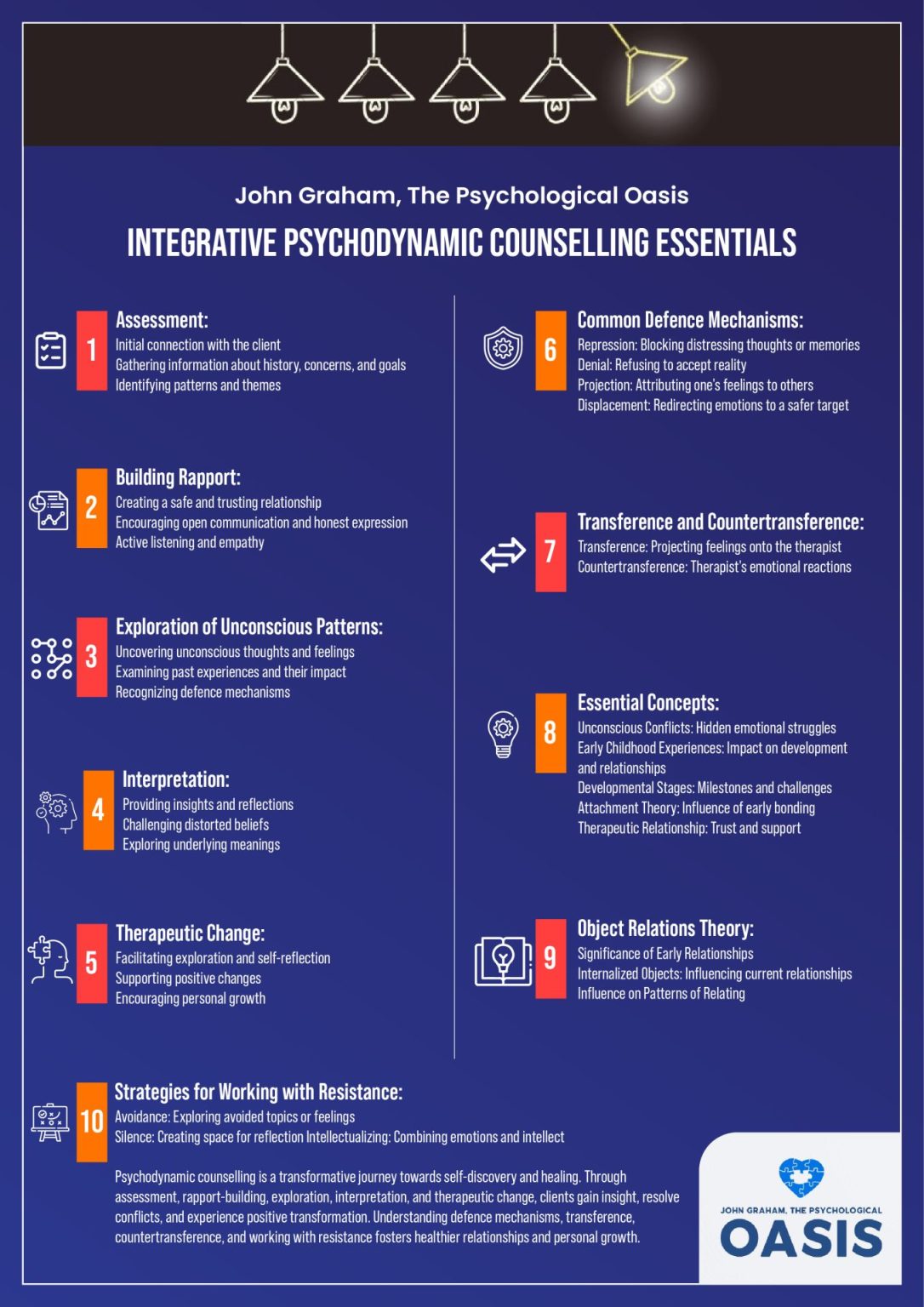
Psychotherapy is critical to the mental well-being of many. While there is little doubt that psychotherapy is effective, like any other process it must follow a systematic pattern to be successful. There are several stages in this process and understanding them makes any kind of therapy session more beneficial for the counsellor and the person in counselling.

Several major steps need to be undertaken for the cycle of dynamic counselling to become a transformative journey of self-discovery and healing for the participant. The first step is assessment. This is where the counsellor finds out as much as possible about the client. After this rapport will be built to create a safe and trusting relationship between the counsellor and the client. 

Exploration of patterns that may be causing specific behaviors based on past experiences is then done and an interpretation is given. The process also involves a therapeutic change in which the client makes strides toward experiencing personal growth.

There are several other stages that the client may go through which can see them projecting feelings onto their therapist and refusing to accept responsibility. All of these are coping mechanisms that must be worked through during counselling.

During psychodynamic counseling, the counselor will seek to go deeper with the patient so that they can identify traumatic experiences from their childhood and any past unconscious conflicts they have hidden that are impacting their lives today.

If you are looking to learn more about psychodynamic counselling and get an in-depth look at all the stages involved.


Infographic Design By “Unlock Your Inner Oasis with John Graham”

Family Responsibilities And Mental Health: Navigating the Unique Relationship.

Pexels Image – CC0 Licence

Being part of a family is one of the most natural things in life. However, sometimes that family isn’t so great for your mental health! It’s an unfortunate truth, but it affects so many people around the globe, even if we don’t talk about it. 

The silence involved can make you feel like such an outsider. Sometimes, your family who are supposed to love and cherish you , aren’t quite doing their job, and it’s hard to explain that. So what can you do in a scenario like this?

Build an External Support System

If your family isn’t there for you, you’ll need to build yourself a support system outside of them. Plenty of friends with couches you can crash on, or provide a shoulder to cry on if your parents have made another cruel remark. 

For any person out there, having connections outside of blood relations is a good idea. It widens your life in general, providing more viewpoints and experience for you to count on. And knowing there’s a group of friendly, funny, caring people at the end of the phone can make family responsibilities a lot easier to parse in your mind. 

Know Your Own Boundaries

Whether you’ve got a grown sibling you’re being made to feel responsible for or your parents have always reacted negatively to your decisions, your life is your own. As such, you may need to start putting up some walls. Commonly known as ‘going no contact’, you grant yourself the ability to move on from a childhood’s worth of trauma and finally make your own way in the world your way. 

But if no contact isn’t for you, you can try ‘low contact’ instead. Some people can panic at the thought of cutting ties completely, and there may still be people in your family you want to see on a regular basis (with boundaries).

No One Can Do it All

Even when you feel like you have to, or like you’re letting a loved one down – you didn’t. Remember, you’re only one person with 24 hours in a day, and you can’t be dedicating all that time to caring for someone else. As a parent or as an adult carer, you’re going to need help. 

So let people in when they’re available. Whether it’s counting on the support of a place like Prestwick Care when dealing with an elderly relative, or simply asking a sibling to pitch in when you can’t arrange a babysitter, help is there. You just have to reach out, no matter how much courage that might take.

A temporary worry is much better for you than long term stress when it comes to your mental health and wellness. 

Being stressed out by family responsibilities happens to us all. But if they’re chronic, reach out. You don’t have to take it all on alone. 

This article was written by a freelance writer.

We are 7! On Be Ur Own Light’s 7th Blog Anniversary by Eleanor

On the 1st March 2016, I started this blog as a way to provide therapy for myself- as I was going through panic attacks, (caused by trauma). Can you believe that was 7 years ago?! I can’t! Since then I have had several years of therapy and my life changed so much too for the better- I met my husband, we got married and moved to our first home.

The blog has turned into a book Bring me to Light (with Trigger), writing for Metro.co.uk, Glamour, the Telegraph, Happiful, Rethink Mental Illness, Mind and other incredible organisations, I have partnered with large and small brands, charities, businesses, writers to create content that battles stigma on mental health. We have been awarded as a Top 10 UK blog by Vuelio since 2018 (thank you) and I love to share my story to help others and educate people about bipolar, anxiety, panic disorders, psychosis, mania and mental health in the workplace (amongst other mental health topics!). I have also recorded podcasts and have begun speaking in the community about bipolar with my Dad.

I cannot believe it has been 7 years since I opened up my computer to write- I was struggling. a lot. Writing has been such a therapy and a saviour to me.. and I hope this blog helps you too!

As always, I want to thank all my contributors and brands (sponsored or not), as well as the digital agencies and freelance writers who provide content too.

This year March 22- 23 we have featured (where it says my name, I wrote it!)

How to Stay Motivated When You’re Feeling Lost: Tracie Johnson

Change the Story Campaign- Eating Disorder Stereotypes- Hope Virgo

Performance of She Used To Be Mine (Sara Bareilles) by Nicolina Bozzo- Eleanor

5 Tips on How To Talk To Your Boss About Mental Health- freelance writer

Does Retail Therapy help your mental health?– freelance writer

9 Tips On Prioritising Your Mental Health while raising children- freelance writer

How to Keep a Good Mindset with Physical Therapy – Sierra Powell

Bipolar and Perinatal mental health- Eleanor

4 Types of Alcohol Addiction Services You can Turn To for Help- Rachelle Wilber

How to Transform Social Anxiety – Lewis McDonnell at Phobia Support Forum

What It’s Like To Go Through Severe Depression as a Bipolar Episode- Eleanor

What To Do When You Feel Alone- Eleanor

4 Reasons to Cook For Yourself- freelance writer

Learning to Embrace Schizoaffective Disorder -Mental Health Awareness Week- James Lindsay

Promoting wellbeing, good mental health and reducing stress in the elderly- freelance writer

Top 10 UK Mental Health Blog Award from Vuelio- Eleanor

Mental health, low self esteem, body image and fashion- freelance writer

What It Means To Have an NHS Perinatal Psychiatry Meeting- Eleanor

Unbroken- How Madeleine Black learnt to heal after sexual violence- Eleanor

What Tools Go Into Substance Abuse Treatment- Kara Masterson

Living with Anxiety- Promoting Mental Health and Success In the Workplace- Erin Hallett

How to know if you have an eating disorder and what to do next- Rachelle Wilber

How can I help an alcoholic or addict parent?- Chaye McIntosh

Boost Your Confidence- freelance writer

Taking Lithium for Bipolar Disorder- Side Effects – Eleanor

4 Effective Ways to Boost Your Mood- freelance writer

Knowing when its right to seek substance abuse treatment- Rachelle Wilber

Protecting mental health, a guide- The Mental Health Foundation

Letting go of hurtful memories to be happier- freelance writer

Group therapy and healing- Lizzie Weakley

Mental health medication and heatwave side effects- Eleanor

How to Create Healthy Daily habits- Sierra Powell

3 Journalling Techniques for Improved Mental Health- freelance writer

Looking after elderly parents- freelance writer

Thank you to a mental health nurse for sharing my book – Eleanor

Interview on Living with Bipolar with Best For You NHS- Eleanor

5 Tips for Communicating with Someone with Dementia- freelance writer

7 Tips to Help Your Personality Shine Through- freelance writer

Sleep Expert on how to stay cool on hot nights- freelance writer

Book Review of my book Bring me to Light by Deb Wilk- Eleanor

4 kinds of Therapy to consider- Rachelle Wilber

Coping with Borderline Personality Disorder and Obsessive Compulsive Disorder- Dr Joann Mundin

Are work places doing enough for mental health post-covid? – freelance writer

Mental Health at Work: First Aid products- writer

The Anxiety Train- a New Year- Eleanor

PTSD therapies and what is right for you- Kara Masterson

Managing mental health when you start college/university- freelance writer

Helping elderly relatives take care of themselves- freelance writer

How to Stay Emotionally Healthy during a Divorce- Lizzie Weakley

4 Ways EMDR Therapy can help you cope with Anxiety- Rachelle Wilber

Stuck in a Rut? Try These 4 Things- Dixie Somers

Non Traditional Therapeutic Activities to Try for Anxiety- Brooke Chaplan

Dealing with Dental Anxiety- Lizzie Weakley

Overcoming Seasonal Mood Changes- Brian Thomas

3 Years of my book Bring me to Light- Eleanor

5 Unbeatable ways to unwind- Dixie Somers

Speed Up Bipolar diagnosis to save lives- Bipolar UK- Eleanor

Losing a loved one- coping with anxiety- Hannah Walters

4 Ways to Treat an eating disorder- Lizzie Weakley

Bipolar UK commission announcement on government funding – Eleanor

How Living by the waterfront improves health- Rachelle Wilber

What football has taught me about life and mental health- Rose Atkinson-Carter

Anxiety and climbing, not carrying mountains- Eleanor

How Car accidents affect mental health- Stubbs Law Firm

How can EMDR therapy help you?- Brooke Chaplan

Tips for planning a sensory friendly wedding- Clay Reese

How to manage emotional eating- Lizzie Weakley

Methods for helping addiction recovery- Kara Masterson

How to tell if a loved one needs psychiatric help- Brooke Chaplan

What to do if you have an eating disorder- Brooke Chaplan

Navigating a divorce and preserving your mental wellbeing- Dixie Somers

January anxiety and burn out, how to avoid- Dr Catherine Carney at Delamere

How to cope with ADHD- freelance writer

My talk at the mental health awareness shabbat on bipolar- Eleanor

Tips to help seasonal depression- Obehi Iyobhebhe

How to help support your friends journey to sobriety- Anita Ginsburg

Why self care is so important- Brooke Chaplan

Coping with big life changes- Meghan Belnap

Befriending my brain, a new book on psychosis and recovery by James Lindsay- Eleanor

Thank you all for contributing and I am raising a glass to 7 years of this blog!!

Love and gratitude,

Eleanor x

It’s Not Just The Therapist or Psychiatrist Alone: Why Treatment Centres Matter in Mental Health.

(Image: David Travis at Unsplash)

It’s not just the therapist or psychiatrist alone. The treatment centre/hospital matters in mental health.. It’s not that therapists are bad or unimportant; they can be critical in helping people with mental health concerns start on the road to recovery. However, sometimes treatment centres can have a huge impact on mental health and well-being, as a whole.

Lasting Impact of the Environment

First, the environment in which individuals with mental health concerns receive treatment can have a lasting impact on their mental health. Is the institution warm and welcoming to visitors? Or does it feel sterile and cold? Does it have adequate resources to meet the needs of its patients? Or is it underfunded and overcrowded? All these factors can have a significant impact on recovery, as they may create feelings of anxiety or alienation in the patient. For example, if the institute has Knightsbridge Furniture and a welcoming waiting area for visitors, it may make people feel less anxious about their treatment, because the furniture is designed to provide comfort.

Supportive Staff Members

Secondly, supportive staff members are paramount for mental health recovery. Not only do staff members need to be competent and knowledgeable about the latest treatment techniques and practices; they also need to be warm, welcoming and supportive towards their patients. They should be able to provide a safe space for individuals with mental health concerns to explore their thoughts and feelings without fear of judgment or punishment. This will help foster an atmosphere of trust and healing at the treatment centre/hospital.

Accessible Resources

Third, centres should strive to make resources accessible and available to those in need. Mental health concerns can often be complex and multifaceted, so individuals may require a variety of services. Treatment centres should provide access to everything from basic mental health services such as counselling, to more specialised resources like crisis intervention teams or support groups. If these resources are not readily available, then individuals might not get the help they need when they need it.

Appropriate Levels of Care

Fourth, treatment centres must provide appropriate levels of care for the patients they serve. This includes ensuring that each individual gets the right combination of treatment and support based on their specific needs. For example, a patient with severe depression or other severe illnesses may benefit from both medication management and psychotherapy while someone with mild anxiety may only require weekly therapy sessions.

A Holistic Approach

Finally, centres should strive to provide a holistic approach to mental health care. This means taking into account not only the individual’s diagnosis or symptoms, but also their lifestyle, environment, and social support system. Taking these factors into consideration can ensure that individuals receive the most appropriate treatment for their unique needs. Additionally, it can help facilitate long-term recovery and prevent future issues from developing.

It is clear that when it comes to mental health recovery, a treatment centre/hospital plays a vital role in helping individuals achieve positive outcomes. From providing supportive staff members to making resources accessible and offering a holistic approach to care – institutions must strive to meet the needs of those they serve in order to ensure the best possible outcomes.

So, while it is important to have a skilled therapist or psychiatrist, never underestimate the importance of a supportive and well-resourced treatment centre as part of that overall care. Together, they can provide individuals with everything they need to start on their journey to mental health recovery.

This article was written by a freelance writer.

4 Kinds Of Therapy To Consider by Rachelle Wilber

(image: free image)

Therapy can be a great way to work through personal issues, improve your mental health, and make positive changes in your life. But with so many different types of therapy available, it can be hard to know where to start. Many people find that a kind of therapy works well for them, while others may benefit from a combination of different approaches. This overview will help you learn about four of the most common types of therapy to make an informed decision about what might work best for you. 

Cognitive Behavioural Therapy 

Cognitive behavioural therapy (CBT) is a type of psychotherapy that helps some people change negative thinking and behaviour patterns. CBT is based on the idea that our thoughts, feelings, and behaviours are interconnected. Changing our thoughts and beliefs can change our behaviour and emotions. CBT is effective in treating a wide range of mental health conditions, including anxiety and depression, so its worth a shot to see if its right for you. 

Group Therapy 

Group therapy is a type of psychotherapy that involves meeting with a group of people who are dealing with similar issues. Group therapy can be helpful because it allows you to share your experiences and feelings with others who understand what you’re going through. It can also help you learn new coping skills and gain insight into your thoughts and behaviors. Many people find group therapy to be a supportive and helpful experience- but see how it goes for you as an individual too. 

Interpersonal Therapy 

When we have issues with our relationships, it can be challenging to know how to make things better. Interpersonal therapy (IPT) is a type of psychotherapy that helps people improve their relationships with others. IPT focuses on the here and now, helping you to understand and change patterns of behaviour causing problems in your relationships. Several studies have shown that IPT is an effective treatment for depression- so this could be one to try. 

Family Therapy 

Family therapy is a type of psychotherapy that involves meeting with a therapist along with your family members. Family therapy can be helpful because it allows you to address problems within your family system. It can also help improve communication and relationships within the family. Research by experts found family therapy to be a supportive and helpful experience. However, some have said that it wasn’t the right experience for them and their family, so it is trial and error too.

These are just a few of the many therapy types available. If you’re considering starting therapy, talk to your doctor or mental health professional about what might be right for you. Also, remember, there is no “right” type of therapy. What matters most is finding a therapist you feel comfortable with and who can help you achieve your goals. You may also try a few therapies before finding the correct one to help yourself, your relationships and your family.

This article was written by freelance writer, Rachelle Wilber, living in the San Diego, California area, USA. She graduated from San Diego State University with her Bachelor’s Degree in Journalism and Media Studies. Follow her on Twitter and Facebook: @RachelleWilber; https://www.facebook.com/people/Rachelle-Wilber/100009221637700/